


The Fed was created to handle two important jobs: keep inflation under control and keep the labor market healthy. However, right now, those two goals are moving in opposite directions. Last Friday’s February U.S. Non-Farm Payrolls report showed the number of jobs created fell by 92,000 and the unemployment rate rose to 4.4%. Meanwhile, another report, the Fed’s preferred inflation indicator (PCE), was still running hot with the headline figure at 2.9% and the core PCE at 3.0%, year over year. That puts it above the Fed’s mandated target and we haven’t even factored in the current oil shock.
Jaime Martinez Medina, Global Market Strategist at PU Prime commented:
Recent U.S. economic data is highlighting a difficult environment for the Federal Reserve. The central bank’s dual mandate requires it to control inflation while maintaining a healthy labor market. At the moment, however, those objectives appear to be pulling policy in opposite directions.
The latest labor market figures showed signs of cooling momentum. February’s Non-Farm Payrolls report indicated weaker job creation, while the unemployment rate edged higher to 4.4%. Normally, softer labor conditions would strengthen the argument for interest rate cuts. Yet inflation remains stubbornly elevated. The Fed’s preferred measure, the Personal Consumption Expenditures index, is still running close to 3% year-over-year on both headline and core measures, well above the central bank’s 2% target.
This combination of slowing growth and persistent inflation has revived concerns about a stagflationary environment. For policymakers, it represents one of the most challenging macroeconomic scenarios, since actions aimed at addressing inflation can further slow economic activity, while policies supporting growth risk keeping price pressures elevated.
Adding to the complexity is the recent surge in energy prices. Oil has climbed significantly in recent weeks, raising the possibility that higher fuel costs could feed into broader inflation. Elevated energy prices tend to affect transportation, manufacturing, and consumer spending simultaneously, creating ripple effects across the economy.
Federal Reserve officials have responded cautiously. Several policymakers have indicated that holding interest rates steady while gathering more data may be the most appropriate course for now. Market expectations reflect this uncertainty. Futures pricing suggests that rate cuts remain possible later in the year, though the timeline has become increasingly dependent on incoming inflation and growth data.
In the near term, the path for monetary policy may hinge largely on energy markets. If oil prices remain elevated, inflation risks could delay easing. If energy pressures ease while the labor market continues to soften, the case for rate cuts would strengthen. For now, the Fed finds itself navigating a narrow path between rising costs and slowing growth.
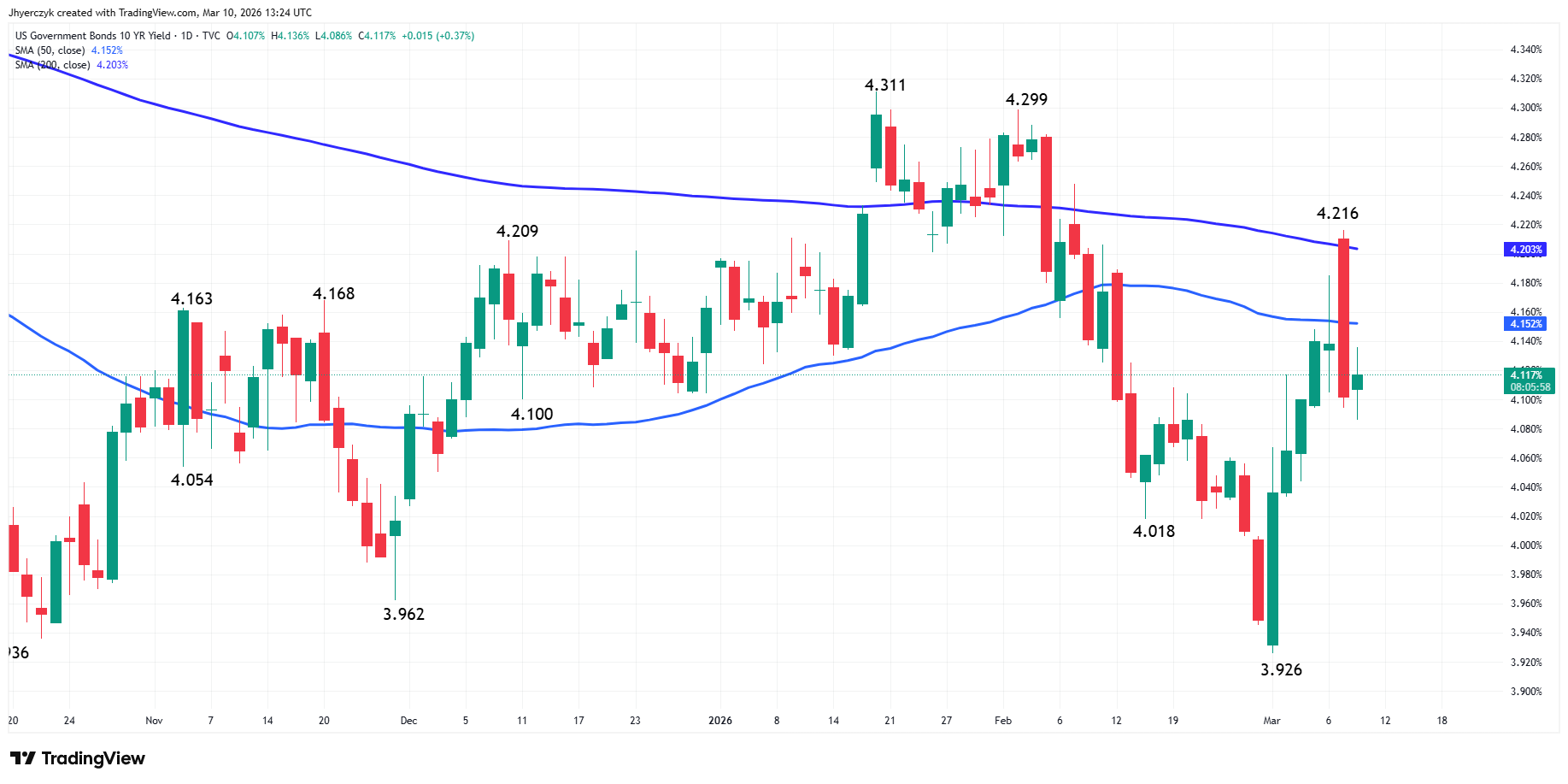
Figure 1: Daily U.S. 10-Year Treasury Note yield — Yields remain volatile as the Fed weighs inflation against a softening labor market. Source: TradingView.
Stagflation Is No Longer Just a Buzzword
Given that scenario, no wonder the new buzzword in the markets is stagflation. Simply stated, it means weaker growth and stickier inflation at the same time. For the Fed, it is probably the worst setup imaginable. This is because the Fed may have to keep interest rates higher and longer than expected to fight rising inflation, while putting a strain on the labor market and spending. Reuters recently described the situation of weaker hiring, soaring oil prices and above-target inflation as a “stagflation” vise.
Fed Officials Are Choosing Their Words Carefully
Traders and Reuters aren’t the only ones who sat up and took notice either. San Francisco Fed President Mary Daly called the situation a “two-sided” risk. Her response is one I can live with. She said about interest rates, “hold them steady while we collect more information.” Her colleague, Chicago Fed President Austan Goolsbee seemed to be more philosophical. He thinks rates will come down eventually, but he expressed caution on the timing. Both Fed officials essentially said the same thing: rate cuts are still on the table, but the war has pushed that timeline further out.
US Dollar Index Price Forecast
Every new US Dollar Index analysis as it publishes, today's technical signal and key levels, live price — on one page.
See all US Dollar Index forecastsWhat the FedWatch Tool Is Telling Us
One gauge that I use a lot to keep the market’s running vote on where policy and interest rates are headed is Fed Funds futures. After Friday’s weak jobs data, the CME’s FedWatch tool started to lean toward the first cut in July while June became more of a 50/50 proposition with no change in June dropping to 55.6% from 66.7% the day before. In my opinion, the market is saying: not now in March, maybe June, but more likely July if growth keeps slowing and inflation expectations don’t blow out.
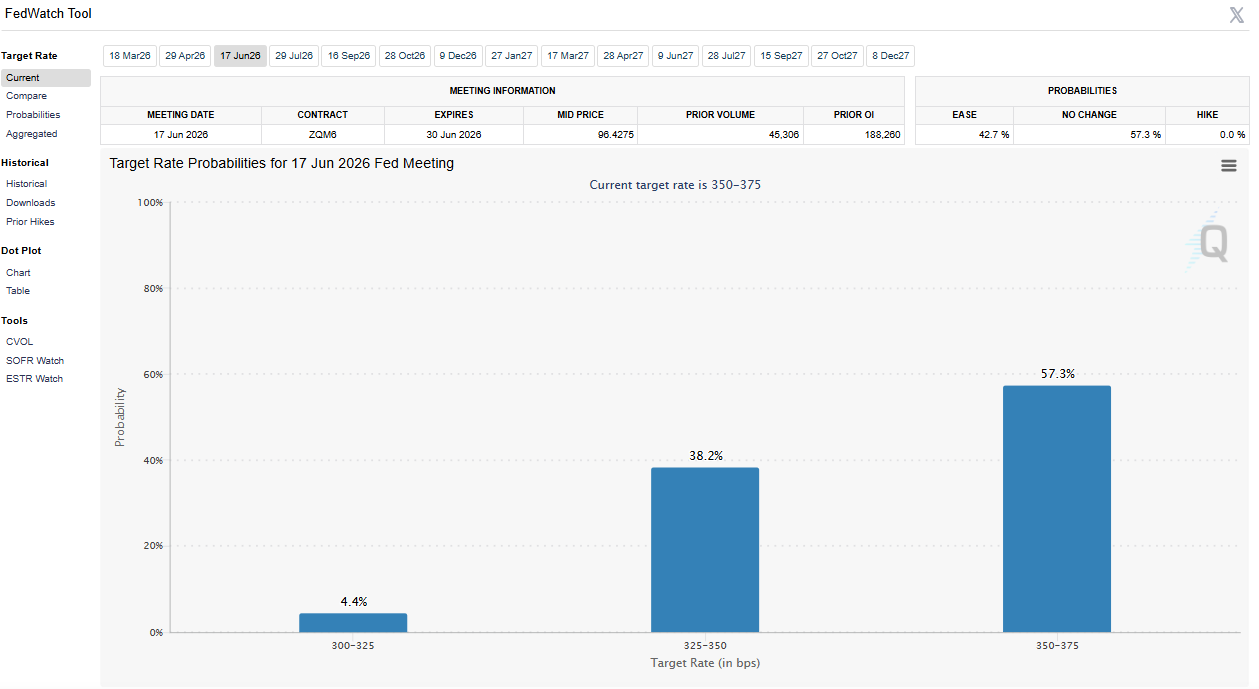
Figure 2: CME FedWatch probabilities for the June 2026 meeting — A 57.3% chance of no change reflects fading rate-cut confidence. Source: CME Group.
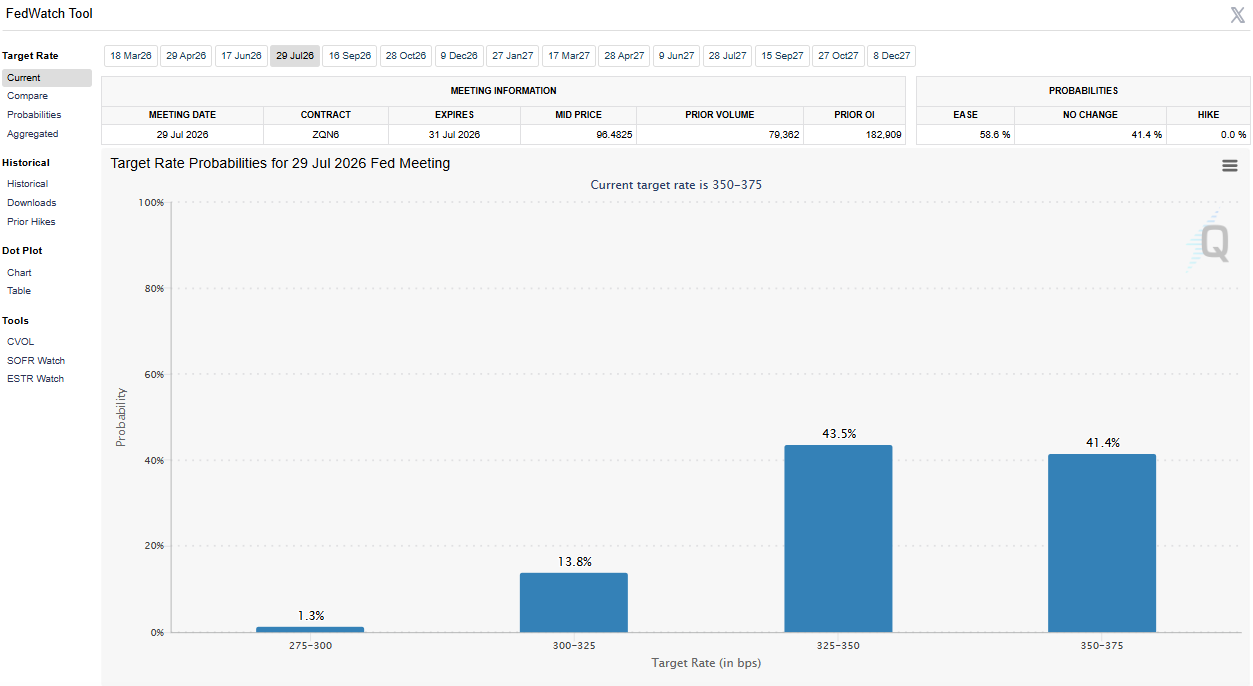
Figure 3: CME FedWatch probabilities for the July 2026 meeting — Markets lean toward a 58.6% combined chance of easing by July. Source: CME Group.
The Market’s Best Guess Points to Mid-Year at the Earliest
Taken together, these FedWatch snapshots paint a clear picture: the market isn’t betting on early action. With the March meeting priced at virtually zero chance of a cut, and June now leaning toward a hold, traders are coalescing around July as the first realistic window—provided growth continues to slow and oil-driven inflation doesn’t run away.
It All Comes Down to How Long Oil Stays Hot
Essentially, however, it all comes down to timing for traders. If crude oil stays hot and headline inflation starts to reaccelerate, the first cut in 2026 can be pushed out further. If oil cools down quickly and the jobs market keeps weakening, traders will pull rate cut expectations forward again.
So over the next few weeks, it’s not going to be just about jobs or CPI in isolation. It’s going to be about whether the oil shock looks temporary or durable. Fed Governor Christopher Waller made that exact distinction, saying the oil move will look like a “one-off event” if it unwinds quickly, but becomes more serious if it lasts and starts “bleeding through” into the rest of the economy.
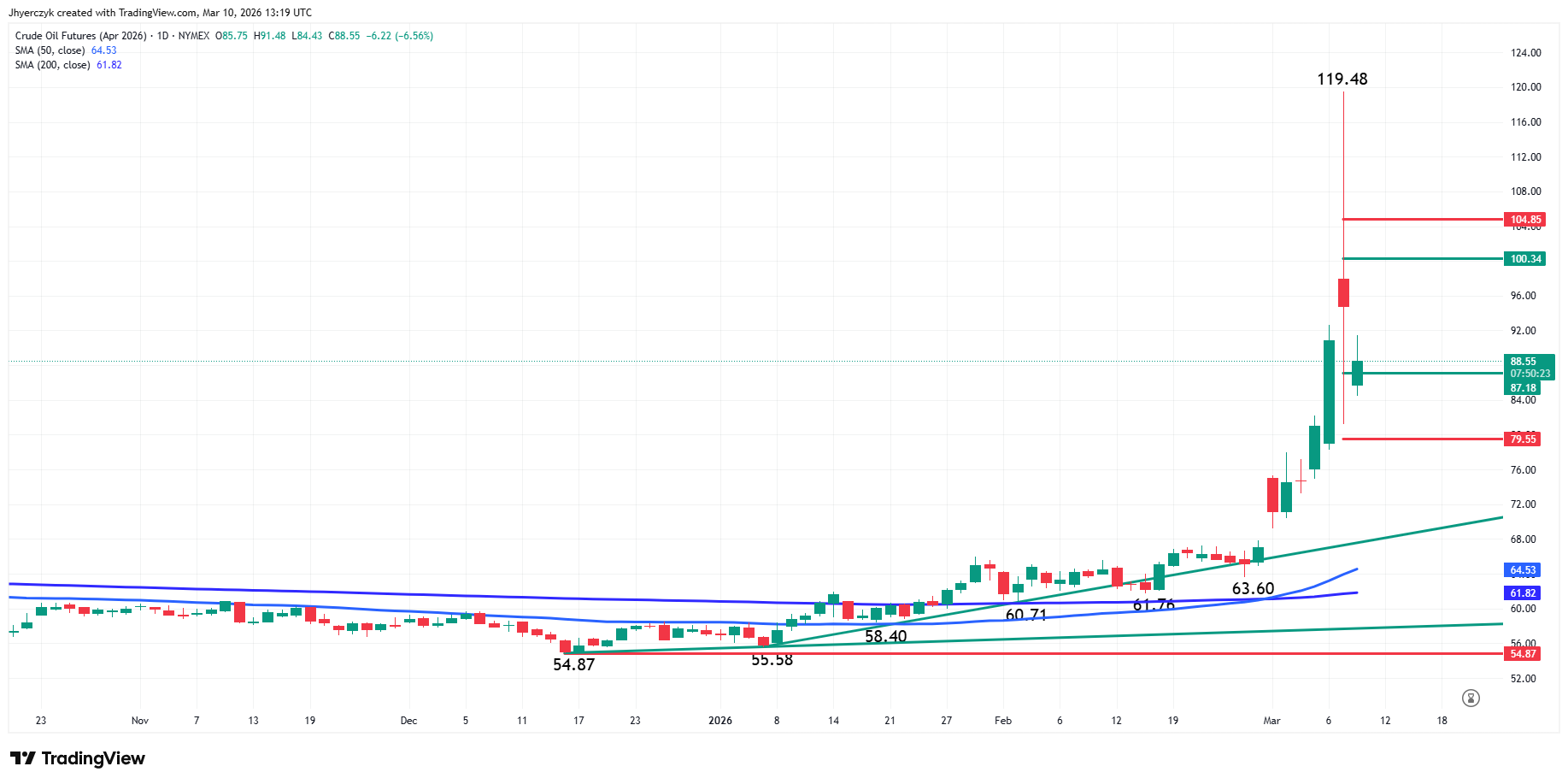
Figure 4: Daily WTI Crude Oil Futures (April contract) — Oil surged to $119.48 before retreating, but remains far above the psychologically critical $100 level. Source: TradingView.
$100 Crude Is Not Just a Number — It Changes Everything
Before the war started on February 28, analysts were mentioning $100 a barrel crude oil as if it were some mystical level. But here we are a little more than a week later and crude oil is trading nearly $20 north of this psychological and economic line that everyone understands now. Below this level, high energy prices are just a problem. Around or above it, energy starts to become a major burden on the whole economy.
Consumers Feel It First
There is no doubt in my mind that it is going to hit the U.S. consumer hard. $100 crude oil means more expensive gasoline, diesel, airline tickets, shipping, and utility costs. That means less money to spend for restaurants, travel, apparel, and discretionary spending. For businesses, it raises transport, input, and delivery costs.
Goldman Sachs Warns of Growth and Inflation Fallout
Looking at it another way, Goldman Sachs said that even a temporary move to $100 per barrel could slow global growth by 0.4 percentage points and lift global headline inflation by 0.7 percentage points. But here’s the real issue in my opinion: central banks don’t typically react to every spike in crude oil prices, but they tend to turn more hawkish when inflation is already elevated like it is now in the United States. Right now, we’re not dealing with an oil shock that drove inflation to 2%—we’re dealing with a fragile economy where inflation is still well above the mandated target.
At this time, the U.S. can probably deal with an oil-induced inflation hit a lot better than it would’ve say 20 years ago, but that’s not the point. A jump from $100 to $150 a barrel, even if prices retreat quickly from that level, could hit inflation psychology and encourage consumers to tighten up their pocketbooks.
The Fed Is Stuck Between Jobs and Oil
The Fed’s problem is easy to explain even though it’s hard to solve. The labor market is softening enough to argue for cuts, but oil is rising enough to argue for patience. Fed Funds are telling us the market still sees no cuts in March, sees June as possible but not locked in, and has been leaning toward July as the first cleaner window for a cut after the Fed has a chance to parse the data and determine whether inflation is transitory or permanent.
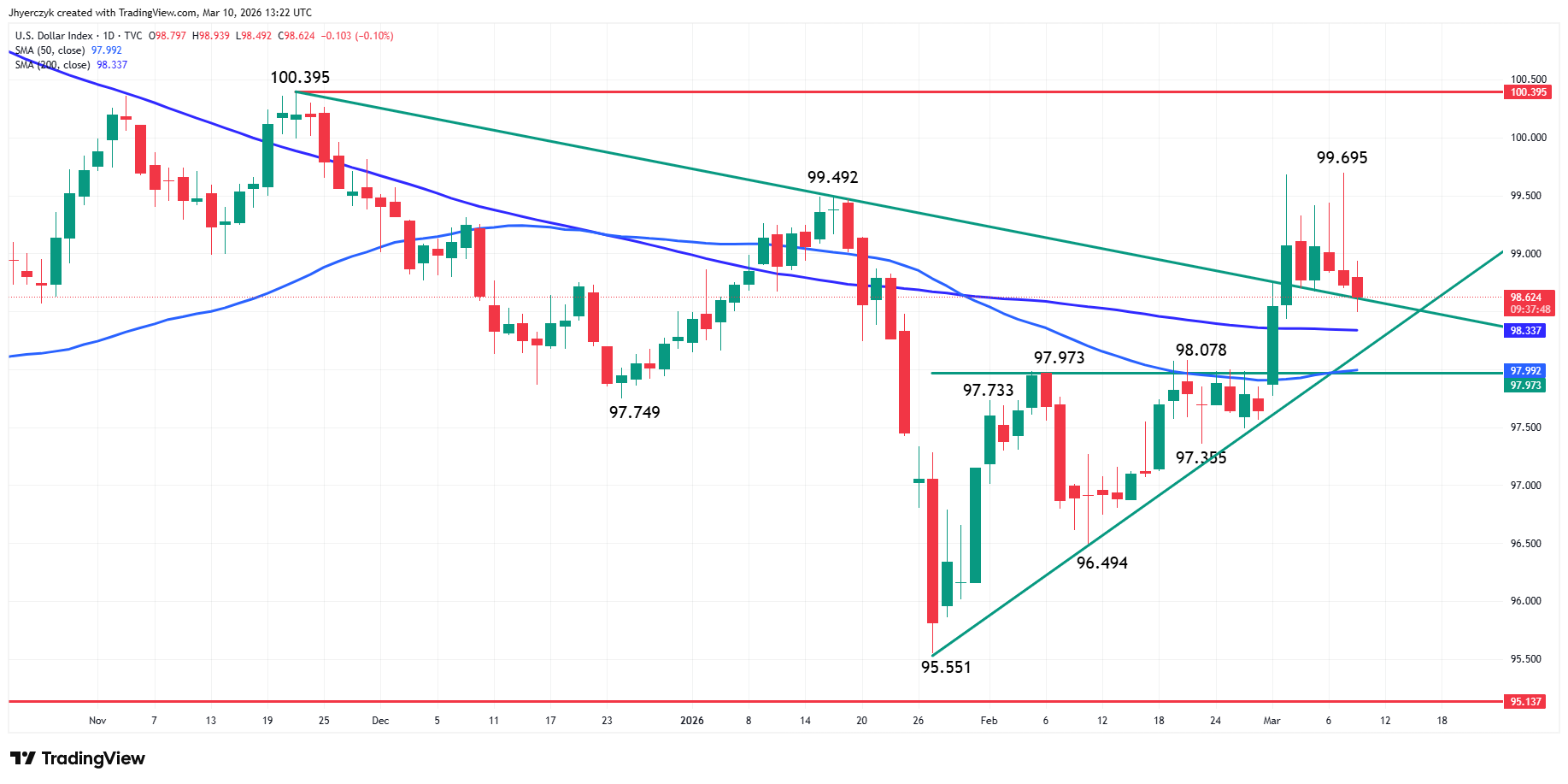
Figure 5: Daily U.S. Dollar Index — The dollar has been volatile amid shifting rate expectations, reflecting the tug-of-war between growth concerns and inflation fears. Source: TradingView.
Oil Is Acting Like a Delay Button on Fed Easing
That’s why $100 is not just a number. Once crude crosses that line and stays there, everything changes. It will hit consumers, businesses, inflation expectations, and central bank timing all at once. For traders, the message is pretty straightforward: if oil stays elevated, the Fed is likely to stay cautious even as jobs weaken. If oil breaks lower, rate-cut odds can rebuild fast. Right now, crude is acting like a delay button on Fed easing.


