
U.S. Dollar Retreats As Traders Bet That War In The Middle East Could End Soon
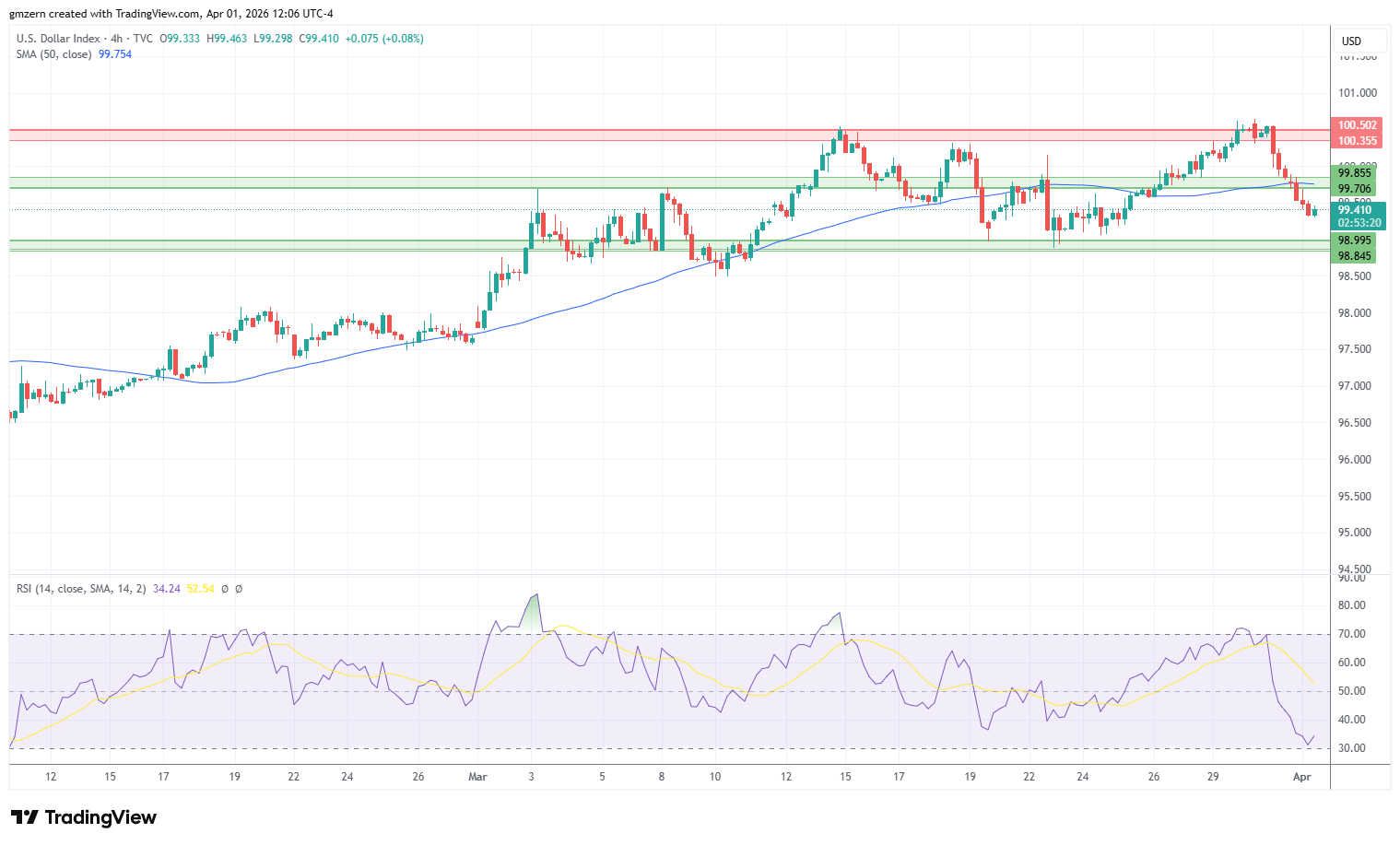
U.S. Dollar Index is losing ground as traders react to economic reports and focus on geopolitical developments.
President Trump said that U.S. will consider ceasefire in the Middle East war when the Strait of Hormuz reopens. Iran said that the Strait would not reopen and noted that its conditions for ending the war have not changed. Nevertheless, traders believe that serious negotiations have just begun, so demand for safe-haven assets is declining.
ADP Employment Change report showed that private businesses added 62,000 jobs in march, compared to analyst forecast of +40,000.
Retail Sales increased by +0.6% month-over-month in February, compared to analyst consensus of +0.5%. Retail Sales ex Autos grew by +0.5%, while analysts expected that they would increase by +0.3%.
Today, traders also had a chance to take a look at the ISM Manufacturing PMI report. The report indicated that ISM Manufacturing PMI increased from 52.4 in February to 52.7 in March, compared to analyst forecast of 52.5. Numbers above 50 show expansion.
The encouraging economic reports did not provide support to the American currency as traders have mostly focused on the situation in the Middle East and bet that U.S. and Iran were moving towards a deal.
U.S. Dollar Index pulled back below the support level at 99.70 – 99.85 and is trying to settle below the 99.50 level. In case this attempt is successful, U.S. Dollar Index will head towards the next support, which is located in the 98.85 – 99.00 range.

EUR/USD Gains Ground Despite Rising Unemployment Rate In The EU
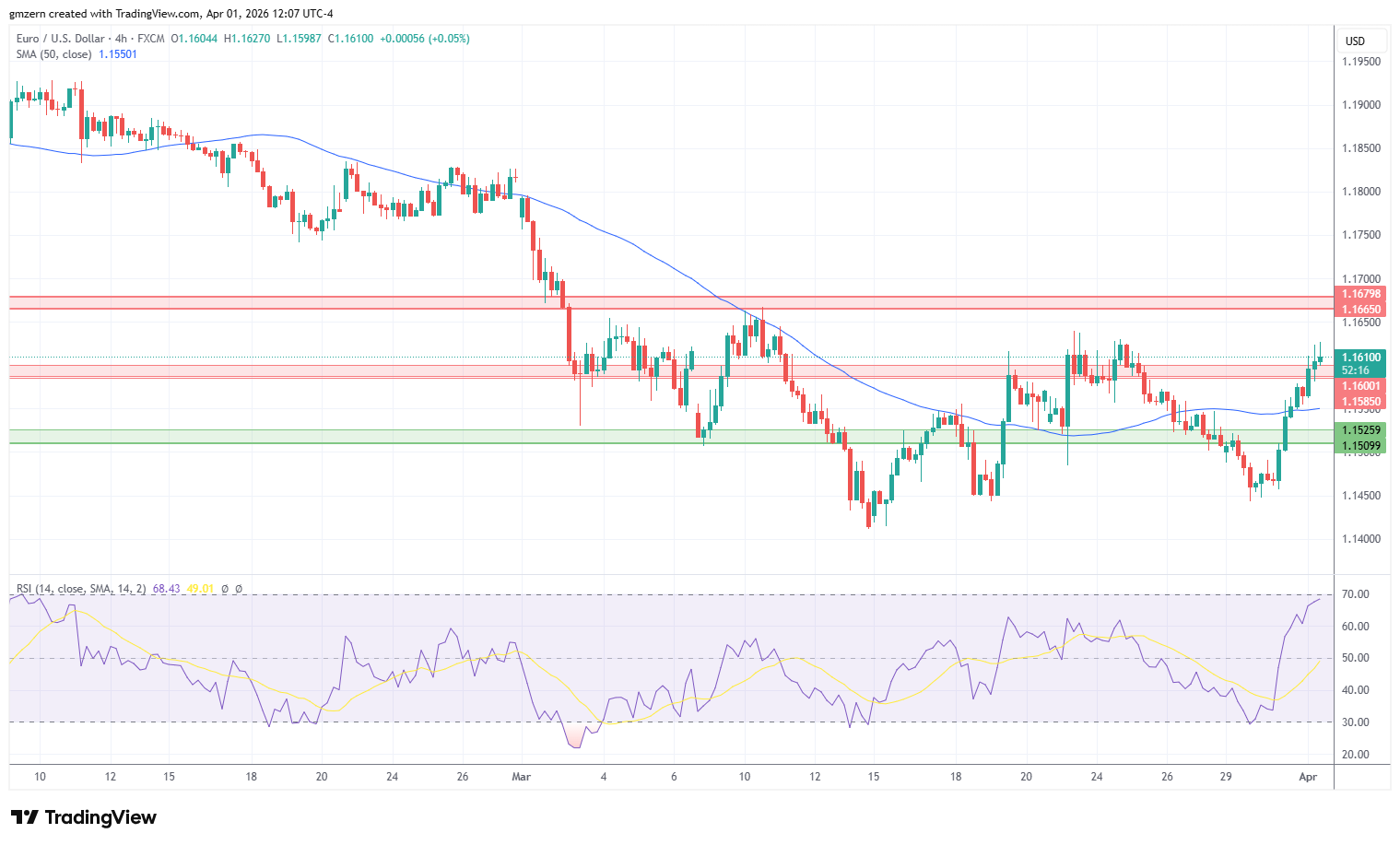
EUR/USD is moving higher as traders ignore the disappointing Unemployment Rate report from the EU and focus on the situation in the Middle East.
Euro Area Unemployment Rate increased from 6.1% in January to 6.2% in February, compared to analyst forecast of 6.1%. The report indicated that the European economy has found itself under pressure ahead of the strong rally in the energy markets in March.
Currently, EUR/USD attempts to settle above the resistance level at 1.1585 – 1.1600. In case EUR/USD manages to settle above the 1.1600 level, it will move towards the next resistance, which is located in the 1.1665 – 1.1680 range.
EUR/USD Price Forecast
Every new EUR/USD analysis as it publishes, today's technical signal and key levels, live price — on one page.
See all EUR/USD forecastsGBP/USD Tests Resistance At 1.3315 – 1.3330
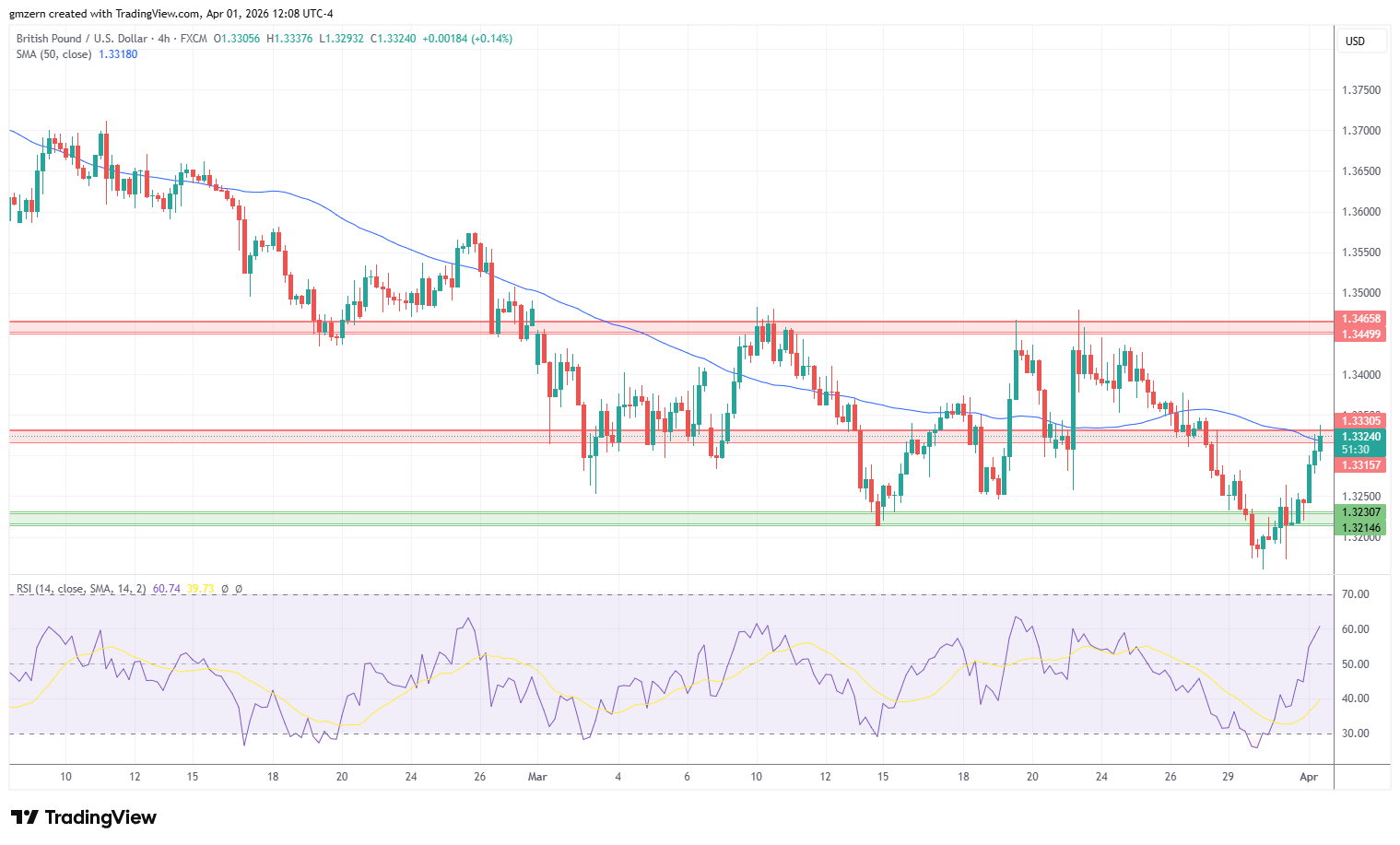
GBP/USD tests resistance at at 1.3315 – 1.3330 as traders focus on general weakness of the American currency.
A successful test of this level will open the way to the test of the next resistance at 1.3450 – 1.3465. RSI remains in the moderate territory, so there is plenty of room to gain momentum in case the right catalysts emerge.
USD/CAD Declines Amid Falling Demand For Commodity-Related Currencies
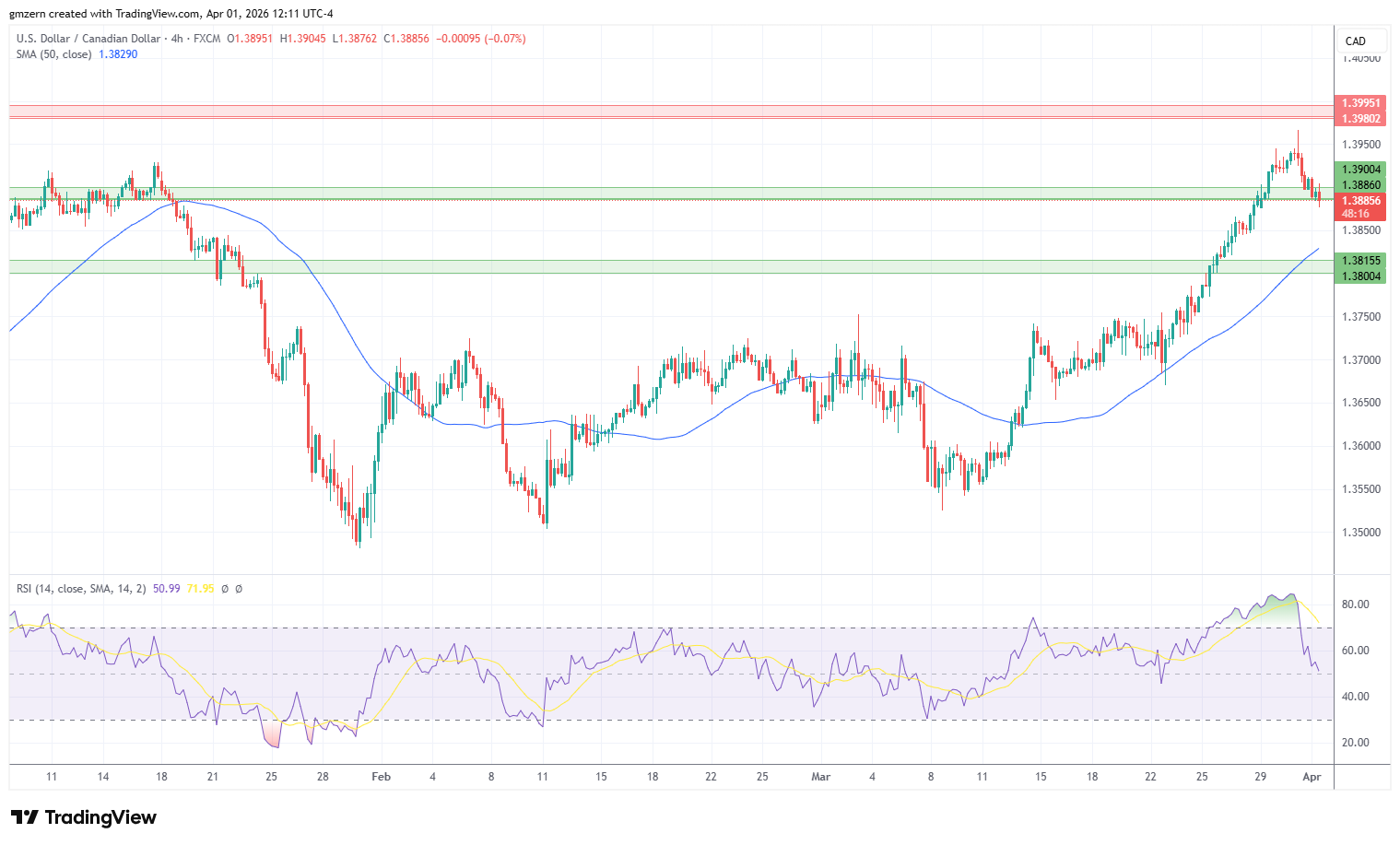
USD/CAD pulled back as demand for riskier assets increased amid signs of negotiations between U.S. and Iran. Other commodity-related currencies have also moved higher in today’s trading session.
Traders also focused on the S&P Global Manufacturing PMI report from Canada. The report showed that Manufacturing PMI decreased from 51.0 in February to 50.0 in March, compared to analyst forecast of 49.2.
In case USD/CAD settles below the support level at 1.3885 – 1.3900, it will head towards the next support at 1.3800 – 1.3815.
USD/JPY Stabilizes Above Strong Support Level
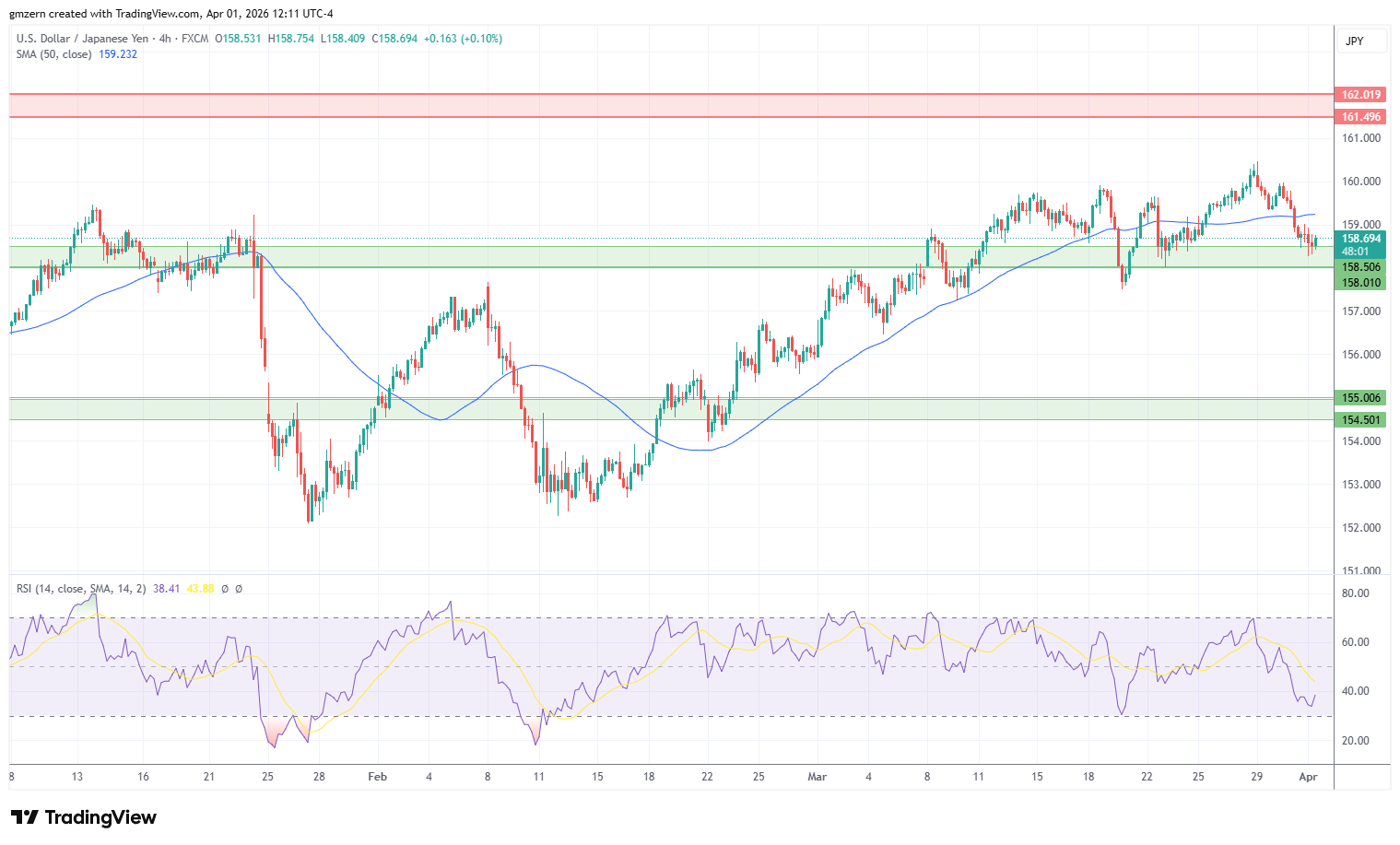
USD/JPY is mostly flat as traders react to Tankan Large Manufacturing Index report from Japan. The report showed that Large Manufacturing Index improved from 16 to 17, exceeding the analyst forecast of 16.
Treasury yields have rebounded from recent lows, providing some support to USD/JPY.
If USD/JPY declines below the support at 158.00-158.50, it will move towards the next support level at 154.50-155.00. On the upside, a move above the 50 MA at 159.23 will push USD/JPY towards the 160.00 level.
If you’d like to know more about how to trade forex, please visit our educational area.