President Donald Trump has signed new executive order threatening 25% tariff against any country that continues to trade with Iran. This move is expanding trade tensions to geopolitical targets. The order does not specify at what rate but uses 25% as a benchmark. The measure is aimed to discourage trade with Iran using market access pressure.
US officials had done the same earlier this year on Truth Social. Now, it’s official policy with the power of the executive. According to the White House this step formed part of an “ongoing national emergency with respect to Iran.”
Backdrop to the Latest Tariff Expansion
The order followed hard on indirect nuclear talks between the U.S. and Iran in Oman. President Trump said the talks were “very good,” but said failure to reach a deal would have “very steep” consequences.
The U.S. argues that Iran still seeks nuclear capabilities and is funding terrorism. The executive order singles out nations that acquire any goods or services from Iran directly or indirectly. That includes oil, petrochemicals and other sanctioned sectors.
The new data shows that U.S. tariff policies are hitting Americans at home. According to the Tax Foundation, the average household spent $1,000 more on last year due to tariffs, and the cost will potentially increase to $1,300 in 2026. These tariffs now account for the largest tax increase by the U.S. as a percentage of GDP since 1993.
Rising Tariff Burdens on U.S. Households
Despite White House claims, the tariffs raised only $264 billion in 2025 which is far less than was projected. Prices for imported goods such as beef, coffee and electronics have increased. The tariff rates are increasing from 2% to nearly 10% in a single year. Many households feel this pinch even before new Iran-related measures kick in.
Brent Oil Price Forecast
Every new Brent Oil analysis as it publishes, today's technical signal and key levels, live price — on one page.
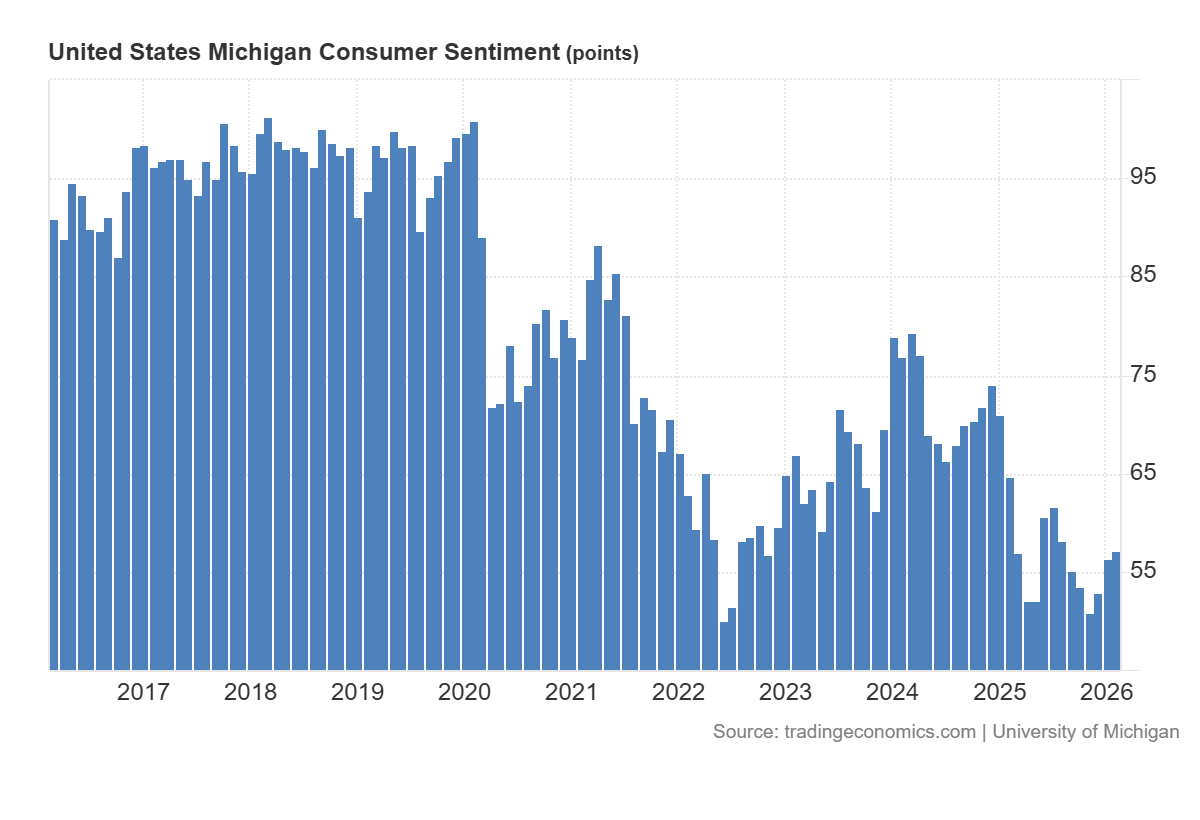
See all Brent Oil forecastsThis pressure is seen in the Michigan Consumer Sentiment Index in the chart below. It is observed that the index is below the levels of pre-2020 which indicates that higher tariffs and rising import prices continue to weigh on the confidence of household.
Sanctions Intensify Pressure on Iran’s Economy and Trade Routes
In addition to announcing the tariffs, the US State Department approved 15 entities to trade in Iranian-origin crude and petrochemical products. This adds to the piling up of economic pressure against Iran, which has already been struggling to cope with years of sanctions. Inflation is running at more than 70% and the price of food is skyrocketing.
Despite the crackdown Iran continues to export. More than 100 countries continue to trade with Iran. China remains its number one customer with more than $14 billion in purchases. Also prominently featured are Iraq, the UAE, and Turkey. These nations now face difficult choice: reduce trade with Iran or suffer tariffs on U.S. exports.
Market Implications and Global Trade Reactions
This new phase of the tariffs will likely have an impact on a number of financial instruments:
- Oil: Any additional pressure on Iranian exports may lead to tightening of global supply and increases in oil prices.
- Gold: Safe haven demand could increase if the situation in the Middle East escalates.
- Currency Markets: A risk-off environment could lead to weakness in U.S. dollar in event of Fed uncertainty or retaliation.
- Equity Markets: Countries such as China, Turkey and UAE can be subjected to equity pressure if U.S. tariffs are followed up.