U.S. Dollar Holds Steady After Week of Mixed Economic Signals
The U.S. Dollar is inching lower against a basket of major currencies on Friday, putting it in a position to close lower for the week. After Monday’s steep sell-off and Wednesday’s minor reversal to the upside, traders appear to have run out of incentives to trade.

Economic Data Fails to Inspire Movement
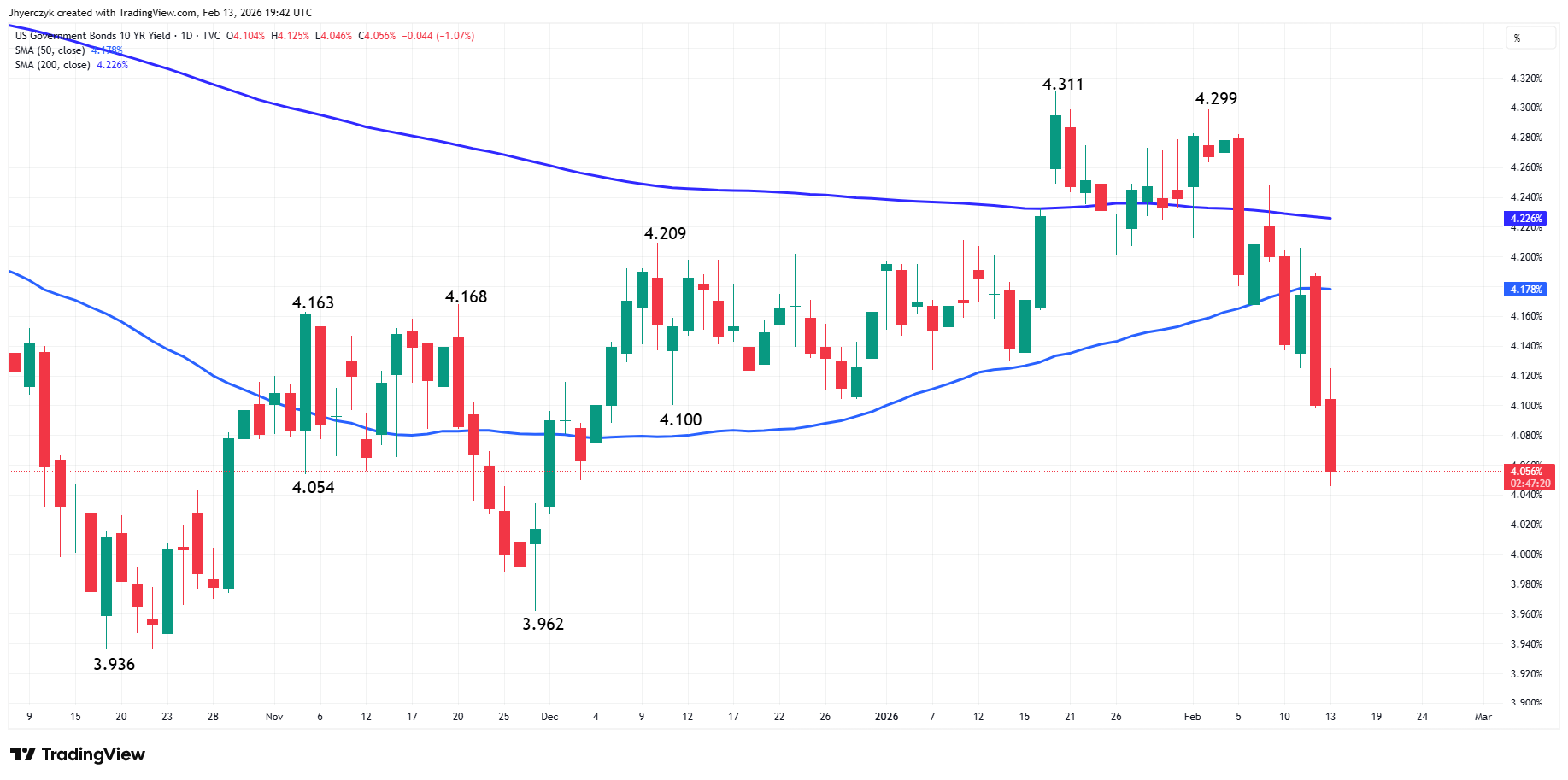
The economic data didn’t help much as well as Treasury yields. On Wednesday, the January Non-Farm Payrolls report came in hotter-than-expected and Friday’s headline consumer inflation data was better than expected with core inflation meeting expectations. Treasury yields plunged for a second session but Dollar traders were unfazed.
DXY Tests Key Support Zone
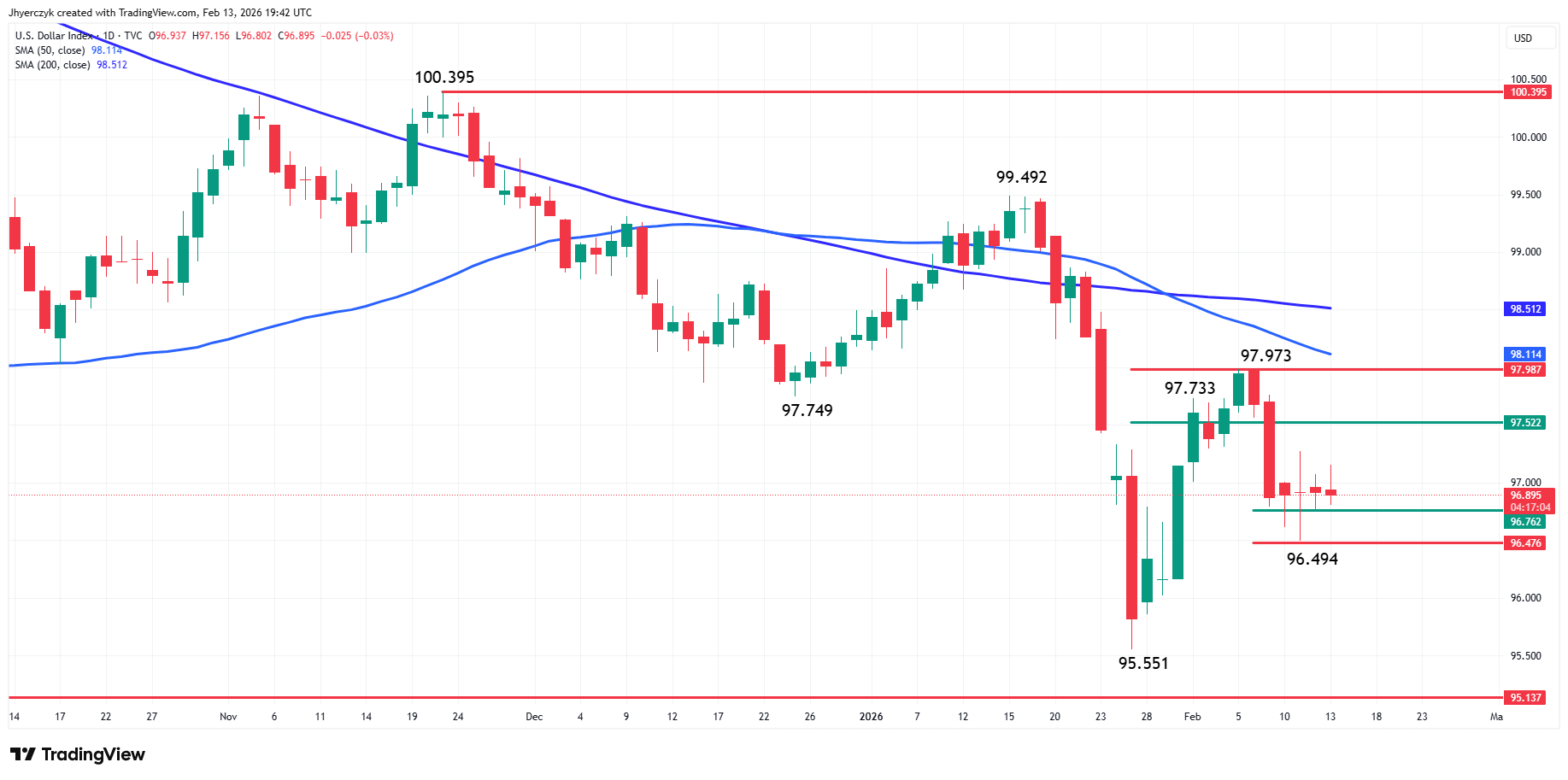
After breaking down under a 50% level at 97.522, the DXY essentially camped out slightly above a short-term retracement zone at 96.762 to 96.476. Bullish traders may try to build a support base near this zone, but the market still needs a catalyst to drive it away from this zone.
At this time last week, I was pretty sure this week’s non-farm payrolls and CPI reports would have moved the dollar index quite a bit, but it appears that the anticipation of the reports had a bigger impact than the actual numbers.
Fed Rate Cut Odds Remain Minimal
The reason for the subdued response is that the data was perceived as not strong enough to shift the Fed into not only making a rate cut sooner than expected, but even a rate cut at all.
EUR/USD Price Forecast
Every new EUR/USD analysis as it publishes, today's technical signal and key levels, live price — on one page.
See all EUR/USD forecasts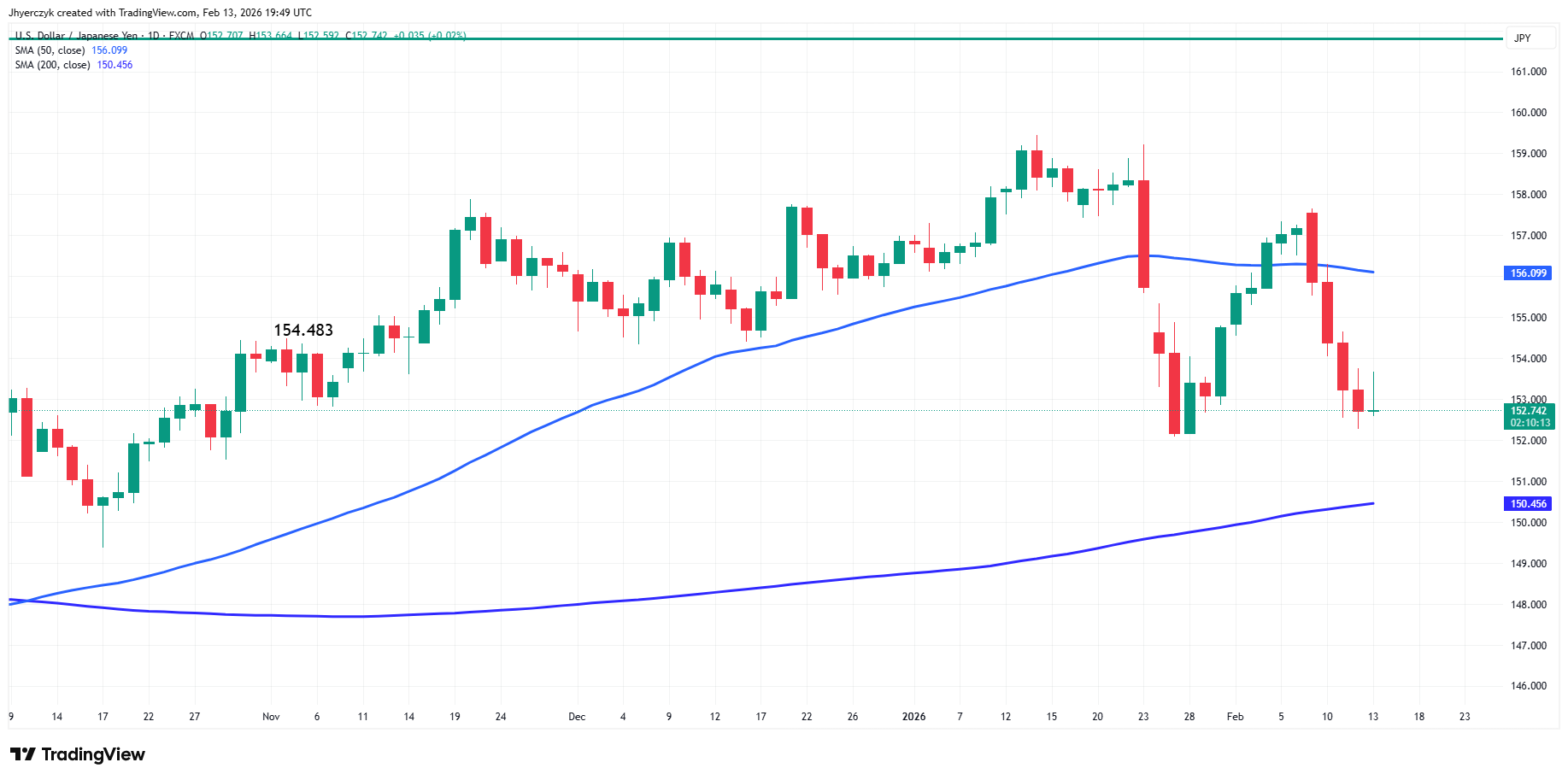
A plunge in Treasury yields and a sharp rise in the Japanese Yen may have kept a cap on any dollar rallies. But there is no real explanation as to why the dollar didn’t break down this week. It’s easy to see why the Yen rose—it was the election of Sanae Takaichi as the new Japanese Prime Minister. But the drop in Treasury yields should have paid off for dollar bears.
We’re just going to accept the fact that the dollar stabilized most of the week because of light trader positioning as they await more information on the course of the Federal Reserve. After this week’s reports, traders place almost no chance on a Fed rate cut in March and only a 50/50 chance on a June rate cut.
Warsh Appointment Looms Over June Rate Decision
It’s interesting that June appears to be the swing month because that’s the month that recently nominated Kevin Warsh takes over as the new Fed Chairman. Even though he’s a follower of President Trump, who is a major dove, I see no signs that Warsh is not going to be independent from the White House and apparently, neither do dollar traders.
Outlook: Sell the Rally Mode Continues
Looking ahead, the U.S. Dollar Index is likely to remain in “sell the rally” mode unless the DXY can recapture the 200-day moving average at 98.512.
More Information in our Economic Calendar.