


Market Overview
The broad-based US dollar started the week on a weaker note as investors seem hesitant to place any strong positions ahead of the Federal Reserve’s (Fed) upcoming policy announcement. As of now, the US Dollar Index (DXY), which measures the Greenback against six major currencies, has fallen by 0.4% to trade near 97.00 on Monday.
Global Tensions and Shifts in Safe-Haven Demand Weigh on USD
Another factor putting pressure on the US dollar is that some countries are moving away from US assets. Tense relations between the US and its allies are pushing investors to seek safer options beyond the dollar.
For example, Danish pension fund Akademiker Pension decided to sell $100 million worth of US Treasuries. Analysts say the move is mainly because of worries about the US debt situation and government finances.
Therefore, this move signals declining confidence in US assets, which could weaken the dollar over the long term, increase borrowing costs for the US, and reduce demand from global investors.
Investors Await Fed’s Policy Decision
On the domestic front, the focus remains on the Federal Reserve’s policy announcement scheduled for Wednesday. The Fed is widely expected to keep interest rates unchanged in the range of 3.50%-3.75%.
GBP/USD Price Forecast
Every new GBP/USD analysis as it publishes, today's technical signal and key levels, live price — on one page.
See all GBP/USD forecastsBesides this, investors are also monitoring US economic data, with Durable Goods Orders for November set to be released at 13:30 GMT on Monday. Thus, the strong data could support the US dollar, whereas weaker-than-expected numbers may further pressure the Greenback.
US Dollar Index Forecast: DXY Breaks Key Support as Bearish Momentum Builds
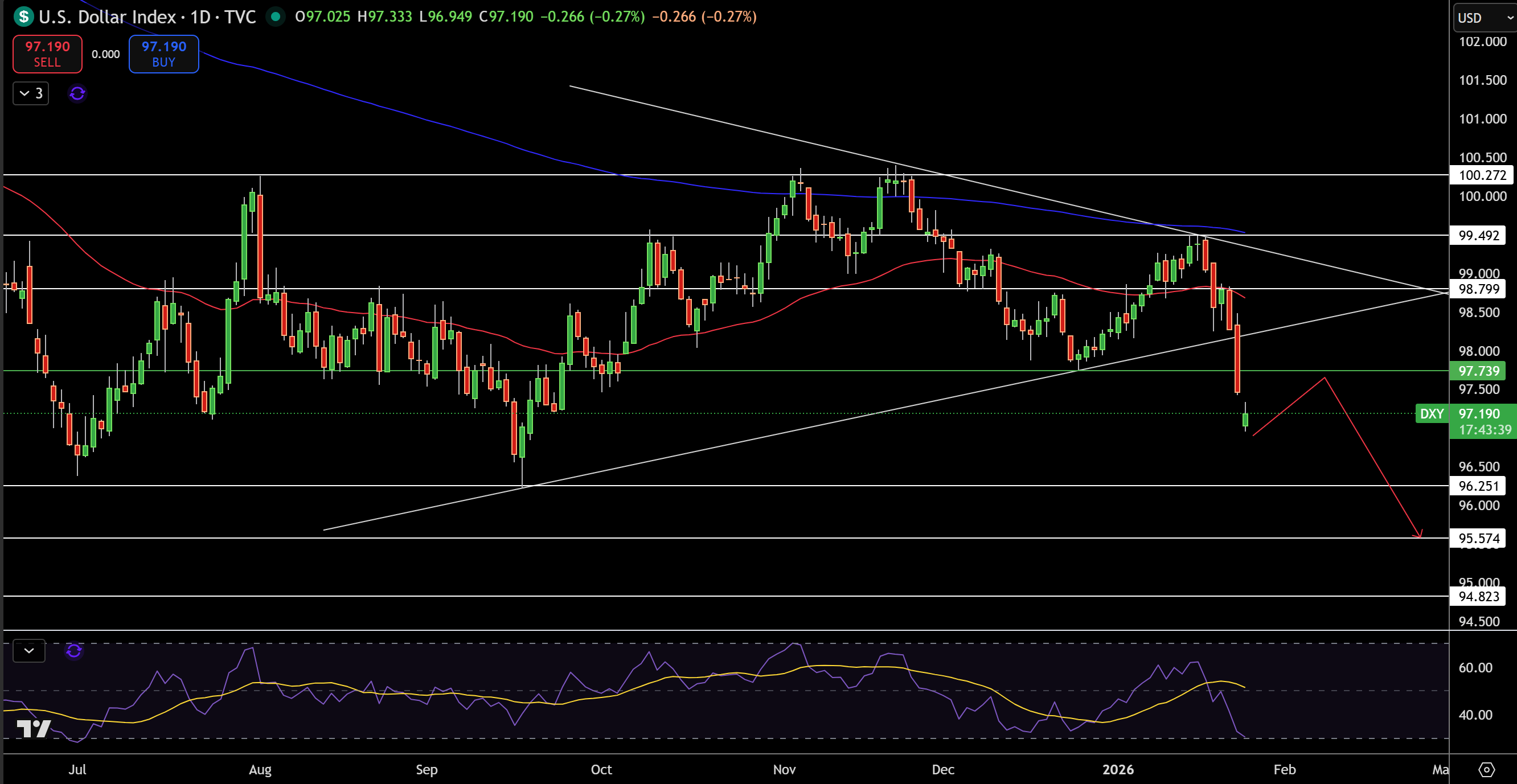
The US Dollar Index is trading near $97.20, extending losses after breaking below the lower boundary of a rising wedge on the daily chart. Price has also slipped under the $97.70–$97.80 support zone and the 50-day moving average, confirming a bearish momentum shift.
RSI is drifting toward 40, signaling weakening demand without oversold conditions. Immediate support sits at $96.25, followed by $95.60. Unless DXY reclaims $97.70, any rebound is likely corrective, keeping downside risks dominant in the near term.
GBP/USD Price Forecast: Rally Pauses Near $1.3660 as Bulls Protect Structure
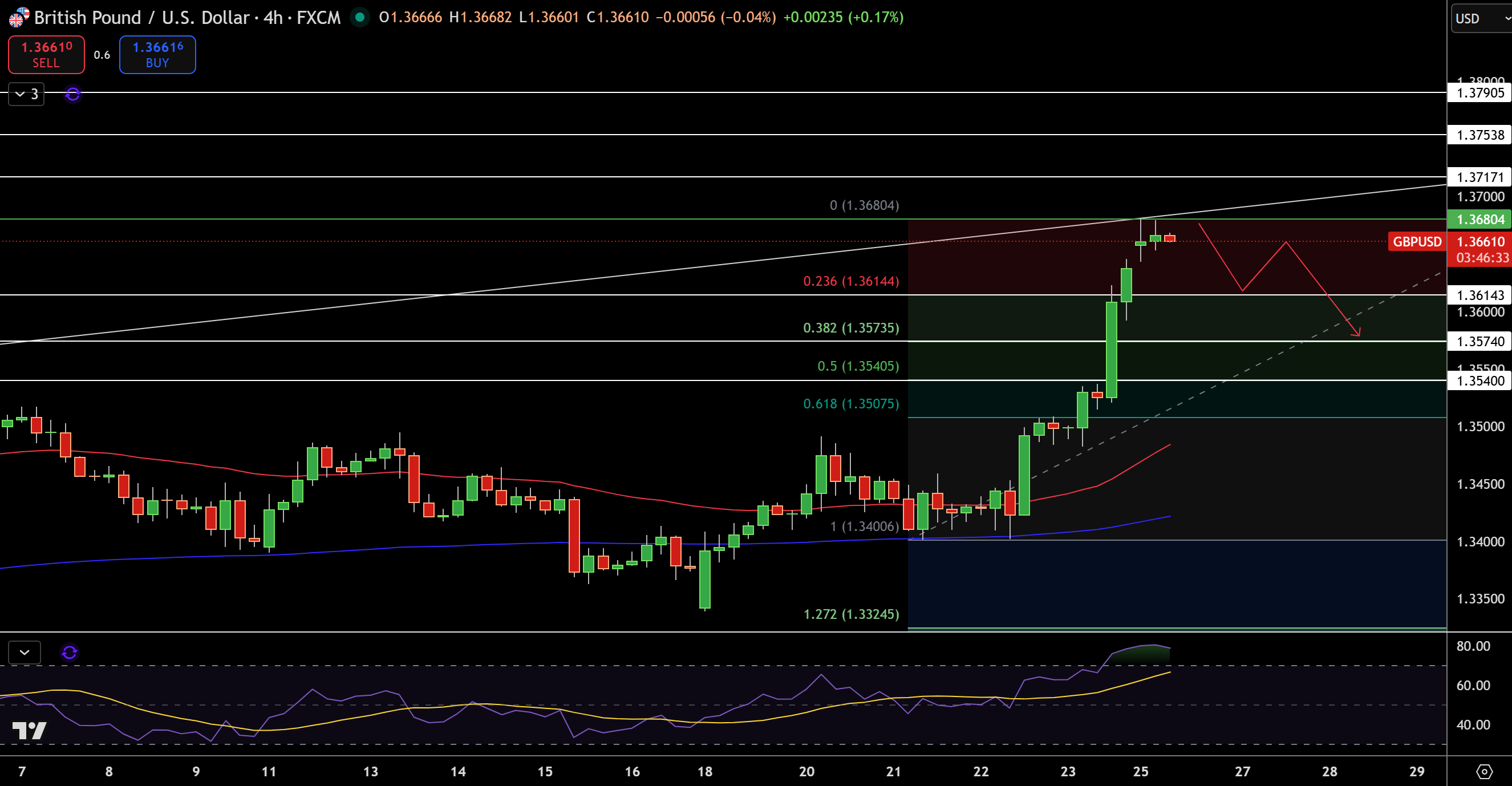
GBP/USD is trading around $1.3660, consolidating after a sharp bullish breakout that lifted price from the $1.3400 base. On the 4-hour chart, the pair remains above a rising trendline and well above its key moving averages, keeping the broader structure constructive despite near-term hesitation. Recent candles near $1.3660–$1.3680 show smaller bodies with upper wicks, signaling profit-taking rather than aggressive selling.
Fibonacci retracement of the $1.3400–$1.3680 rally highlights first support at $1.3615 (0.236), followed by $1.3573 (0.382) and $1.3540 (0.5). The $1.3507 (0.618) level aligns with trendline support, making it a critical zone for maintaining bullish momentum. RSI has eased slightly from overbought levels but remains near 65, consistent with a healthy pause.
Trade idea: Buy pullbacks near $1.3580, target $1.3720, stop below $1.3500.
EUR/USD Price Forecast: Rally Pauses Near $1.1860 as Key Fib Support Comes Into Focus
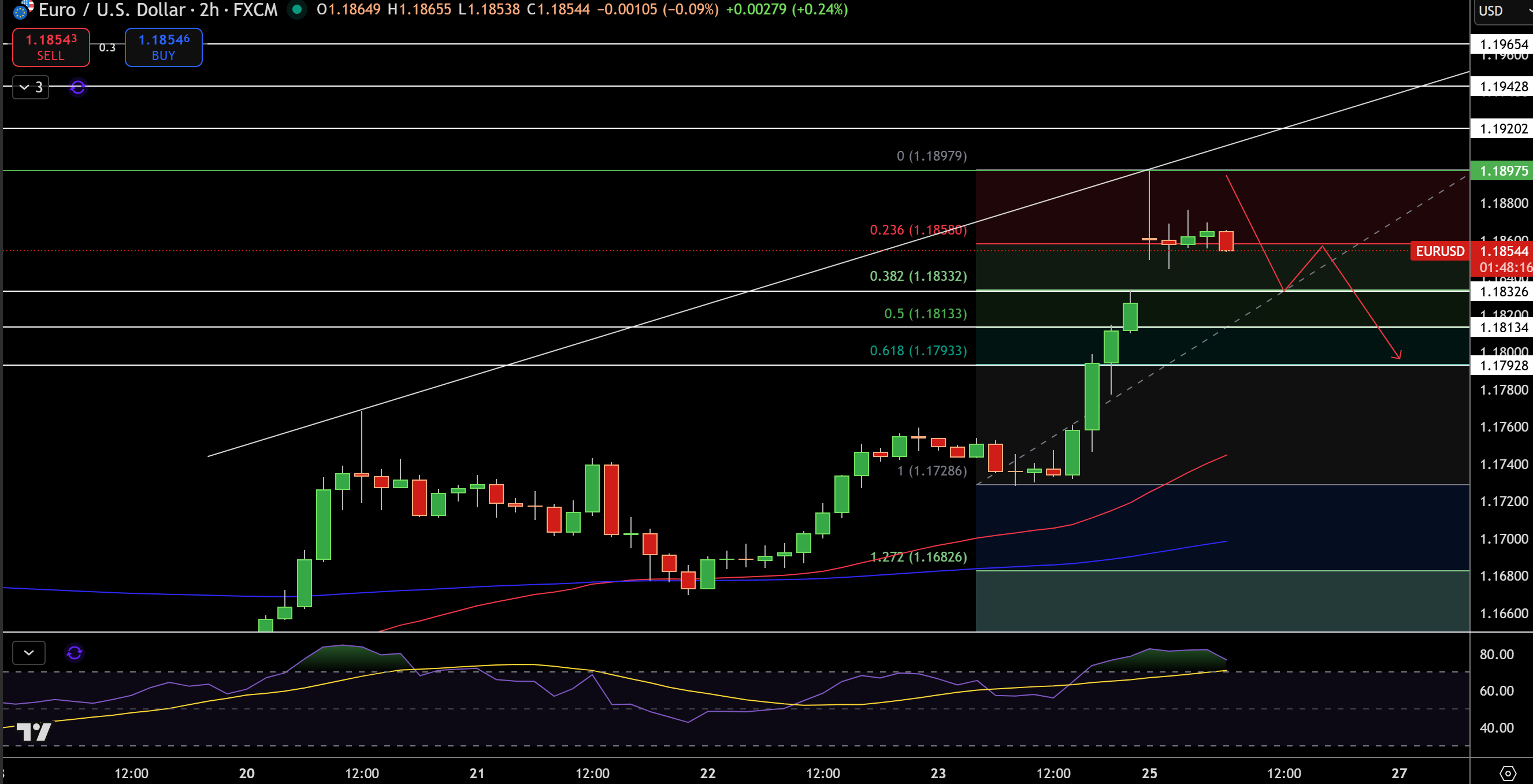
EUR/USD is trading near $1.1854, consolidating after a sharp upside move that stalled just below the $1.1895–$1.1900 resistance zone. On the 2-hour chart, price remains above a rising trendline from the mid-January lows, keeping the broader structure constructive despite near-term hesitation. Recent candles around $1.1860 show small real bodies with upper wicks, pointing to profit-taking rather than a decisive reversal.
Fibonacci retracement of the $1.1729–$1.1898 rally places first support at $1.1850 (0.236), followed by $1.1833 (0.382) and $1.1813 (0.5). A deeper pullback could test $1.1793 (0.618), where trendline support also converges. RSI has eased toward 60, cooling from overbought levels while staying positive.
Trade idea: Buy dips near $1.1830, target $1.1900, stop below $1.1790.