


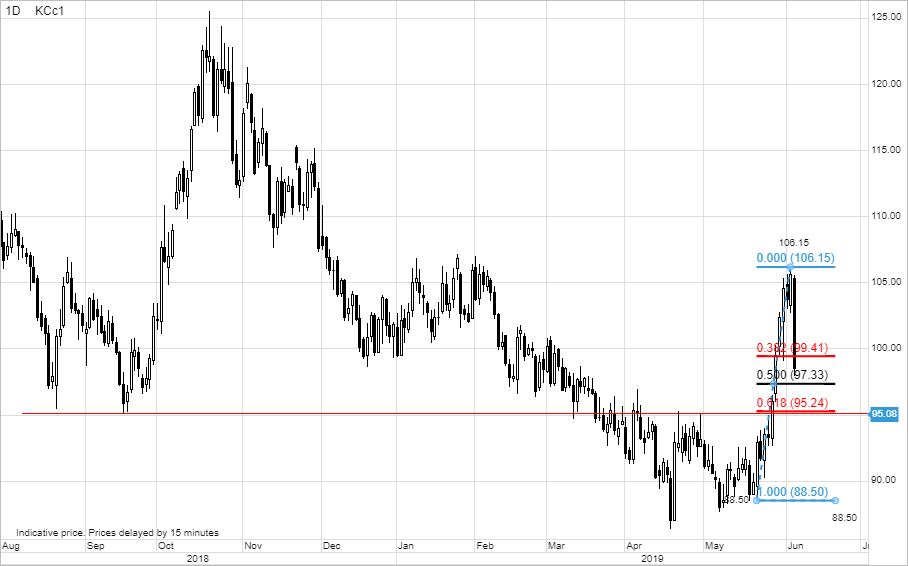
The fragile state of the coffee market was once again put on display yesterday when Arabica coffee futures in New York dropped by 7.3%, their worst one-day drop since 2010.
The ugly and at times disorderly sell-off came after the market had rallied by 19% since mid-May. The initial rally last month was led by frost fears and a stronger Brazilian real; these developments helped trigger short-covering from hedge funds while also attracting renewed buying from traders looking for the price of beans to bounce from the 2005 low.
A few potential reasons behind yesterday’s move:
• A retreat in the frost fears which helped push the recent recovery to a three-month high.
• A weaker Brazilian real in response to reports that President Bolsenaro’s administration is considering ways to relax a government spending cap. The cap is key to investor confidence given Brazil’s large budget deficit and uncertainties over pension reform.
• The prospect of Brazil reaping another large harvest in 2020, which is the “on” year in its biennial cycle.
• The International Coffee Organization cautioned Tuesday that the ongoing Brazilian harvest “confirmed its expectation that coffee production in the current 2018-19 season will exceed demand” for a second successive season.
• The contango remains elevated in the futures market with the one-year spread giving short sellers a return of close to 14%. As long as the shape of the curve continues to favour short-sellers, the upside is likely to be limited to periods of short-covering like the one just witnessed.
The key area of support (former resistance) is once again 95 cents/lb but so far the market has managed to hold above 97.33 cents/lb, the 50% correction of the recent run-up in prices.
This article is provided by Saxo Capital Markets (Australia) Pty. Ltd, part of Saxo Bank Group through RSS feeds on FX Empire.