
US stock futures edged higher in early Asian trading on Tuesday, December 16, as the broader Asian equity markets moved lower. Stronger-than-expected Japanese private sector PMI data supported a more hawkish Bank of Japan rate path, strengthening the yen.
Expectations of a BoJ rate hike on Friday, December 19, sent 10-year Japanese Government Bond (JGB) yields to a morning high of 1.964% before easing back. Despite pulling back, 10-year JGB yields remained elevated, capping gains for US equity futures, while weighing on broader market sentiment.
While concerns over a Bank of Japan rate hike and policy outlook linger, the short- to medium-term outlook remains bullish for US stock futures. A resilient US economy and hopes for a March Fed rate cut provided early price support.
Below, I’ll outline the key market drivers, the medium-term outlook, and the key technical levels traders should watch.

Japanese PMIs Send Hawkish BoJ Signals
On Tuesday, December 16, Japanese private sector PMI data faced scrutiny ahead of Friday’s BoJ monetary policy decision. The S&P Global Manufacturing PMI increased from 48.7 in November to 49.7 in December, while the Services PMI slipped to 52.5 (Nov: 53.2). The December survey revealed some crucial trends, including:
- New order growth rose at the fastest pace since August.
- Manufacturers reported a drop in external demand, though overall demand for goods fell at the slowest pace in 18 months.
- Firms increased staffing levels due to stronger overall demand.
- Inflationary pressures intensified, with rates of charge inflation higher across the private sector.
A resilient services sector, a less marked contraction across the manufacturing sector, and rising prices supported bets on a Friday BoJ rate hike. Notably, USD/JPY fell 0.22% to 154.871 in morning trading. The stronger yen sent the Nikkei 225 down 1.28%.
Dow Jones Price Forecast
Every new Dow Jones analysis as it publishes, today's technical signal and key levels, live price — on one page.
See all Dow Jones forecasts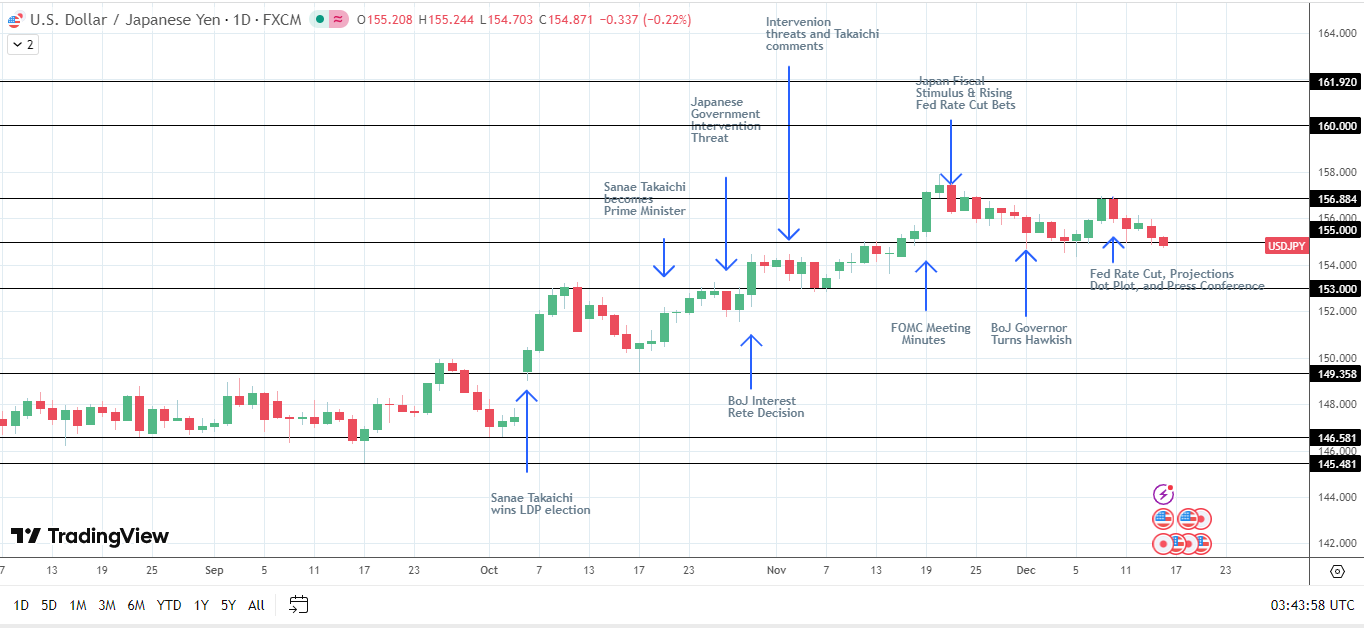
US Jobs Report in Focus
US futures advanced on Tuesday, December 16, bucking the broader Asian market trend. The Dow Jones E-mini gained 241 points, the Nasdaq 100 E-mini climbed 52 points, while the S&P 500 E-mini advanced 24 points.
Later on Tuesday, the highly anticipated US jobs report will take center stage. October and November’s data will draw significant interest given last week’s Fed rate cut and dot plot, which signaled one rate cut in 2026. Softer wage growth, a lower-than-expected increase in nonfarm payrolls, and rising unemployment would raise bets on a March Fed rate cut and lift sentiment.
A more dovish Fed rate path would support the bullish short- to medium-term outlook for US index futures.
According to the CME FedWatch Tool, the probability of a March Fed rate cut increased from 49.5% on Friday, December 12, to 51.7% on December 15. The increase came despite the Fed signaling a single rate cut in 2026.
Key Technical Levels for Dow Jones, Nasdaq 100, and S&P 500
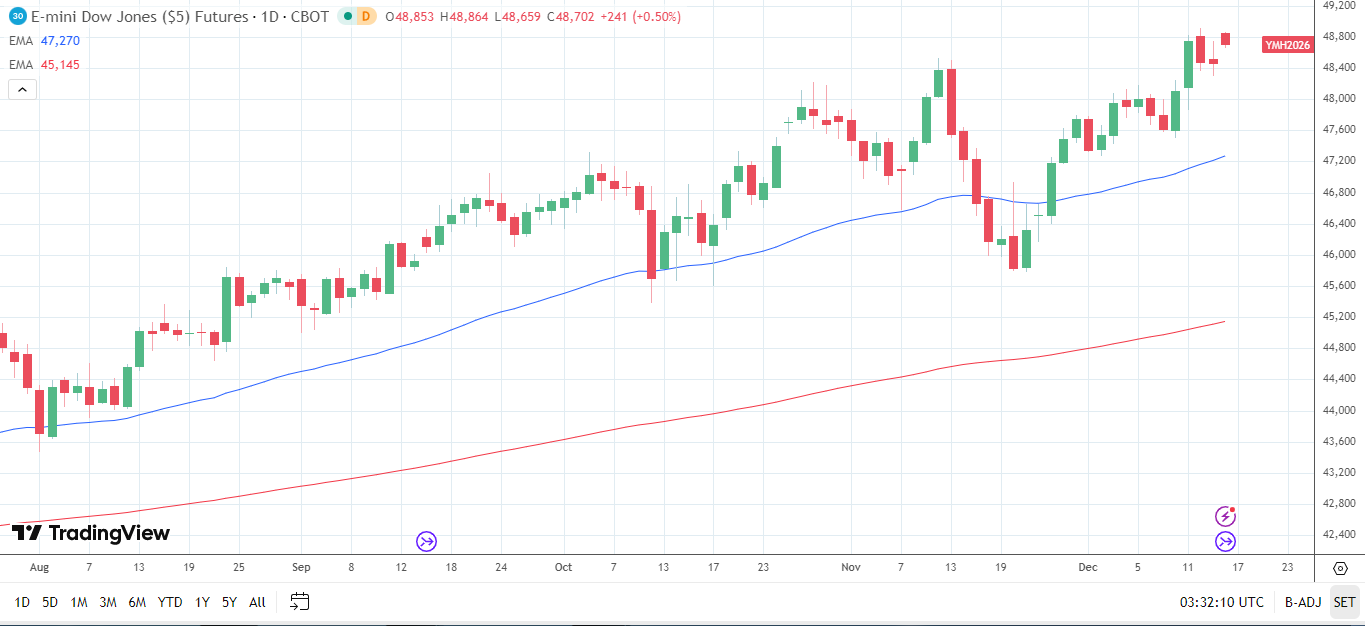
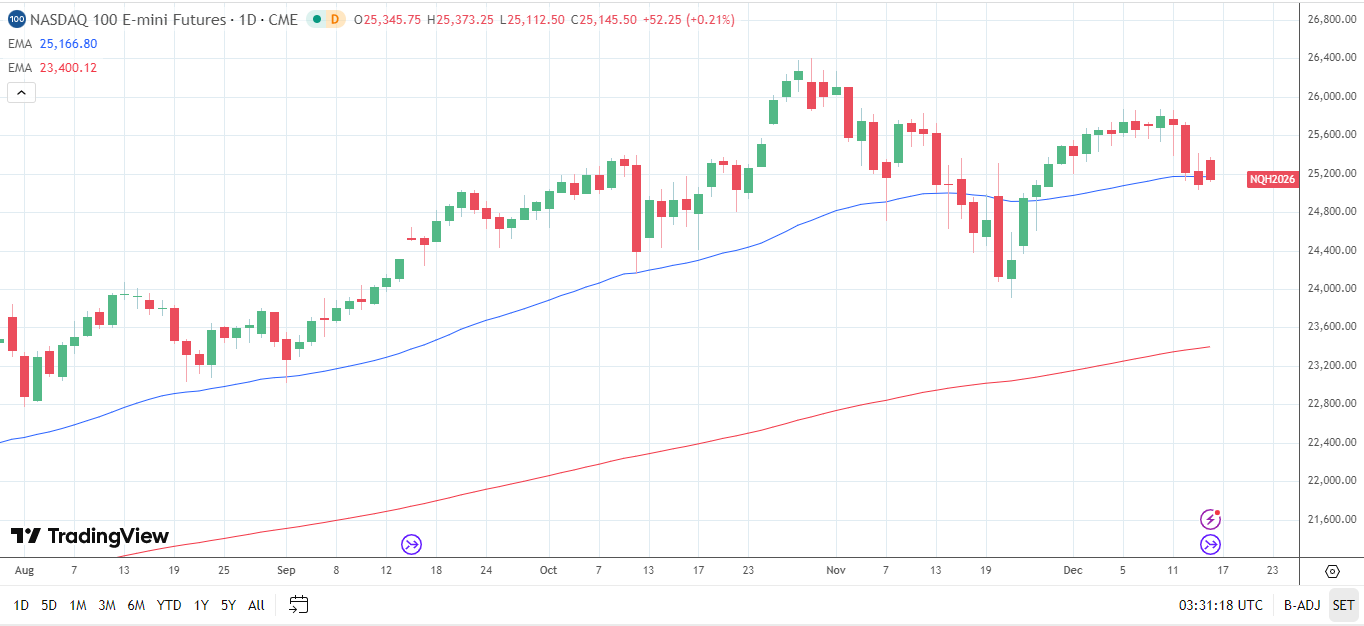
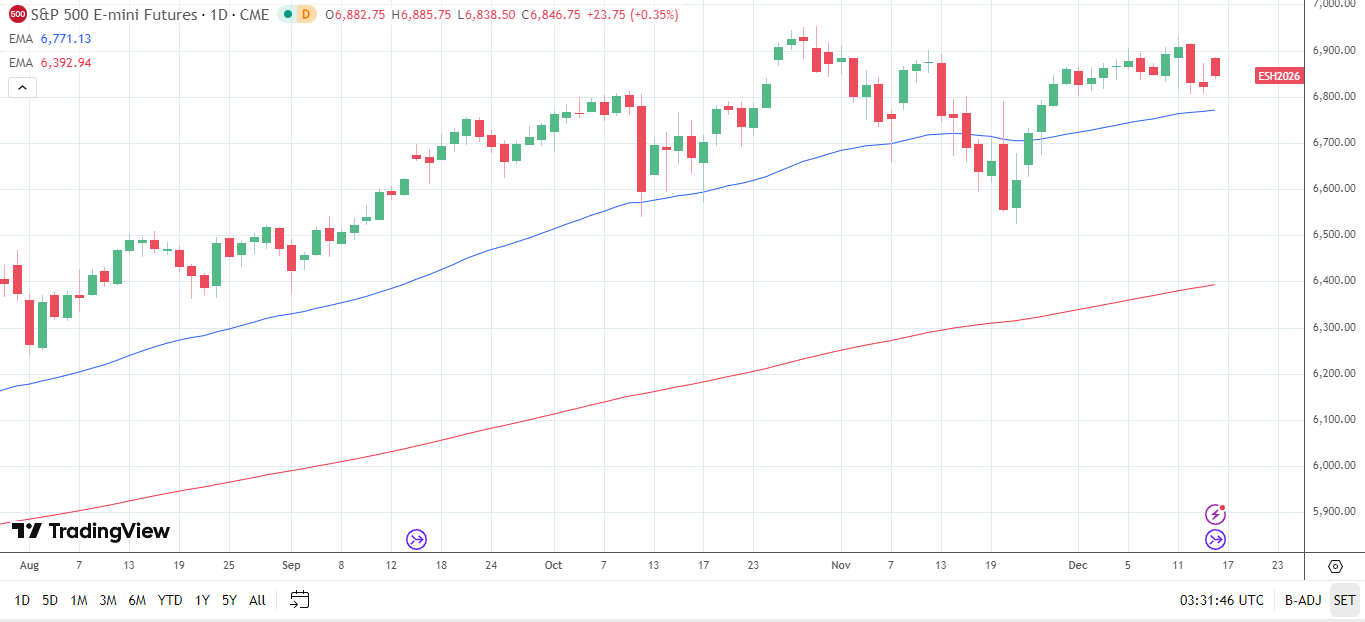
Following the morning gains, the Dow Jones E-mini, the Nasdaq 100 E-mini, and the S&P 500 E-mini traded above their 50-day and 200-day EMAs, indicating a bullish bias.
Near-term trends will depend on JGB yields, USD/JPY trends, US jobs and inflation data, and the BoJ monetary policy decision and forward guidance. Key levels to monitor include:
Dow Jones
- Resistance: the December 12 record high of 48,917, and then 49,000.
- Support: 48,750, 48,000, 47,500, and then the 50-day EMA (47,270).
Nasdaq 100
- Resistance: 25,500, 25,750, 26,000, and then the October 30 record high of 26,399.
- Support: the 50-day EMA (25,167), 24,500, and then 24,000.
S&P 500
- Resistance: the October 30 record high of 6,954, and then 7,000.
- Support: the 50-day EMA (6,771), 6,500, and then 6,250.
Short-Term and Medium-Term Outlooks Hinge on US Data and BoJ
In my opinion, the short- to medium-term outlook remains bullish amid rising bets on a March Fed rate cut. Despite concerns about a BoJ rate hike and a yen carry trade unwind, US-Japan rate differentials remain attractive, albeit less profitable, easing fears of market disruption.
However, several scenarios would likely derail the bullish short- and medium-term outlook, including:
- Bank of Japan announces a 2% neutral rate, sharply narrowing the US-Japan rate differential.
- Hawkish Fed chatter, supporting one 2026 rate cut.
- US jobs and inflation data temper bets on a March Fed rate cut.
Conclusion: Outlook Bullish
In summary, softer US jobs and inflation data would boost bets on a March Fed rate cut, increasing demand for US equity futures.
However, traders should closely monitor BoJ rhetoric, JGB yields, the USD/JPY, and the Nikkei 225. Their trends are potential warning signals for a yen carry trade unwind.
Key levels would include a USD/JPY drop to 150 and 10-year JGBs at 2%, an important level to watch. These levels would likely trigger a sharper Nikkei 225 sell-off, weighing on broader risk sentiment.
Despite 10-year JGB yields easing back from last week’s 18-year high, yields remain elevated. Elevated 10-year JGB yields, a weaker USD/JPY, and a falling Nikkei expose US stock futures to yen carry trade unwind risks.
Follow our live coverage and consult the economic calendar for real-time market updates.