Over the past month, Crude Oil prices have turned explosive, delivering some of the largest daily and weekly moves seen in years – sending an unmistakable message across global markets: this is not a routine Commodity rally. It is a structural energy squeeze and it is rapidly emerging as one of the defining macro opportunities of 2026.
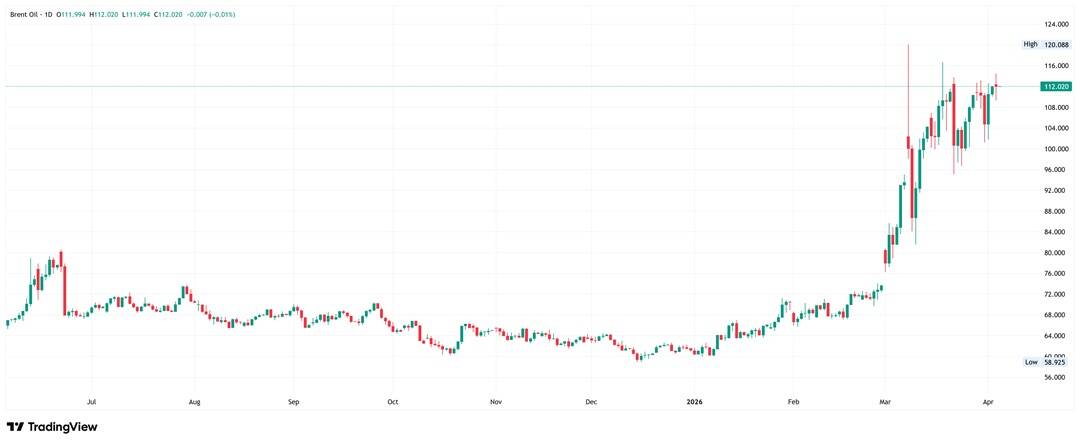
The old framework is breaking down. The era of sub-$100 Oil is being challenged by a more powerful reality: structural scarcity, geopolitical disruption and a market forced to revalue the true price of secure energy supply. What the world is witnessing is not merely volatility. It is a reset in the Oil market’s baseline.

$100 Is Starting to Look Like the New Floor
For years, $100 Oil was treated as an extreme. In 2026, it is increasingly being treated as the starting point for a new pricing regime.
The current crisis has shattered the illusion that global energy flows are a guaranteed right of the modern economy. The market has moved from managed volatility into a new era of scarcity and geopolitical realignment. With $100 Oil beginning to serve as the floor rather than the ceiling, the global supply chain is being fundamentally rewritten.
That shift matters because it changes the entire trading equation. When the market starts accepting triple-digit Oil as normal rather than exceptional, the upside mathematics change with it. Pullbacks become shallower, momentum becomes more aggressive and breakouts carry further.
“The market is undergoing a structural repricing of energy risk,” says Lars Hansen, Head of Research at The Gold & Silver Club. “When supply security is no longer guaranteed, Oil begins trading at an entirely different premium.”
Brent Oil Price Forecast
Every new Brent Oil analysis as it publishes, today's technical signal and key levels, live price — on one page.
See all Brent Oil forecastsThe Case for Higher Oil Prices Is Becoming Impossible to Ignore
The argument for $100 as a new floor is rational. Conflict in the Middle East has disrupted critical flows and raised the risk premium across the energy complex.
Attacks on tankers and disruption around the Strait of Hormuz have underlined how fragile the global supply chain has become. Even if the conflict cools, damage to infrastructure and confidence may last for months, if not years.
At the same time, there has been no meaningful production surge capable of offsetting the pressure.
Despite Oil trading above $100, U.S shale producers have remained restrained, prioritising capital discipline and shareholder returns over aggressive expansion. In previous cycles, rising U.S output often acted as the release valve. In this cycle, that response looks slower and far less reliable.
“The most powerful rallies happen when demand for supply security rises faster than the market’s ability to create new barrels,” Hansen says. “That is the exact environment Oil is moving into now.”
The ‘Sell America’ Trade Adds a New Layer
There is another reason this move looks deeper and more durable. For decades, America underwrote stability in the Middle East while Gulf States recycled Oil revenues into U.S Treasuries. That petrodollar loop helped subsidise U.S borrowing costs and reinforced the dollar’s reserve status. Now, it is beginning to fracture.
Oil-importing nations facing surging dollar-priced Crude and weakening currencies have been forced to sell Treasuries to access dollars and defend exchange rates. At the same time, Gulf producers are no longer able to recycle revenues as smoothly as before because export routes are disrupted and regional infrastructure is under strain. The old circularity is breaking at both ends.
That matters because it signals something much larger than an Oil spike. It suggests the world is moving into a more fragmented, more inflation-prone macro regime in which hard assets command structurally higher premiums.
Oil Has Entered a Critical Zone
The technical backdrop only strengthens the case. WTI Crude’s 12-month rate of change (ROC) has surged above 91%. Historically, when Oil’s annual rate of change has approached or exceeded 100%, it has coincided with major periods of market stress. That does not weaken the bullish Oil thesis. It reinforces Oil’s role as the dominant macro signal.
“This is not just another rally,” Hansen says. “This is the kind of structural move traders wait years for. If $100 becomes the accepted floor, the upside potential from there could be extraordinary.”
That is why this moment matters now. If the market is correct, and $100 is indeed the new floor for Oil prices, then Oil is no longer merely a Commodity trade. It is becoming one of the greatest wealth creation opportunities of 2026.