The atmosphere in the financial markets is remarkably heavy and nervous. With the Strait of Hormuz effectively closed and domestic energy prices near multi-year highs, the Fed’s priority is clear: inflation control. Investors should prepare for a Fed that is more concerned with price stability than with the demands of the stock market. In this article, we’ll examine key factors that make this meeting one of the most critical in recent memory.
The Inflation Problem Just Got Worse
The Fed’s primary concern remains the stubborn nature of U.S. inflation. We are now five years into an inflation cycle once called ‘transitory’ but proven anything but. Despite the most high-paced rate-hiking cycle in a generation—525 basis points (bps) in just 16 months, from March 2022 to July 2023—the Personal Consumption Expenditures (PCE) Price Index, the Fed’s favourite measure of inflation, remains stuck nearly a full percentage point above the Fed’s 2% target.
Recent geopolitical events have only added fuel to this fire. The outbreak of hostilities between the U.S., Israel, and Iran on 28 February has sent oil prices surging more than 40% year-over-year, above $100 a barrel. The conflict has disrupted about one-fifth of world’s oil supply and pushed U.S. gasoline prices up by roughly 18–25 per cent since late February. This energy shock acts like a hidden tax on consumers, complicating the Fed’s job immensely. March Consumer Price Index (CPI) is likely to show a clear reacceleration in inflation. I expect monthly energy inflation of above 5% in March.
Before the recent tensions, many central banks were cutting rates. Now, interest-rate futures suggest the European Central Bank could raise rates, while Reserve Bank of Australia has already tightened policy. As a result, markets have pushed back expected US rate cuts to September and reduced the total easing for the year from 50 bps to only 25 bps.
Energy is your hidden ingredient in the price tag of almost everything. Since businesses usually pass those extra costs down to consumers rather than eating the loss, a spike at the pump quickly turns into a price hike across your entire shopping cart. The Fed cannot ignore the conflict in the Persian Gulf. To cut rates now would be to risk letting the inflation fire burn out of control again.
Crude Oil Prices, U.S. Inflation and Interest Rates
AUD/USD Price Forecast
Every new AUD/USD analysis as it publishes, today's technical signal and key levels, live price — on one page.
See all AUD/USD forecasts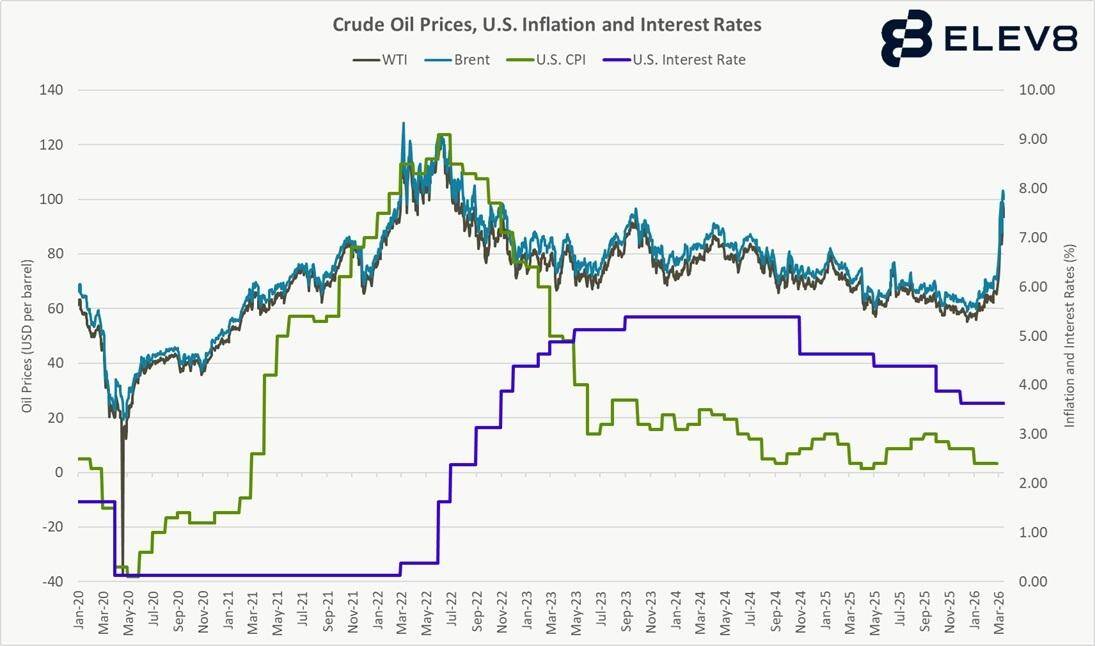
What Is at Stake?
Investors and traders will watch three main things. First, the updated Summary of Economic Projections and the dot plot will show whether the Fed still expects any rate cuts this year. Only two members need to revise their forecasts upward to remove that cut completely. Second, the FOMC statement and Chair Jerome Powell’s press conference will reveal whether officials see the oil shock as transitory or more persistent. Third, revisions to GDP and unemployment forecasts will signal if the Fed believes growth is starting to weaken under higher prices. Recent data already show a loss of 92,000 jobs in February and concerns about tighter credit conditions.
The hard landing that economists feared in 2023 didn’t happen, but the risks are reappearing. The economy doesn’t necessarily need tight policy to slide into recession—even a reduction in monetary easing might be the tipping point.
Investors are also closely watching the leadership transition. With Chair Jerome Powell’s term ending in May and the Trump-nominated Kevin Warsh waiting in the wings, there is a growing sense of uncertainty. The market hates uncertainty, and the internal dissent within the FOMC—where members are increasingly split on the next move—is making the Fed look like a liability to stock market valuations.
While a Reuters poll shows many economists still expect a rate cut in June, I believe this is increasingly unlikely. The data simply does not support a loosening of policy. The U.S. economy is still expanding at a rate of 2.1% to 2.5%, which is faster than the ‘non-inflationary’ speed the Fed prefers.
I expect the Fed to hold rates steady at 3.50%–3.75% this week. I also expect the dot plot (the Fed’s forecast of future rates) to show a more hawkish tone, perhaps signalling that rates will stay higher for longer, well into the second half of the year.
Impact on Gold and the U.S. Dollar
For traders, the 18 March decision will create significant volatility in two key assets: gold and the greenback.
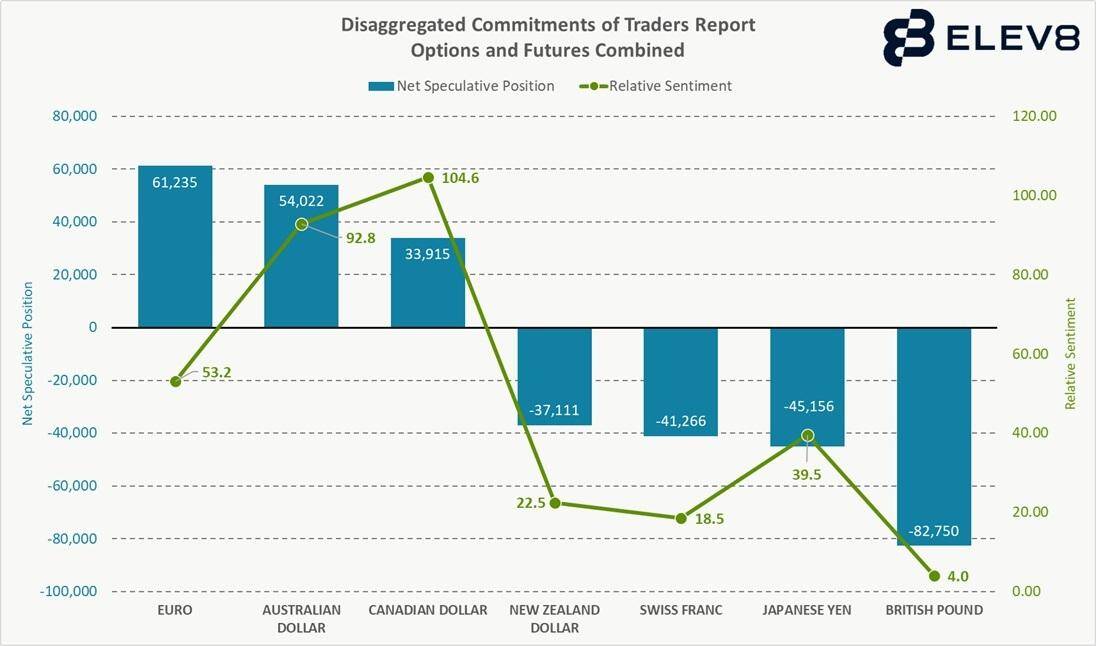
If the Fed remains firm and signals no hurry to cut rates, the Dollar Index (DXY) is poised for further gains. Elevated yields would likely drive the currency higher against its major counterparts. AUDUSD is particularly vulnerable to a correction: with the Aussie appearing technically overbought (see the chart below), a retracement toward 0.6950 is on the cards. Meanwhile, USDJPY may finally gather enough momentum to break above the psychological 160.00 threshold.
Should the Fed signal a dovish stance (which is relatively less likely), the British pound is the most likely candidate for a big move higher, as it is very oversold (see the chart below).
Traders’ positioning (CFTC COT report)
Gold, on the other hand, may face short-term downward pressure from the stronger dollar and higher real yields. At the same time, ongoing geopolitical risks and gold’s inflation-hedge role could limit losses and create volatility. $4,900 looks like a strong support for now.
Conclusion
Overall, the March FOMC meeting will not change the current rate but will give important clues about the path ahead. With oil prices high and inflation concerns returning, markets must adjust to the possibility of fewer cuts than previously thought. You should stay alert to the dot plot and Powell’s comments, as these will shape trading decisions across currencies, commodities, and equities over the coming weeks.
The market may be hoping for a sign of relief, but the Fed is looking at the geopolitical map. I expect a ‘hawkish hold’ that will provide a strong tailwind for the U.S. Dollar while putting the brakes on the recent rally in stocks.
Disclaimer: This article does not contain or constitute investment advice or recommendations and does not consider your investment objectives, financial situation, or needs. Any actions taken based on this content are at your sole discretion and risk—Elev8 does not accept any liability for any resulting losses or consequences.
Elev8 is a global broker that takes trading to a new level. Elev8 provides traders with an ecosystem designed to meet their needs, featuring a wide range of instruments, analytical and educational tools, integrated AI solutions, and responsive customer support. As a socially responsible broker, Elev8 funds various charitable projects and humanitarian efforts worldwide.