XRP (XRP) has traded within a $2.00–$3.50 range for more than a year, but the prolonged consolidation increasingly resembles accumulation rather than indecision.
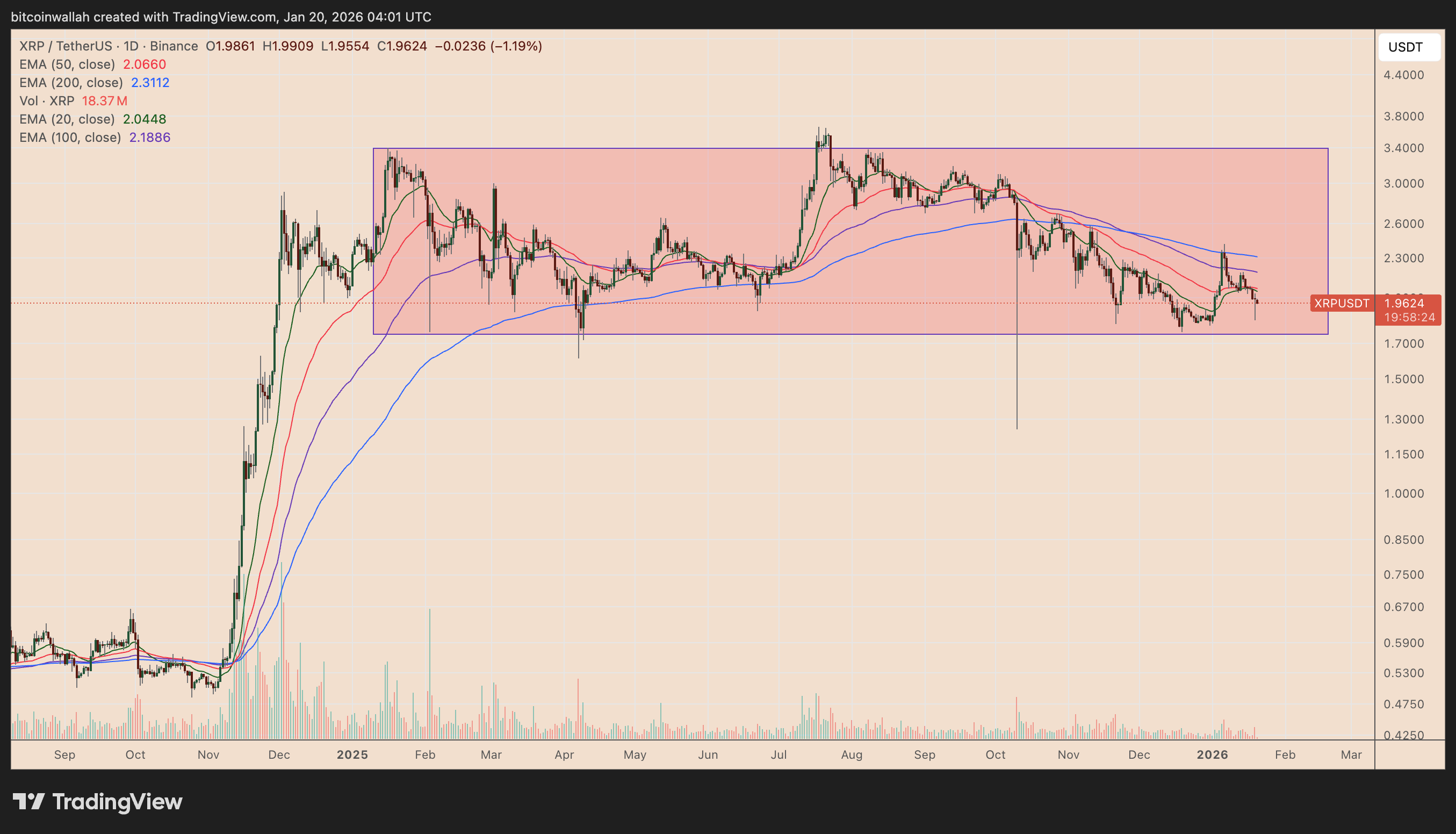
The range followed a sharp 550% rally in late 2024, after which momentum cooled as markets digested the move.
XRP’s price structure still shares similarities with its 2021 bearish phase, but the backdrop is materially different. The launch of US-listed exchange-traded funds (ETFs) and improving institutional access have shifted the balance of risks in favor of upside resolution.
In my view, the current range continues to offer tactical opportunities near support and resistance, but the broader setup remains skewed toward bulls as macro and structural tailwinds build.
This article examines the macro backdrop, key technical levels, and scenarios shaping XRP’s outlook for the year ahead.

Key Points
- XRP’s $2.00–$3.66 consolidation increasingly resembles accumulation rather than distribution.
- Easing Fed policy, rising debt pressures, and XRP ETFs have improved XRP’s institutional backdrop.
- A breakout above $3.66 would validate a bull-flag structure targeting ~$14.59 in 2026.
- Failure to hold range support risks a bearish move toward the $1.41 area.
Macro Drivers Behind XRP’s Bullish Outlook For 2026
XRP’s sideways price action over the past year reflects a market transitioning toward strength, with macro and structural tailwinds gradually shifting risk to the upside.
Fed Policy and the Liquidity Backdrop
US monetary policy has turned meaningfully more supportive compared with prior crypto-cycle peaks.
Ripple Price Forecast
Every new Ripple analysis as it publishes, today's technical signal and key levels, live price — on one page.
See all Ripple forecastsThe Federal Reserve delivered three interest-rate cuts in 2025, and futures markets are pricing in the possibility of up to two additional cuts in 2026, according to CME data.
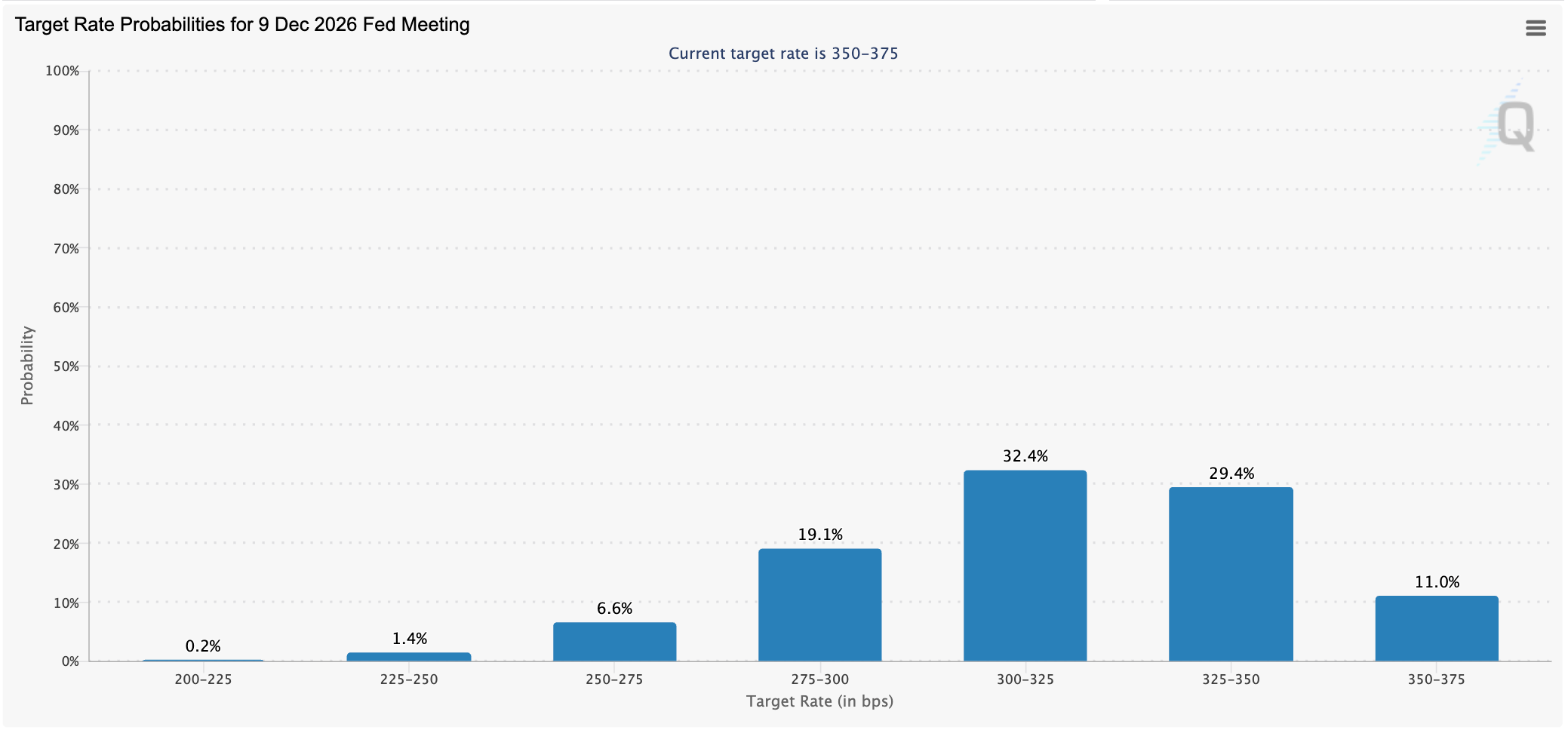
This backdrop contrasts sharply with 2018 and 2022, when rising rates tightened liquidity and pressured digital asset prices. In 2026, policy expectations point to stable-to-easier financial conditions, reducing downside risk for large-cap cryptocurrencies, including XRP.
US Debt Pressures Support Crypto
Elevated US government debt and long-term fiscal imbalances continue to weaken confidence in fiat currencies, reinforcing demand for alternative assets.
Persistent deficits increase incentives for policymakers to keep rates lower for longer, tolerate higher inflation, or rely on financial repression.
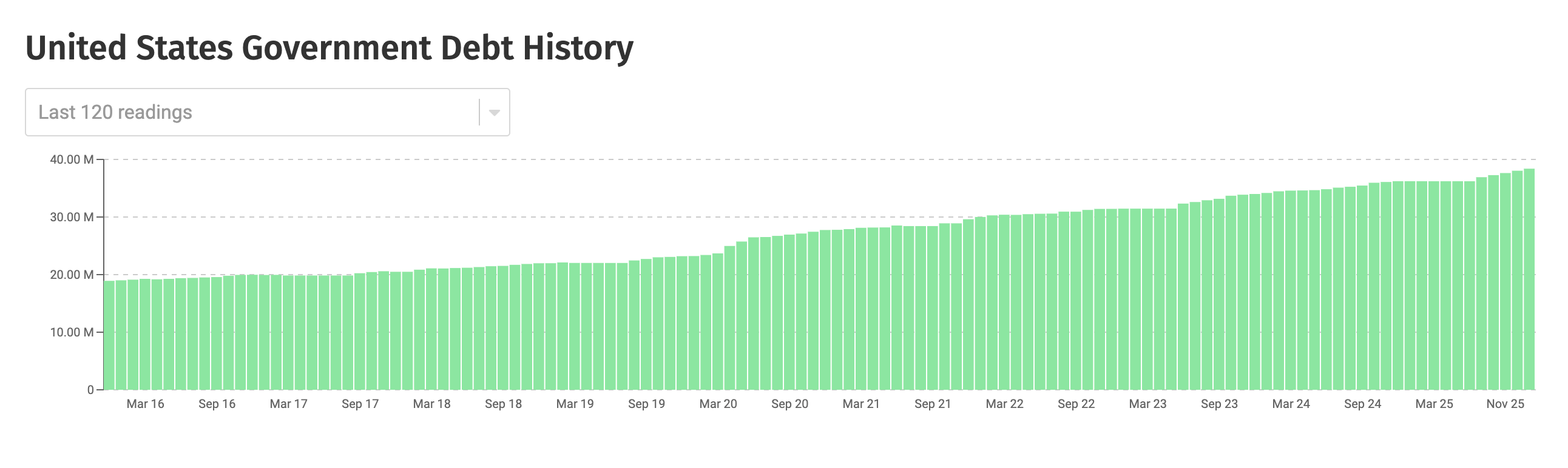
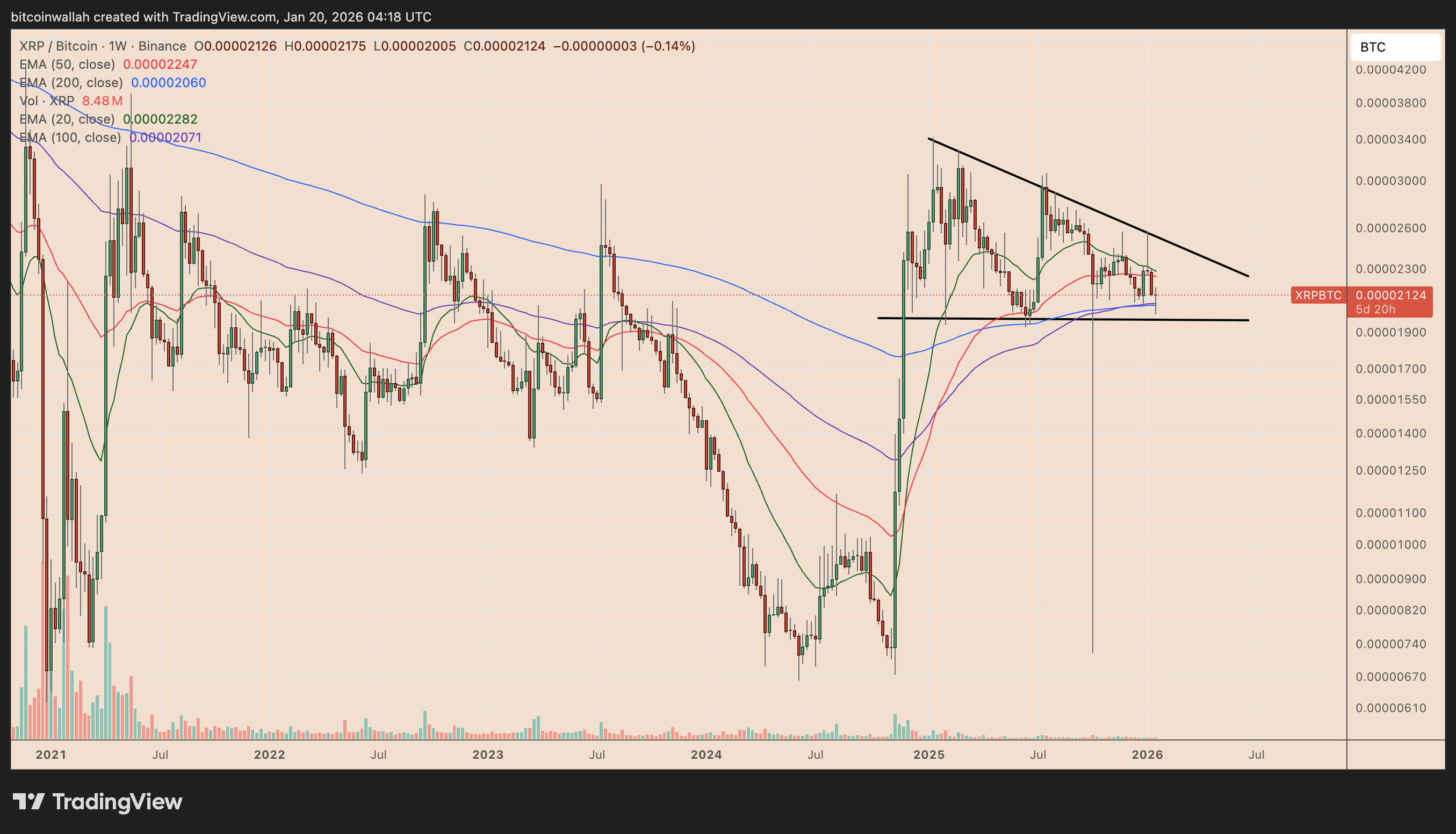
As a result, macro conditions may help defend XRP’s downside near range support, but they have yet to provide a catalyst strong enough to break resistance convincingly.
XRP ETFs Add Institutional Credibility
The launch of US-listed XRP ETFs in November 2025 has materially improved XRP’s institutional standing.
Since then, these funds have collectively amassed over $1.52 billion worth of assets, higher than their altcoin peers launched in the same month, including Dogecoin (DOGE) and Solana (SOL).
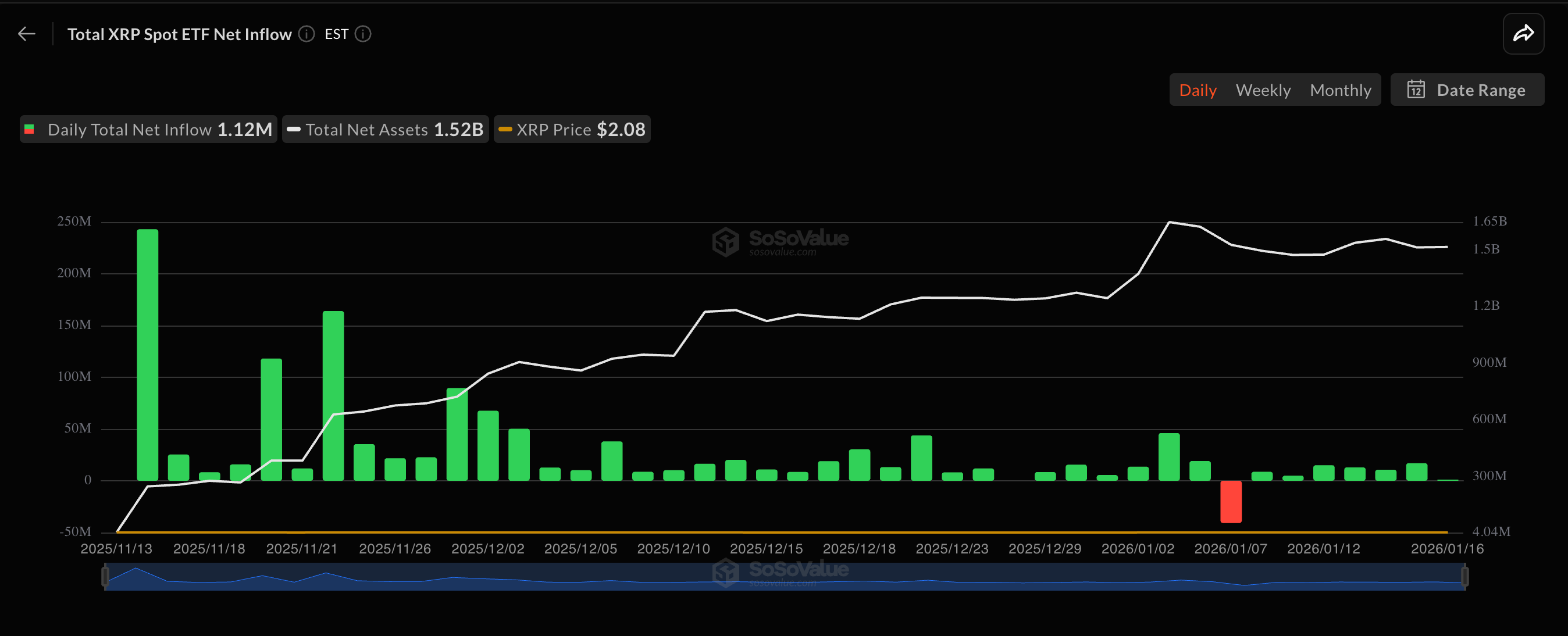
In my opinion, ETFs have strengthened demand for XRP near its $2 range low. Unlike Bitcoin, where ETFs altered market structure by consistently tightening supply, XRP ETF activity has so far reinforced balance.
Until ETF inflows become persistent and materially directional, they are more likely to support range trading than trigger a sustained breakout.
XRPL Activity Supports XRP Utility
Rising usage of the XRP Ledger (XRPL) continues to underpin XRP’s long-term utility narrative, particularly in payments, tokenization, and settlement-focused applications.
The total value locked across the XRPL reached $213.345 million at 2025’s close, up from just $5 million a year before that, according to data resource RWA.XYZ.
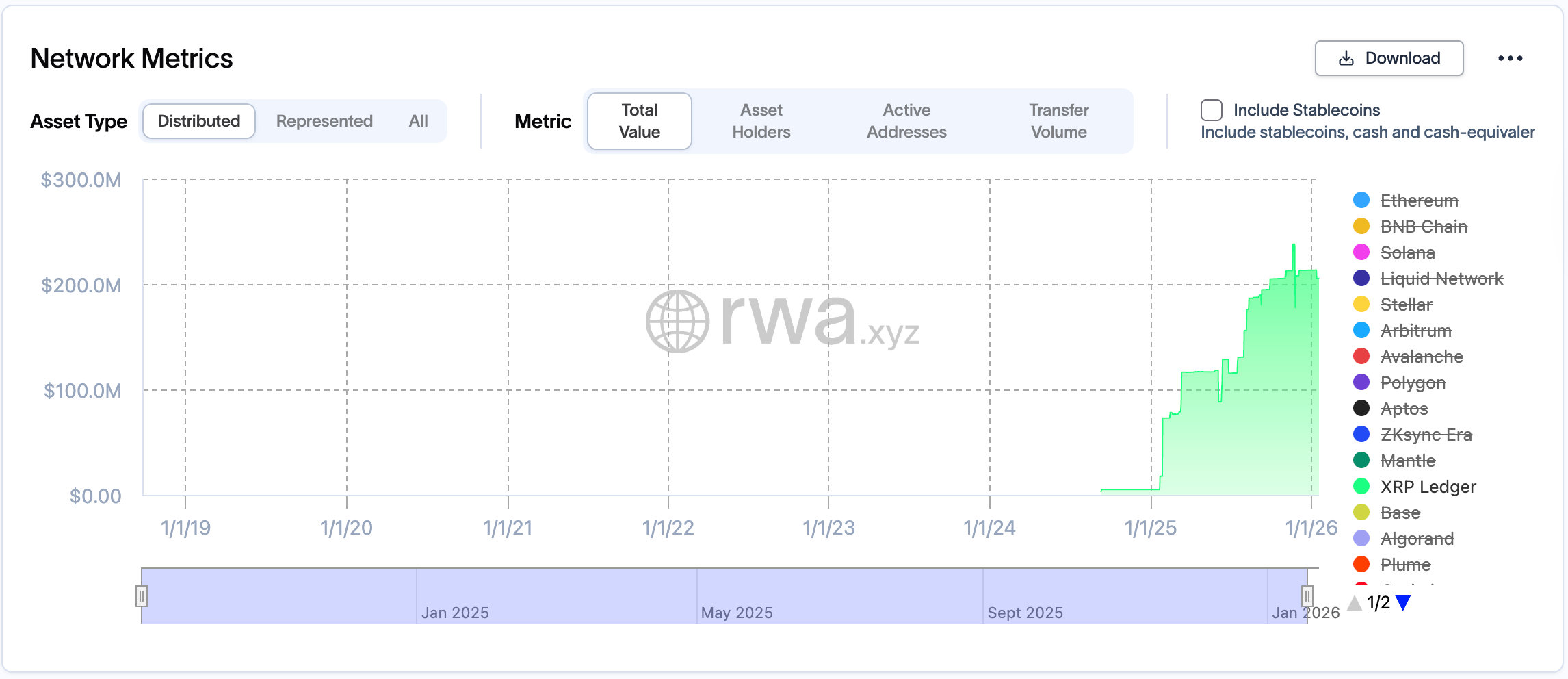
XRPL still lags other layer-1 blockchains, with Ethereum managing over $12 billion in real-world assets during the same period.
In my view, the gap highlights XRPL’s relative under-penetration rather than weakness, leaving room for gradual growth in 2026, especially amid rising stablecoin adoption.
While expanding on-chain activity improves XRP’s fundamental footing and could support tests of the $3.50–$3.66 range high, it has so far contributed to price stability rather than directional expansion.
XRP Technical Analysis: Sideways Trend a Bull Flag?
If the macro backdrop remains supportive, the current $2.00–$3.66 range increasingly resembles a bull flag rather than a distribution.
From a long-term perspective, XRP’s explosive 2017–2018 rally formed a classic impulse move, followed by multi-year corrective structures marked by descending channels and triangular consolidations. Each compression phase eventually resolved higher once selling pressure was exhausted.
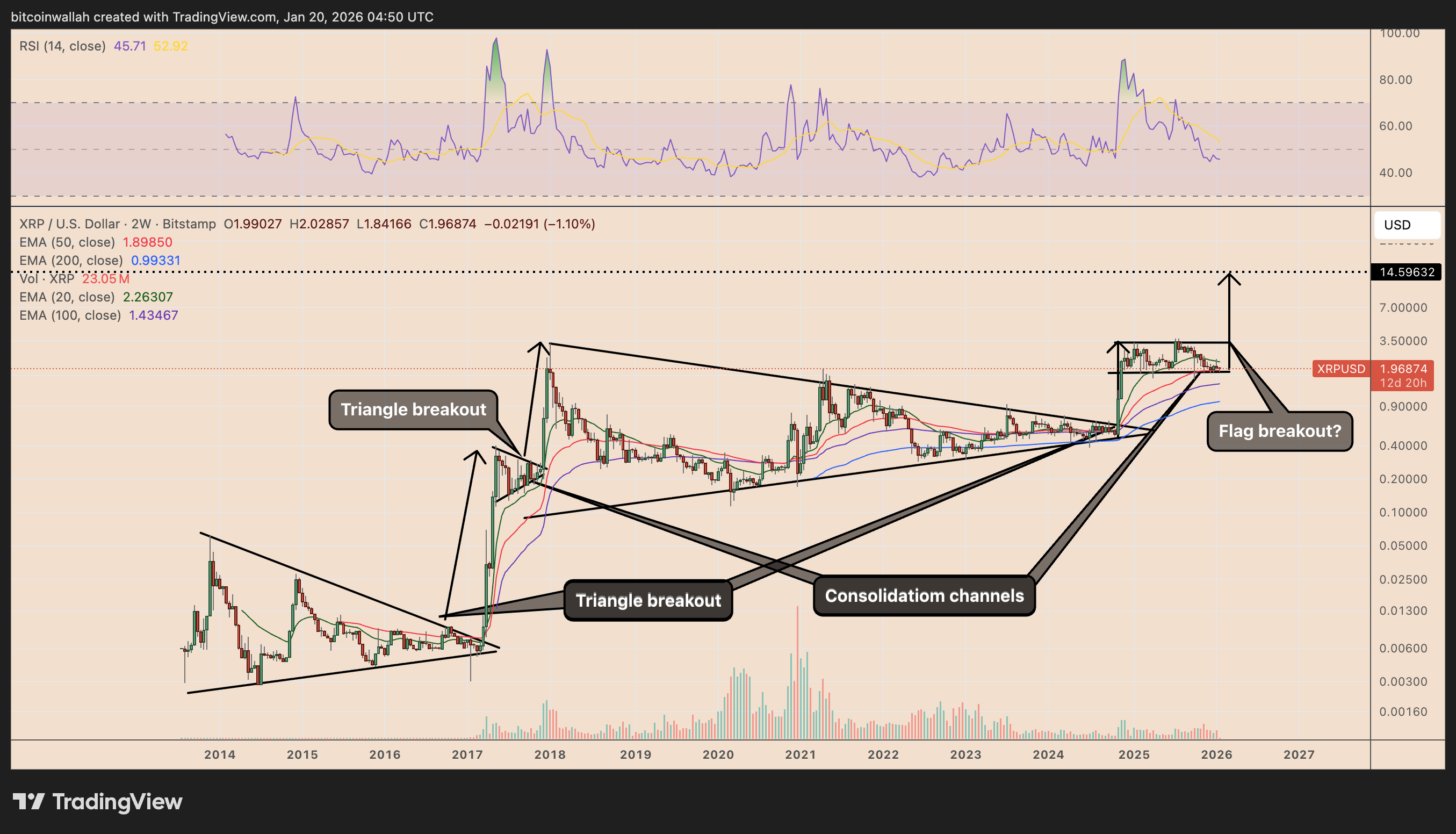
The current setup mirrors those historical pauses. XRP has spent more than a year digesting gains above rising long-term moving averages, while volatility continues to compress inside a narrowing range.
This behavior is consistent with trend continuation rather than exhaustion.
If XRP breaks decisively above the $3.50–$3.66 resistance zone, the measured move of the broader flag structure projects a long-term upside target near $14.59, derived by extending the height of the prior impulse leg from the breakout point.
In my opinion, derivatives traders must wait for a breakout confirmation above the flag’s upper trendline before placing any leverage long bets. As noted, uncertain macro drops can trap overconfident bulls.
Risks to the XRP Bullish Outlook
The bearish alternative mirrors XRP’s 2021 topping structure.
In that cycle, price printed higher highs while RSI formed a bearish divergence, signaling fading momentum before a deeper correction. XRP then rolled over toward its 100-week EMA and eventually fell to the 200-week EMA.
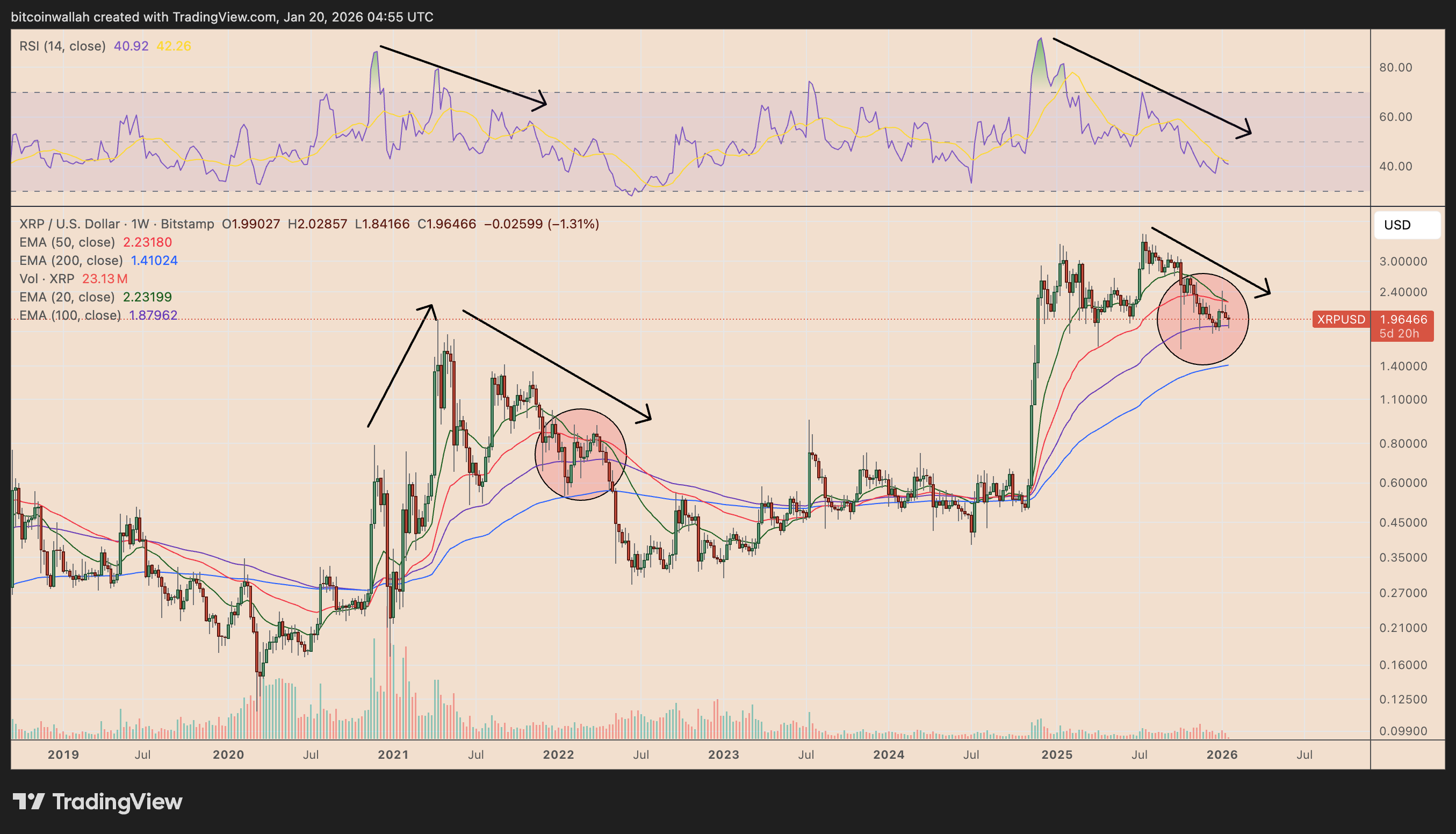
A similar divergence is now visible. If XRP breaks below the $2.00–$3.66 consolidation range, downside risk increases toward the 200-week EMA near $1.41, invalidating the bull-flag thesis.
Macro risks could accelerate that outcome. President Donald Trump’s renewed tariff threats toward European Union exports have increased the probability of abrupt risk-off episodes.
In such environments, XRP-linked ETFs—still early in their adoption curve—remain vulnerable to short-term outflows, reinforcing the potential for a 2021-style bearish resolution.
In Closing
XRP enters 2026 with a structurally constructive setup, supported by improving institutional access, steady XRPL growth, and a more accommodative macro backdrop, even as technical risks persist.
As long as price holds within the $2.00–$3.66 range, consolidation remains the dominant theme. A decisive breakout above resistance would confirm the bull-flag structure and open the path to higher long-term targets.
A breakdown below support would revive the 2021-style bearish scenario toward $1.41, but until that occurs, XRP appears to be building a base rather than topping.