
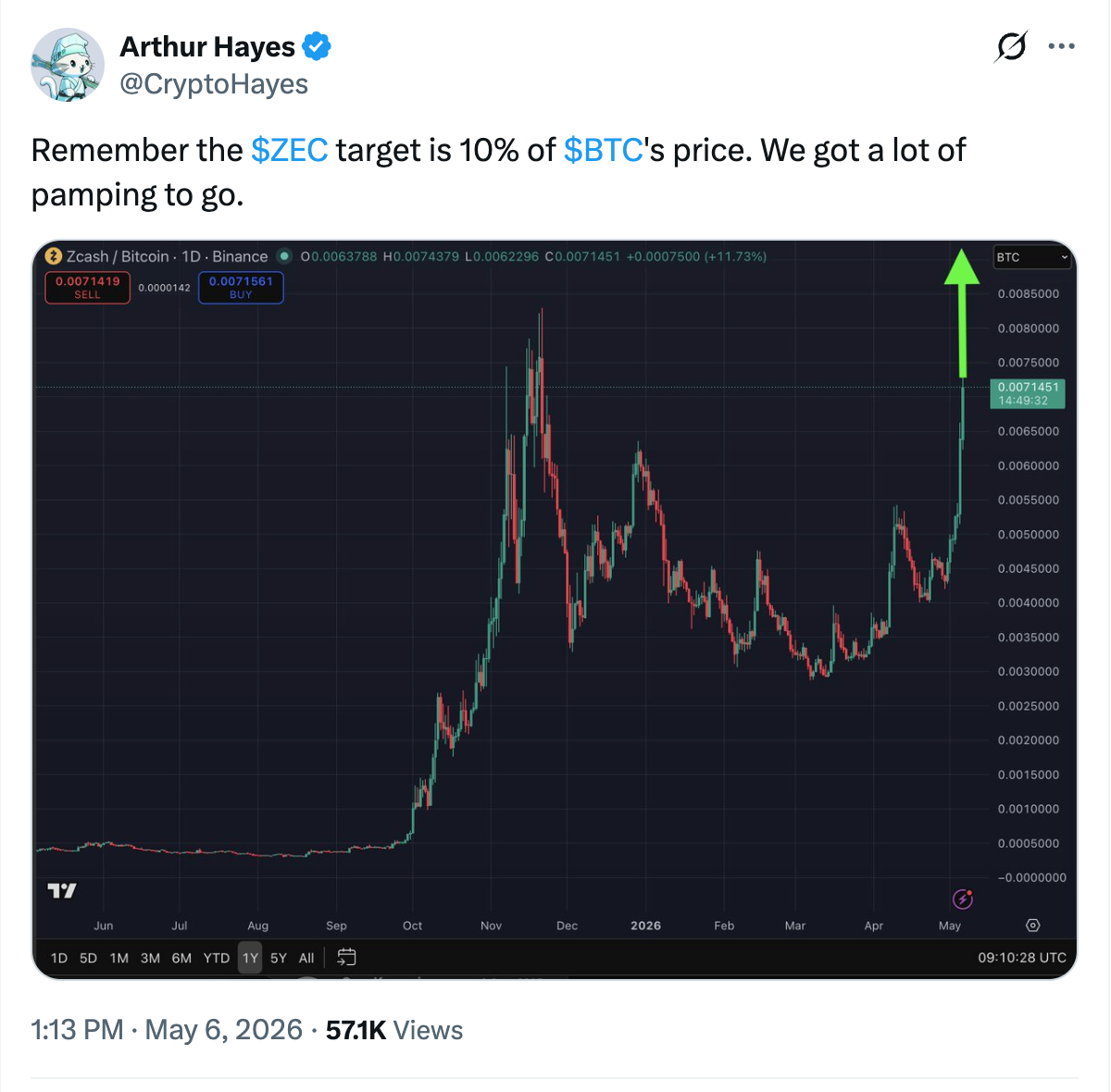
What Arthur Hayes’ 10% Bitcoin Target Means for ZEC Price
Hayes’s forecast implies a massive rerating for Zcash.
If ZEC were to capture 10% of Bitcoin’s current market capitalization of roughly $4.2 trillion, Zcash’s valuation would rise to around $420 billion.
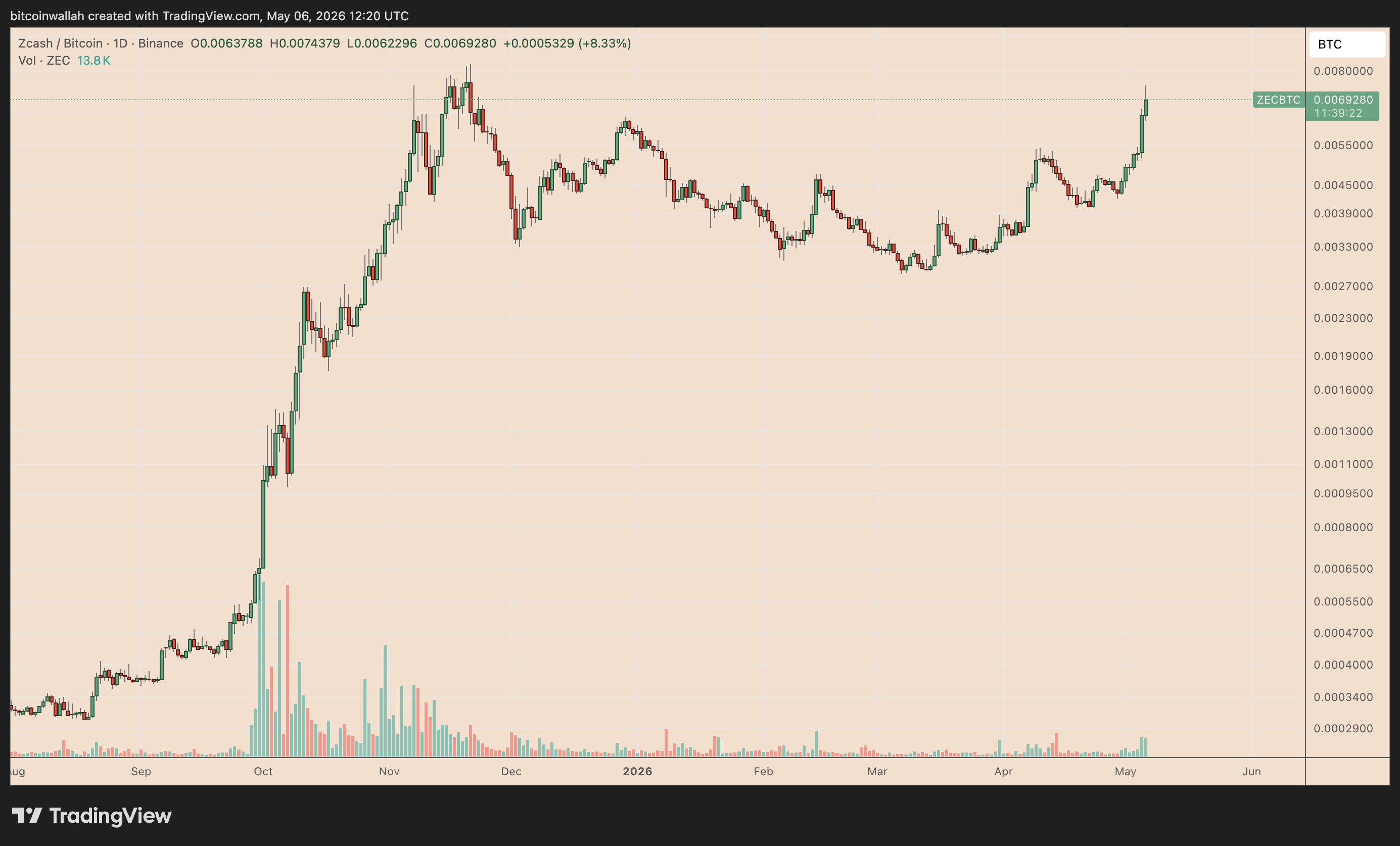
Hayes has long argued that financial privacy will become more valuable as governments expand surveillance, capital controls, and transaction monitoring. In that framework, Zcash is a direct bet on demand for private, censorship-resistant money.
Multicoin’s ZEC Disclosure Adds Institutional Weight to Hayes Argument
Hayes’ comments landed as ZEC was already gaining momentum from a fresh institutional catalyst.
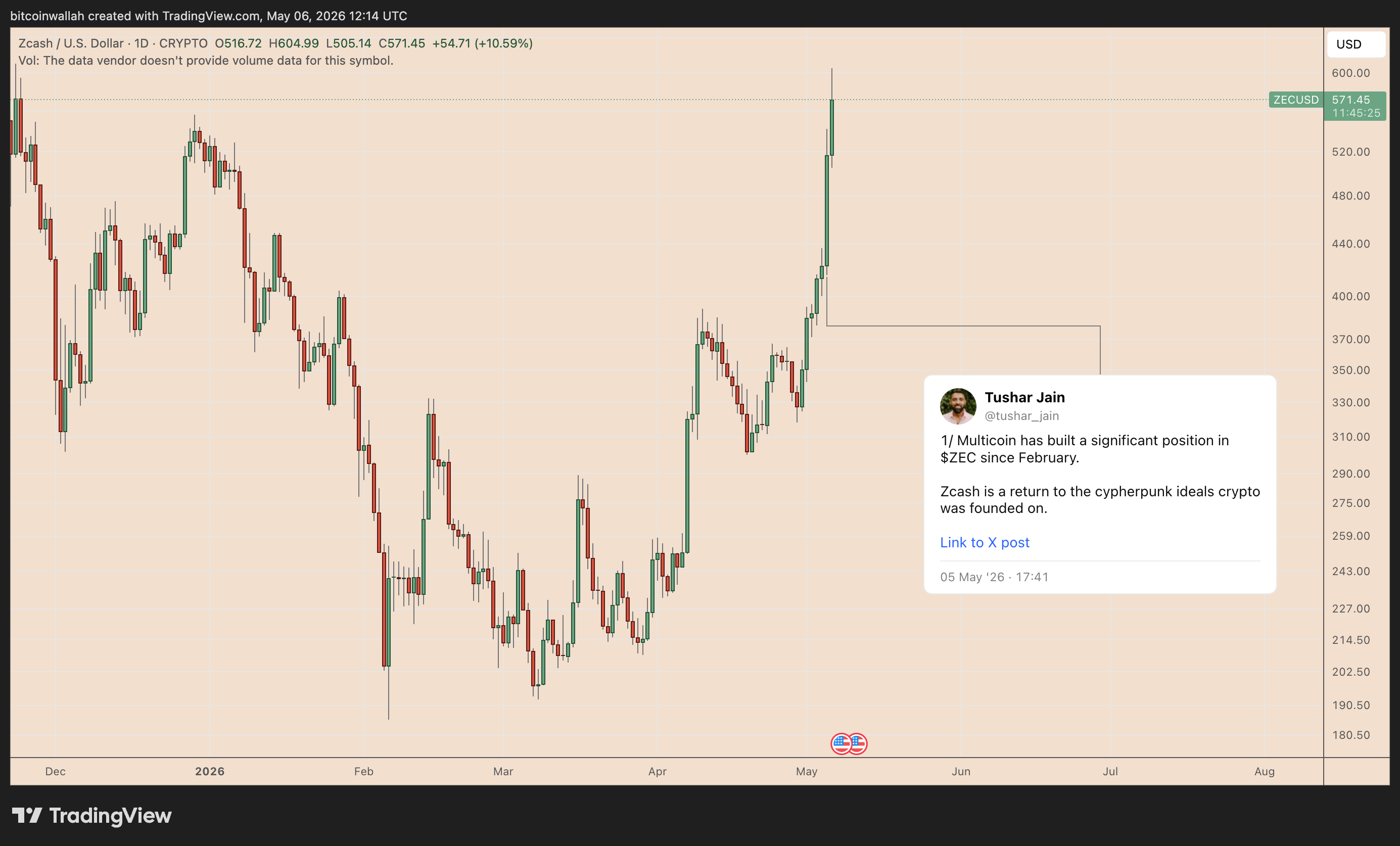
On May 5, US crypto hedge fund Multicoin Capital revealed that it had built a “significant position” in ZEC after accumulating the token since February.
Multicoin co-founder Tushar Jain described Zcash as “the most direct public market vehicle” for exposure to private, censorship-resistant, and seizure-resistant money.

That framing closely aligns with Hayes’ own thesis and helped revive the privacy coin narrative after years of weak interest and regulatory pressure.
Traders appeared to treat the disclosure as institutional validation. ZEC jumped more than 40% in 24 hours at one point, extending a rally that has made it one of the best-performing major crypto assets this month.
Robinhood Listing And Macro Tailwinds Support ZEC Rally
Zcash’s rally is also unfolding during a broader improvement in risk appetite across crypto markets.
ZEC has climbed alongside Bitcoin (BTC), Ether (ETH), and other altcoins as US–Iran peace-deal hopes reduced fears of a wider Middle East conflict and an inflationary oil shock. That helped investors rotate back into higher-beta crypto assets.
Meanwhile, Robinhood’s April 23 listing of ZEC added another tailwind by opening spot access to about 25.9 million funded users, including traders in stricter jurisdictions such as New York.
$ZEC is now available to trade on Robinhood Crypto, including NY. pic.twitter.com/68xgDsNDJm
— Robinhood (@RobinhoodApp) April 23, 2026
On-chain data also supports the tightening-supply narrative.
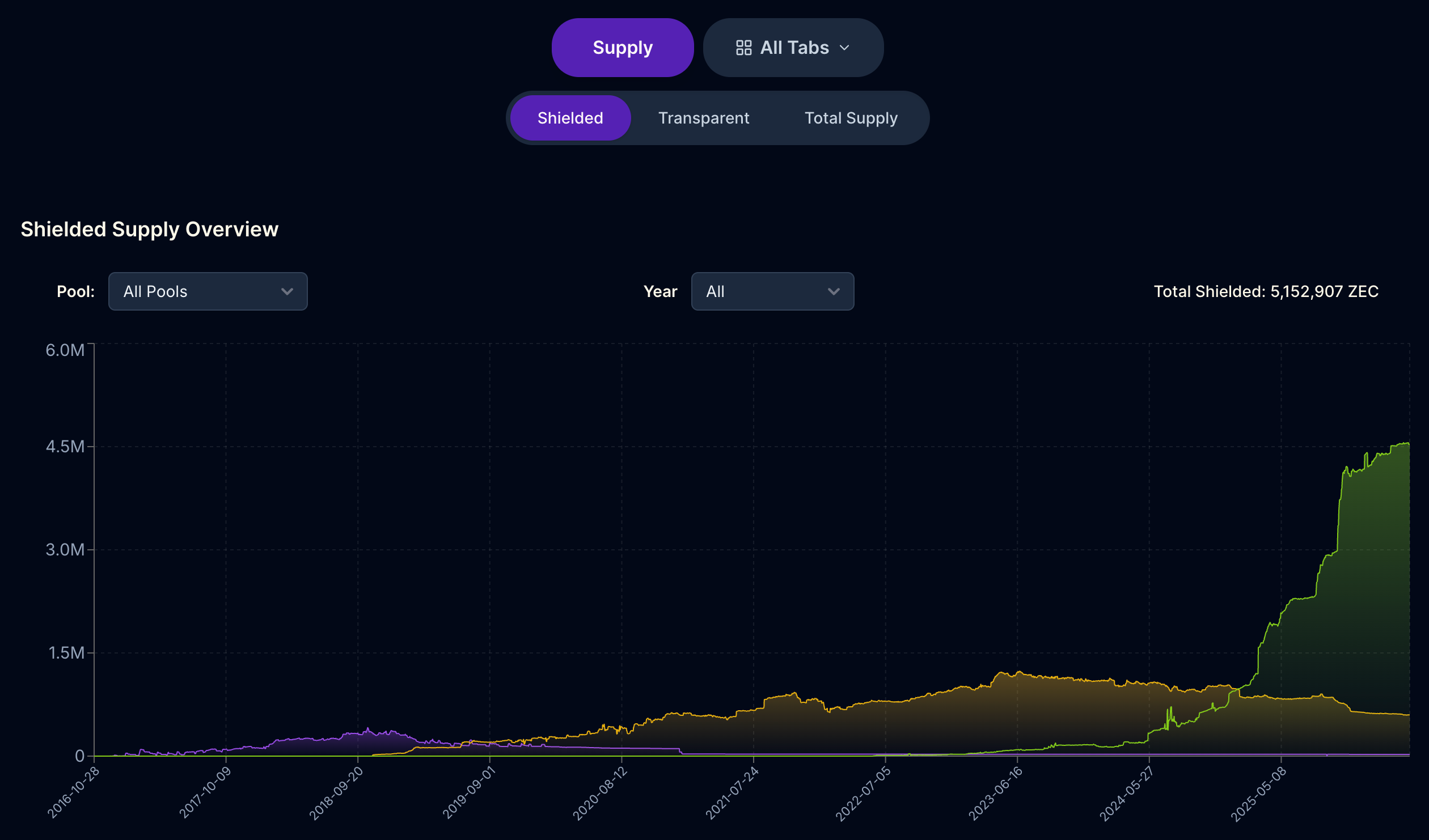
More than 30% of circulating ZEC now sits in shielded addresses, according to ZecHub.WIKI. That suggests rising demand for private transactions while potentially reducing the liquid supply available for trading.
ZEC Falling Wedge Breakout Targets $900 Next
From a technical perspective, Zcash may be entering the next leg of its uptrend after breaking out of a falling wedge pattern on the weekly chart.
A falling wedge forms when the price consolidates inside two descending and converging trendlines following a strong rally. The setup is generally considered bullish because it signals weakening selling pressure during the pullback phase.
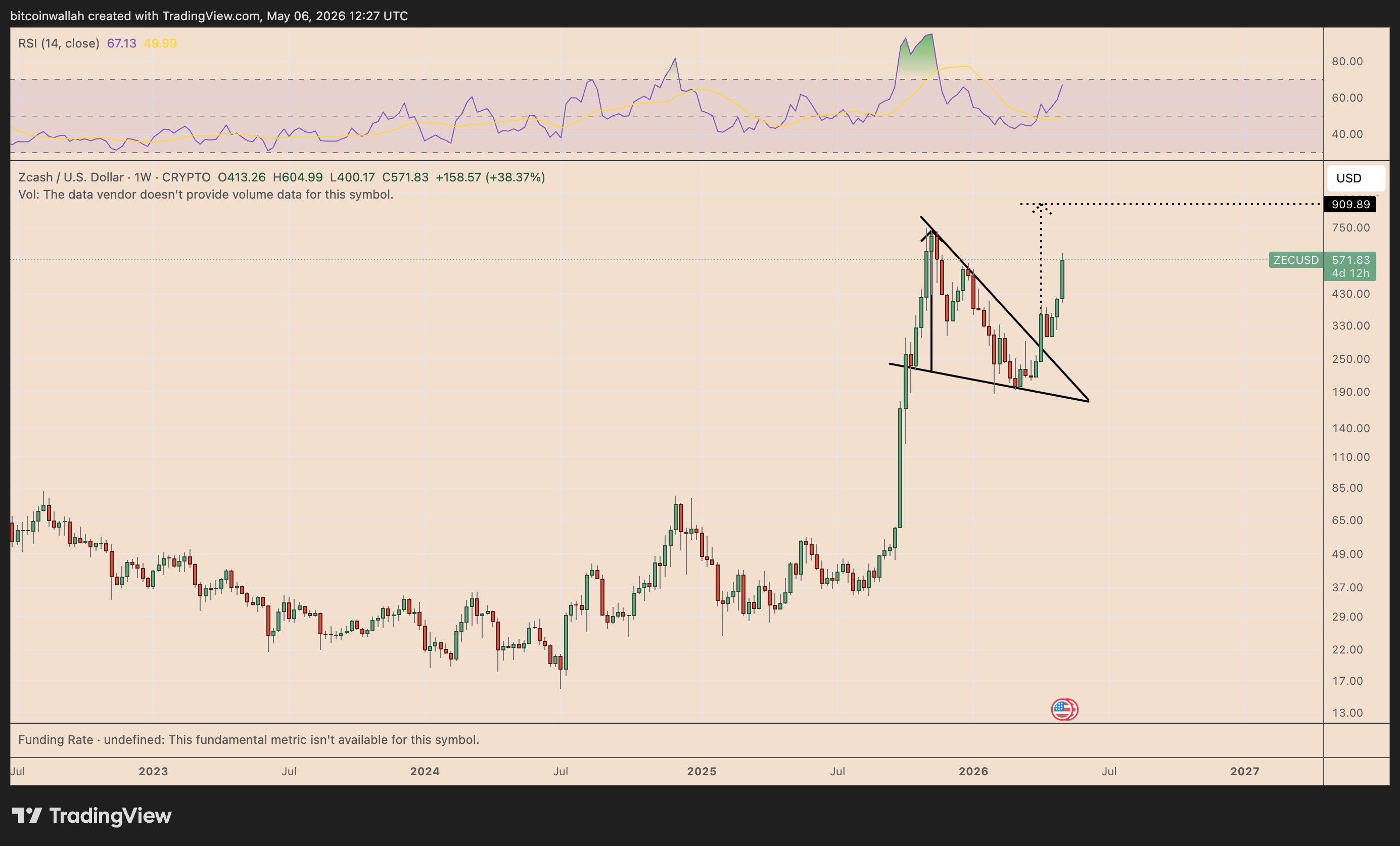
ZEC recently broke above the wedge’s upper resistance trendline near the $350–$400 area, confirming the pattern and shifting momentum back in favor of buyers.
The breakout target is calculated by measuring the wedge’s maximum height and adding it to the breakout point. Applying that rule projects a move toward roughly $900, or about 55% above current levels.
Momentum indicators also support the bullish continuation thesis. ZEC’s weekly RSI has rebounded toward bullish territory while remaining below overheated levels, suggesting the rally may still have room to expand before exhaustion signals emerge.
The Bearish Case Nobody’s Talking About: A Double Top
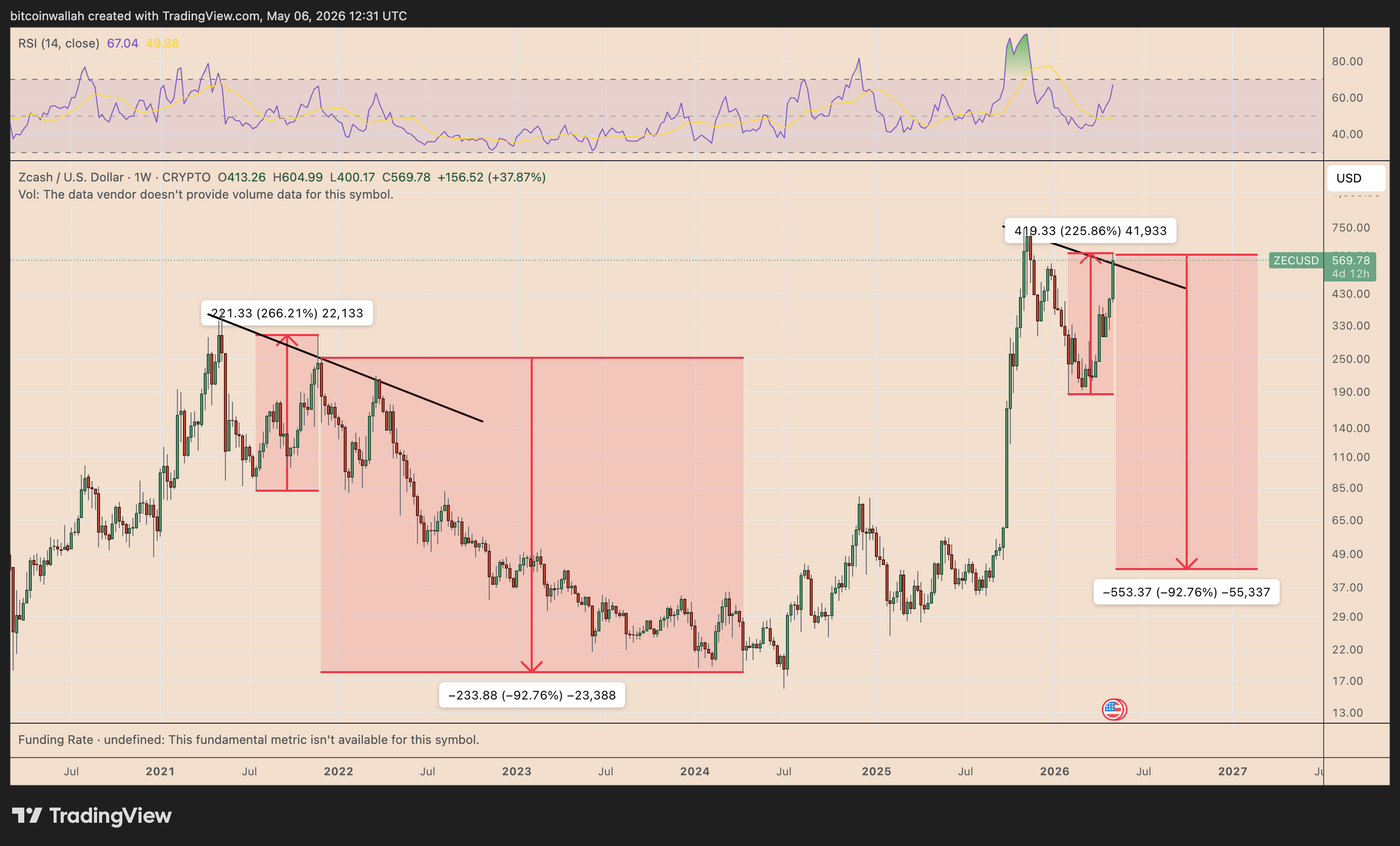
Despite the strong breakout narrative, Zcash may also be forming a massive double-top pattern similar to the setup that preceded its 2021–2024 collapse.
A double top is a bearish reversal pattern that forms when the price tests the same resistance area twice but fails to break higher decisively. It usually signals that buyers are losing momentum while sellers gradually regain control.
ZEC appears to be approaching that scenario now.
The token has rebounded sharply toward the same $600–$700 resistance zone that capped its previous cycle rally in late 2021.
Back then, Zcash surged more than 260% before forming a lower-high structure near the top. The rally eventually failed, leading to a prolonged downtrend that erased over 92% of ZEC’s value across the next two years.
The current setup looks structurally similar.
ZEC has already climbed more than 225% from its local bottom and is again struggling near a historically important resistance region. The latest rebound also resembles the type of retest often seen before a larger reversal begins.
If the double-top structure confirms, ZEC could enter another extended correction phase, with downside risks potentially stretching toward the $40–$50 region over the longer term.
The risk becomes higher when parabolic rallies attract aggressive late buying, since those moves often reverse sharply once momentum slows and early investors begin taking profits.