
Let’s cut to the chase. In December the U.S. Federal Reserve raised its benchmark interest rate for the second time in ten years and the first time since December 2015. It also projected that it could raise rates as many as three times in 2017. This news was enough to keep the downside pressure on the Australian and New Zealand Dollars last month.
In December, the AUD/USD closed at .7201, down 0.0180 or -2.44%. The NZD/USD ended the month at .6916, down 0.0165 or -2.33%.

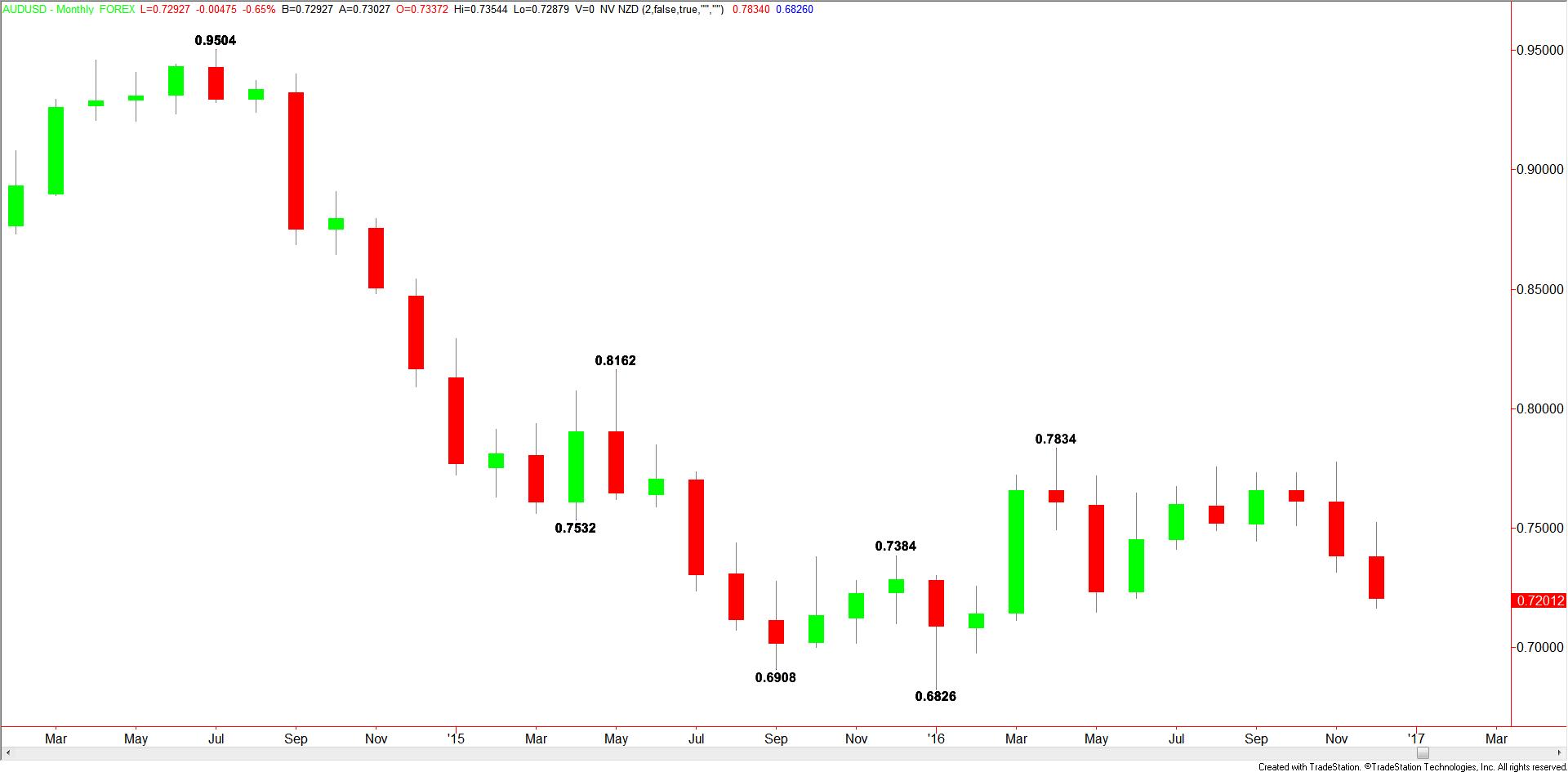
Australian Dollar
On December 1, Australia reported that retail sales rose in November by 0.5%, slightly lower than the previous 0.6%.
On December 5, the Reserve Bank of Australia left its benchmark interest rate unchanged at 1.50%. The very next day, the Australian government reported a 0.5% plunge in the Gross Domestic Product for the third quarter. This was well below the previous 0.6% gain.
On December 14, the Employment Change report showed the economy added 39.1K jobs in November. This was well above the previous 15.2K. The Unemployment Rate rose to 5.7% from 5.6%.
On December 18, the Australian government released its Mid-Year Economic and Fiscal Outlook. The report said the Australian government forecast wider budget deficits and slower growth over the coming years, although it stuck to its promise to deliver a surplus in the next five years, helping to maintain its AAA rating for now.
On December 19, the Reserve Bank of Australia released the minutes of its December policy meeting. In the minutes, the RBA identified balanced risks and expressed concerns about the strength of its currency.
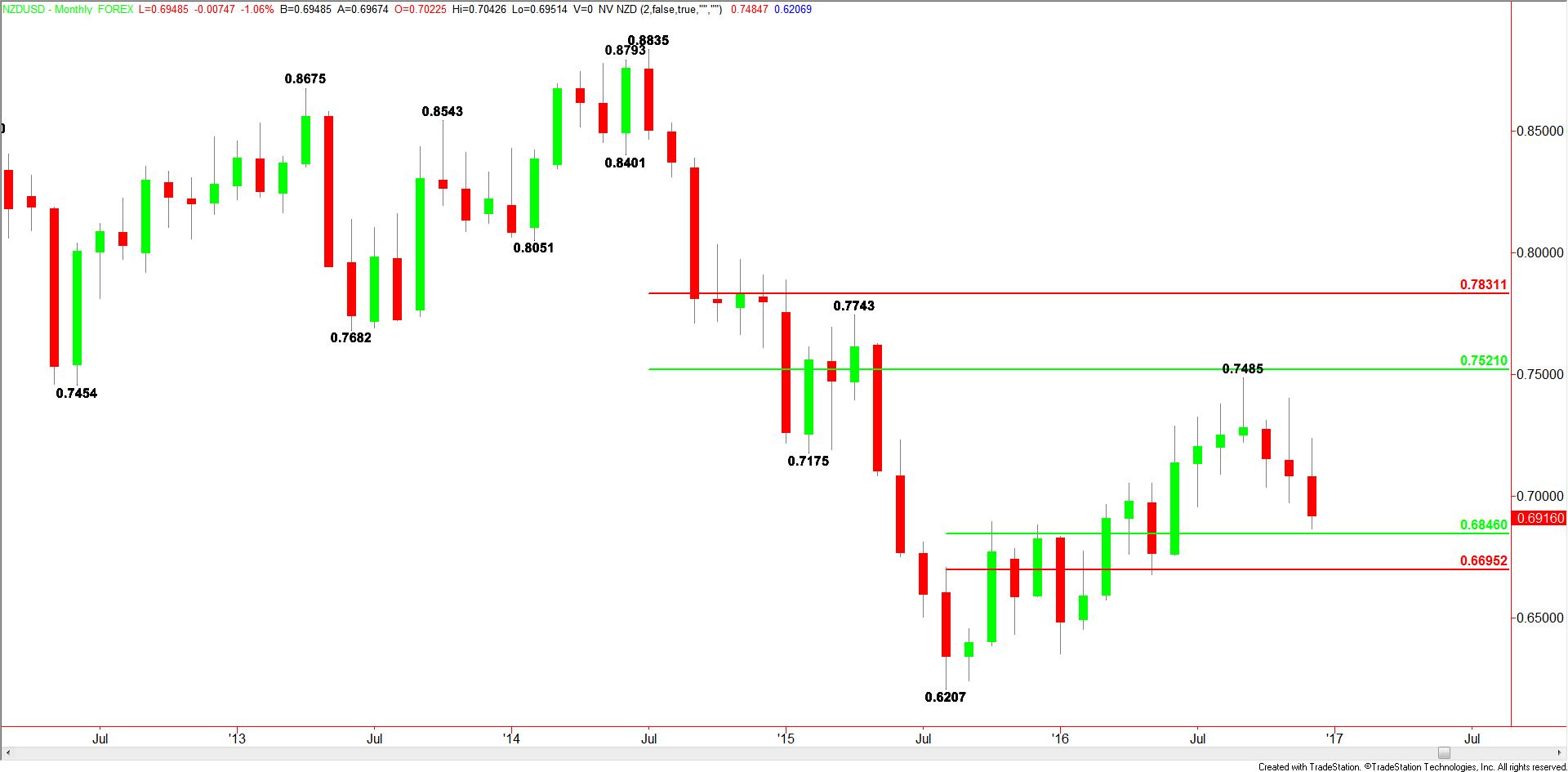
New Zealand Dollar
The GDT Price Index offered mixed results in December. On December 6, it posted a 3.5% gain, but the December 20 auction produced a 0.5% loss.
The highlight for the month was the surprised increase in the Gross Domestic Product. It rose 1.1% in the third quarter, beating the previous 0.7% read.
Early in the month, Reserve Bank of New Zealand governor Graeme Wheeler said he thought the economy was performing well and that he expects inflation back in the target band by the fourth quarter.
Forecast
The year ended with investors talking about the demise of the carry trade that had helped the Australian and New Zealand Dollars attract investment capital during the long period of low interest rates. Now that U.S. Treasury yields are rising and could continue to rise in 2017 due to the aggressive fiscal spending plans by new President Donald Trump, we expect to see the AUD/USD and NZD/USD pressured in 2017. The pressure could accelerate if the Fed raises rates the three times it has projected.
In January, it is going to be all about the U.S. Dollar and whether it can continue to strengthen. Towards the end of the year, concerns were being raised over Trump’s ability to run the government. A weaker dollar will be supportive for the Aussie and the Kiwi. Any rallies will be capped, however, if U.S. Treasuries continue to rise.