Priced at $149, the shares opened at $170 on their first day of trading and closed at $168.01 (a gain of roughly 13% from the offering price).
By the end of that first session, SK Hynix carried a market valuation of $1.2 trillion, putting it ahead of established U.S. chipmakers Micron Technology and Advanced Micro Devices. For a company that, until now, was largely inaccessible to everyday American investors, that is a remarkable debut.

Why This Listing Matters So Much
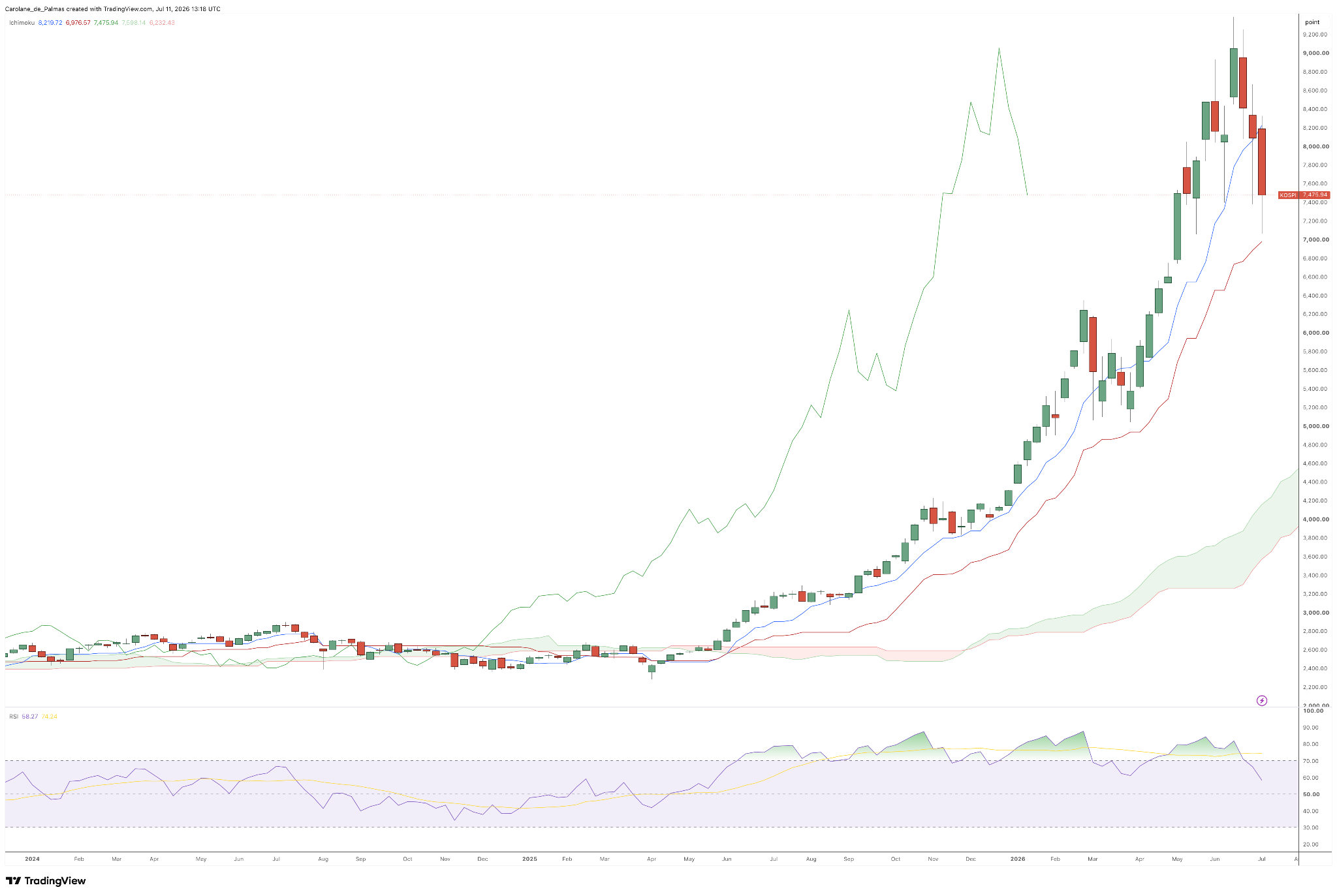
For years, U.S.-based traders have watched from the sidelines as Korean tech stocks surged, largely because so few Korean companies offer American Depositary Receipts. SK Hynix and its rival Samsung Electronics together make up roughly 55% of South Korea’s benchmark Kospi index, which has been the world’s best-performing major stock market this year (+77%). Yet most U.S. investors had no direct, simple way to participate in those gains.
That’s precisely what makes this listing significant: it hands American investors a straightforward route into one of the year’s strongest-performing markets. An ADR allows U.S. investors to hold shares of a foreign company through the U.S. exchange system, without navigating different brokerage accounts, currency conversion, or unfamiliar market hours.
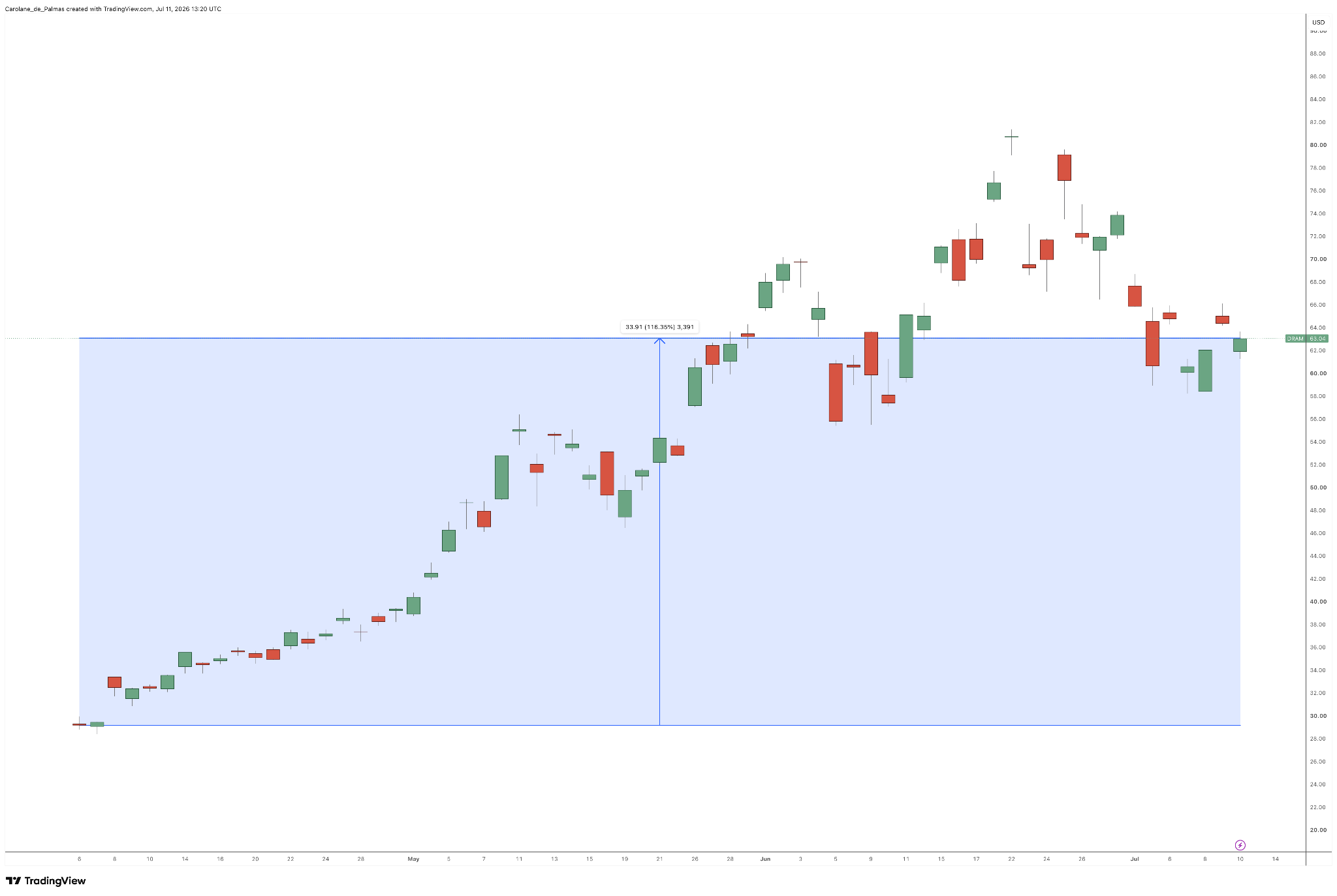
Before this listing, many traders instead turned to workarounds such as the Roundhill Memory ETF (+116% in 2026), a fund concentrated in U.S. and Korean memory-chip names including SK Hynix and Samsung. Launched in April, it became the fastest ETF in history to reach $20 billion in assets: a clear sign of pent-up investor appetite for exposure to Korean chipmakers. SK Hynix’s direct U.S. listing closes the access gap that had kept much of that rally out of reach for American portfolios.
The AI Engine Behind the Boom
SK Hynix holds a dominant global position in high bandwidth memory (HBM), the specialized chip technology that underpins advanced AI systems. The company has partnered with Nvidia — now Wall Street’s most valuable company — to supply advanced memory chips as AI infrastructure buildout accelerates worldwide.
That demand is reshaping the entire memory-chip market. As AI infrastructure spending outpaces chip supply, memory prices have climbed sharply, squeezing margins for buyers across the tech sector. Apple, for instance, recently raised prices on some of its products, citing the rising cost of memory components. For SK Hynix, though, that same dynamic has been a tailwind: 2025 revenue came in at just under $65 billion, while profits doubled to roughly $28 billion.
The U.S. is central to that growth story. It already accounts for 68.8% of SK Hynix’s revenue, and the company is building its first U.S. production facility in Indiana — a move that deepens its ties to the American market well beyond the stock listing itself.
Back home, SK Hynix, Samsung, and the South Korean government have jointly committed to an 800 trillion won (roughly $518 billion) investment in a new chipmaking hub in the country’s southwest, part of a broader push to spread semiconductor investment beyond the greater Seoul region.
Part of a Bigger IPO Story
SK Hynix’s listing is one of the standout deals in a broader IPO boom fueled largely by AI. Global IPO activity in the second quarter of 2026 told a paradoxical story according to EY’s latest IPO Barometer: the number of new listings actually fell 21% year-on-year to 195 in Q2 2026, down from 246 a year earlier, as geopolitical uncertainty kept many companies on the sidelines. Yet total proceeds hit a record $136.0 billion, more than four times the $32.1 billion raised in the same quarter of 2025.
That surge was driven by a handful of enormous deals. The ten largest IPOs of the quarter accounted for $109.3 billion (about 80% of all proceeds raised globally). SpaceX led the way with an $86.2 billion offering, the largest IPO of all time, followed by Cerebras Systems at $6.4 billion and Victory Giant Technology (HuiZhou) at $3.0 billion.
The United States captured the lion’s share of that activity. Despite a 24% drop in the number of U.S. listings (39, down from 51 a year earlier), issuance volume rocketed to $115.6 billion from just $8.1 billion — almost entirely on the back of the SpaceX deal. Sector-wise, advanced manufacturing dominated proceeds with $97.7 billion raised across 39 listings, while technology added another $15.1 billion across 36 IPOs.
The common thread across nearly every headline deal this year, from SpaceX to Cerebras to SK Hynix, is artificial intelligence. Companies tied to AI infrastructure, chip manufacturing, and computing power are the ones commanding investor appetite big enough to support these outsized raises, even as the broader number of companies going public shrinks.
What It Means for Traders and Investors
For investors who have wanted exposure to the AI-driven memory chip boom but found Korean markets difficult to access directly, SK Hynix’s U.S. listing is a notable turning point. It offers a simpler, dollar-denominated way to invest in a company sitting at the center of the AI supply chain — one with a dominant position in HBM technology, a strategic partnership with Nvidia, and a rapidly expanding U.S. manufacturing footprint.
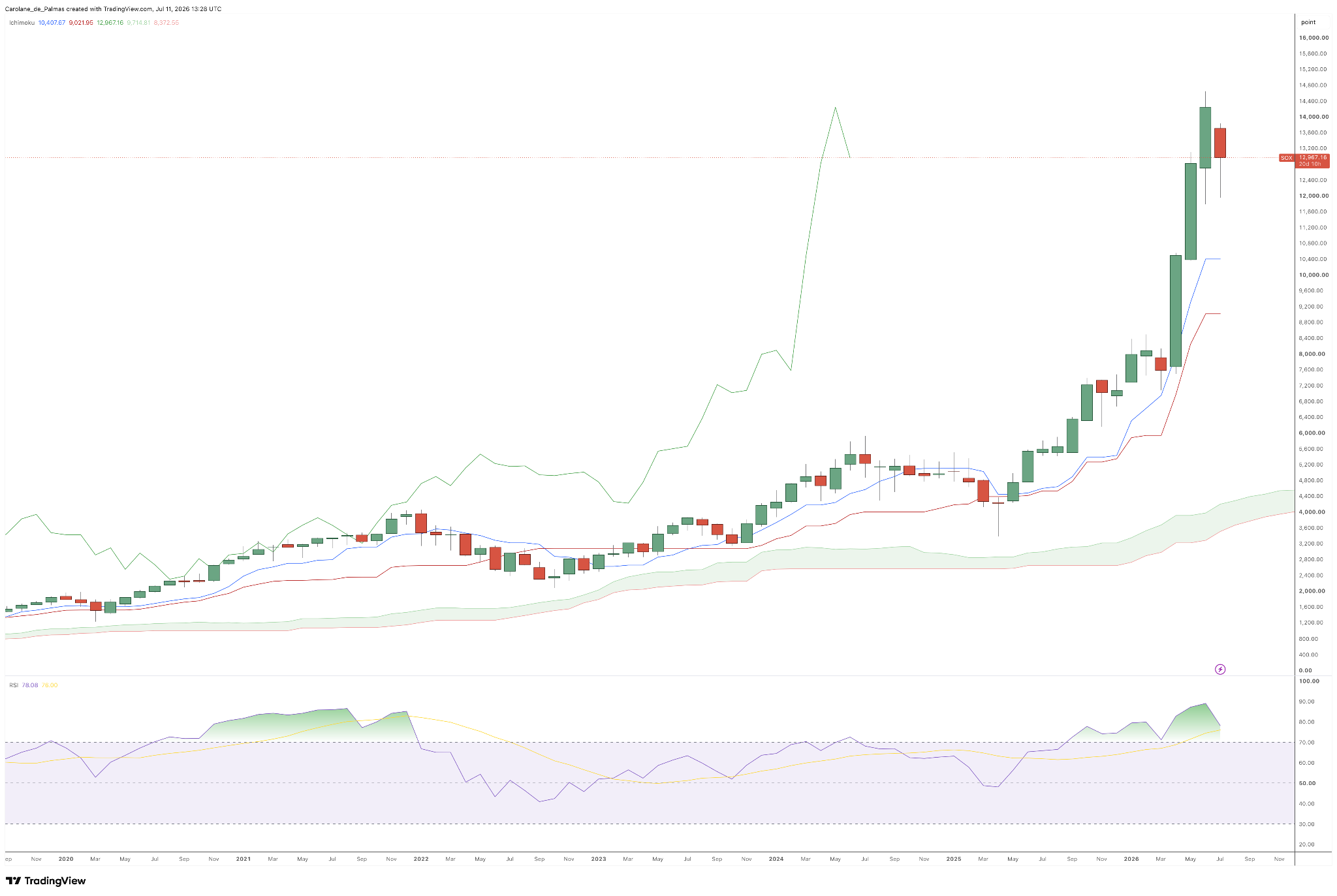
Still, investors shouldn’t forget that the broader chip sector is volatile: the PHLX Semiconductor index was roughly flat on the day of the South Korean giant’s debut and remains down nearly 9% for the month heading into earnings season. That’s a reminder that even amid a historic listing, the sector’s near-term path may not be a straight line upward.
But SK Hynix’s debut sends a clear signal: demand for AI infrastructure exposure remains strong enough to draw record capital into new listings, and investors are increasingly looking beyond the usual U.S. chip names to capture that growth story.
Sources: AP, EY, The Wall Street Journal