
Bitcoin (BTC) breaches key support at $80,000. ETF outflows, Trump’s Fed Chair nomination, and US economic data impact buying interest in risk assets.
The US BTC-spot ETF market extended its weekly outflow streak, signaling a slump in institutional demand for BTC.
US economic indicators tempered expectations of an H1 2026 Fed rate cut, adding to the negative sentiment.
Meanwhile, President Trump nominated a more hawkish-than-expected Fed Chair to replace Powell, spooking the global markets.
Despite January’s losses, a dovish Fed rate path and the progress of the Market Structure Bill continue to support a cautiously bullish medium-term price outlook.
Below, I consider the key drivers behind recent price trends, the short-term outlook, the medium-term trajectory, and the key technical levels traders should watch.

US Spot-ETF Market Wraps Up a Grim January
The US BTC-spot ETF market saw $1.49 billion in net outflows in the reporting week ending January 30. Following outflows of $1.32 billion in the week prior, the US BTC-spot ETF market reported total net outflows of $1.61 billion in January 2026 after December’s outflows of $1.09 billion.
According to Farside Investors, key flows for the week included:
- iShares Bitcoin Trust (IBIT) had net outflows of $947.2 million.
- Fidelity Wise Origin Bitcoin Fund (FBTC) reported net outflows of $191.5 million.
- In total, eight ETF issuers reported weekly net outflows.
Crucially, the US BTC-spot ETF market extended its monthly outflow streak to three months, tilting the supply-demand balance in the bears’ favor. Meanwhile, BTC extended its monthly losing streak to five months, plunging from October’s all-time high of $125,761 to a January 31 low of $75,678 before steadying. BTC last sat below $75,000 in April 2025.
Flow trends and BTC’s price action reflected the effect of US tariff policies, the US government shutdown, central bank policy stances, and regulatory developments on sentiment.
Bitcoin Price Forecast
Every new Bitcoin analysis as it publishes, today's technical signal and key levels, live price — on one page.
See all Bitcoin forecasts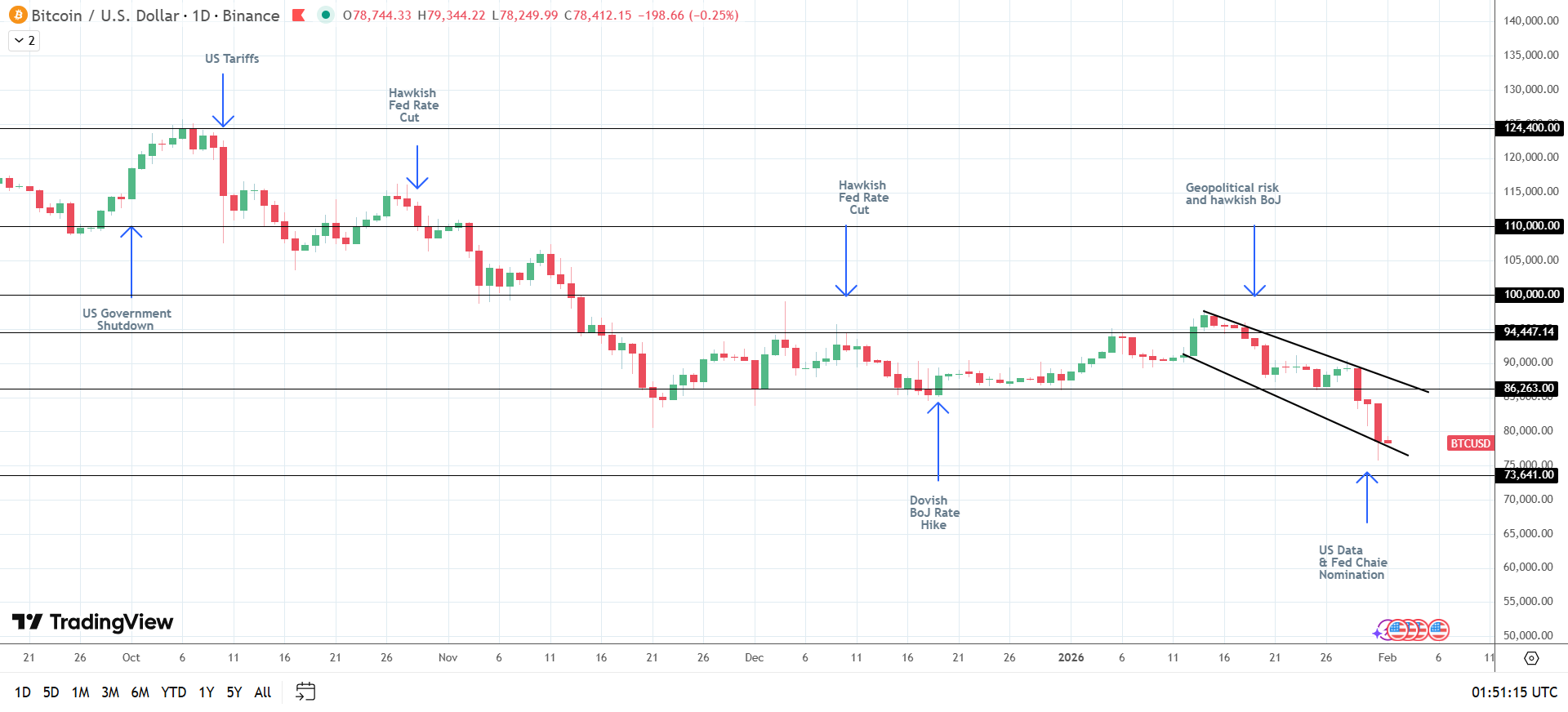
President Trump Nominates Fed Chair Powell’s Replacement
While ETF outflows weighed heavily on sentiment, Fed Chair Powell’s replacement is a potential boon for the Bitcoin bulls over the longer-term.
This week, President Trump nominated Kevin Warsh for the Fed’s top job, signaling a shift in monetary policy and attitudes toward BTC.
Markets reacted adversely to the nomination. Economists view Kevin Warsh as more hawkish than the other potential nominees. While supporting lower interest rates, the consensus is that he would be less aggressive in cutting rates.
However, if appointed Fed Chair, his pro-Bitcoin stance may fuel speculation about BTC becoming a US strategic reserve asset. A US Strategic Bitcoin Reserve would tilt the supply-demand balance firmly in BTC’s favor, supporting a bullish medium-term outlook. Kevin Warsh previously signaled his support for Bitcoin as a store of value, placing it in the same category as gold.
In 2025, Senator Cynthia Lummis introduced the Bitcoin Act, proposing that the US government acquire one million BTC over five years, with a mandatory 20-year holding period.
For context, Congress, the US Treasury, and the Fed Chair would need to approve BTC as a US strategic reserve asset.
Crucially, renewed speculation that BTC could become a Strategic Reserve Asset would counter spot ETF outflows, supporting a bullish medium- to long-term price outlook.
Bitcoin and the US Economic Calendar: US Services PMI and Jobs Report in Focus
Looking at the week ahead, US services sector data, the jobs report, and Fed chatter will influence Fed rate cut bets and risk sentiment.
Slower services sector activity and softer labor market conditions would support a more dovish Fed rate path. Rising expectations of an H1 2026 Fed rate cut would boost demand for risk assets such as BTC.
Recent US economic indicators, including labor market and inflation data, and Fed Chair Powell, signaled a more hawkish Fed rate path. Shifting sentiment toward the Fed’s policy stance contributed to spot ETF outflows and BTC’s drop below $80,000. Nevertheless, hopes for a rate cut linger.
According to the CME FedWatch Tool, the probability of a March cut fell from 50.9% on December 30 to 13.4% on January 30. Meanwhile, the chances of a June cut dropped from 84.5% on December 30 to 61.8% on January 30.
Bitcoin Fear & Greed Index Plunges Deep into Extreme Fear
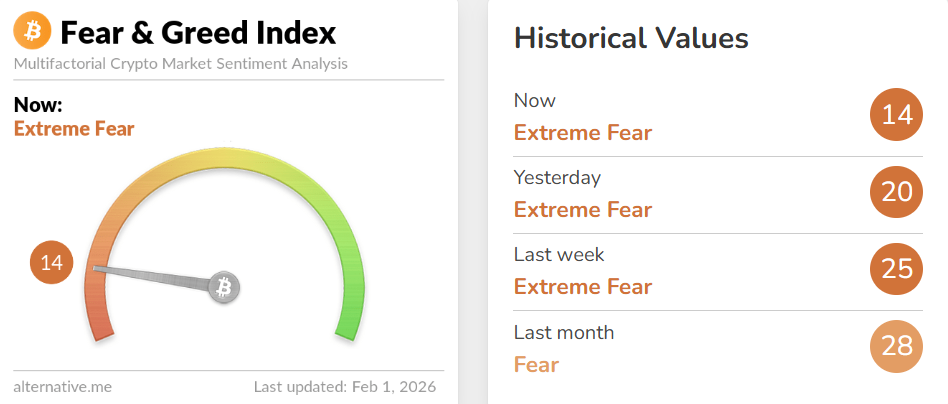
BTC-spot ETF outflows and BTC’s stumble below $80,000 sent the Bitcoin Fear & Greed Index deep into the Extreme Fear zone. The Fear & Greed Index dropped from 20 on January 31 to 14 on February 1, indicating oversold conditions and a potential rebound.
Downside Risks: Central Banks and ETF Flows
While fundamentals support a constructive medium-term bias, downside risks remain, including:
- The BoJ signals a higher neutral interest rate (potentially 1.5%-2%), indicating multiple rate hikes. BoJ rate hikes and Fed rate cuts would narrow rate differentials, potentially triggering a yen carry trade unwind.
- US economic data and the Fed support a more hawkish policy stance.
- BTC-spot ETFs face renewed outflows.
These factors would likely send BTC below $70,000, exposing the November 2024 low of $66,832.
In summary, the short-term outlook remains bearish as fundamentals align with technicals. However, the medium- to longer-term outlook is constructive, based on favorable fundamentals developing. These dynamics include the prospects of Fed rate cuts, the potential for BTC becoming a strategic reserve asset, and the progress of the Market Structure Bill on Capitol Hill.
Technical Analysis
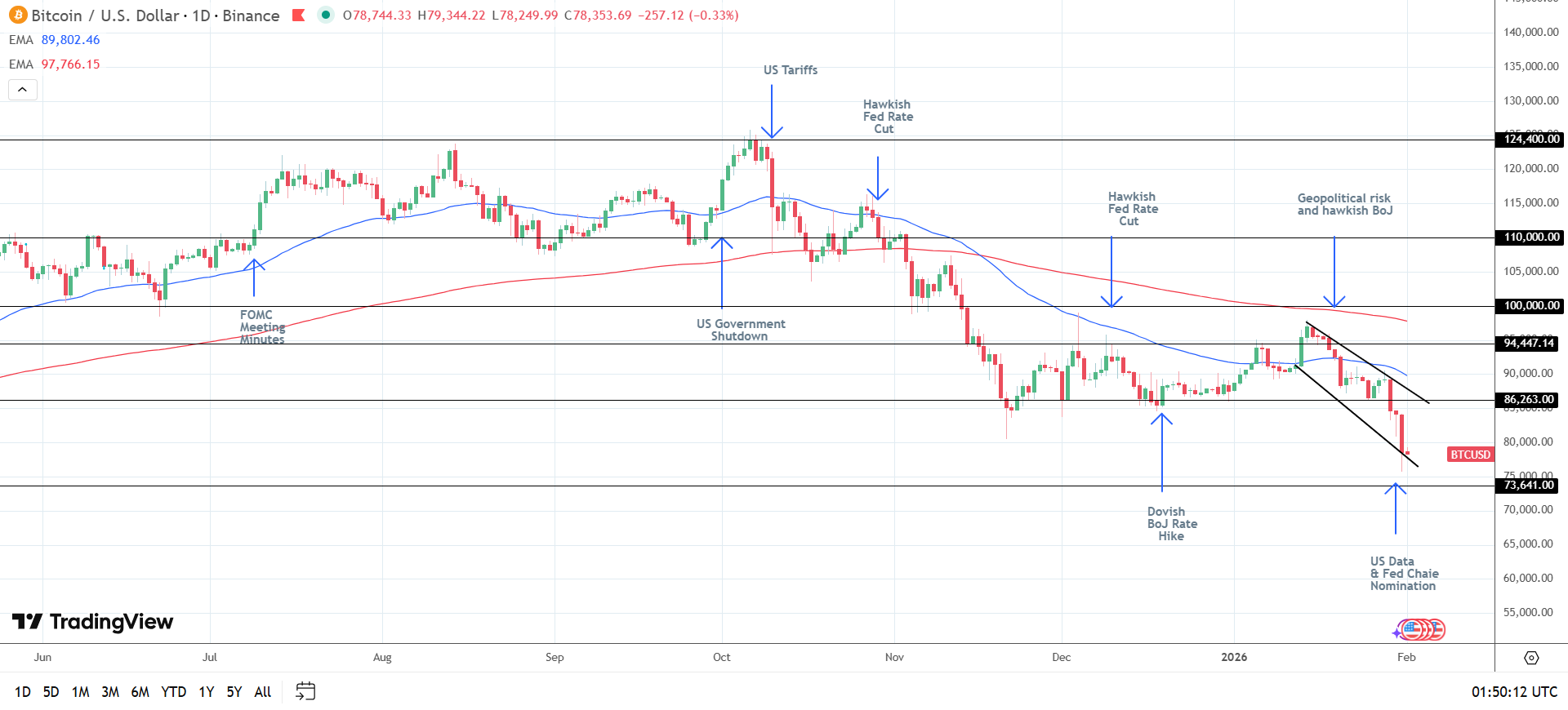
The weekly losses left BTC trading below its 50-day and 200-day Exponential Moving Averages (EMAs), indicating bearish momentum. However, improving fundamentals suggest a rebound from the current levels, countering the negative technicals.
A break above the 50-day EMA would bring $95,000 and the 200-day EMA into play. A sustained move through the 50-day and 200-day EMAs would signal a bullish trend reversal, paving the way toward $100,000. Notably, a sustained move through the 200-day EMA would reaffirm the bullish medium-term price outlook.
Bearish Structure Validated: What Happens if BTC Reclaims $85,000?
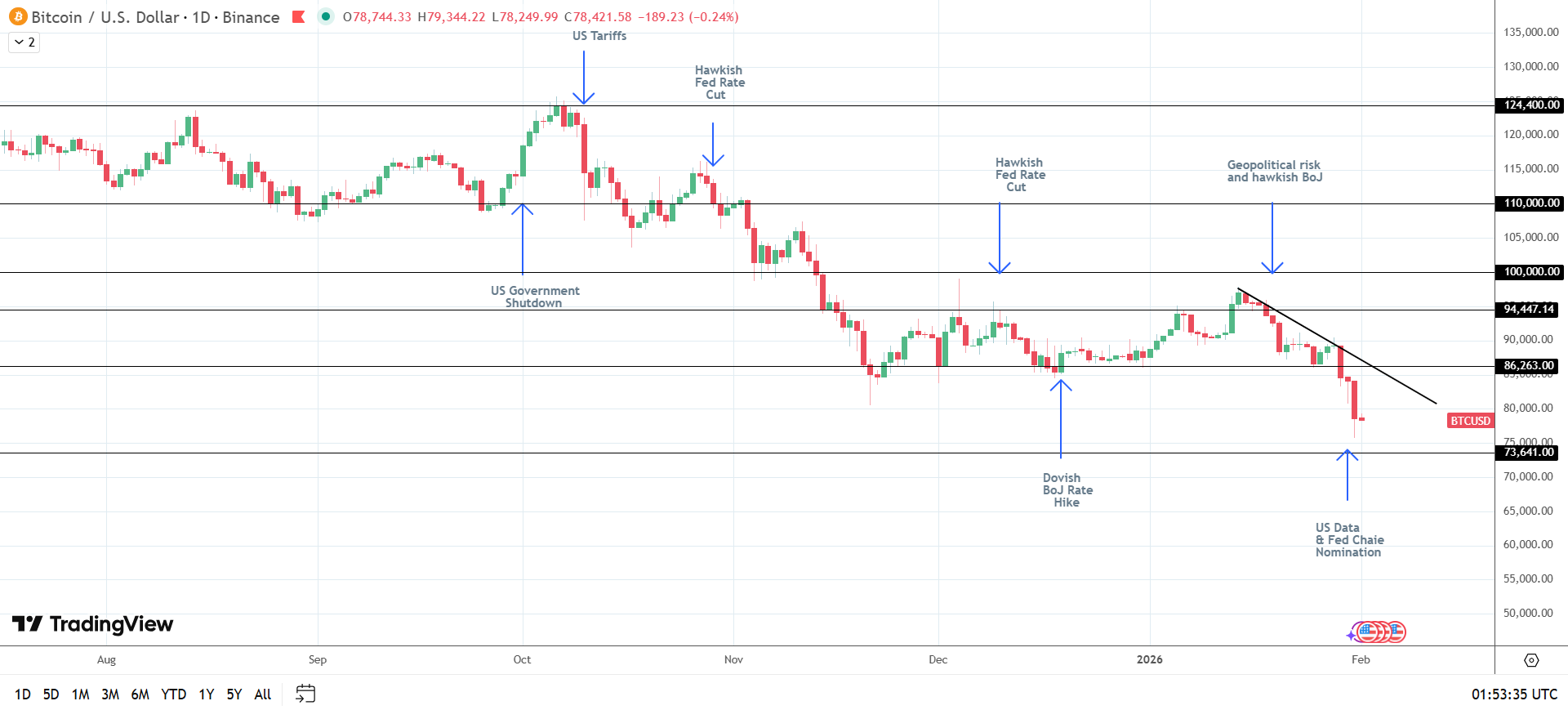
Avoiding a sustained fall below $75,000 would support a recovery to $85,000. A breakout above $85,000 and the upper trendline would invalidate the bearish structure, affirming the bullish short-term (1-4 weeks) target of $100,000 and the medium-term (4-8 weeks) target of $115,000.
However, a sustained drop below $75,000 would expose the November 22 low of $66,832 and validate the bearish structure.
Track BTC market trends with our real-time data and insights here.
Outlook: $75,000 Support Key to Medium-Term Bullish Outlook
US economic indicators, the Fed, the BoJ, and US BTC-spot ETFs will influence demand for BTC.
The US jobs report (February 6) will be the main event of the coming week. Weaker labor market conditions and rising bets on a March Fed rate cut would likely lift sentiment. Kevin Warsh’s policy stance will also be crucial, given last week’s price action.
Considering current market dynamics, the medium- and long-term outlook remains constructive, with a 6-12 month price target of $150,000. The US Senate’s passing the Market Structure Bill would add to the bullish outlook.
Stay informed on BTC trends by monitoring macroeconomic developments, ETF flows, and technical indicators here.