
Bitcoin (BTC) needs strong gains at the end of the week to avoid five weeks in the red from six. A hawkish Bank of Japan Governor Kazuo Ueda sent Japanese Government Bond (JGB) yields to its highest level since 2007, raising fears of a yen carry trade unwind.
The hawkish BoJ policy stance overshadowed bets on a December Fed rate cut, weighing on demand for BTC-spot ETFs. Spot ETF outflows reversed the previous week’s, sending BTC lower.
BTC slid to a low of $83,762 on Monday, December 1, before briefly reaching a high of $99,000. Despite this week’s reversal, the short- to medium-term outlook remains bullish, with broader investor access, legislative developments, and bets on a Fed rate cut.
Below, I consider the key drivers behind November’s sell-off, the short-term outlook, the medium-term trajectory, and the key technical levels traders should watch.

US BTC-Spot ETF Flows Dictate Price Trajectory
The US BTC-spot ETF market reported $87.7 million in net outflows for the reporting week ending December 5. Outflows for the week reversed $70.2 million in net inflows from the previous week, weighing on demand for BTC. Key flow trends for the week included:
- ARK 21Shares Bitcoin ETF (ARKB) saw net outflows of $77.8 million.
- iShares Bitcoin Trust (IBIT) reported net outflows of $49.1 million.
- Meanwhile, Fidelity Wise Origin Bitcoin Fund (FBTC) had net inflows of $62 million.
- In total, five issuers reported net outflows while three had net inflows.
BTC-spot ETF flows continue to influence price trends. Monthly net outflows of $3.47 billion in November left BTC down 17.42% for the month. Outflows in the first week of December sent BTC down 0.98% for the week.
Despite weekly outflows, spot ETF issuers reported net inflows of $54.8 million on Friday, December 5, indicating a potential shift in demand. A resumption of inflows would support the bullish short- to medium-term outlook for BTC as the market focus turns to the Fed.
Bitcoin Price Forecast
Every new Bitcoin analysis as it publishes, today's technical signal and key levels, live price — on one page.
See all Bitcoin forecastsMarkets Bet on a Fed Rate Cut: Will BTC Reclaim $100,000?
The Fed will deliver its final interest rate decision of 2025 on Wednesday, December 10. A 25-basis-point cut and projections of two further rate cuts in H1 2026 would boost demand for risk assets such as BTC.
Concerns about sticky US inflation and a resilient labor market have fueled uncertainty about the Fed’s policy stance beyond December. According to the CME FedWatch Tool, the probability of a December rate cut stood at 86.2% on December 5. Meanwhile, the next more than 50% chance of a rate cut is in July, underscoring concerns over elevated inflation delaying further monetary policy easing.
However, Fed Chair Powell’s imminent exit could pave the way to a more dovish Fed stance, supporting the bullish price outlook.
Crucially, the FOMC Economic Projections will provide insights into the current Committee’s outlook for inflation, unemployment, GDP growth, and the Fed rate path in 2026. Downward revisions to inflation, upward revisions to unemployment, and a more dovish policy outlook would set the stage for a BTC breakout.
For context, the Fed cut rates in September 2025 but revised up its inflation projection and revised down its unemployment forecast, suggesting a less dovish rate path. Markets will view the September projections as the base case, with deviations from these expectations set to shift sentiment.
Fed Pivot Lifts BTC Demand
Notably, BTC slid from $113,686 on October 29 to a low of $80,523 on November 21, on previously fading bets on a December rate cut. However, New York Fed President John Williams supported a December rate cut on November 21, sending BTC to a December 5 high of $99,000. Price action through the fourth quarter underscored BTC’s sensitivity to the Fed rate path.
In my view, a dovish Fed rate cut and sustained inflows into BTC-spot ETFs would reinforce a bullish short- to medium-term outlook.
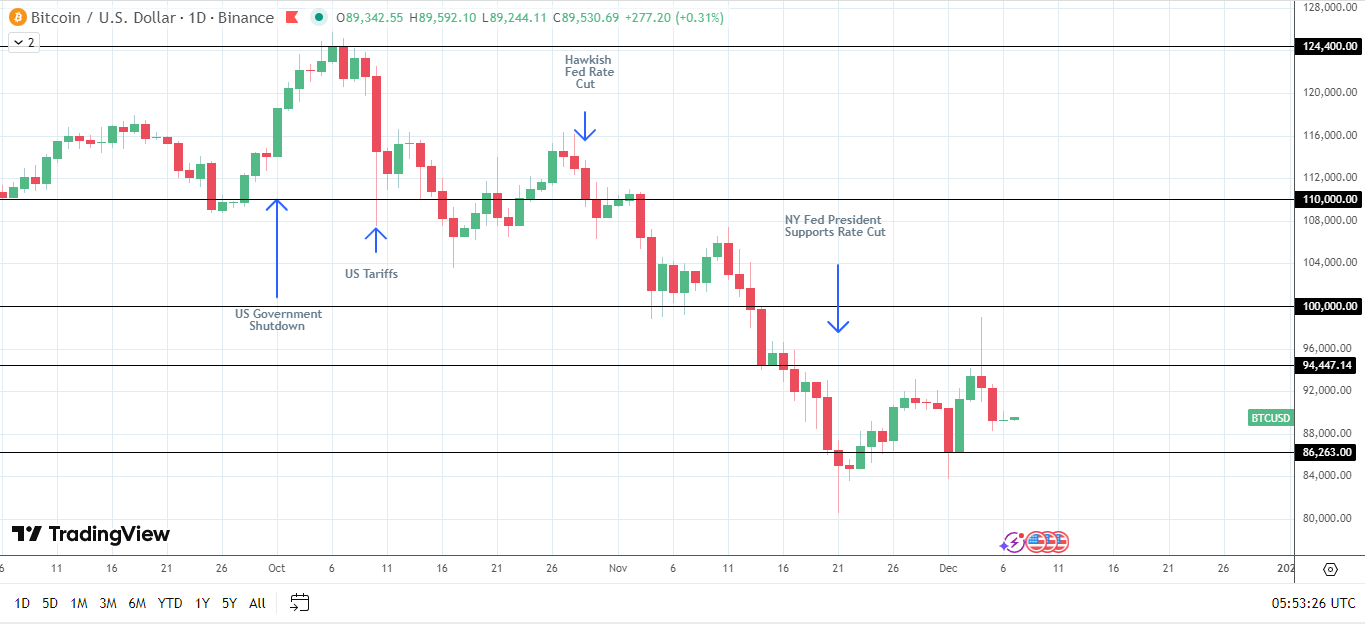
Technical Analysis
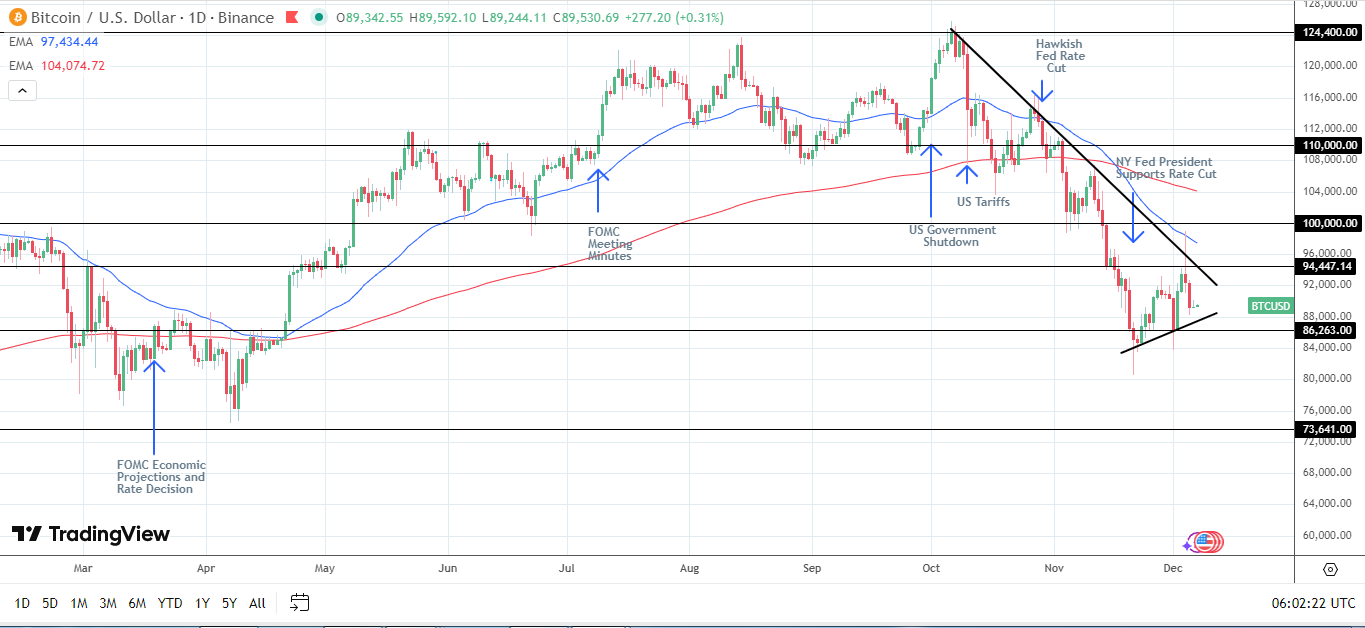
This week’s pullback left BTC below the 50-day and 200-day Exponential Moving Averages (EMAs), signaling a bearish bias. However, fundamentals are beginning to diverge from the technical trend, suggesting a potential rebound.
A break above the $94,447 resistance level would pave the way to the 50-day EMA. A sustained move above the 50-day EMA would bring the $100,000 psychological resistance level into play. Significantly, a sustained break above the 50-day EMA would indicate a bullish trend reversal, aligning with the bullish short- to medium-term price trajectory.
Downside Risks: A Hawkish Fed and ETF Outflows
While a December Fed rate cut and spot ETF inflows lifted sentiment, downside risks remain, leaving BTC trailing this week’s $99,000 high.
More hawkish FOMC Economic Projections would affect demand for spot ETFs and BTC. A break below the lower trendline could trigger a sharper sell-off. Given the November low of $80,523 on November 21, a move below $80,000 would invalidate the medium-term bullish structure.
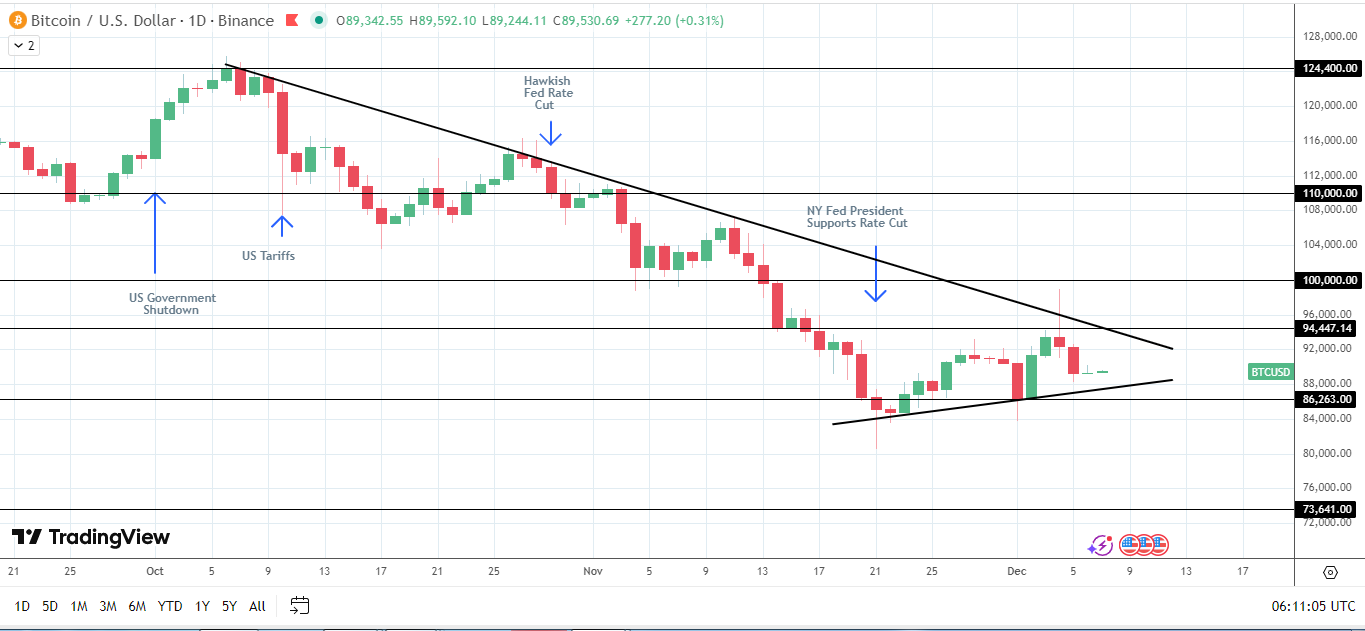
Track BTC market trends with our real-time data and insights here.
Key Takeaways
Looking ahead, several key events will influence BTC’s short to medium-term outlook:
- Fed interest rate decision
- FOMC Economic Projections.
- Legislative developments, including the progress of the Market Structure Bill on Capitol Hill.
- US BTC-spot ETF flow trends.
- BoJ rate hike bets and Japanese Government Bond (JGB) yields.
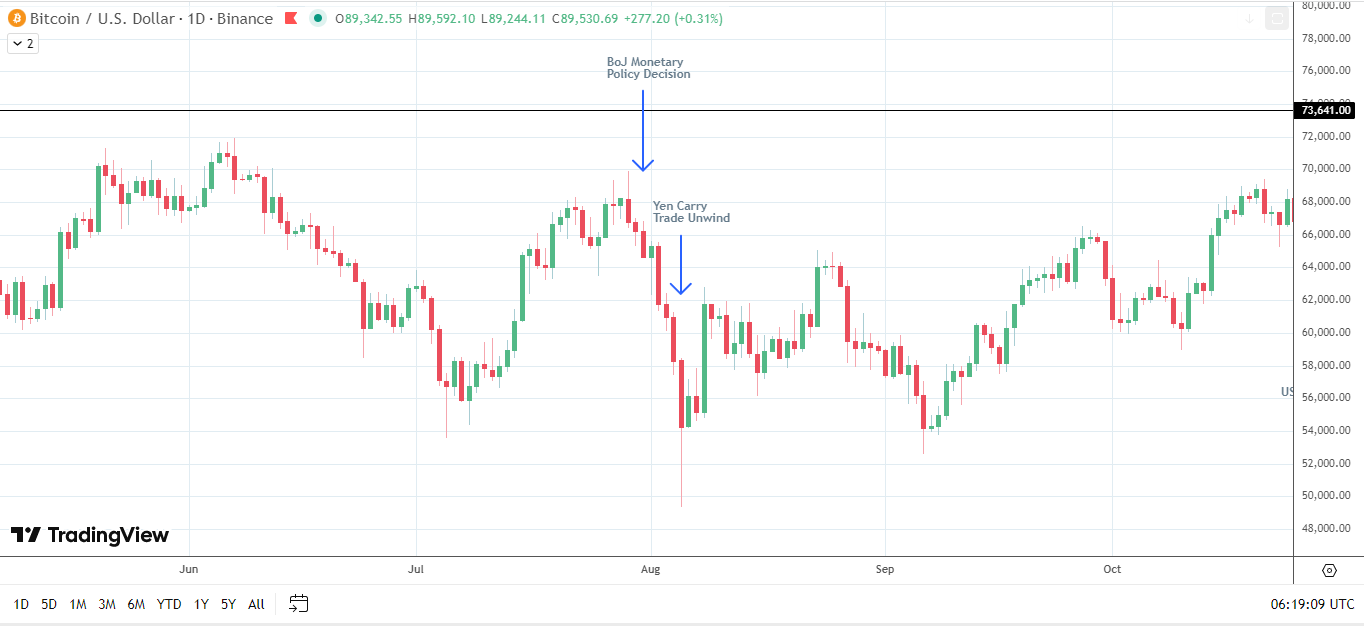
Bitcoin has shown an inverse price relationship with 10-year JGB yields since October. Crucially, 10-year JGB yield climbed to 1.971% on Friday, December 5, their highest level since 2007.
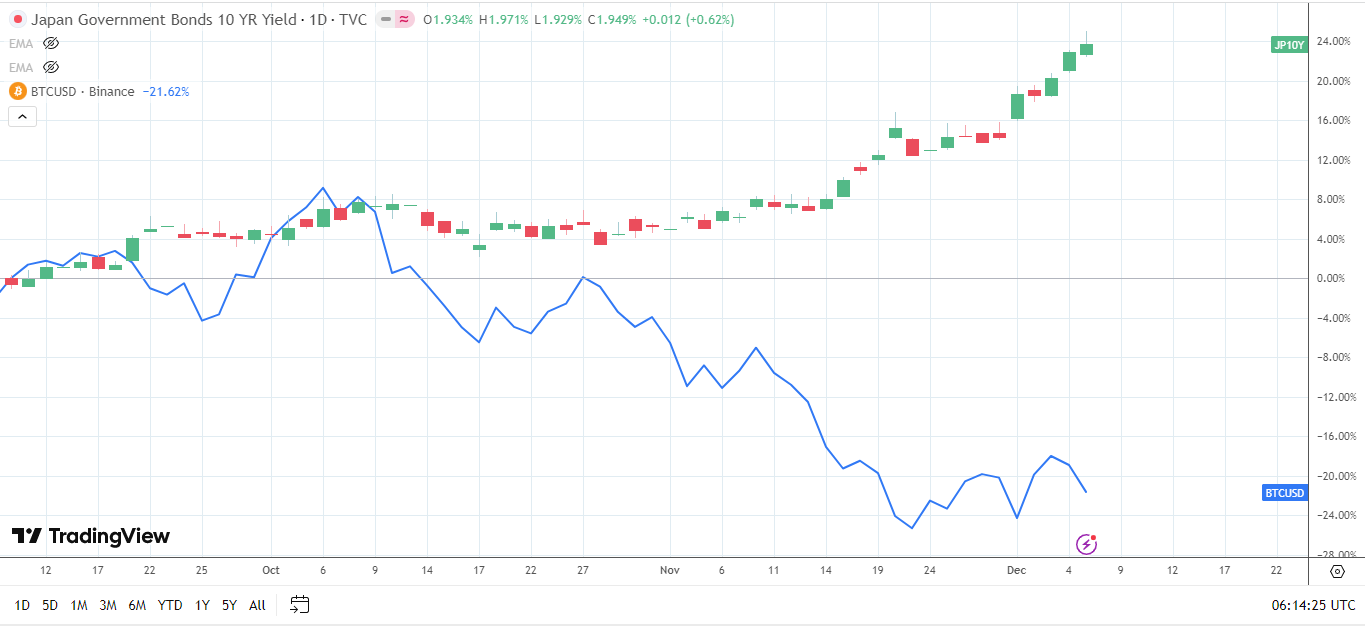
Rising bets on a December Bank of Japan rate hike and potentially further adjustments in 2026 have lifted yields. Higher borrowing costs could trigger a yen carry trade unwind, matching events in 2024. BTC plunged 25.5% after the BoJ reduced JGB purchases and unexpectedly raised interest rates.
Stay informed on BTC trends by monitoring macroeconomic developments, ETF flows, and technical indicators here.