
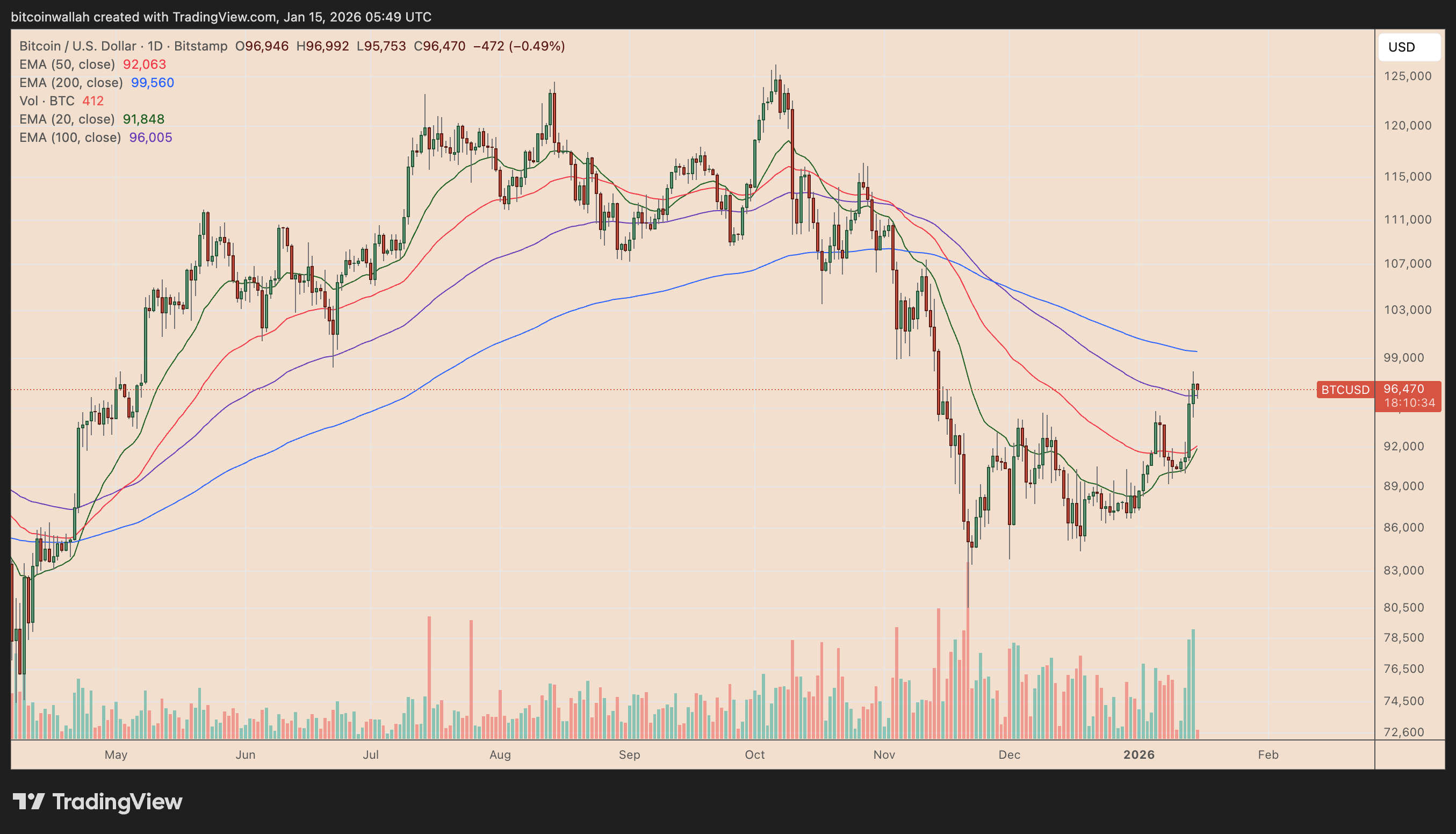
Bitcoin (BTC) rebounded sharply from its early-January lows, reclaiming the mid-$90,000s by Jan. 15 after briefly dipping below $90,000 last week.
Now, three independent charts suggest the move may have more follow-through than skeptics expect.

OG Bitcoin Holders Are Selling Less Into Strength
The first chart tracks STXO from OG Bitcoin holders, defined here as coins that remained dormant for more than five years before being spent.
STXO refers to spent transaction outputs, Bitcoin’s accounting mechanism that ensures each coin can only be spent once, while preserving detailed historical data about age, size, and timing.
OG activity has been meaningfully higher than in the previous bull market, reflecting a uniquely favorable environment for long-term holders to sell, according to CryptoQuant analyst Darkfrost.
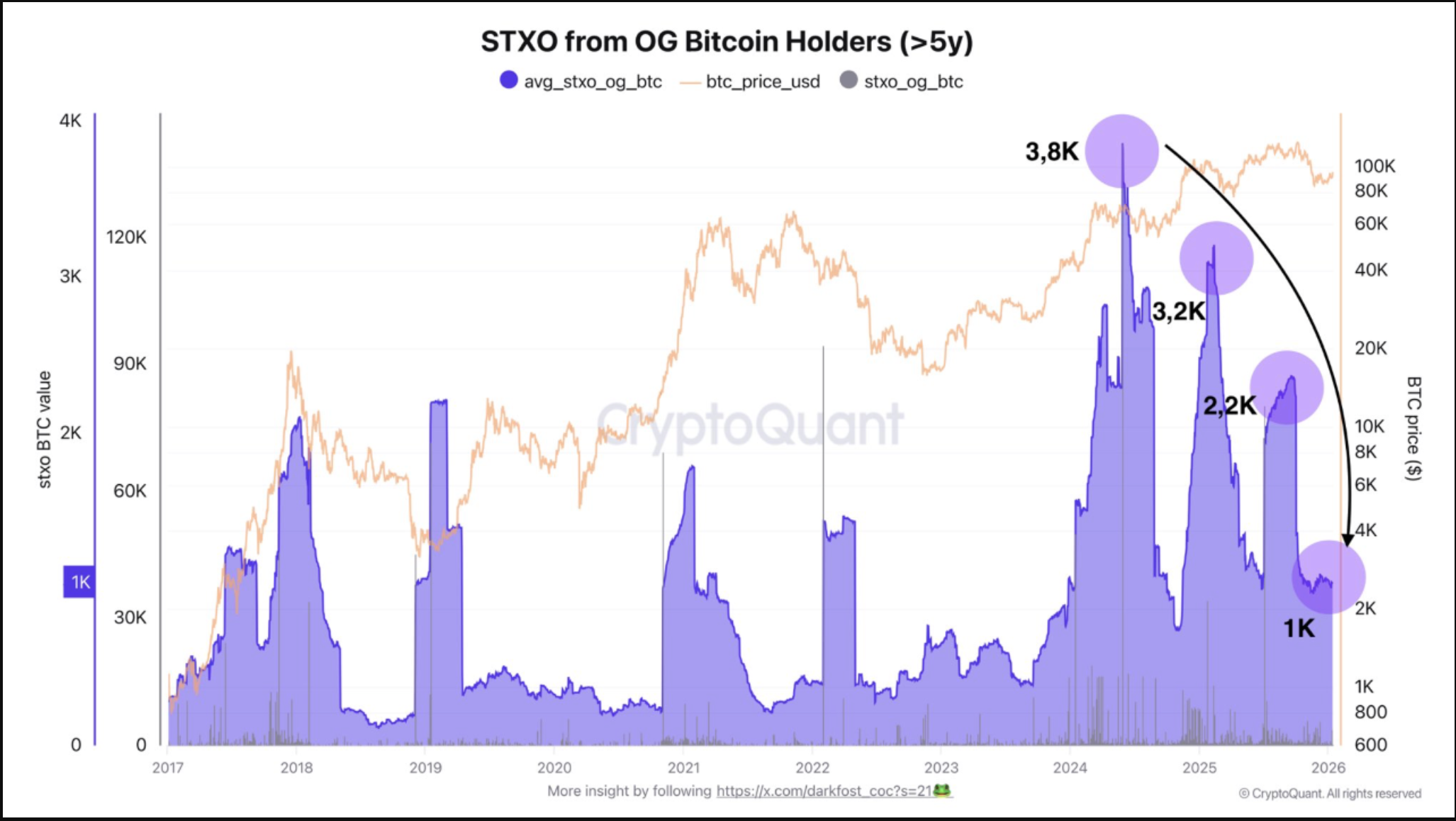
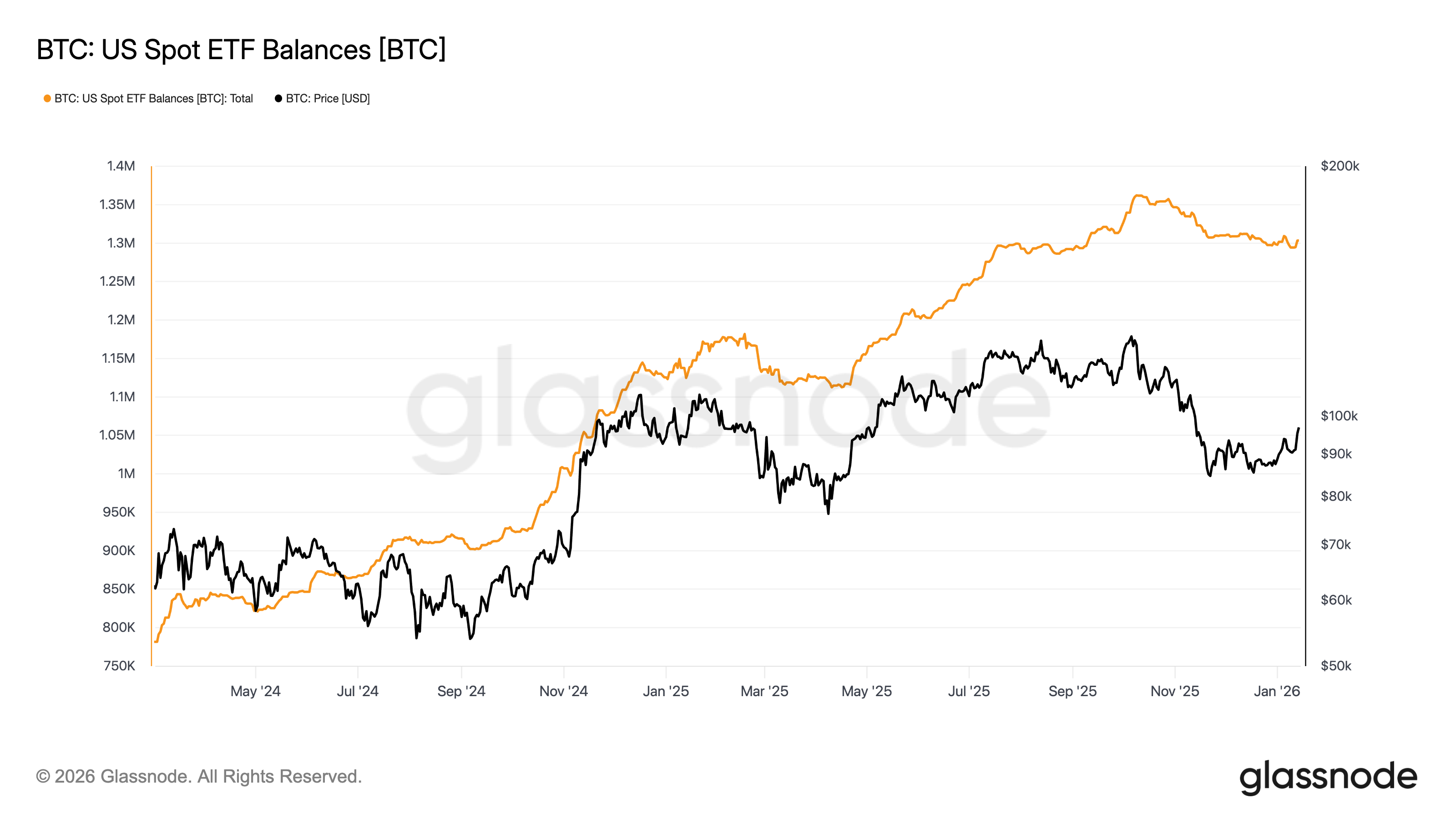
Yet the trend has shifted. After peaking near a 90-day average of ~2,300 BTC spent during local highs, OG selling has cooled materially. The smoothed average has since fallen to roughly 1,000 BTC, where it continues to fluctuate.
OGs historically distribute aggressively near cycle tops and pull back when they expect higher prices ahead. The reduction in selling pressure suggests that long-term holders, despite already realizing significant gains, are increasingly opting to hold rather than distribute.
In past cycles, similar slowdowns in OG selling tended to precede continuation moves rather than major tops.
Bitcoin Price Forecast
Every new Bitcoin analysis as it publishes, today's technical signal and key levels, live price — on one page.
See all Bitcoin forecastsSocial Sentiment Toward Bitcoin Turns Bearish: Its Good News
The second chart comes from Santiment’s social sentiment data, which measures the ratio of positive to negative Bitcoin commentary across major social platforms.
Notably, sentiment has turned increasingly bearish even as BTC rebounded this week. The latest readings place social commentary deep in the fear zone, marking the most pessimistic stretch in roughly 10 days, despite prices pushing higher.
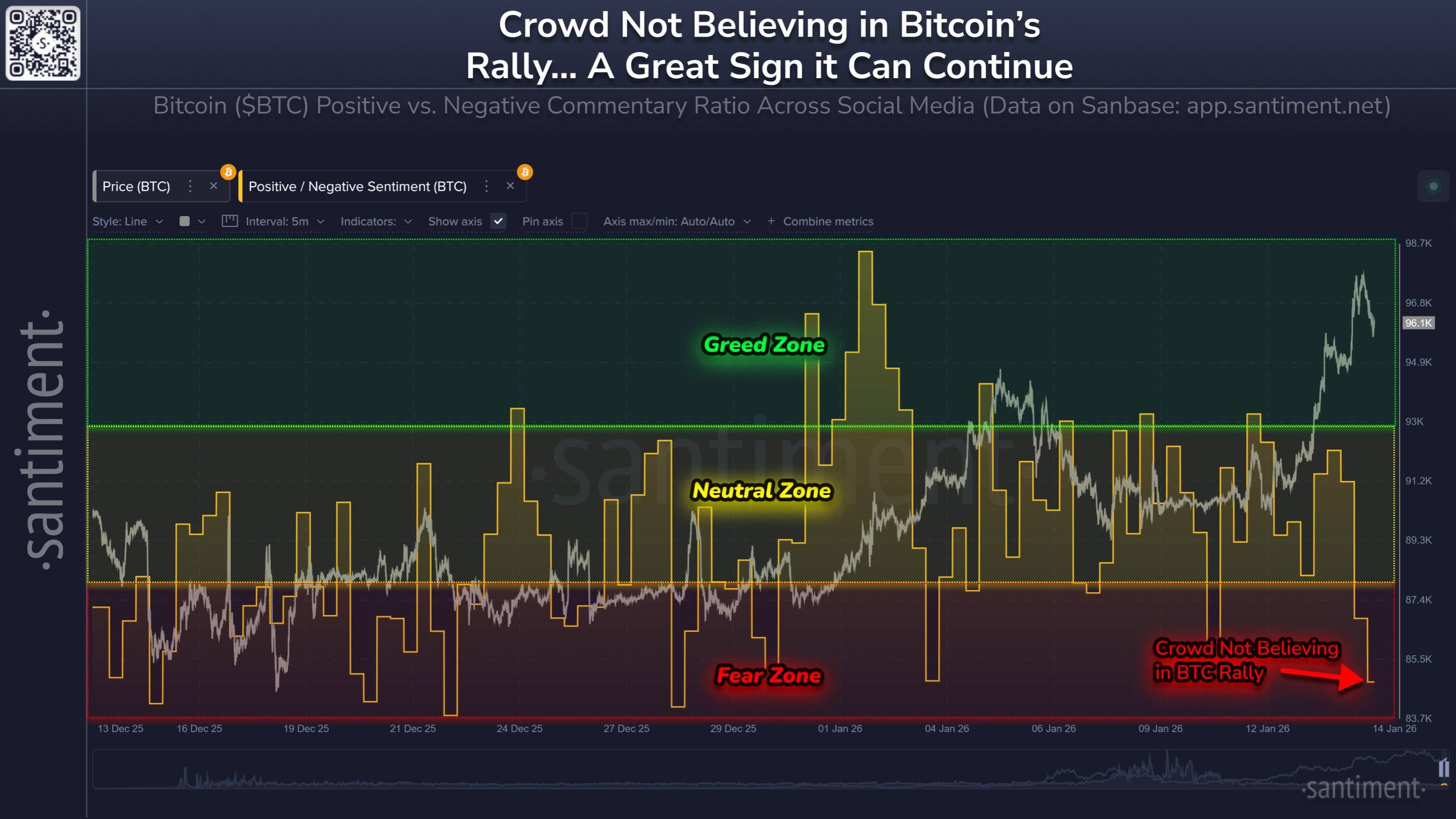
Historically, Bitcoin has tended to move against retail sentiment, especially during trend transitions.
Persistent disbelief during rallies often reflects sidelined capital, short-term hedging, or premature profit-taking rather than distribution by informed holders.
That skepticism reduces the likelihood of immediate exhaustion and increases the odds of a continuation move, with $100,000 emerging as the nearest psychological magnet.
Bitcoin last traded above that level on Nov. 13, and sentiment conditions now look far less euphoric than they did during that prior visit.
Bitcoin’s Ascending Triangle Breakout Signals Reversal Potential
The third chart focuses on price structure. Bitcoin has carved out what resembles an ascending triangle near its recent local lows, defined by rising support and relatively flat overhead resistance.
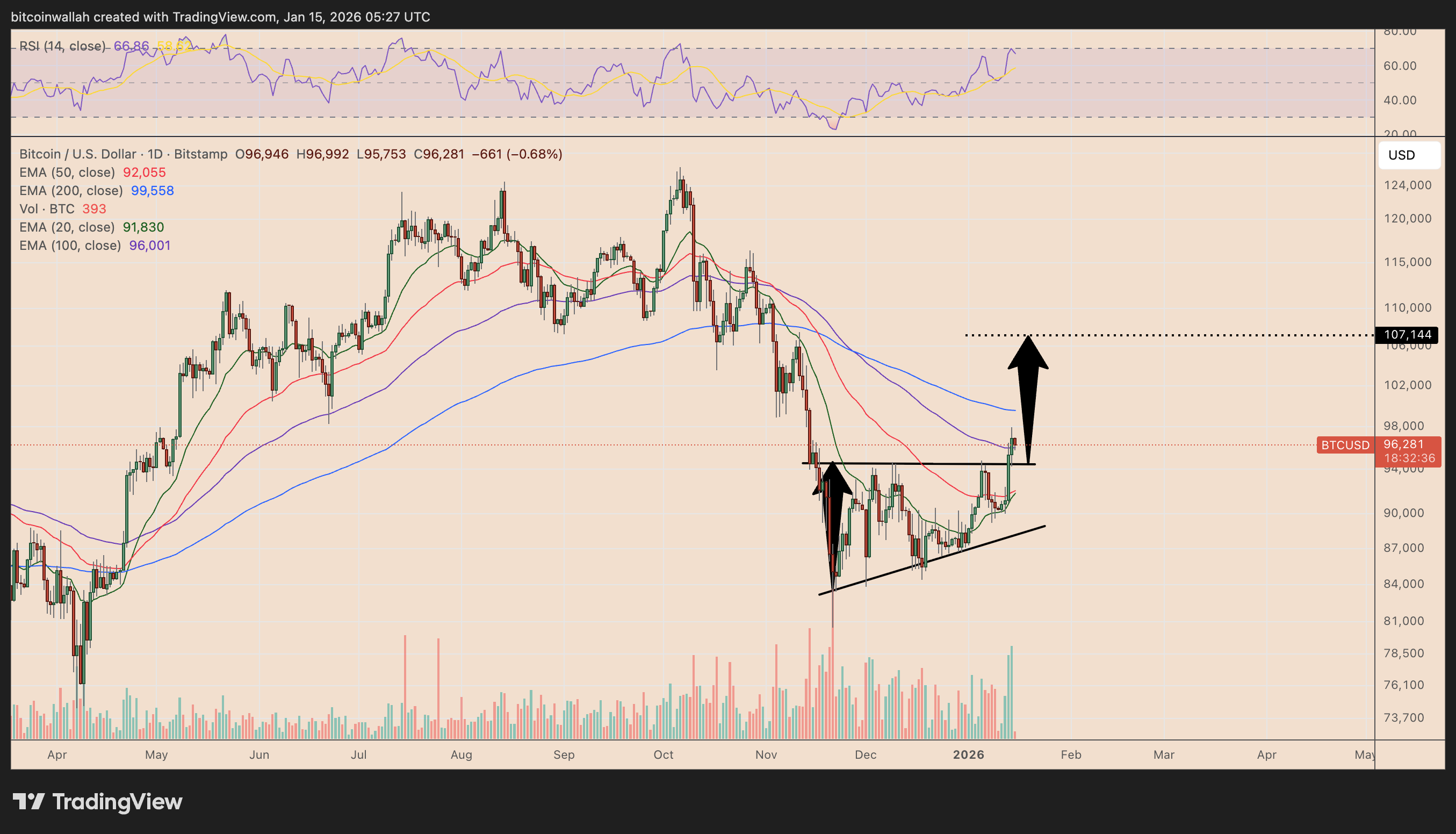
This pattern typically reflects strengthening demand.
Buyers are stepping in at progressively higher levels, while sellers fail to push prices meaningfully lower. The latest breakout above the triangle’s upper boundary coincides with improving momentum and a rebound from oversold conditions.
Measured from the pattern’s height, the structure points toward a retest of the $100,000–$107,000 zone, aligning closely with prior resistance and psychological round-number levels.