
Bitcoin (BTC) extended its decline after the Federal Reserve held interest rates steady at its first policy meeting of the year.
On Jan. 29, the BTC/USD exchange rate was down roughly 1.50% while holding above $88,000, a round-up support level. Its decline accompanied rising volumes, which, in my view, hints at strong bearish conviction among crypto traders.

Fed Pause, US-Iran Conflict May Crash BTC Price Further
The Fed held rates steady at 3.50%–3.75% after delivering three cuts last year, with its officials recommending a wait-and-see approach due to sticky inflation and a cooling jobs market.
Higher interest rates increase the opportunity cost of holding yield-bearing assets like US Treasuries. That, in turn, reduces the appeal of risk-on assets like Bitcoin and equities, which seems to be the case in the past 24 hours.
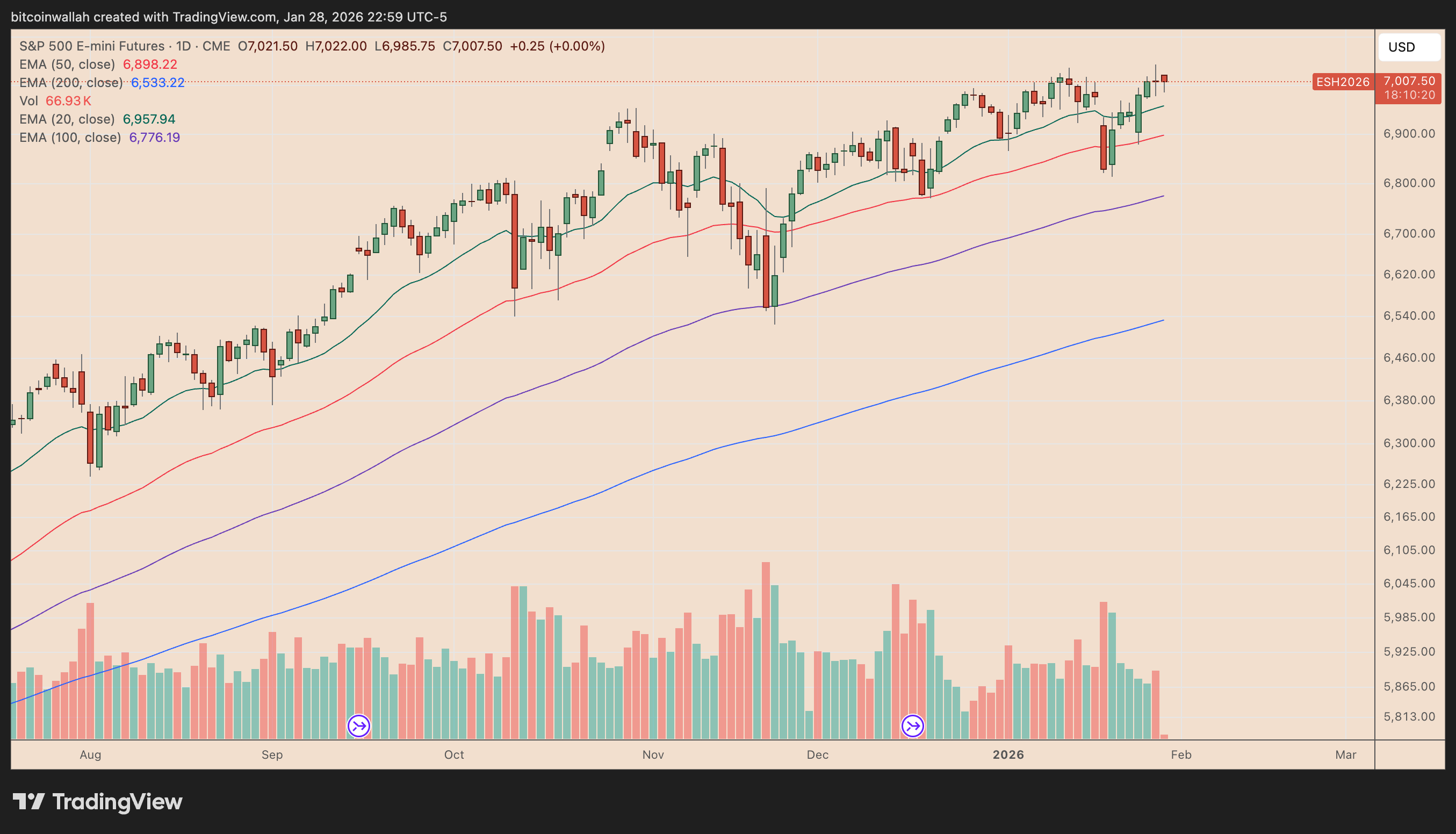
Geopolitics also added to the risk-off mood. Tensions between the US and Iran escalated this week, with a US carrier strike group entering the region and markets pricing a higher chance of conflict.
Oil rose for a third straight session on Jan. 29 on fears of a wider flare-up. Gold rallied to a new record high, further reducing the appeal of Bitcoin and equities among traders.
Bitcoin Price Forecast
Every new Bitcoin analysis as it publishes, today's technical signal and key levels, live price — on one page.
See all Bitcoin forecastsBitcoin On-Chain Metric Double Down on Bearish Outlook
Bitcoin’s Supply in Loss is rising after years in decline, an early warning that downside pressure is spreading beyond short-term traders.
Historically, this inflection has aligned with the early phase of bear markets, when losses begin to migrate from weak hands to progressively longer-term holders.
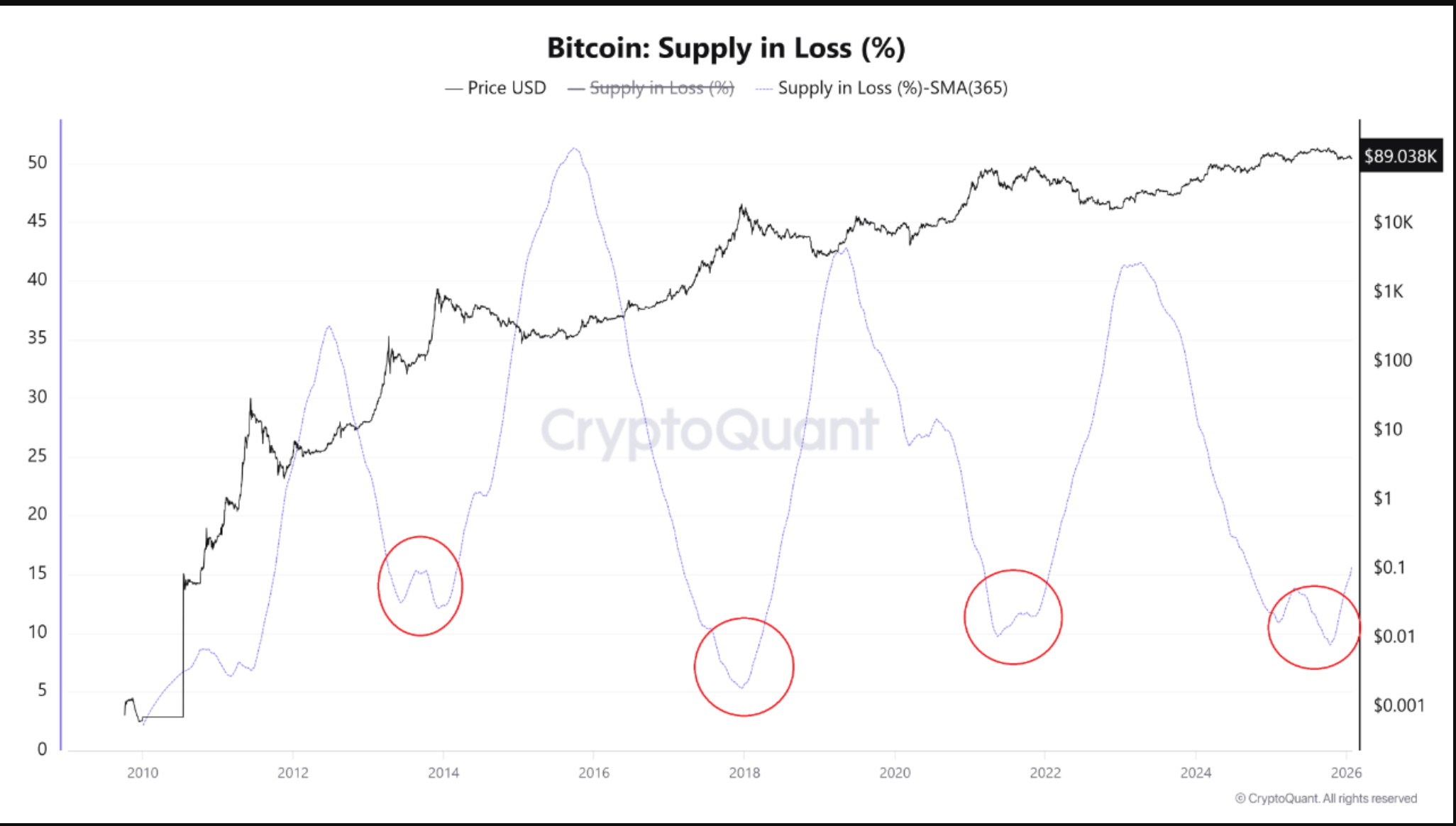
In prior drawdowns (2014, 2018, 2022), the metric turned up well before the final bottom, while price continued to grind lower. The true trough only formed after Supply in Loss expanded much further into capitulation territory.
For now, Supply in Loss remains well below those historical extremes, but the directional shift matters. It suggests Bitcoin may be transitioning into a bear-market structure, not just a quick pullback inside a broader bull trend.
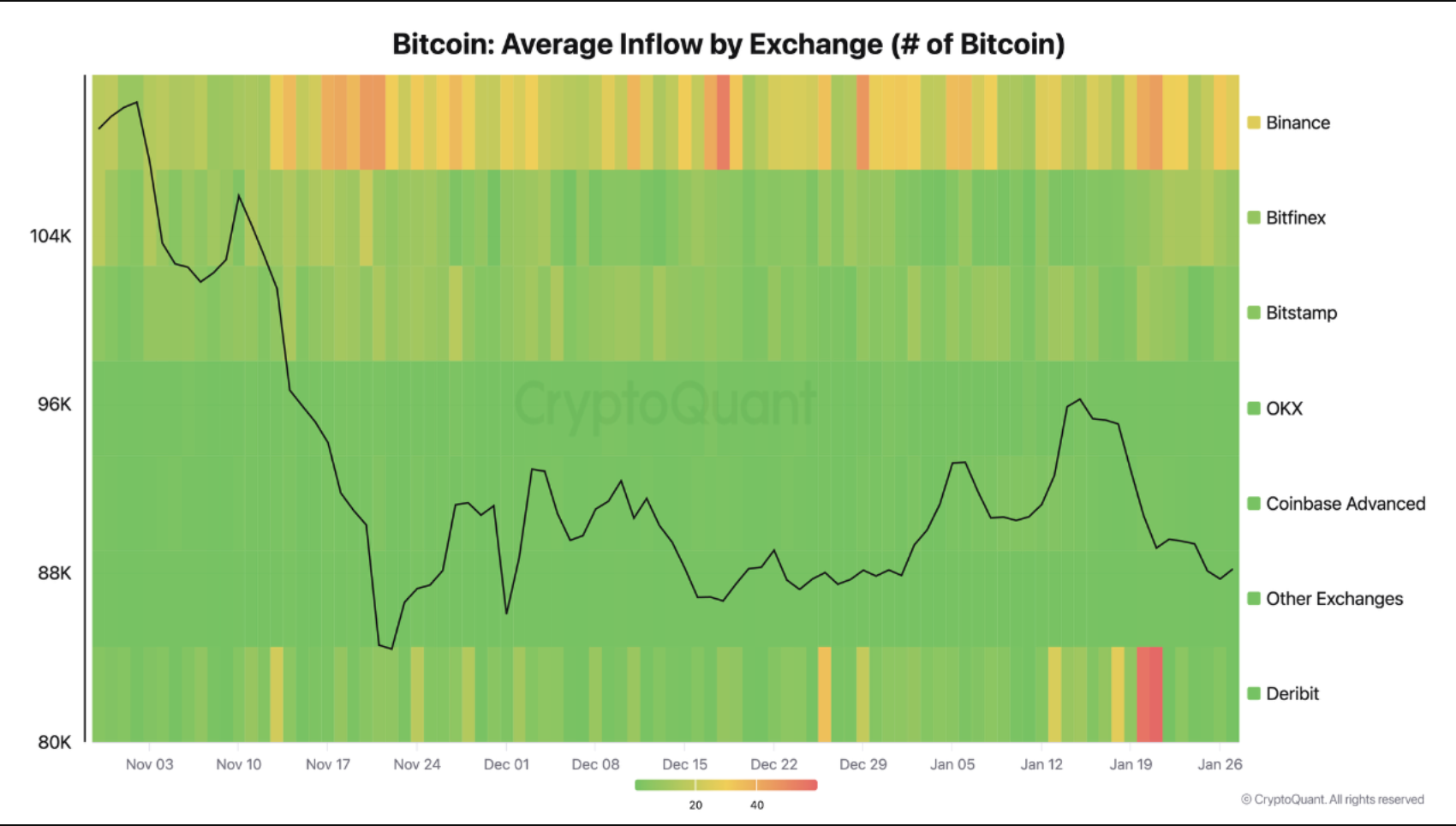
It indicates whales were likely positioning to sell or hedge into strength, since rising deposit sizes—especially on Binance—typically reflect increased access to liquidity and distribution ahead of or during volatility.
Bitcoin Technical Analysis
BTC/USD Four-Hour Chart Outlook: Wedge Shows Decline Toward $84,000
Bitcoin may slide toward $84,000 into early February as the price continues to track the lower boundary of its falling wedge, a structure that often guides downside moves before a breakout attempt.
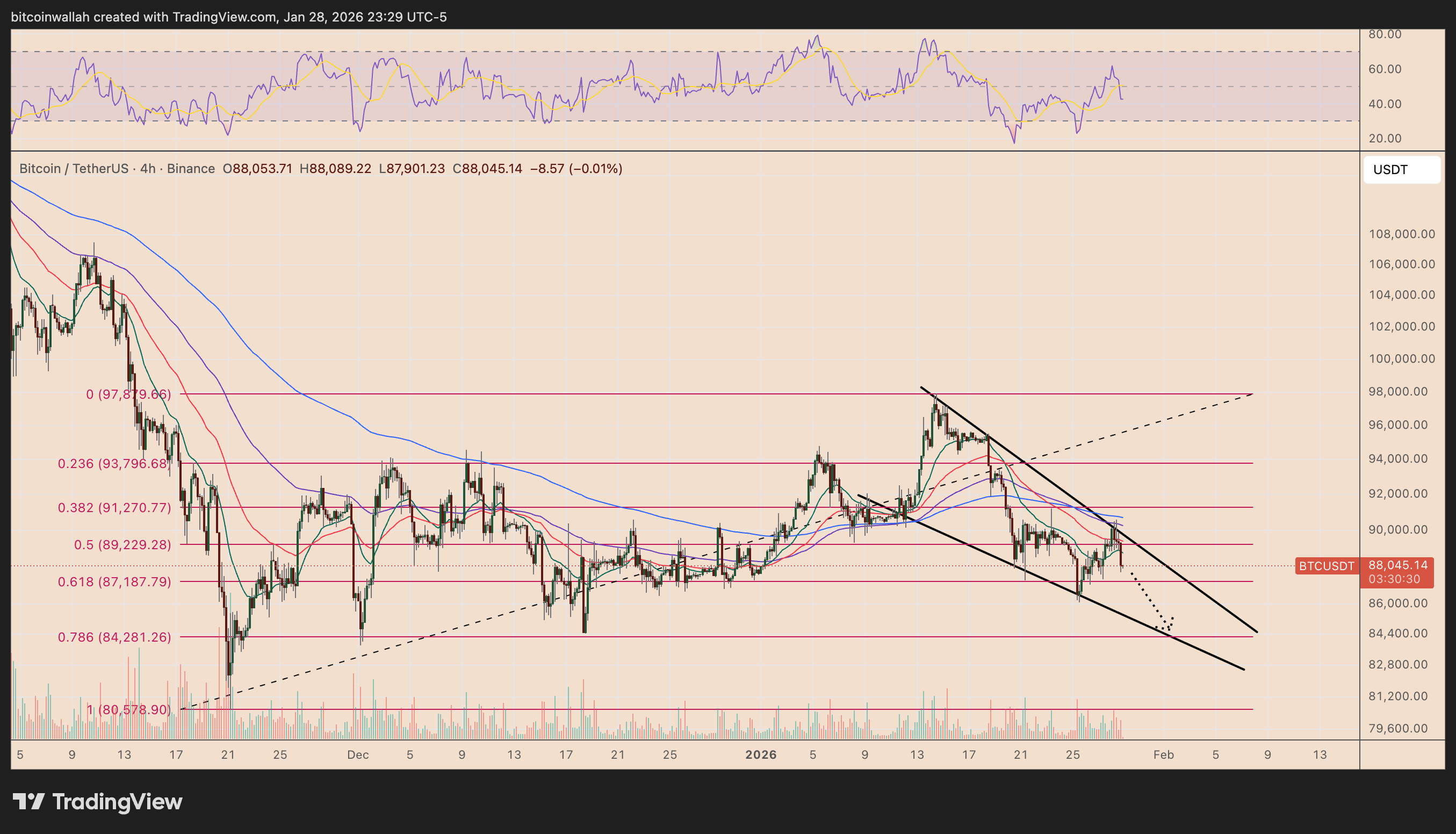
That area also aligns with a key Fibonacci support zone (near the 0.786 retracement), strengthening it as a technical “magnet.” A clean break below would expose deeper downside, while a bounce could set up a wedge breakout retest.
BTC/USD Weekly Chart Outlook: Bear Flag Setup Flashes $70,000 Target
Bitcoin’s weekly chart is also flashing a bear-flag setup.
In January, BTC bounced after testing the pattern’s lower trendline, a support zone that overlaps with the 100-week EMA (the purple wave), helping stabilize price in the near term.
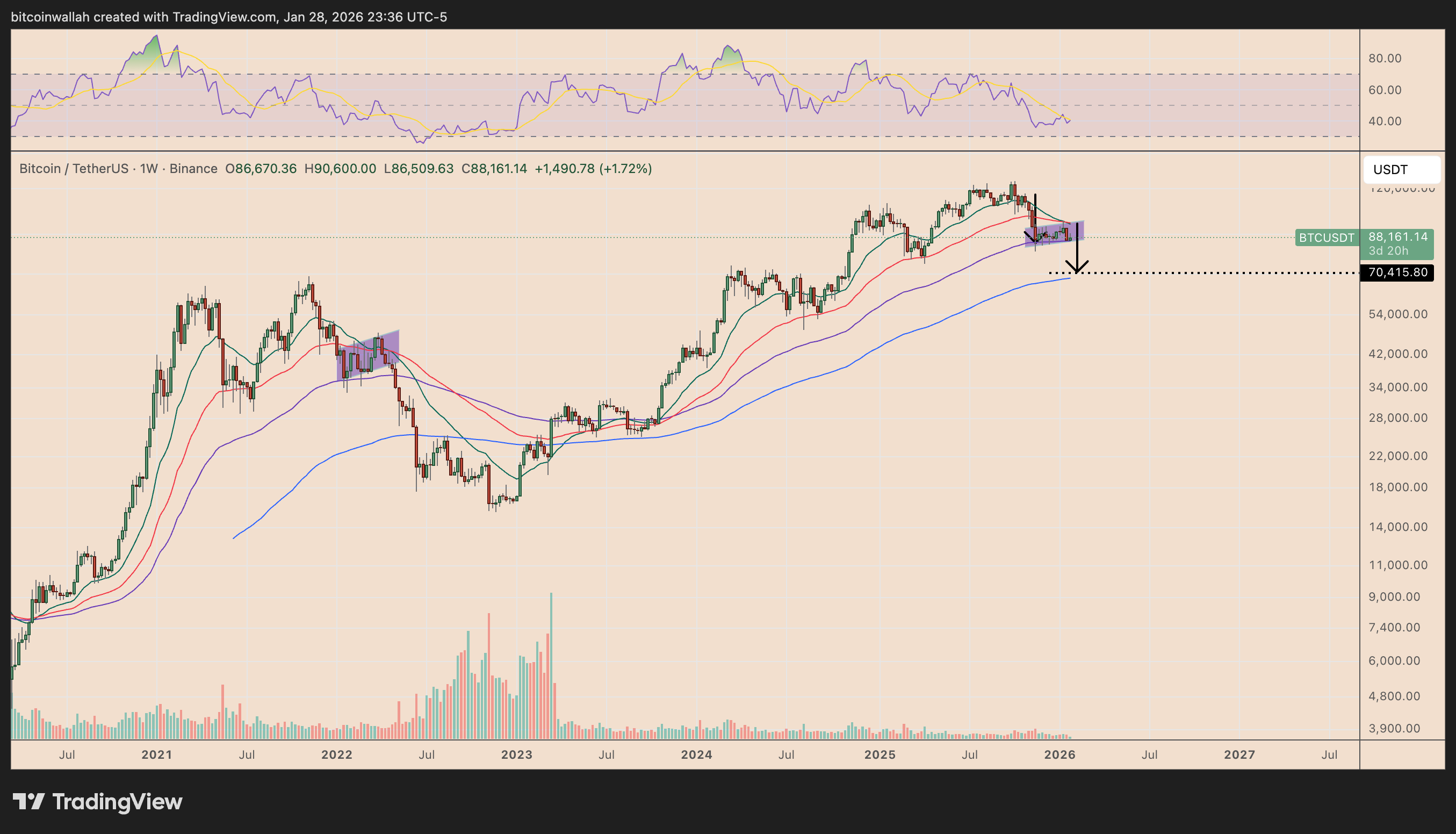
But the broader structure still shows lower highs within a downward-sloping channel, keeping the bias tilted to the downside.
If BTC loses the flag support on a weekly close, the move could trigger a continuation drop, with the next major downside area near $70,000. The level aligns with the 200-week EMA (the blue wave).