
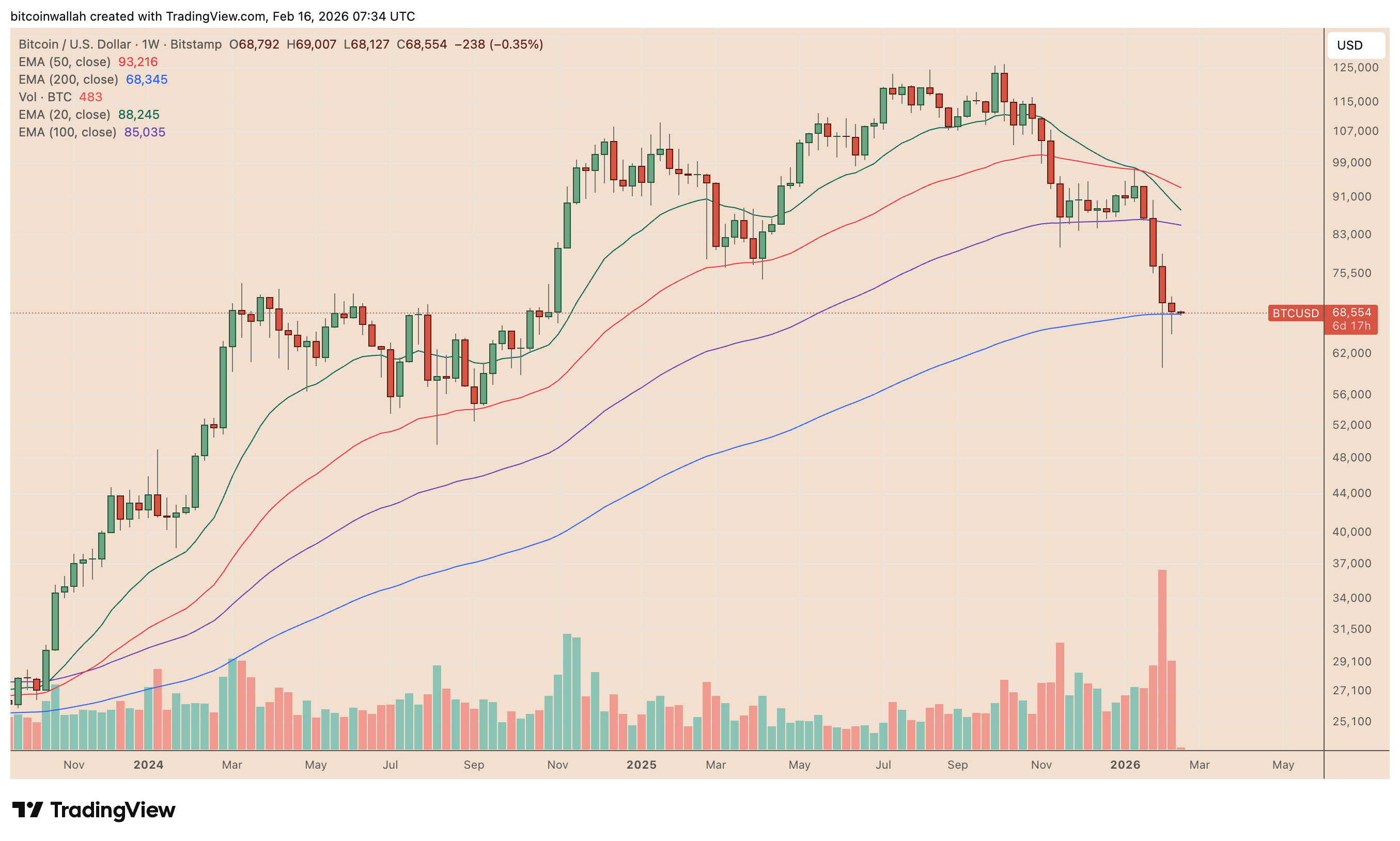
Bitcoin (BTC) opened the new week in red, dropping by 0.50% to around $68,130. Still, the cryptocurrency was floating above a key moving average support and well above the local low of $59,930, established two weeks ago.
Below, I break down the catalysts that shaped last week’s move and the key macro triggers traders are watching as the new week begins.

The Prevailing Bitcoin Price Drivers
Bitcoin’s downside momentum stalled late last week as a softer-than-expected inflation print shifted the macro tone.
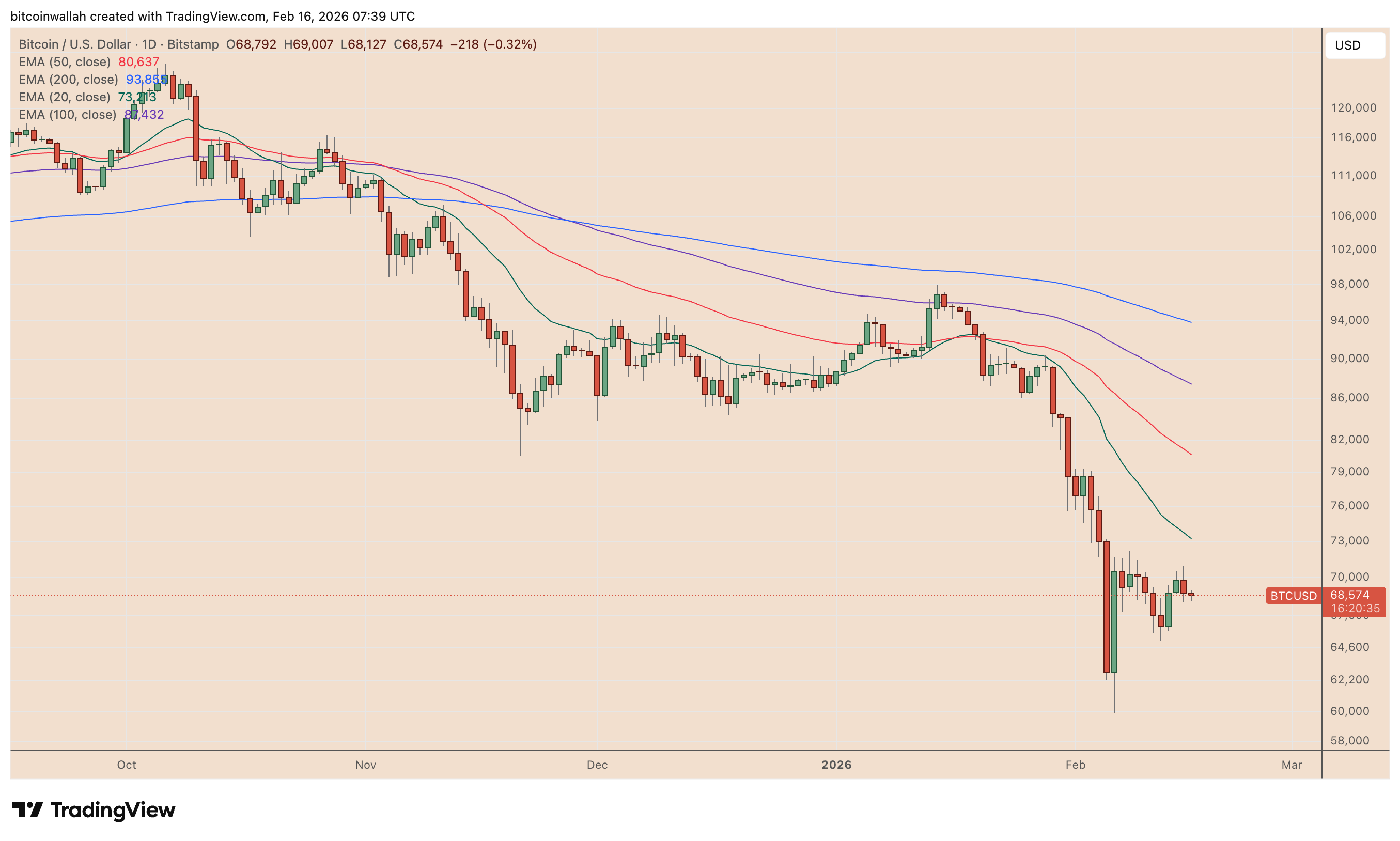
The cryptocurrency had fallen roughly 7.5% through Thursday, briefly slipping below the $65,000 level as traders reacted to a stronger-than-expected January jobs report.
Nonfarm payrolls rose 130,000 versus forecasts for 65,000, while the unemployment rate ticked down to 4.3% and average hourly earnings climbed 0.4%.
The data initially dampened hopes for near-term Federal Reserve rate cuts, pressuring risk assets across the board.
But sentiment turned on Friday after the Consumer Price Index showed headline inflation rising just 0.2% month over month, below expectations.
Annual CPI eased to 2.4%, while core inflation held at 2.5%, its lowest level since April 2021.
Treasury yields fell sharply, with the 2-year sliding toward 3.4% and the 10-year near 4.06%, easing financial conditions and helping Bitcoin stage a swift rebound off weekly lows.
Bitcoin Price Forecast
Every new Bitcoin analysis as it publishes, today's technical signal and key levels, live price — on one page.
See all Bitcoin forecastsWhat Bitcoin Traders Must Focus On This Week
This week’s macro lens narrows to the FOMC minutes and Friday’s Core PCE inflation report, the Fed’s preferred gauge.
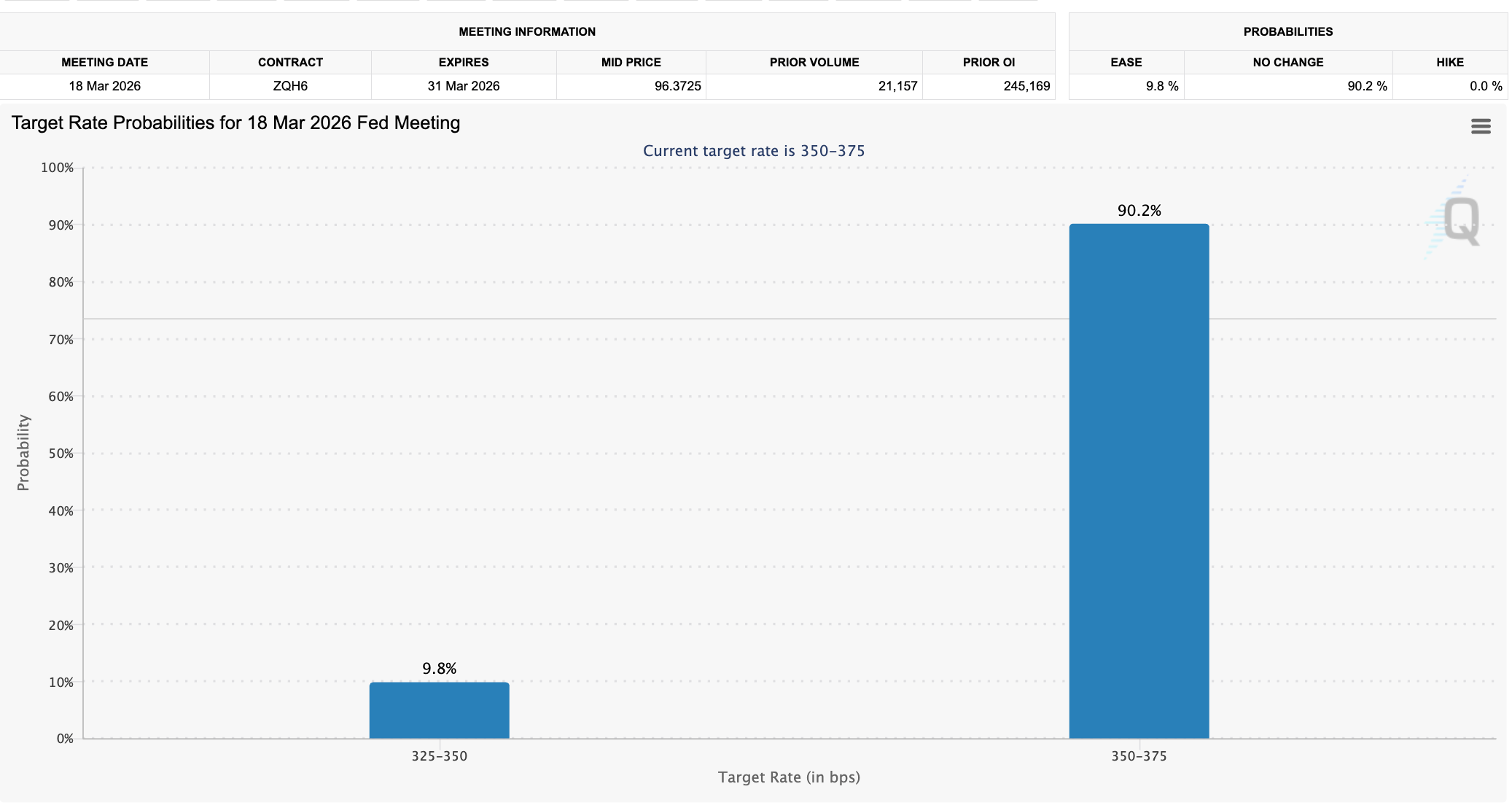
With policymakers holding the federal funds target range at 3.50%–3.75% at the Jan. 28 meeting, traders will comb the minutes for how officials are weighing a still-firm labor market against cooling inflation and, crucially, what that means for the timing of the next policy move.
Core PCE is due Friday, Feb. 20, and a softer print could reinforce last week’s post-CPI drop in yields and keep risk appetite supported; a re-acceleration would likely revive “higher-for-longer” pricing.
For Bitcoin, the implications are direct. A softer Core PCE reading could push Treasury yields lower and revive risk appetite, supporting BTC’s rebound structure.
Conversely, a hotter print may reinforce “higher-for-longer” rate expectations, tightening liquidity conditions and pressuring upside momentum.
Bitcoin Technical Analysis: Another 20% Correction Likely
Bitcoin appears to be carving a bear pennant on the daily chart following its sharp drop from the $90,000 area toward sub-$65,000 levels.
The initial selloff forms the flagpole, while the recent consolidation between converging trendlines reflects weakening upside momentum. Volume has tapered during the consolidation phase, which is typical of pennant structures.
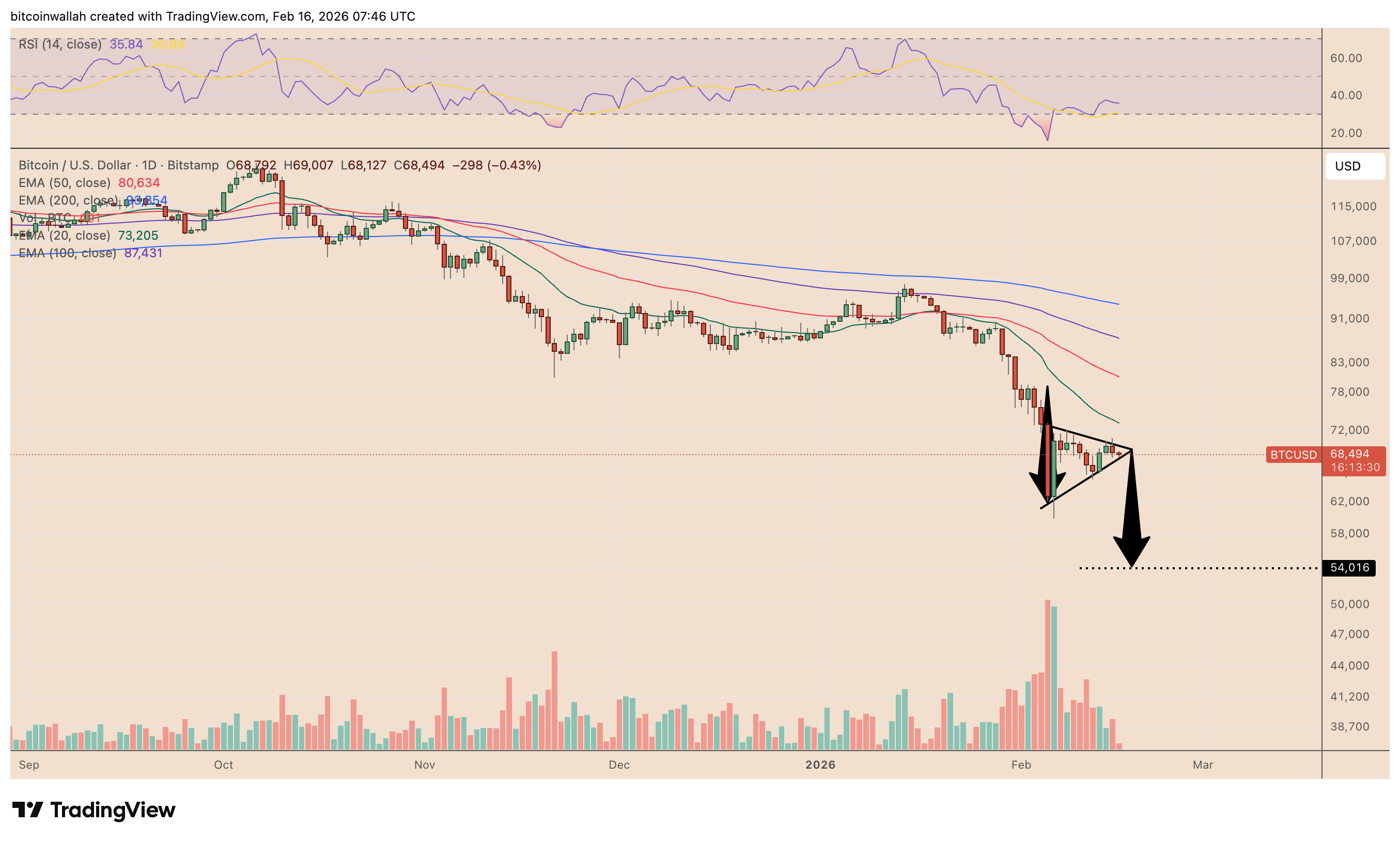
If BTC breaks below the lower trendline support near the $66,000–$67,000 zone, the measured-move target projects toward the $54,000 region, aligning with prior horizontal demand.
A breakout above the upper boundary would invalidate the setup and delay further downside.