



Crude Oil Settles Lower as Supply Concerns Trump Geopolitical Risk
Nearby light crude oil futures settled lower last week. The action was choppy with prices hitting $65.83 before plunging to $62.14 and rebounding to $62.89 at the close. The volatility reflected the market’s struggle to balance geopolitical risk against mounting supply concerns.
U.S.-Iran Tensions Escalate as Trump Deploys Second Naval Fleet
Early in the week, trader focus was clearly on geopolitical concerns tied to the ongoing negotiations between the United States and Iran, and the potential for a supply disruption. Traders grew frustrated throughout the week due to the lack of progress in the talks.
President Trump even expressed his concerns over the uncertainty of a deal, saying at one point that he was considering sending another fleet of warships into the region. By this weekend, it looks like he decided to make the move, indicating he wanted to put pressure on Iran.
The Middle East territory that the markets are most concerned about is the Strait of Hormuz. It’s responsible for roughly 20% of global consumption. So yes, it is a big deal when the U.S. has two naval fleets sitting within striking distance of Iran, which is one of the reasons why the current war premium remains intact.
Supply Glut Resurfaces to Cap Rally Attempts
While a supply disruption and consequently, the war premium provide protection against a price collapse, newly emerging concerns about supply are now capping gains.
Brent Oil Price Forecast
Every new Brent Oil analysis as it publishes, today's technical signal and key levels, live price — on one page.
See all Brent Oil forecastsLast week’s attempt to rally was thwarted Wednesday when the U.S. Energy Information Administration’s (EIA) weekly inventories report showed an unexpected 8.5 million barrel build in stockpiles. The staggering figure was worse than the 793,000 forecast and reminded traders of the persistent oversupply situation facing the oil market.
IEA Demand Downgrade Delivers the Knockout Blow
However, traders didn’t react to the bearish EIA news until Thursday when the International Energy Agency (IEA) released a downwardly revised forecast for 2026 global oil demand growth. In my opinion, it was the IEA’s decision to lower its demand outlook that took the market from positive for the week to lower for the week. The news was strong enough to put a dent in some of the war premium, but not enough to completely eliminate it.
Outlook: Range-Bound Trade Unless Headlines Shift
Looking ahead to this week, in my opinion, I expect to see some downward pressure as long as the key focus remains on the oversupply situation. However, it could easily shift back to supply disruption fears if the U.S.-Iran negotiations collapse. This would open the door to an attack on Iran by the U.S. navy, sitting in the Strait of Hormuz. Traders will also continue to monitor the weekly EIA inventories report and key U.S. economic data including the U.S. GDP report.
Technical Picture Shows War Premium Holding at Key Support
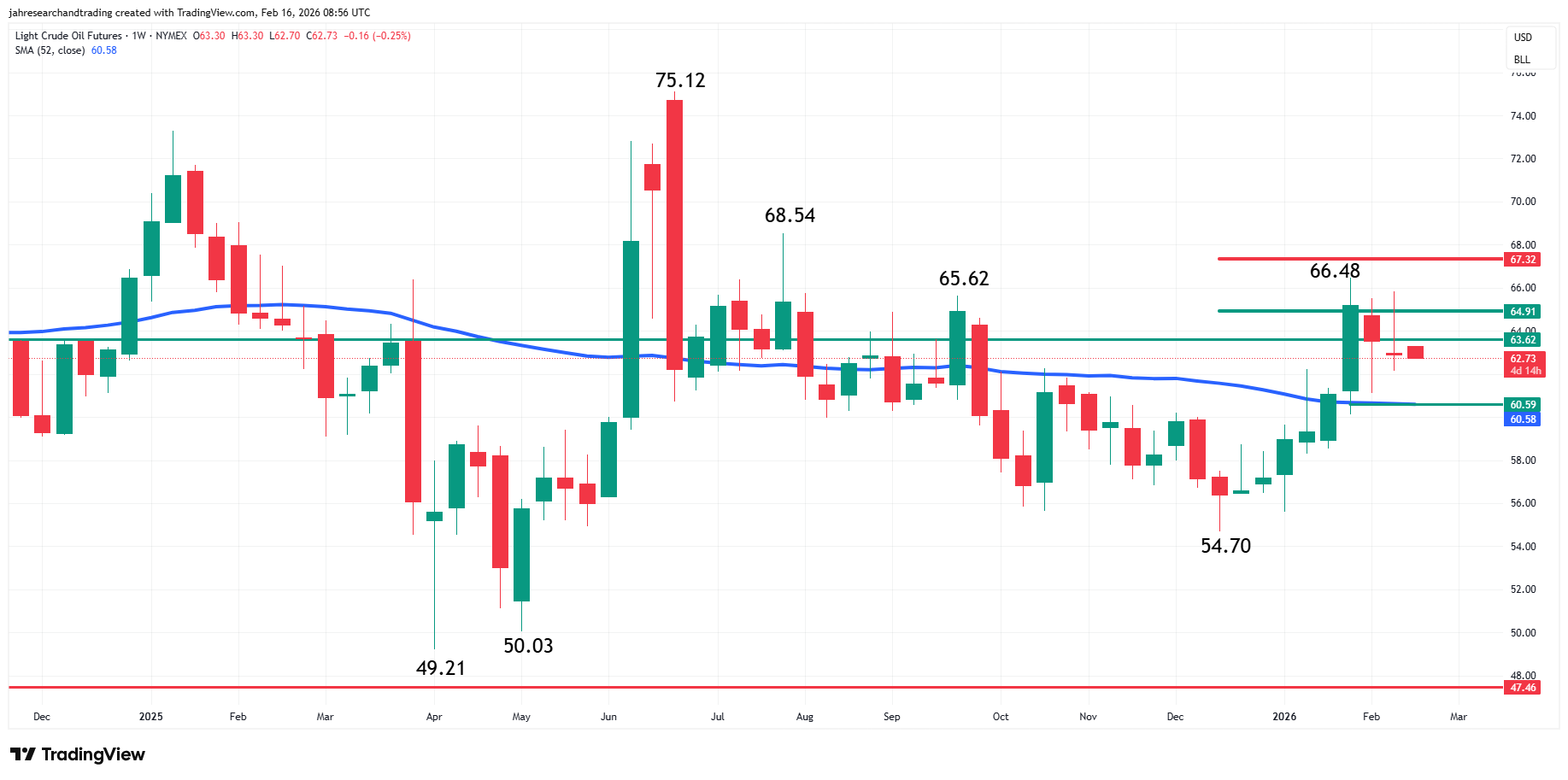
Technically, the market is still holding the 52-week moving average at $60.58. This represents the war premium. Gains are being limited, however, by the long-term pivot at $63.62 and the short-term retracement zone at $64.91 to $67.32. This zone stopped the rally at $66.48 a month ago.
Putting it all together, it looks like a range-bound trade unless a major headline shifts the narrative to bullish or bearish.
More Information in our Economic Calendar.