
Bitcoin (BTC) was down early Monday as traders digested a fresh bout of trade-policy whiplash.
The BTC/USD exchange rate fell by over 5% to around $64,600 at the beginning of this week. Its dip mirrored downside sentiment elsewhere in the risk market, including US futures.

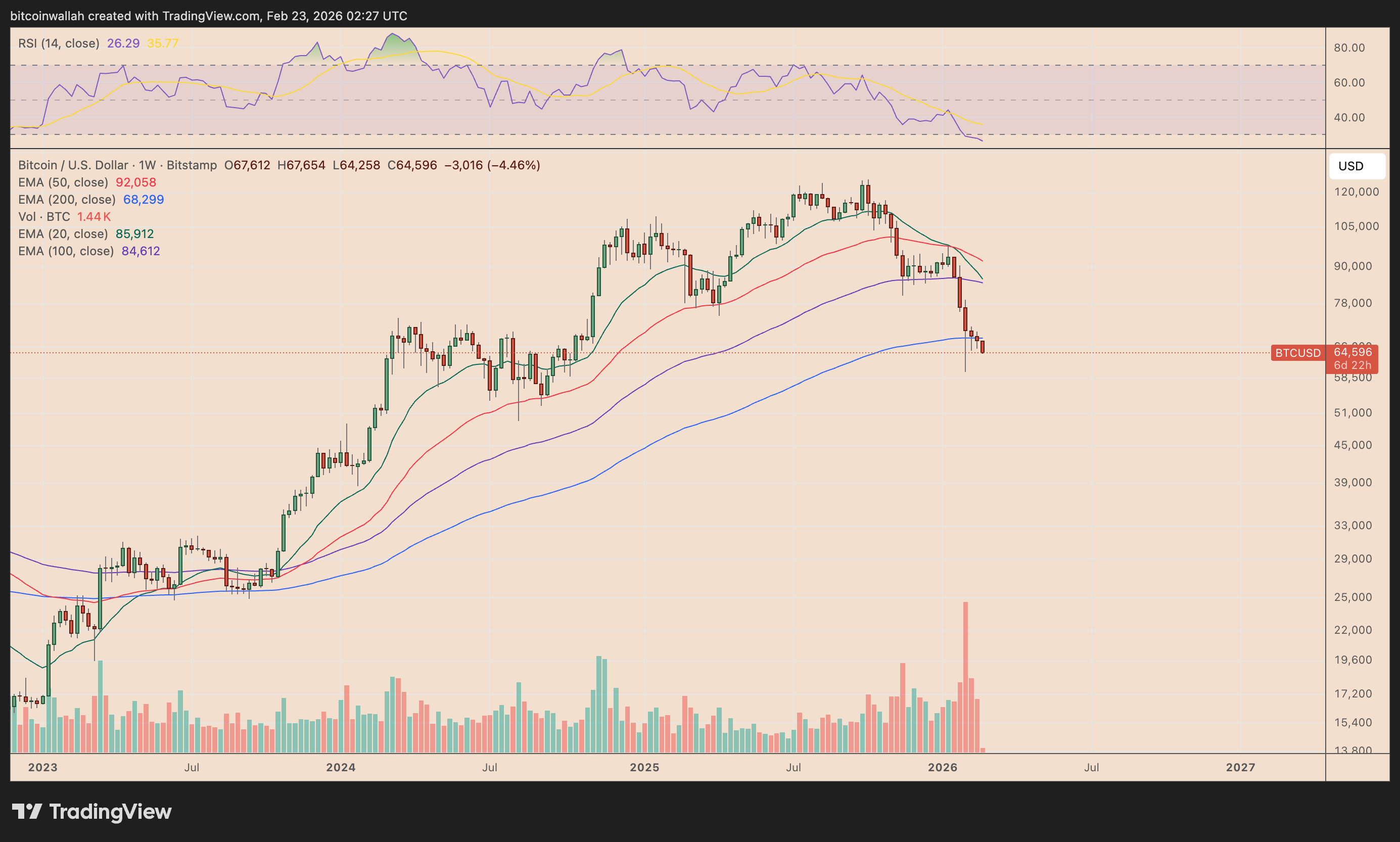
Why is Bitcoin Price Down Already This Week?
Bitcoin’s decline took cues from a mix of growing macroeconomic and geopolitical risks.
To begin with, the US Supreme Court struck down much of President Donald Trump’s earlier emergency-tariff framework. It could have been good news for Bitcoin, but Trump moved quickly to impose a temporary universal tariff, first at 10% and then lifting it to 15%.
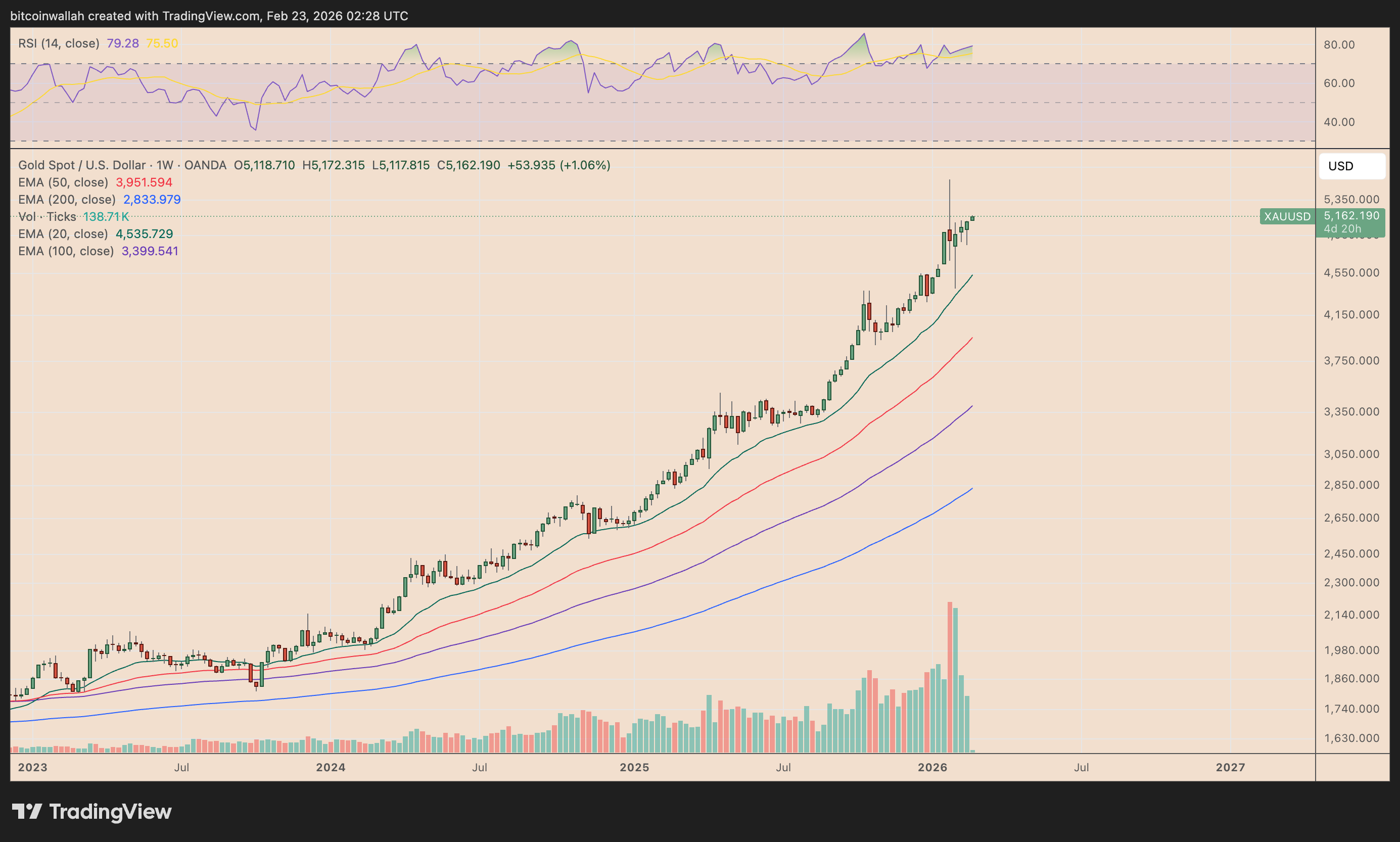
Geopolitical risk was also in the mix, centered on US–Iran tensions and headlines around diplomacy. Markets are watching for potential escalation, but also the possibility of de-escalation: Oman confirmed a third round of US–Iran nuclear talks in Geneva on Thursday.
That’s one reason oil eased after a strong prior-week move, and it fed into cross-asset positioning (risk assets cautious, havens firmer).
Bitcoin Price Forecast
Every new Bitcoin analysis as it publishes, today's technical signal and key levels, live price — on one page.
See all Bitcoin forecastsNVIDIA Earnings Promises a Volatile Week For Bitcoin Ahead
NVIDIA (NVDA) is one of the major catalysts for Bitcoin this week.
The world’s leading chipmaker will release its earnings on Wednesday. Investors are treating it as a litmus test for the AI trade because NVIDIA remains a core bellwether for AI compute demand and hyperscaler capex expectations.
Market chatter is focused on whether Nvidia can sustain “AI is still accelerating” guidance. Consensus expectations cited in market coverage point to ~71% year-over-year profit growth and ~67% revenue growth.

A beat/raise could re-rate the chip complex and broader growth tech, which may lead to Bitcoin’s recovery.
Conversely, a miss or cautious guidance could spill over into semis and AI-adjacent names, hurting Bitcoin alongside.
Bitcoin Technical Analysis: Bear Pennant Breakdown Hints At $52.45K Target
Bitcoin has entered the breakdown stage of what appears to be a bear pennant structure, represented via two converging trendlines after a strong downward move (flagpole).
A bear pennant resolves when the price breaks below the lower trendline while accompanying rising trading volumes. Bitcoin is doing just that, as growing volumes alongside a breakdown indicate higher traders’ conviction in further downside.
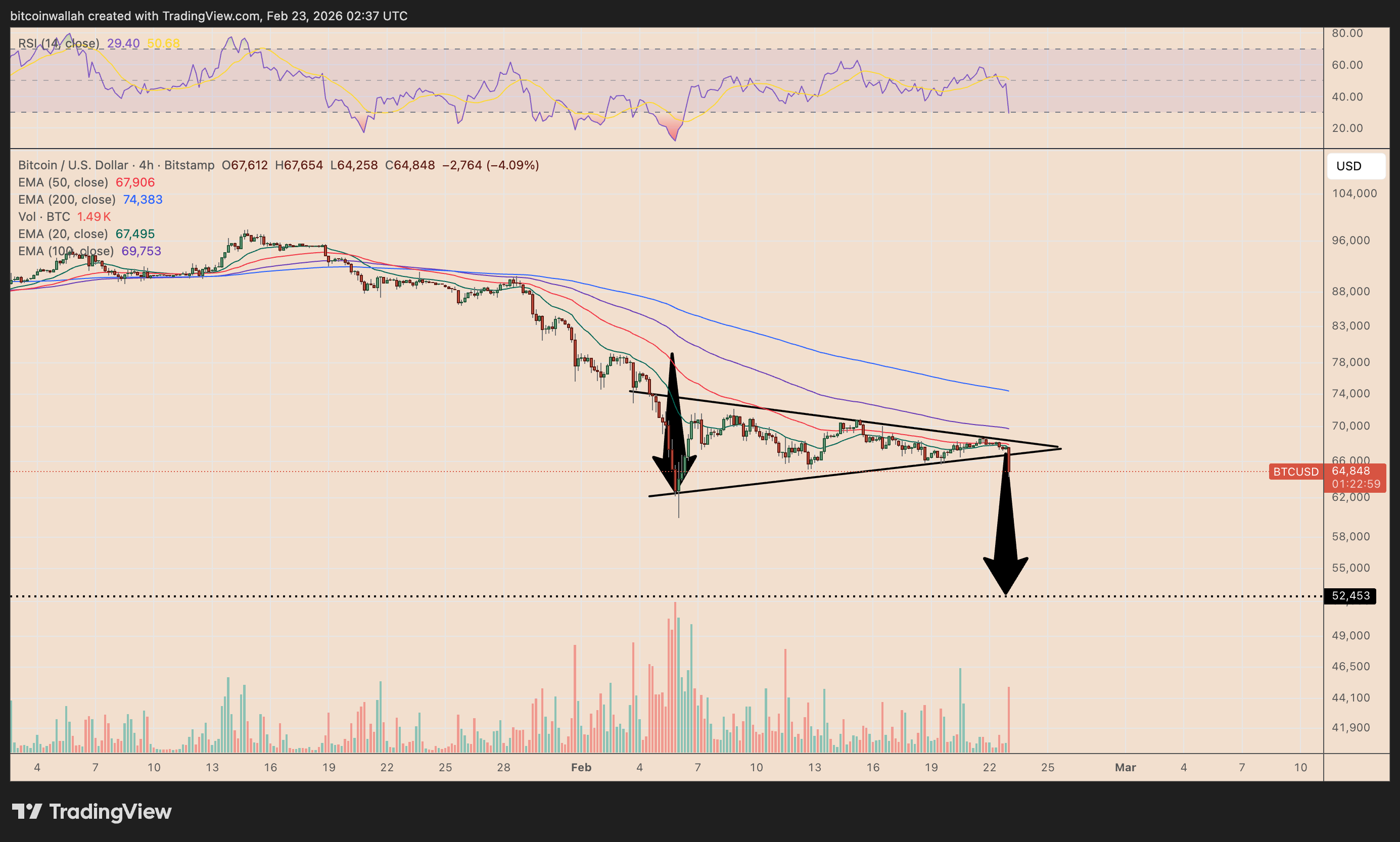
In technical analysis, traders measure the bear pennant’s downside target by subtracting its breakout point from the flagpole height. Applying the same parameters to Bitcoin brings its bear pennant target to around $52,450.
That further aligns with Bitcoin’s realized price (the purple wave in the chart below), the mean level at which traders accumulated the cryptocurrency the most.
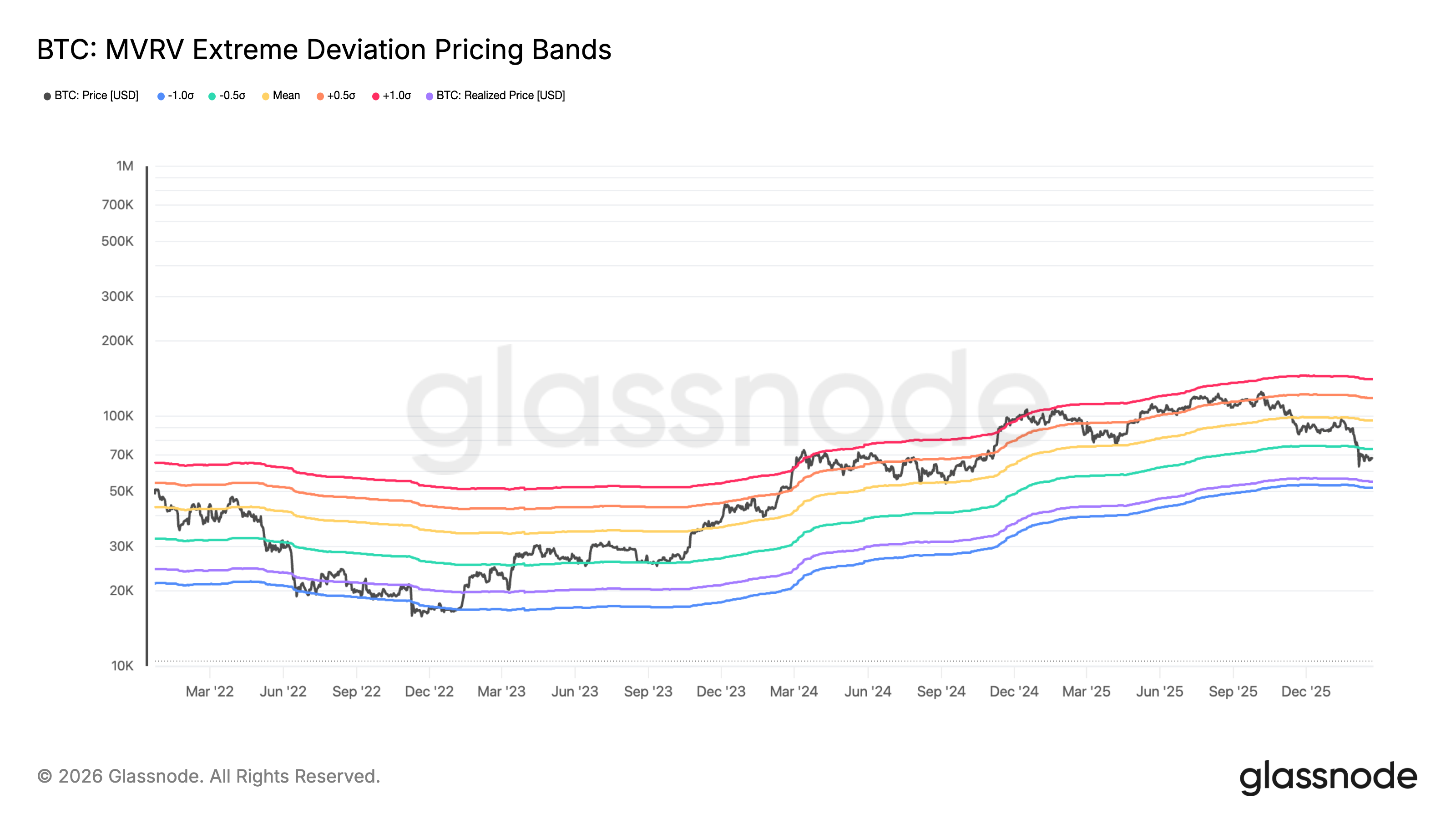
In other words, BTC’s price may decline another 19%–20% from current prices this week.