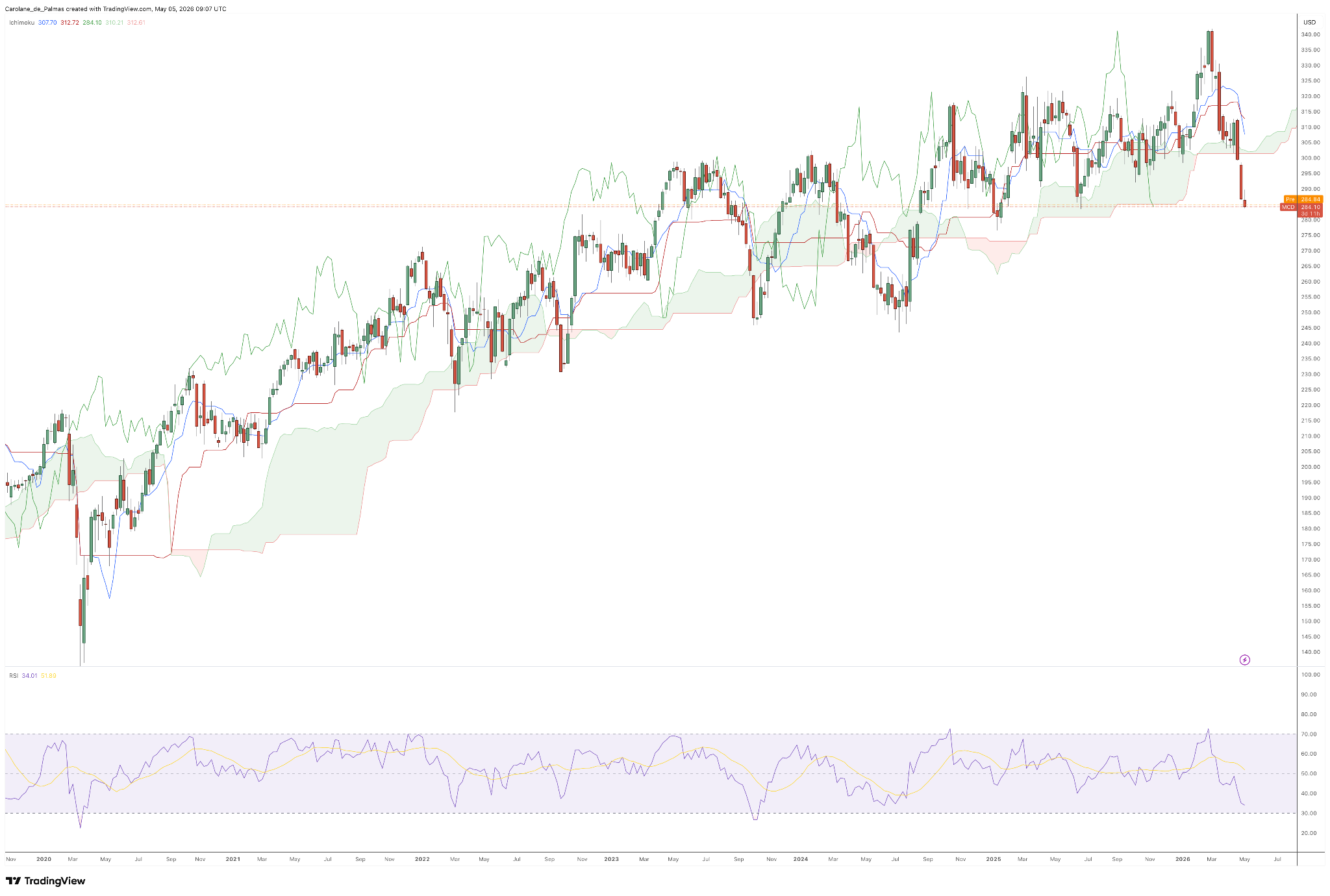
Despite these recent setbacks, the company’s shares have demonstrated 21.35% growth over the last 5 years. The recent pullback from a peak above $341 per share has prompted questions about the company’s trajectory and potential for recovery. Let’s take a look at McDonald’s operational strengths, strategic initiatives, and market position, as they could provide insight into the fundamental factors that could support a stock rebound.

Recent Earnings Performance
The company reported global comparable sales growth of 5.7%, exceeding Wall Street consensus estimates of 3.7%. This outperformance extended across key markets, with U.S. comparable sales rising 6.8%, the largest quarterly increase in approximately two years. This represents a stark contrast to the prior year’s 1.4% decline, which had been pressured by an E. coli outbreak that temporarily dampened consumer traffic.
Earnings per share on an adjusted basis reached $3.12, surpassing analyst expectations of $3.05. Revenue increased 10% to $7.01 billion. CEO Chris Kempczinski highlighted evidence of success in the company’s value-focused strategy, citing increased visits from low-income consumer segments. The fourth quarter also saw the introduction of a holiday-themed Grinch meal that reportedly achieved the highest single-day sales volume in company history, demonstrating the potential impact of promotional product development into the company’s performance.
Competitive Positioning Within the QSR Sector
The quick-service restaurant industry has faced structural headwinds as consumer spending patterns have shifted toward value consciousness. Many competitors have struggled to maintain traffic volumes as customers have reduced frequency or shifted to lower-priced alternatives, which has impacted their stock prices.
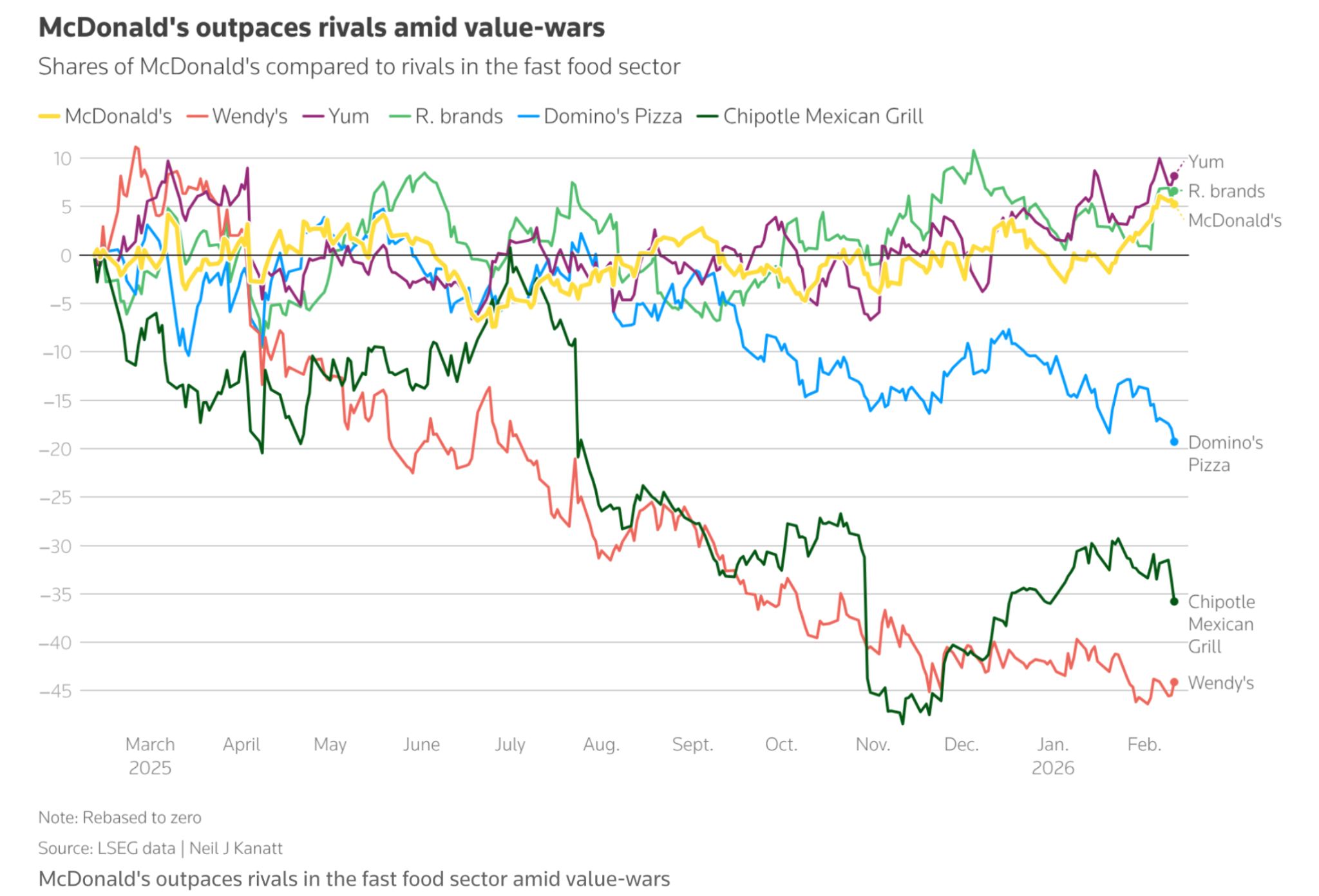
McDonald’s latest results demonstrate the company’s ability to not merely maintain share but gain share within this competitive environment. The company’s comparable sales outperformance versus peers reflects both effective promotional strategy and brand strength. The Monopoly promotional tie-in, reintroduced in October after nearly a decade, demonstrated the sustained emotional connection many consumers maintain with the brand, generating significant traffic uplift.
What Are the Strategic Growth Initiatives for 2026?
McDonald’s articulated an ambitious expansion plan for 2026, planning capital expenditures between $3.7 billion and $3.9 billion. This investment is predominantly directed toward new unit development, with the company targeting approximately 2,600 new restaurant openings globally.
Such expansion indicates management confidence in the brand’s market demand and long-term profitability prospects. Operating margin guidance from the company for 2026 is expected in the mid-to-high 40% range, compared to 46.1% achieved in 2025, suggesting the company anticipates modest margin compression during the investment phase.
1. McDonald’s Is Leveraging McCafé to Dominate Specialty Drinks. A significant innovation initiative involves the rollout of a new McCafé-branded beverage lineup in the United States and select international markets. This expansion builds on a 500-store pilot program that exceeded internal expectations.
The McCafé extension represents a strategic effort to increase per-customer spending and capture market share in the growing premium beverage segment, which has historically delivered higher margins than traditional food offerings.
2. McDonald’s Is Strengthening its Value Strategy to Capture More Price-Conscious Consumers. A fundamental pillar of McDonald’s recent performance has been its value proposition strategy. In an environment where consumer spending patterns have become more cautious, McDonald’s has specifically engineered promotional offerings to address budget-conscious demographics. The company has implemented a tiered pricing approach, introducing menu items priced at $3 or less and bundled meal offerings ranging from $4 to $6.
In June 2024, McDonald’s introduced a $5 meal offering on a limited-time basis. The success of this promotion led the company to extend its availability beyond the initial timeframe, indicating strong consumer acceptance. Subsequently, the company has rolled out additional promotional tiers, including a $4 breakfast meal deal and lunch and dinner combinations priced between $5 and $6. During 2024, the company also offered 15% discounts on select combo meals and introduced $5 and $8 special offerings.
This promotional architecture achieves multiple objectives. First, it creates psychological price anchors that make purchases appear economical. Second, by bundling items, it increases average transaction values while maintaining perceived affordability. Third, it demonstrates the company’s ability to adjust marketing strategy in real time based on consumer response. The early momentum data (reflected in comparable sales outperformance) suggests this approach is effectively capturing traffic that competitors may be losing.
3. McDonald’s Is Relying on its International Markets. McDonald’s international operations have contributed meaningfully to overall growth. Sales in the company’s franchised restaurant segment increased 4.5% last quarter, driven substantially by demand in Japan. Additionally, the company’s international operated-market restaurant segment posted sales growth of 5.2%, with particular strength observed in Britain, Germany, and Australia.
This geographic diversification provides important risk mitigation for the company. While the U.S. market represents the largest revenue contributor, international operations now represent a meaningful percentage of overall results.
The strength across multiple developed markets suggests that McDonald’s value positioning resonates globally, not merely as a domestically unique phenomenon. Furthermore, according to independent analyst Mark Kalinowski’s franchisee survey conducted in January, franchisee sentiment regarding store performance over the subsequent six-month period reached its highest level in nearly three years, indicating operational confidence extends beyond corporate management to the franchise partners who execute daily operations.
4. McDonald’s is Expanding its Beverage Segment to Profit from a High-Margin Opportunity. McDonald’s strategic focus on beverage innovation represents a significant opportunity for margin expansion and traffic increase. The beverage sector, particularly specialty coffee and craft beverages, has demonstrated sustained growth across the restaurant industry. McDonald’s is positioning itself to capture share in this segment through targeted product development and competitive pricing.
Beginning in April 2025, McDonald’s introduced crafted sodas and cold coffee refresher beverages to its U.S. menu. These offerings include items such as a Dirty Dr Pepper and a Mango Pineapple Refresher, designed to appeal to younger demographics and existing customers seeking premium beverage experiences. Importantly, McDonald’s has strategically priced these offerings below comparable competitors such as Starbucks, Dutch Bros, and Sonic, positioning the company as a value alternative in a market segment traditionally associated with premium pricing.
Further expansion of this strategy is planned, with energy drink offerings scheduled for launch in August. This timing aligns with seasonal consumer demand patterns and positions McDonald’s to capture share as consumer interest in energy beverages accelerates during the latter half of the calendar year. Beverages typically offer significantly higher gross margins than food products, making this segment expansion particularly attractive from a profitability standpoint. Each beverage transaction incrementally increases per-customer spending without proportionally increasing food costs of goods sold.
What Could it Mean for McDonald’s Stock?
Has McDonald’s recent pullback from its peak valuations created an opportunity? Are current price levels reflecting fair value or presenting an attractive entry point? Several factors suggest the recent weakness may have been overdone.
First, the company has demonstrated operational momentum through consecutive quarters of same-store sales acceleration.
Second, the strategic initiatives outlined for 2026—geographic expansion, beverage innovation, and continued value positioning—are in early stages of execution, suggesting a material runway for continued performance improvement.
Third, the company’s balance sheet strength and capital allocation discipline support continued expansion spending while maintaining shareholder distributions.
Fourth, the guidance for opening 2,600 units globally reflects management confidence in development returns and brand demand durability. The mid-to-high 40% operating margin guidance, despite anticipated compression from expansion spending, remains within ranges that support attractive profitability relative to the broader restaurant industry.
Perhaps most significantly, the company’s success in the value segment comes at a moment when consumer behavior is shifting toward price consciousness. McDonald’s has demonstrated operational agility in adjusting promotional strategy, pricing architecture, and product development to address evolving consumer preferences. This adaptability, when combined with the company’s scale advantages and brand recognition, represents a sustainable competitive advantage.
Key metrics to monitor during this quarter earnings include quarterly comparable sales persistence, unit growth achievement, operating margin trends, and beverage segment penetration rates. International market momentum, particularly in Japan and Europe, merits continued attention given these regions’ contribution to consolidated results. Additionally, tracking franchisee sentiment and unit economics will provide insight into whether current promotional strategies are sustainable and generate acceptable returns for franchise partners.
As McDonald’s has demonstrated momentum in traffic, profitability, and market share, the current valuation could provide an entry point for investors wanting to invest in the giant fast food company over the long term.
Sources: Reuters, The Wall Street Journal, CNBC, Yahoo Finance, McDonald’s