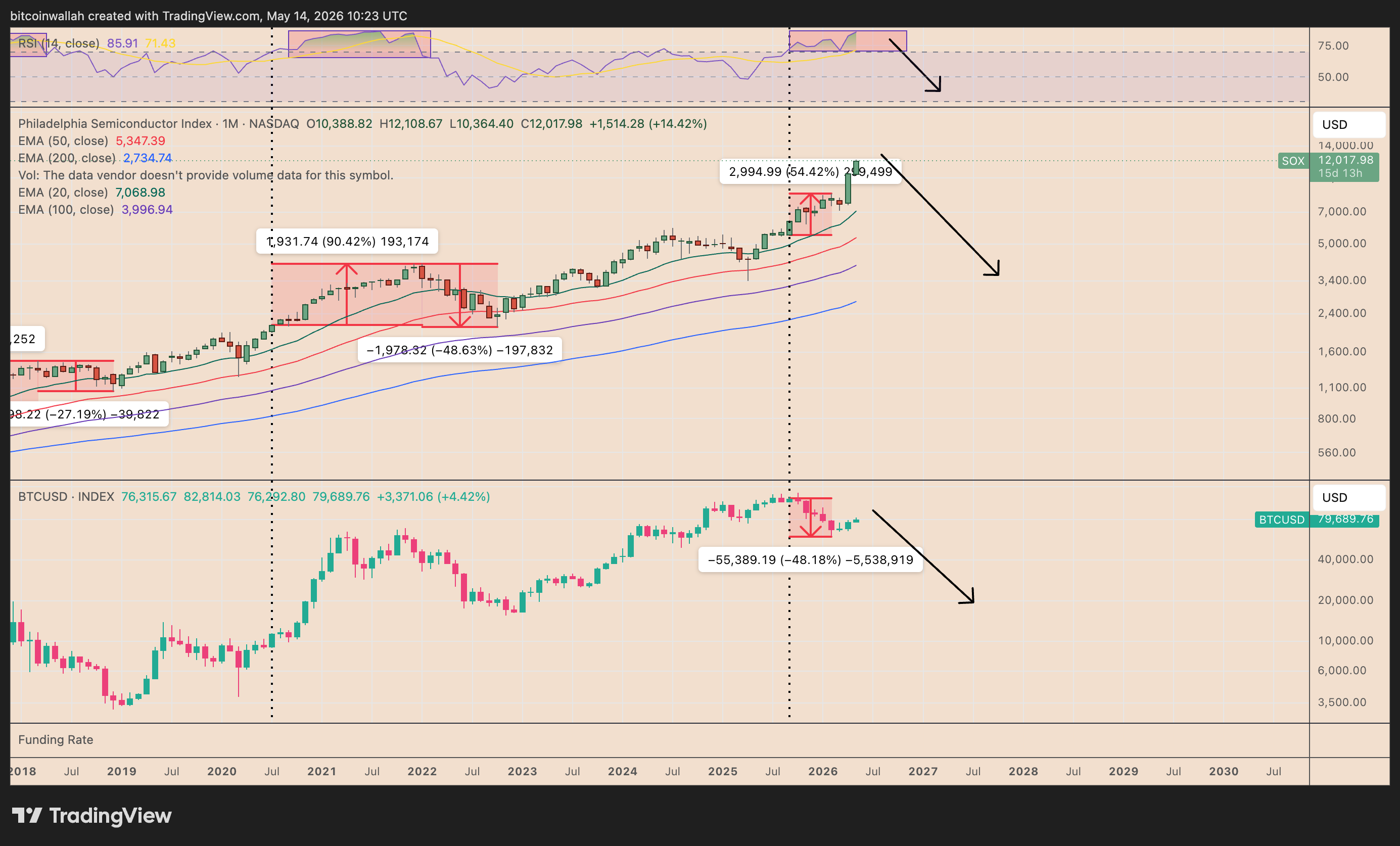
Investor Michael Burry, aka “The Big Short,” says the semiconductor rally looks like the final stretch of the dot-com bubble. I think that warning matters to Bitcoin (BTC) bulls, too, especially to long-term holders like me.
In past cycles, BTC broadly moved with the same risk-on waves that lifted chip stocks. This time, that link has weakened, and Strategy may be the biggest reason why.
Why I Care About the SOX Index
The Philadelphia Semiconductor Index, or SOX, tracks major semiconductor companies and has served as one of the clearest gauges of speculative enthusiasm in tech since 1993.
Traders often treat it as a clean barometer of AI and high-growth tech appetite. That is why Burry’s warning caught my attention.
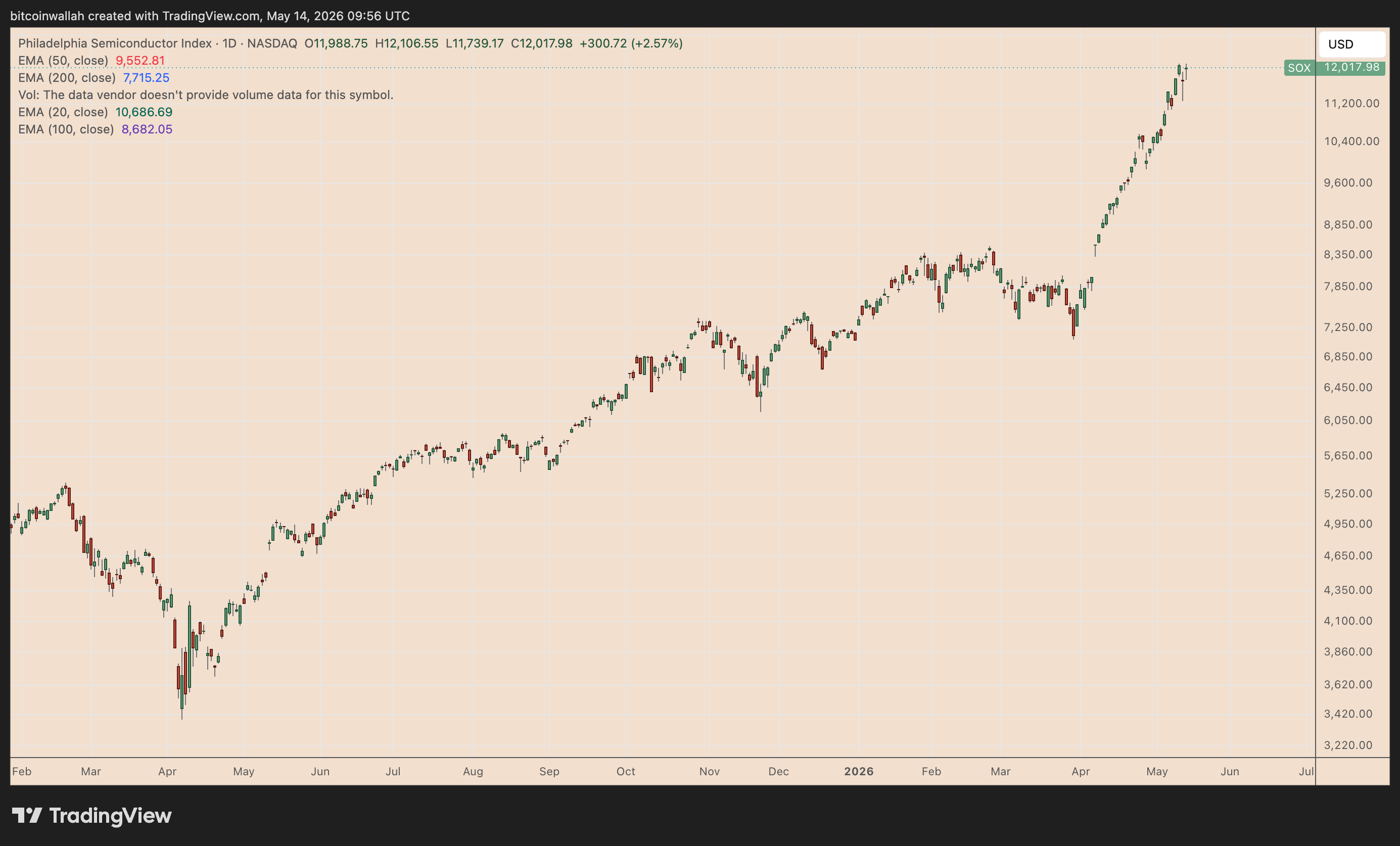
Earlier this month, Saylor compared the AI-driven rally to “the last months” of the 1999-2000 bubble. Around that time, STOX jumped more than 10% in a single week and was up roughly 65% in 2026.
The key signal on my chart is the monthly RSI pushing above 70. Newer traders often hear “overbought” and assume a crash comes next. That is not how strong bull phases work.
My chart shows that in earlier SOX cycles, the index kept rising hard even after RSI first crossed into overbought territory. One run extended another 82.6%. Another stretched about 90.4%.
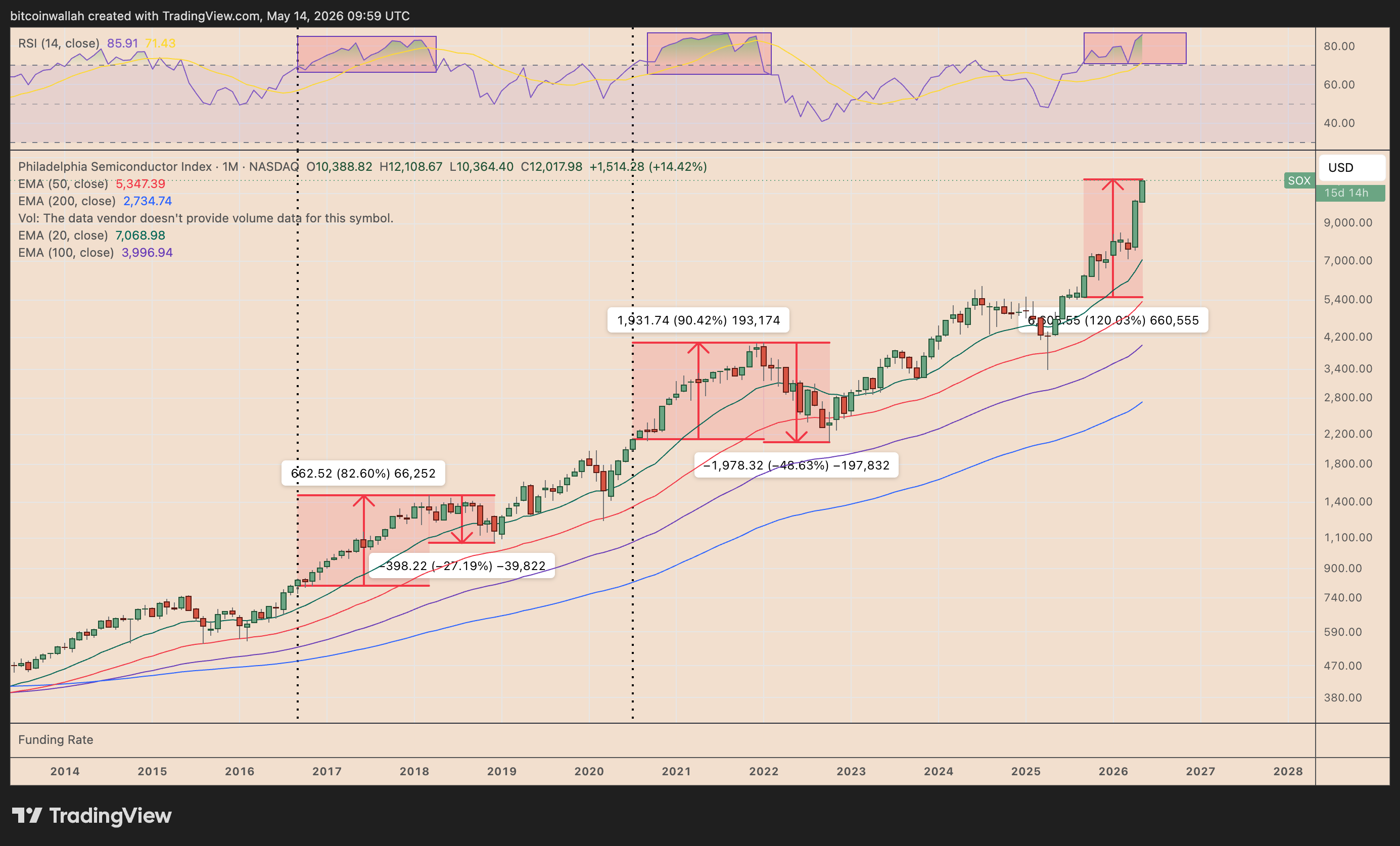
In the current cycle, SOX has already climbed roughly 120% from the marked breakout area, and it is now showing fresh signs of exhaustion. The same chart also shows how ugly the comedown can get: prior drawdowns reached about 27.2% and 48.6%.
That is the first important point in this whole thesis: Overbought conditions did not lead to immediate bullish exhaustion, but when the rally finally died, the damage was large.
Bitcoin Price Forecast
Every new Bitcoin analysis as it publishes, today's technical signal and key levels, live price — on one page.
See all Bitcoin forecastsBitcoin Mirrored Semiconductor Trends, Mostly
In previous cycles, Bitcoin acted like a turbocharged version of the same risk-on trade.
One historical phase saw BTC rise by about 3,526%. Another delivered roughly 665%. Those moves broadly lined up with the same kind of speculative environment that helped push SOX deep into overbought territory.
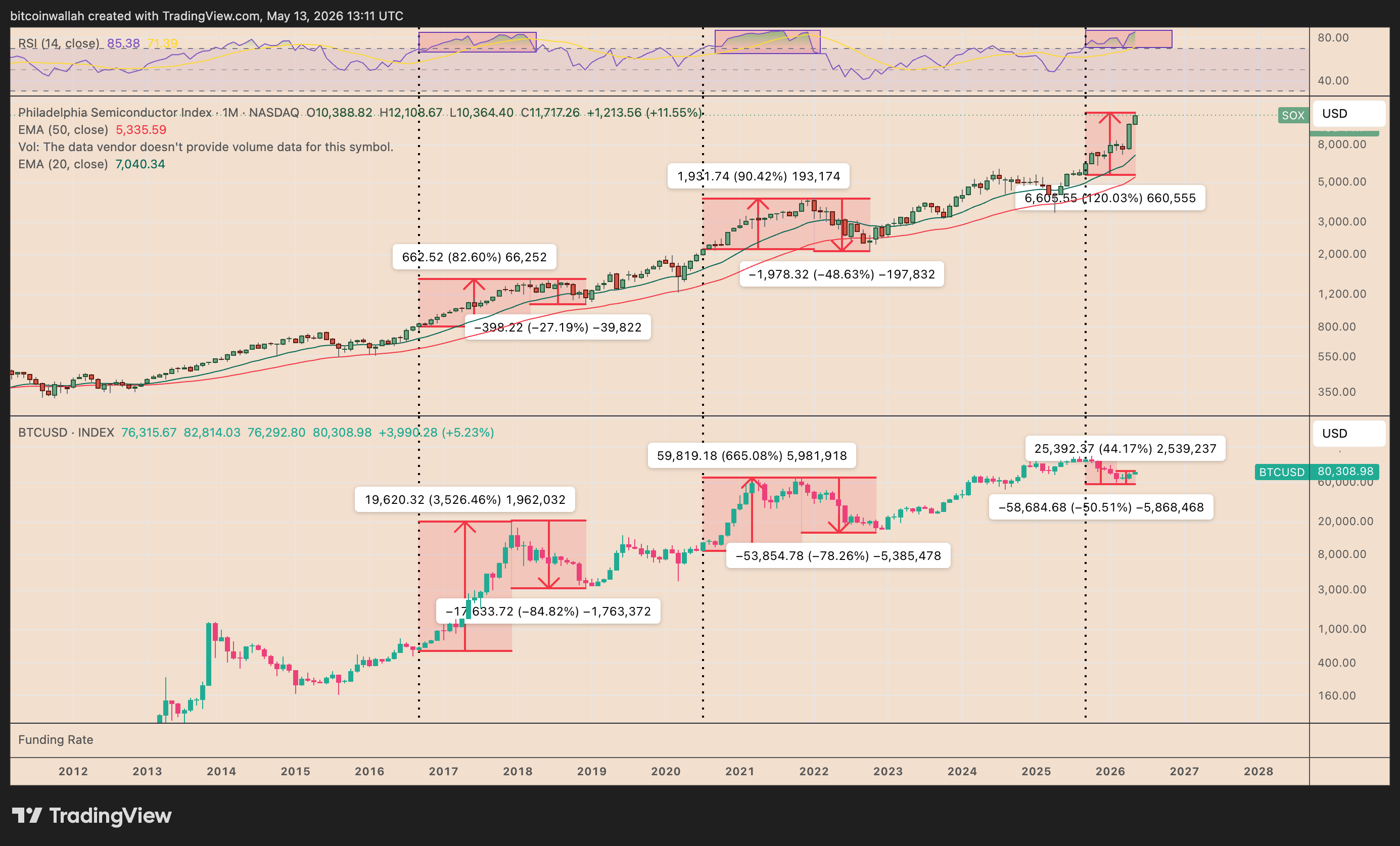
On the downside, Bitcoin’s corrections were brutal too: about 84.8% and 78.3% in the marked phases.
This is why I take the SOX chart seriously for crypto. I am not saying semiconductors control Bitcoin. I am saying both often respond to the same liquidity regime.
When the market chases growth, narrative, and momentum, both can rip higher. When that regime breaks, both can suffer.
Why This Bitcoin Cycle Looks Different
The current cycle has broken the old rhythm.
SOX exploded by over 50% since its RSI entered the overbought area in September. Bitcoin, by comparison, fell by around 50% in the same period, thus breaking its correlation with the semiconductor index.
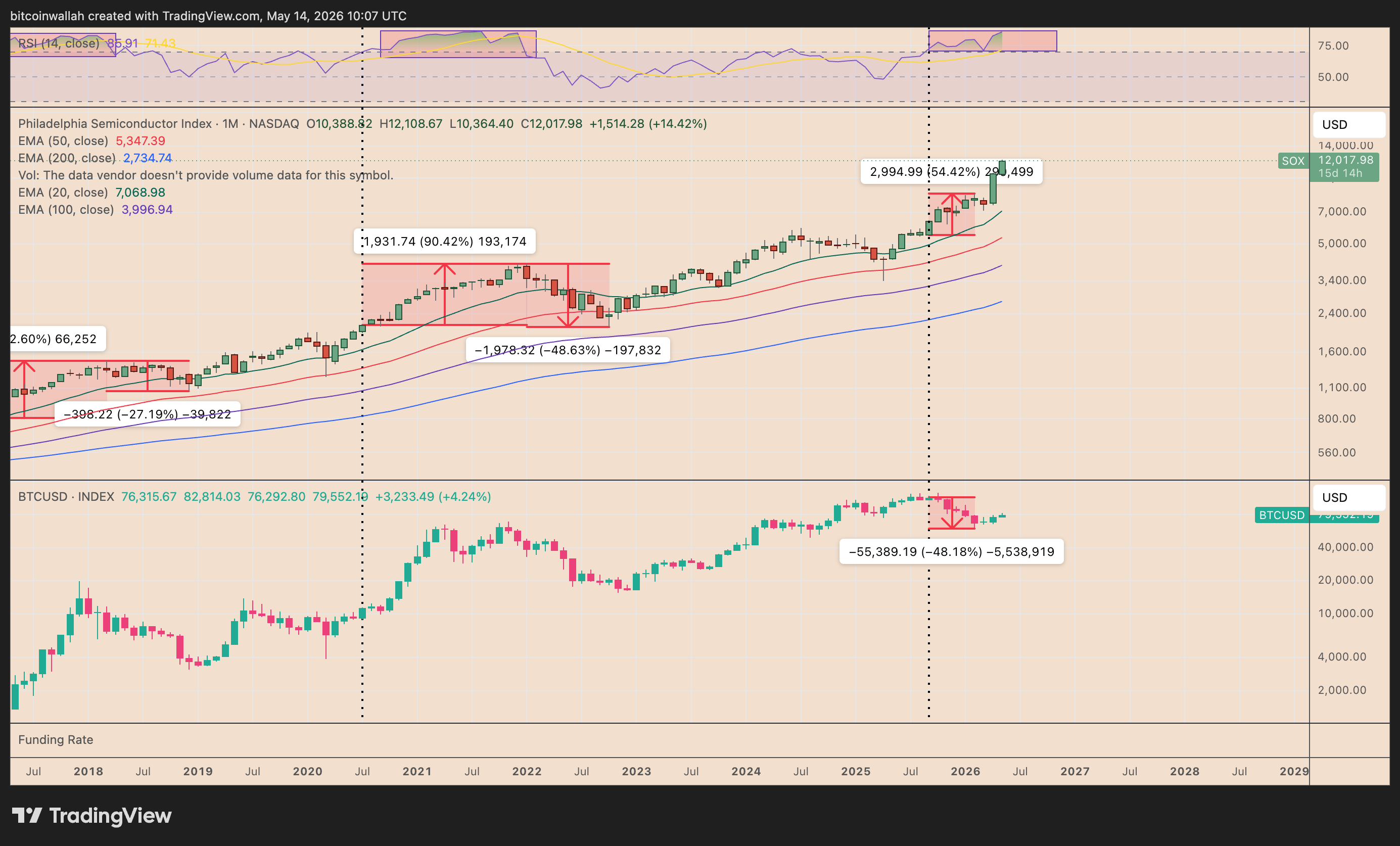
That divergence is the whole story.
If Bitcoin were still trading exactly like it did in earlier high-beta cycles, I would expect a much bigger response by now. Instead, BTC initially fell while SOX kept melting up, and only later began recovering by over 40% from its February lows.
And that was largely due to Michael Saylor’s Strategy. Since February, the company has added over 100,000 BTC to its reserves. That is roughly 222 times the BTC daily new supply of 450 BTC.
On the other hand, there is little retail participation in the ongoing BTC price recovery.
In May, Santiment said Bitcoin’s holder count shrank by 245,000 wallets in five days, the fastest decline in nearly two years.
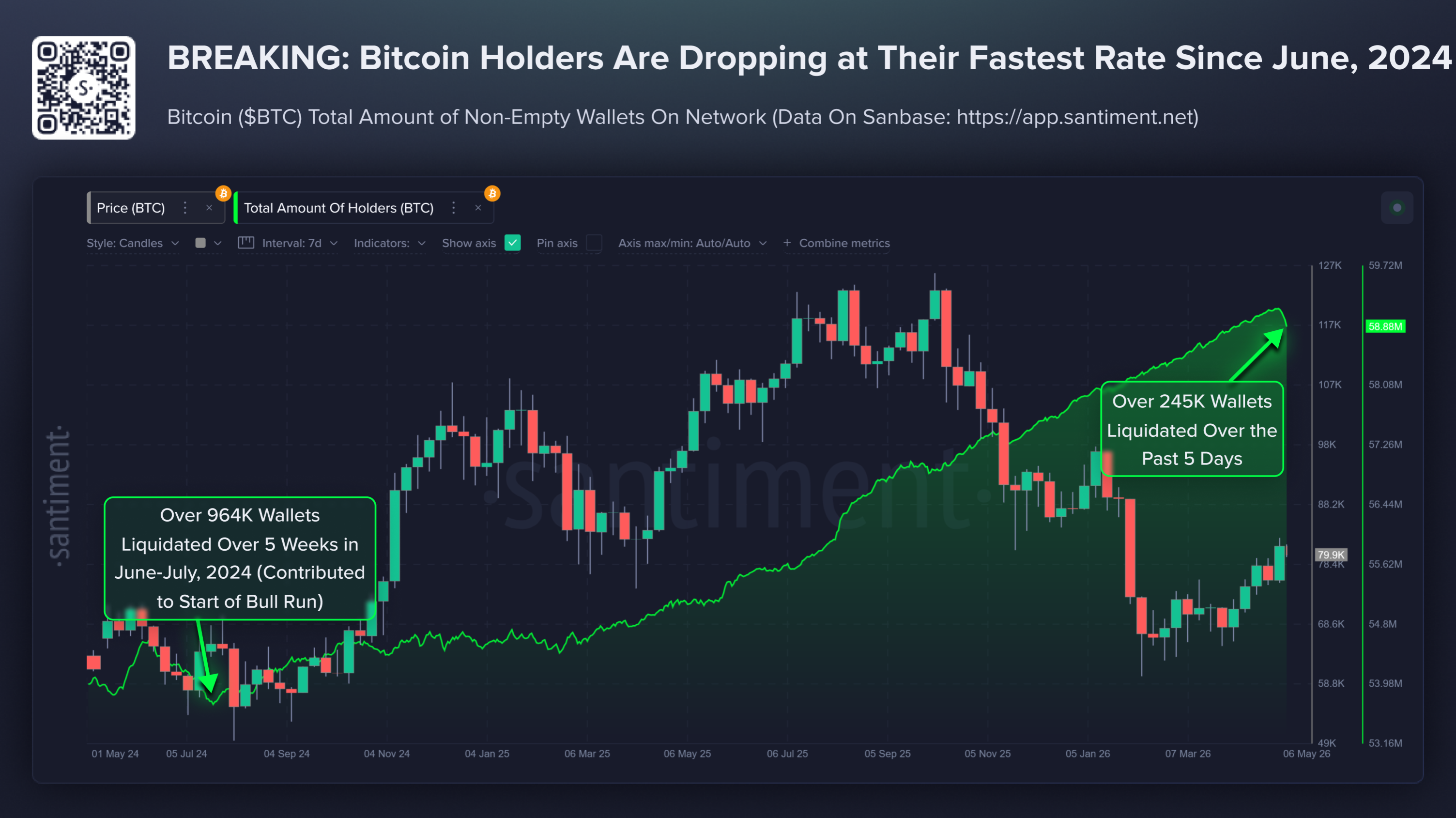
It also pointed to a similar June-July 2024 episode, when more than 964,000 wallets exited over five weeks before a bullish phase followed.
When retail exits, supply often moves into fewer, stronger hands. That reduces the liquid supply. And when the liquid supply shrinks, it does not take a massive wave of fresh demand to push the price up.
That may be one reason Bitcoin has held up better than older correlations would suggest.
Where The Bear Case For Bitcoin Begins
I do not want to FUD this. But I do think there is a real risk chain worth watching as long as Strategy remains the only thing stopping Bitcoin from a long-term downturn.
If Burry is right and SOX is entering a late-stage blowoff similar to the dot-com bubble, a reversal in semiconductors could pressure broader equities. If that happens, Strategy’s own stock and funding engine, such as its preferred stock, STRC, could come under pressure too.
Strategy admitted that it may sell Bitcoin to help meet obligations if needed, which is a clear shift from the old “never sell” aura around the name.
Strategy announced we may sell #Bitcoin when advantageous to the company. Bitcoin shrugged. pic.twitter.com/swWWtDau4f
— Phong Le (@phongle) May 6, 2026
That does not mean forced selling is around the corner. It means Bitcoin’s recent divergence may depend partly on a buyer whose strength still ties back to capital-market conditions.
so what happens when bitcoin holdings drop below 1x of STRC, then stays there for 6 months and they run out of cash to pay dividends…
When you’re paying todays dividends using money from futures investors that’s called a ponzi.
We can party for now because the money is… https://t.co/Jpd31lcIzU
— Krugman (@krugman87) May 6, 2026
So my bear case is simple: if SOX breaks, equities weaken, and Strategy’s funding machine loses efficiency at the same time, Bitcoin could slide back into its old high-beta relationship with tech.