



Bitcoin Faces $90K Glass Ceiling as Ethereum Loses 12% in a Week
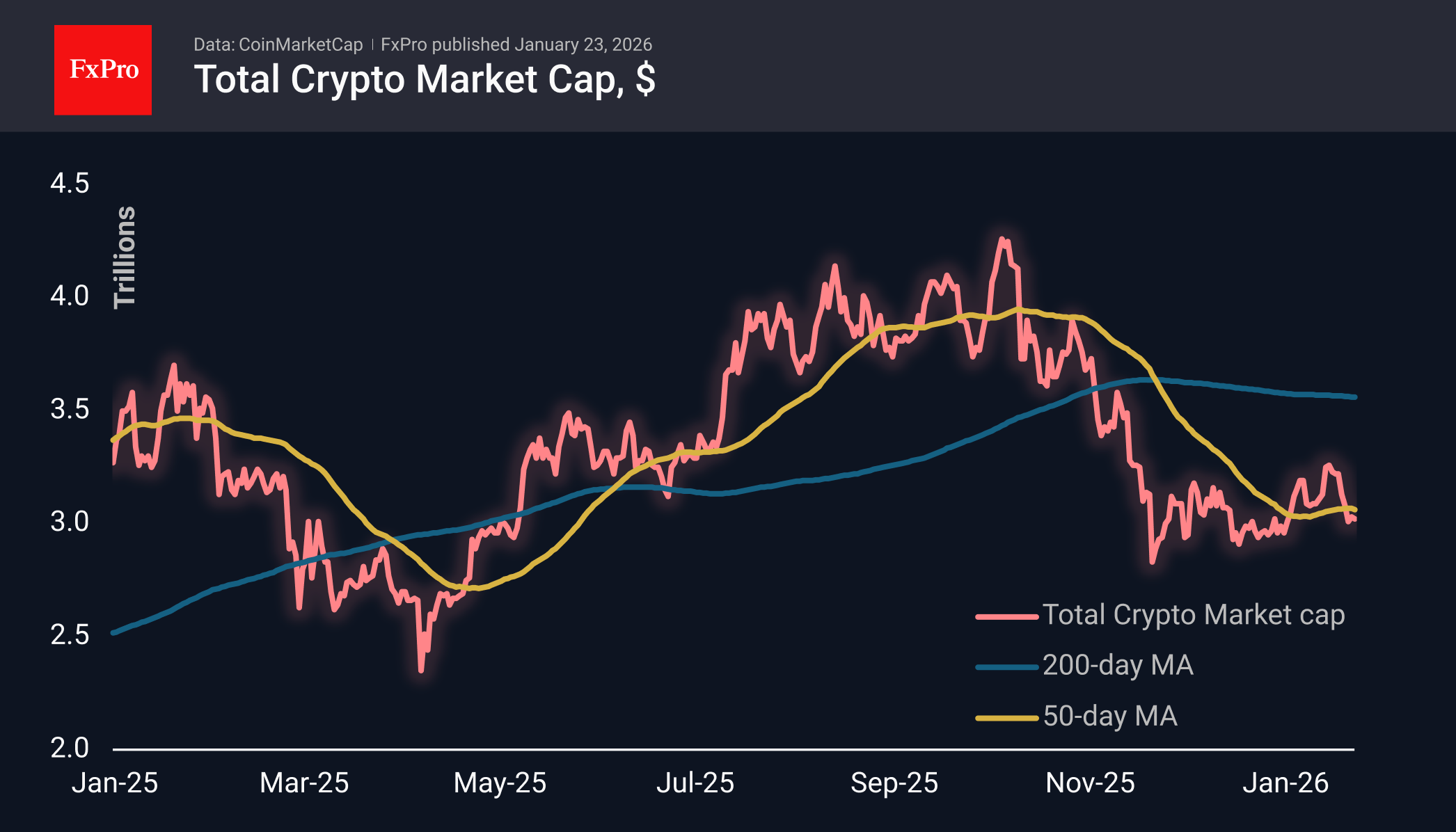
The total capitalisation of the crypto market has changed little over the past two days, fluctuating mainly just above the $3T level. The crypto market remains largely on the sidelines of the positive dynamics in stocks and metals. This apathy in the face of good news in recent months goes hand in hand with complete sympathy when adverse events occur. If we assume that a bear market begins not with a 20% decline from its peak, but first in the minds of investors, then this shift seems to have occurred in October.
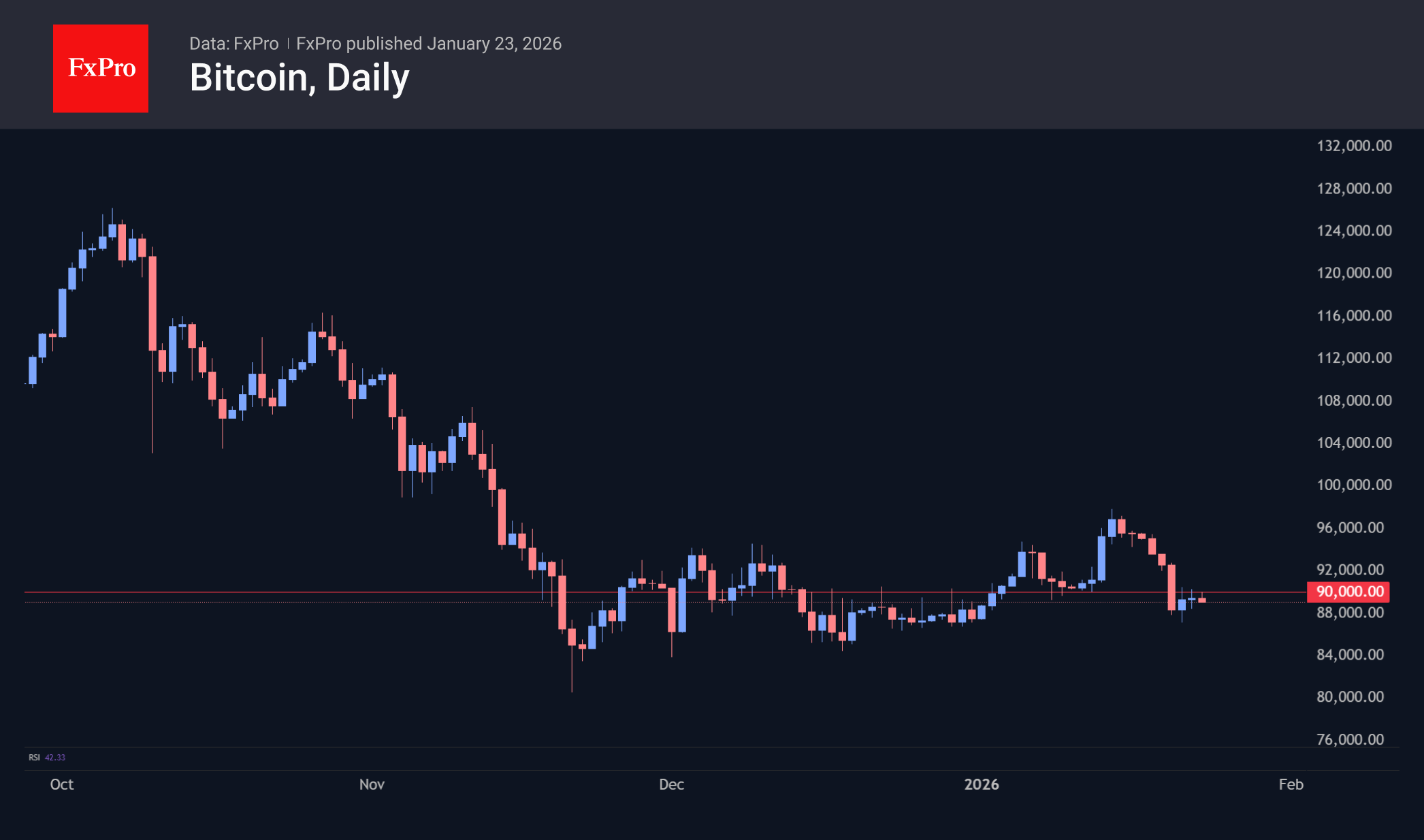
Bitcoin continues to attempt to break above $90K, a round level that has become a kind of glass ceiling. On the other hand, the general increase in risk appetite in financial markets is providing support during intraday declines. On Friday, the bulls may be motivated by the desire to lock in some of their bearish positions at the end of the week after a 6% decline since Monday.
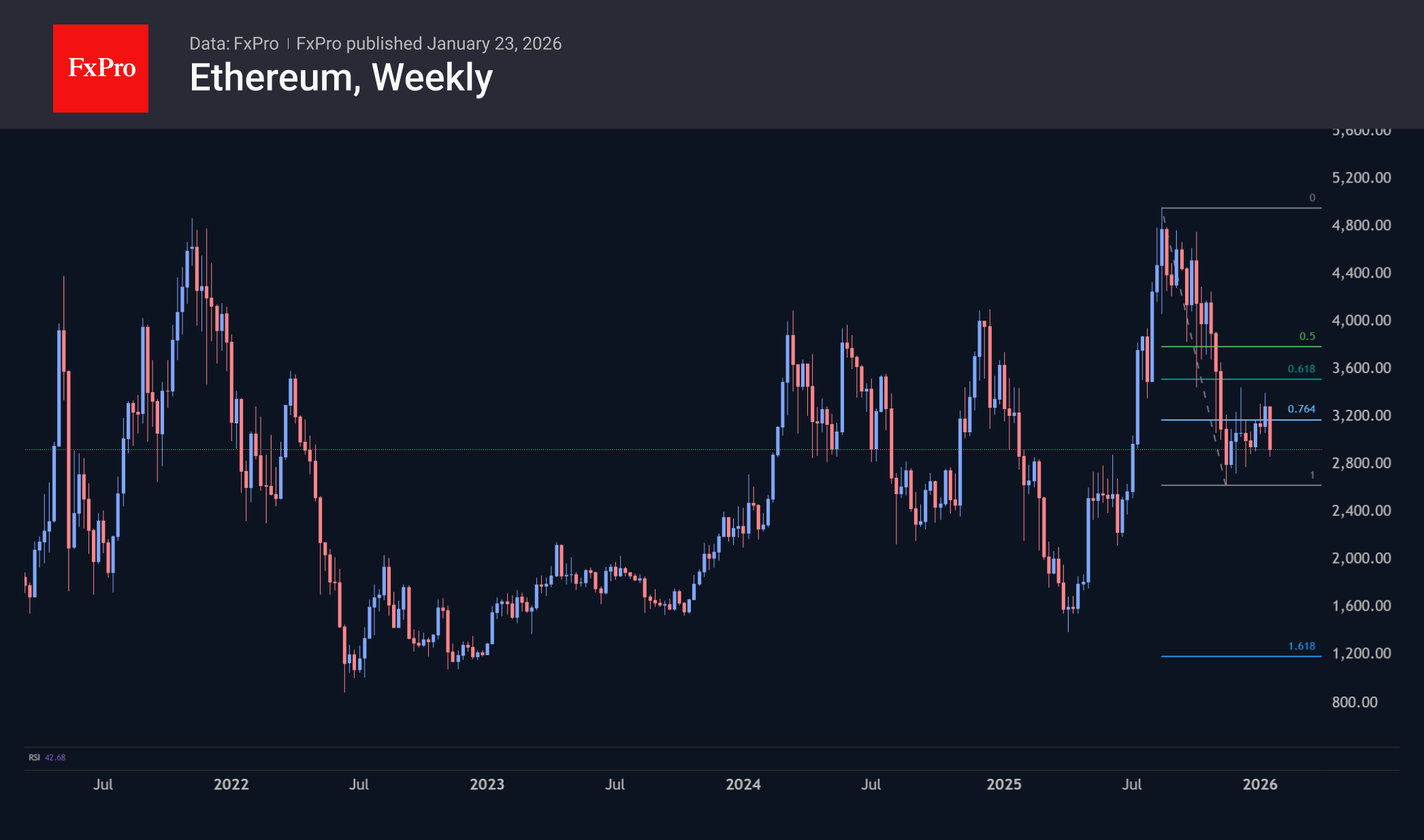
Since the beginning of the week, Ethereum has lost twice as much as Bitcoin – 12% – and is back in the November and December support zone. In May and June last year, there was active resistance from the bears here, which increased the focus on the battle for the current $2700-2900 zone. A victory for the bears at this stage could unlock a shocking scenario of ETHUSD falling to $1000–1100, with a Fibonacci extension of 161.8% from the August peak to the November low.
Crypto News
Recent buyers are using short-term Bitcoin rallies to exit their positions, limiting upside potential. The main pressure comes from participants who bought coins 3–6 months ago for over $110,000, Glassnode notes. Additional pressure is created by a large cluster of supply above $100,000 formed by long-term holders.
CryptoQuant refers to 2024–2025 as a period of record BTC sales by long-term holders. This indicates a structural rotation of capital from early investors to new participants who are focused on price levels, macroeconomics and global liquidity.
The fourth quarter of last year was probably the end of the bear cycle, Bitwise suggests, comparing the current situation with the first quarter of 2023. At that time, the market was recovering after the collapse of the FTX exchange.
Interest payments on stablecoins do not threaten the banking system, said Circle CEO Jeremy Allaire. He called fears about a possible outflow of deposits from banks ‘absolutely absurd.’
On 22 January, as a result of another recalculation, the difficulty of mining Bitcoin decreased by 3.28% to 141.67 T. This is the second consecutive decline in the indicator after a 1.2% reduction. According to Glassnode, the Bitcoin hash rate, smoothed by a seven-day moving average, is at 1.01 ZH/s.
Bitcoin Price Forecast
Every new Bitcoin analysis as it publishes, today's technical signal and key levels, live price — on one page.
See all Bitcoin forecasts