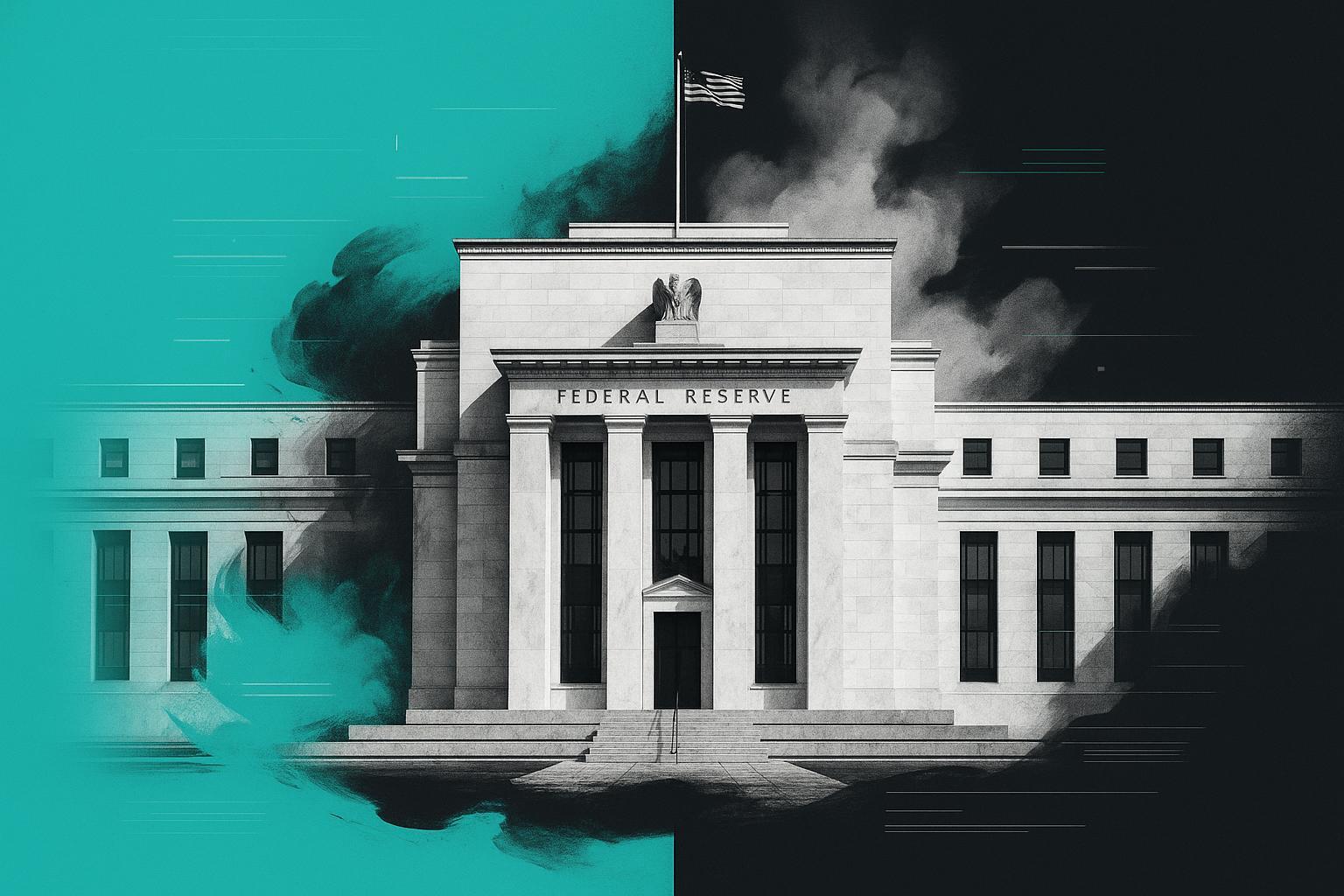
Investors turned cautious in early Asian market trading on Wednesday, December 10. Market focus shifted to the Fed interest rate decision, FOMC Economic Projections, and the highly anticipated dot plot.
Expectations of a December Fed rate cut have bolstered demand for risk assets. However, uncertainty about the Fed rate path through 2026 has led to tighter price ranges. Tight price ranges exposed US stock futures to Fed-fueled price volatility.
Meanwhile, stabilizing 10-year Japanese Government Bond (JGB) yields and a weaker yen eased fears of a BoJ-Fed-induced yen carry trade unwind, cushioning the downside.
Chinese inflation data failed to move the dial, as producer deflation lingered, while consumer price inflation sent mixed signals in November.
Expectations of a Fed rate cut and easing fears of a yen carry trade unwind support a bullish short- to medium-term outlook for US equity futures.
Below, I’ll outline the key market drivers, the medium-term outlook, and the key technical levels traders should watch.

Japanese Producer Prices Bolster BoJ Rate Hike Bets
Japanese producer prices rose 2.7% year-on-year in November, matching the previous month’s trend, bolstering bets on a December BoJ rate hike. USD/JPY pulled back from an early high of 156.937, dropping to a low of 156.668 on the data before steadying at 156.721. The price action reflected market reaction to producer price trends and influence on the BoJ rate path.

Meanwhile, 10-year JGB yields fell back from the previous session’s high of 1.981%. 10-year JGB yields, USD/JPY price trends, and Nikkei 225 movements remain key focal points for investors as the BoJ monetary policy decision looms. A spike in yields and a sharply stronger yen, sending USD/JPY lower, may trigger a yen carry trade unwind. A yen carry trade unwind would weigh on risk assets such as the Nikkei 225 and US equity futures.
The Nikkei 225 was down 0.80% in morning trading, joining the broader Asian equity markets in the red.
Dow Jones Price Forecast
Every new Dow Jones analysis as it publishes, today's technical signal and key levels, live price — on one page.
See all Dow Jones forecastsChinese Deflationary Signals Test Sentiment
While the Fed interest rate decision is the key event of the day, Chinese producer and monthly consumer price trends highlighted ongoing deflationary pressures, weighing on sentiment.
Producer prices fell 2.2% year-on-year in November after declining 2.1% in October. Consumer prices increased 0.7% YoY in November, up from 0.2% in October. However, consumer prices fell 0.1% month-on-month after rising 0.2% in October, suggesting a potential pickup in deflationary pressures.
The month-on-month CPI and the PPI underscored Beijing’s challenge of boosting domestic consumption as firms face margin squeezes, forcing job cuts.
Mainland China’s CSI 300 and the Shanghai Composite Index dropped 0.87% and 0.59%, respectively.
US Federal Reserve Takes Center Stage
Futures posted modest losses during the Asian morning session. The Dow Jones E-mini dropped 26 points, the Nasdaq 100 E-mini fell 46 points, while the S&P 500 E-mini declined 5 points.
Later on Wednesday, the FOMC interest rate decision, economic projections, dot plot, and Fed Chair Powell’s press conference will be the main events of the mid-week session. A 25-basis-point Fed rate cut, projections for two to three cuts in 2026 on softer inflation and rising unemployment outlook, would drive buyer demand for US equity futures.
Sticky inflation data has dampened expectations of a Q1 2026 Fed rate cut, sending US equity futures into negative territory. Crucially, sticky inflation and softer labor market data have divided the Committee.
Some members have raised concerns about sticky inflation, supporting a less dovish rate path, while others support rate cuts to bolster the labor market. The projections and the dot plot will provide much-needed insights into the members’ views on inflation and monetary policy.
According to the CME FedWatch Tool, the chances of a December Fed rate cut stood at 87.6% on December 9, down from 88.4% on December 8. However, the probability of a March Fed rate cut fell from 46.1% to 40.4% on December 9, underscoring uncertainty about the Fed’s policy outlook.
A 25-basis-point rate cut and support for two to three rate cuts in 2026 would likely lift sentiment, supporting a bullish short- to medium-term price outlook.
Key Technical Levels for Dow Jones, Nasdaq 100, and S&P 500
Despite the morning losses, the Dow Jones E-mini, the Nasdaq 100 E-mini, and the S&P 500 E-mini traded above their 50-day and 200-day EMAs, indicating a bullish bias.
Near-term trends will hinge on BoJ chatter, JGB yields, USD/JPY trends, the Fed interest rate decision, the FOMC economic projections, and the Fed’s dot plot. Key levels to monitor include:
Dow Jones
- Resistance: 47,750, 48,000, 48,250, and then the November 12 record high of 48,528.
- Support: 47,500, the 50-day EMA (47,019), 46,000, and then the November 21 low of 45,779.

Nasdaq 100
- Resistance: 25,750, 26,000, and then the October 30 record high of 26,399.
- Support: 25,500, the 50-day EMA (25,141), 24,500, and then 24,000.

S&P 500
- Resistance: the October 30 record high of 6,954, and then 7,000.
- Support: the 50-day EMA (6,755), 6,500, and then 6,250.

Short-Term and Medium-Term Outlook Hinges on the Dot Plot
In my opinion, the short- to medium-term outlook remains bullish despite the post-December Fed rate path uncertainty. However, several scenarios would likely derail the bullish short- and medium-term outlooks, including:
- Bank of Japan hints at quantitative tightening (QT) and multiple rate hikes.
- A hawkish Fed rate cut, where FOMC members project steady inflation, a resilient labor market, and one rate cut in 2026.
- Fed QE and BoJ QT clash, narrowing rate differentials sharply, potentially triggering a yen carry trade unwind.
Conclusion: Outlook Bullish
In summary, a Fed rate cut will likely lift investor appetite for US equity futures. However, traders should continue monitoring BoJ rhetoric, JGB yields, the USD/JPY, and the Nikkei 225 for potential yen carry trade unwind warning signals.
Key levels would include a USD/JPY drop to 150 and 10-year JGBs at 2%, an important level to watch. Crucially, these moves would likely trigger a Nikkei 225 sell-off, weighing on broader risk sentiment.
The pullback in 10-year JGB yields provided some market relief. However, yields remain elevated, exposing US stock futures to unwind risk as the Fed’s interest rate decision approaches.
Follow our live coverage and consult the economic calendar for real-time market updates.