
US stock futures came under selling pressure early in the Asian market session on Friday, January 30, as concerns about AI-related spending and Fed monetary policy weighed on sentiment.
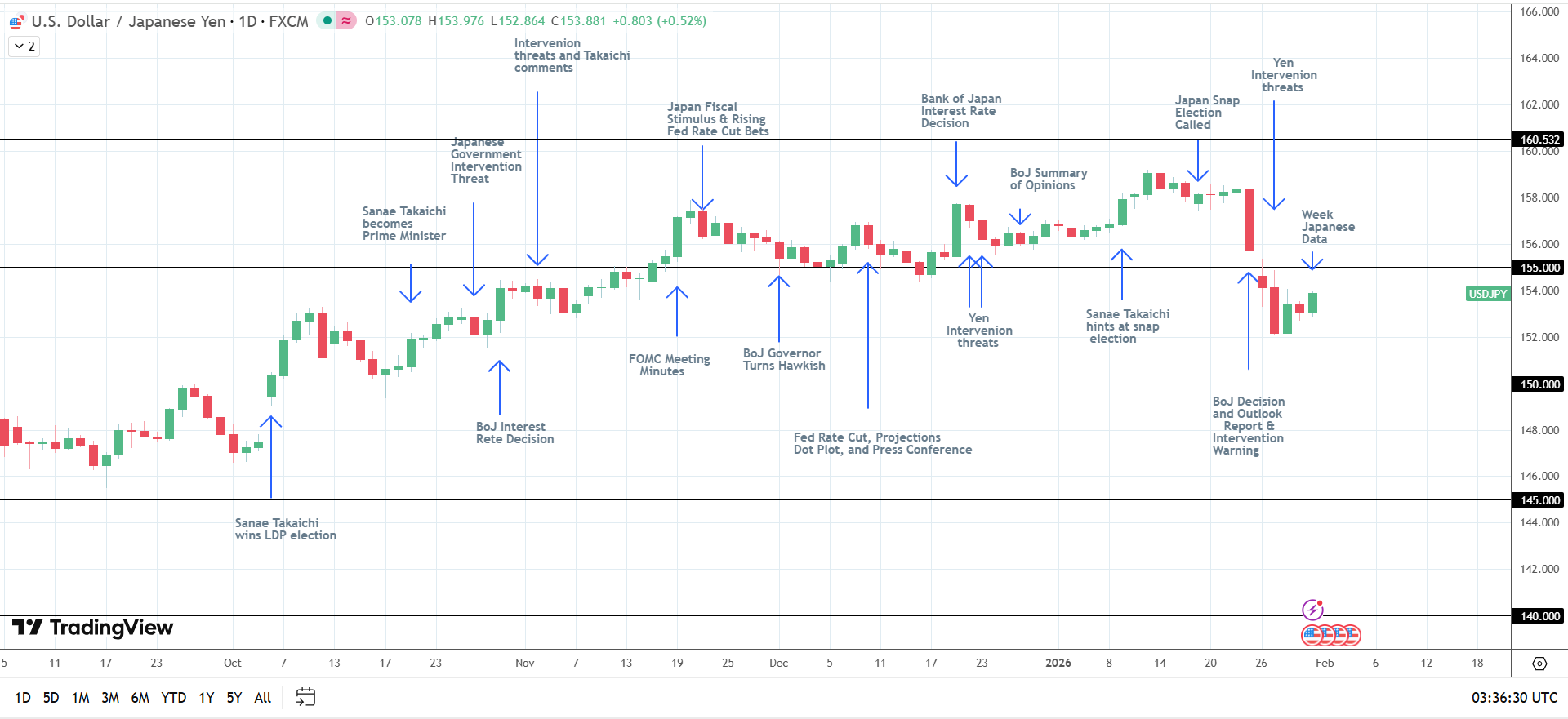
Softer-than-expected Japanese economic data cushioned the downside, with Tokyo inflation cooling in January and Japanese retail sales unexpectedly falling in December. USD/JPY advanced 0.52% to 153.881 in morning trading on easing expectations of an April Bank of Japan rate hike.
Despite the morning pullback, a less hawkish BoJ and expectations of multiple Fed rate cuts in 2026 continue to support a bullish outlook for the US index futures.
Meanwhile, US inflation-related data, Fed rhetoric, and earnings will influence market sentiment later in the session.
Below, I’ll outline the key market drivers, the medium-term outlook, and the technical levels traders should watch.

Microsoft Slides, Triggering a Flight to Safety
Microsoft (MSFT) plunged 10% on Thursday, January 29, after reporting slower cloud growth. The slower cloud growth reignited jitters about AI-linked spending and concerns about returns on investment, sending tech stocks sharply lower. The negative sentiment from Thursday spilled over to the Friday session, leaving Asian equity markets and US index futures in the red.
Tokyo Inflation Drops to BoJ Target
The Nikkei joined US stock futures in the red, dropping 0.85% despite softer economic data from Japan tempering bets on an April BoJ rate hike, weighing on the yen.
Dow Jones Price Forecast
Every new Dow Jones analysis as it publishes, today's technical signal and key levels, live price — on one page.
See all Dow Jones forecastsTokyo’s so-called core-core inflation fell from 2.3% in December to 2.0% in January, while headline inflation dropped to 1.5% (December: 2%). Softer national inflation could delay a Bank of Japan rate hike, boosting demand for export-focused Japanese stocks. An unexpected fall in retail sales also suggested a less hawkish BoJ policy stance. However, the weaker yen failed to drive buying interest in Japanese stocks, underscoring market risk sentiment.
US Producer Prices and Earnings in Focus
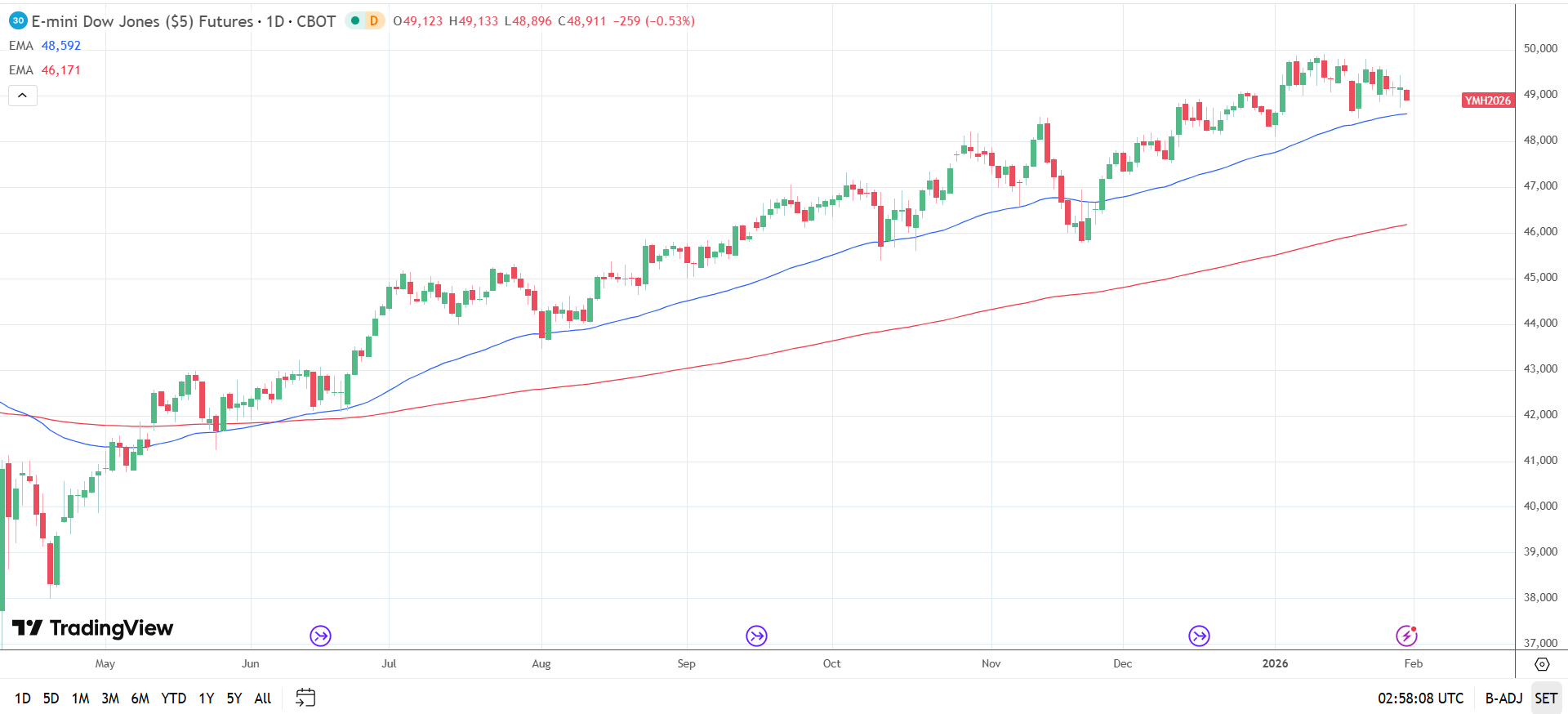
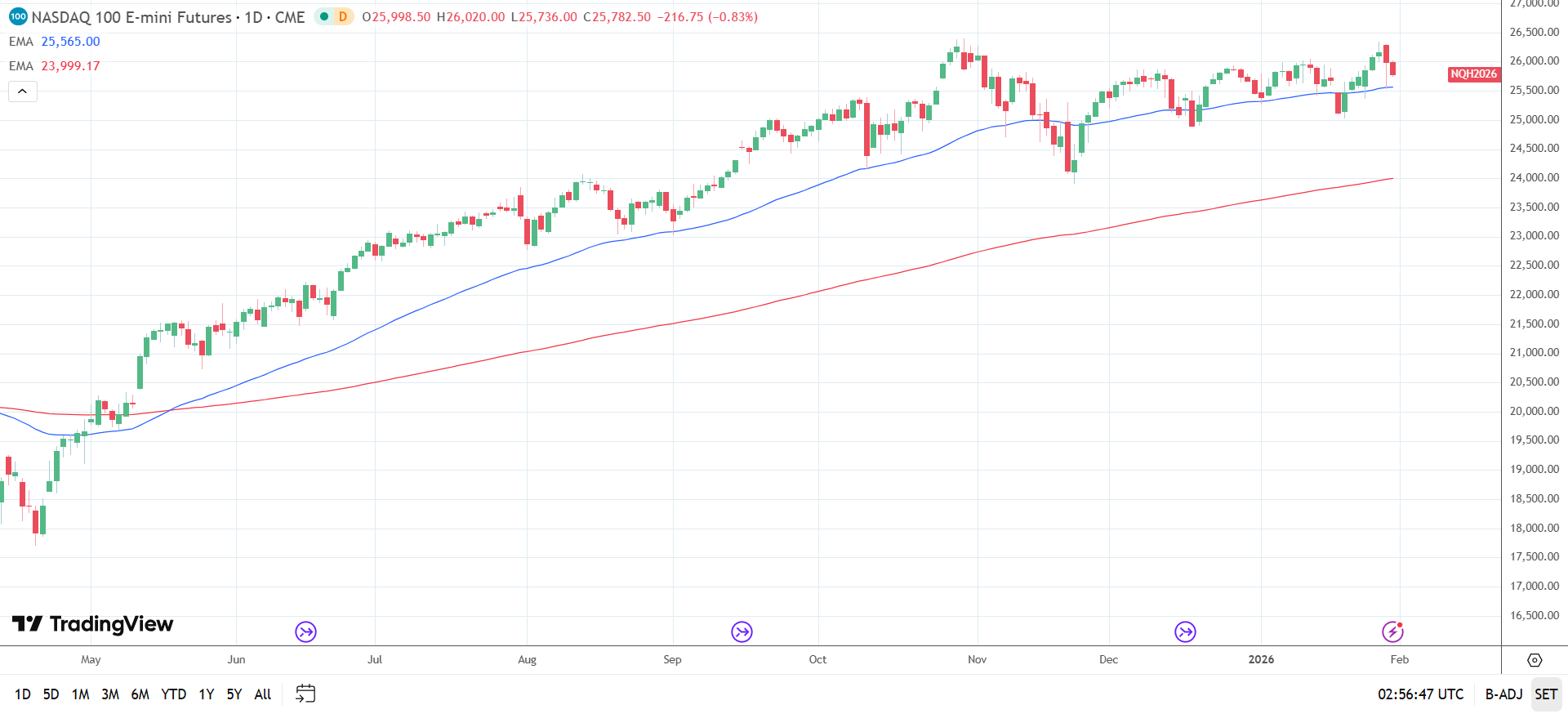
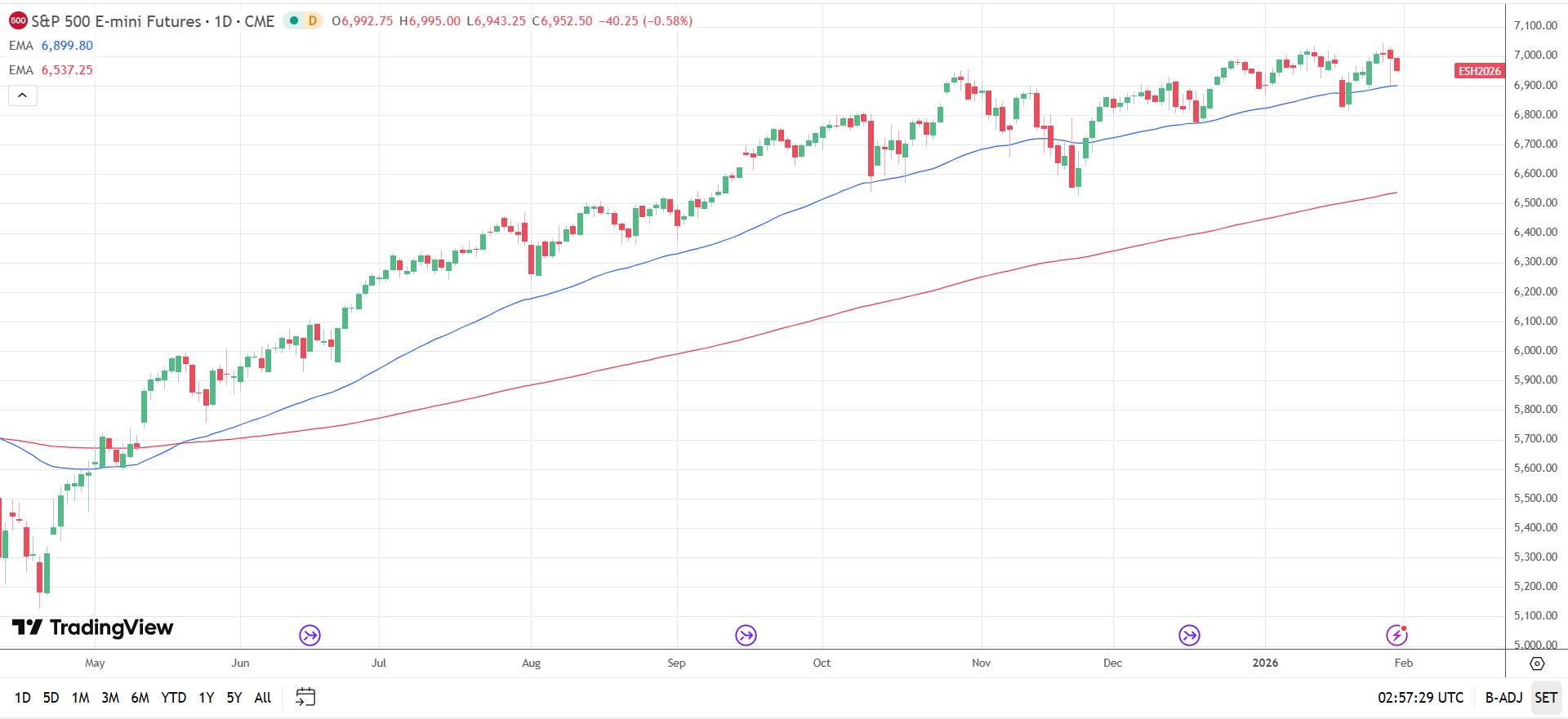
US futures posted losses during the Asian session on January 30. The Dow Jones E-mini fell 259 points, while the Nasdaq 100 E-mini and the S&P 500 E-mini dropped 217 points and 40 points, respectively.
Later on Friday, US producer prices will influence sentiment toward the Fed’s policy outlook. Economists expect producer prices to rise 2.7% year-on-year in December, down from 3% in November. Lower producer prices would support a softer inflation outlook and signal a more dovish Fed rate path. Rising bets on an H1 2026 Fed rate cut would boost demand for risk assets.
Beyond the data, corporate earnings will also influence sentiment. Exxon Mobil (XOM), Chevron (CVX), American Express (AXP), and Verizon Communications (VZ) are big names scheduled to release earnings results.
Strong earnings and softer producer prices would support a rebound in US index futures, supporting the bullish medium-term outlook.
Key Technical Levels for Dow Jones, Nasdaq 100, and S&P 500
Despite the morning pullback, the Dow Jones E-mini, the Nasdaq 100 E-mini, and the S&P 500 E-mini remained above their 50-day and 200-day EMAs. The EMAs indicated a bullish bias, aligning with favorable fundamentals.
Near-term trends will hinge on geopolitical risks, earnings, US economic data, Fed rhetoric, and the BoJ’s rate path. Key levels to monitor include:
Dow Jones
- Resistance: 49,000, the January 13 record high of 49,901, and then 50,000.
- Support: the 50-day EMA (48,592).
Nasdaq 100
- Resistance: 26,000 and then the October 30 record high of 26,399.
- Support: the 50-day EMA (25,565), 25,000, and then 24,500.
S&P 500
- Resistance: the January 13 high of 7,036, followed by 7,500.
- Support: the 50-day EMA (6,899) and then 6,500.
Outlook: US Economy and Earnings Support Bullish Outlook
In my opinion, the short-term price outlook remains bullish. Existing bets on an H1 2026 Fed rate cut and market optimism over Q4 earnings reaffirm the bullish outlook. These favorable fundamentals align with technicals for US index futures.
However, several factors would challenge the bullish medium-term outlook, including:
- Rising geopolitical tensions.
- The Bank of Japan announces a higher-than-expected neutral interest rate (potentially 1.5%-2.5%). A narrower US-Japan rate differential may trigger an unwind of yen carry trades. Such an event would invalidate the short-term outlook.
- Fed rhetoric and US data temper expectations of multiple Fed rate cuts in 2026.
- Corporate earnings and outlooks disappoint.
Conclusion: Bullish Bias Intact
In summary, the robust US economy, a dovish Fed rate path, upbeat earnings, and a cautious BoJ reaffirm the bullish short- and medium-term outlook for US stock futures.
However, traders should monitor BoJ commentary, threats of yen intervention, and USD/JPY trends. Hawkish BoJ rhetoric, a dovish Fed, and more intervention warnings could send USD/JPY sharply lower, potentially triggering an unwind of yen carry trades.
Despite risks of a yen carry trade unwind, new all-time highs for US stock futures remain in sight if US economic data raises expectations of a June Fed rate cut. Fed rate cuts are likely to have a more lasting impact on company earnings and equity valuations than narrowing US-Japan rate differentials on sentiment.
Follow our live coverage and consult the economic calendar for real-time market updates.