



US stock futures posted gains in early trading on Monday, January 5, as economic data from Japan and China lifted sentiment. Crucially, there was no fallout from the US removing Venezuelan President Nicolas Maduro and seizing control of the country. Economists downplayed the potential impact on the global economy and the risks of crude oil oversupply.
USD/JPY advanced in morning trading, despite 10-year Japanese Government Bond (JGB) yields climbing to 2.128%, which calmed fears of a yen carry trade unwind. Notably, the Nikkei 225 rallied 2.82% on the weaker yen, lifting broader market sentiment.
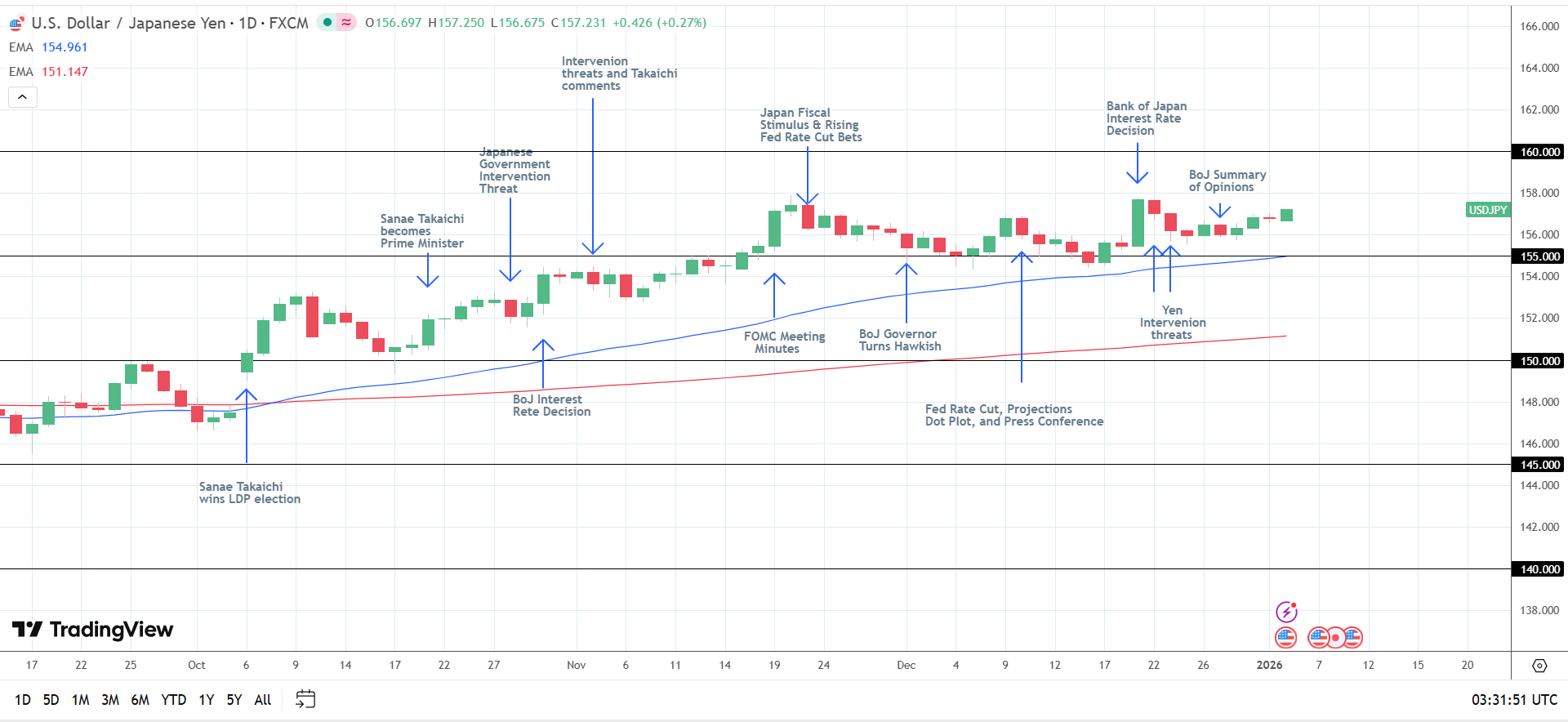
Monday’s market trends affirmed a bullish medium-term price outlook as investors await earnings season and crucial US economic indicators.
Below, I’ll outline the key market drivers, the medium-term outlook, and the key technical levels traders should watch.
Japan’s Manufacturing Sector Steadies
The S&P Global Japan Manufacturing PMI increased from 48.7 in November to 50.0 in December, climbing to the neutral level. New business fell at the slowest pace in a year and a half, on weaker demand from Asia, signaling a potential rebound in sector activity after five months of contraction.
Notably, employment increased across the sector amid optimism over the demand outlook. However, price sub-components supported further BoJ rate hikes, as input and factory gate prices climbed at the end of Q4.
The Manufacturing PMI data coincided with BoJ Governor Kazuo Ueda signaling additional rate hikes if prices and the economy move in line with the Bank’s forecasts. Governor Ueda’s comments sent 10-year JGB yields to a high of 2.132% on January 5, capping the gains across US equity futures.
Dow Jones Price Forecast
Every new Dow Jones analysis as it publishes, today's technical signal and key levels, live price — on one page.
See all Dow Jones forecasts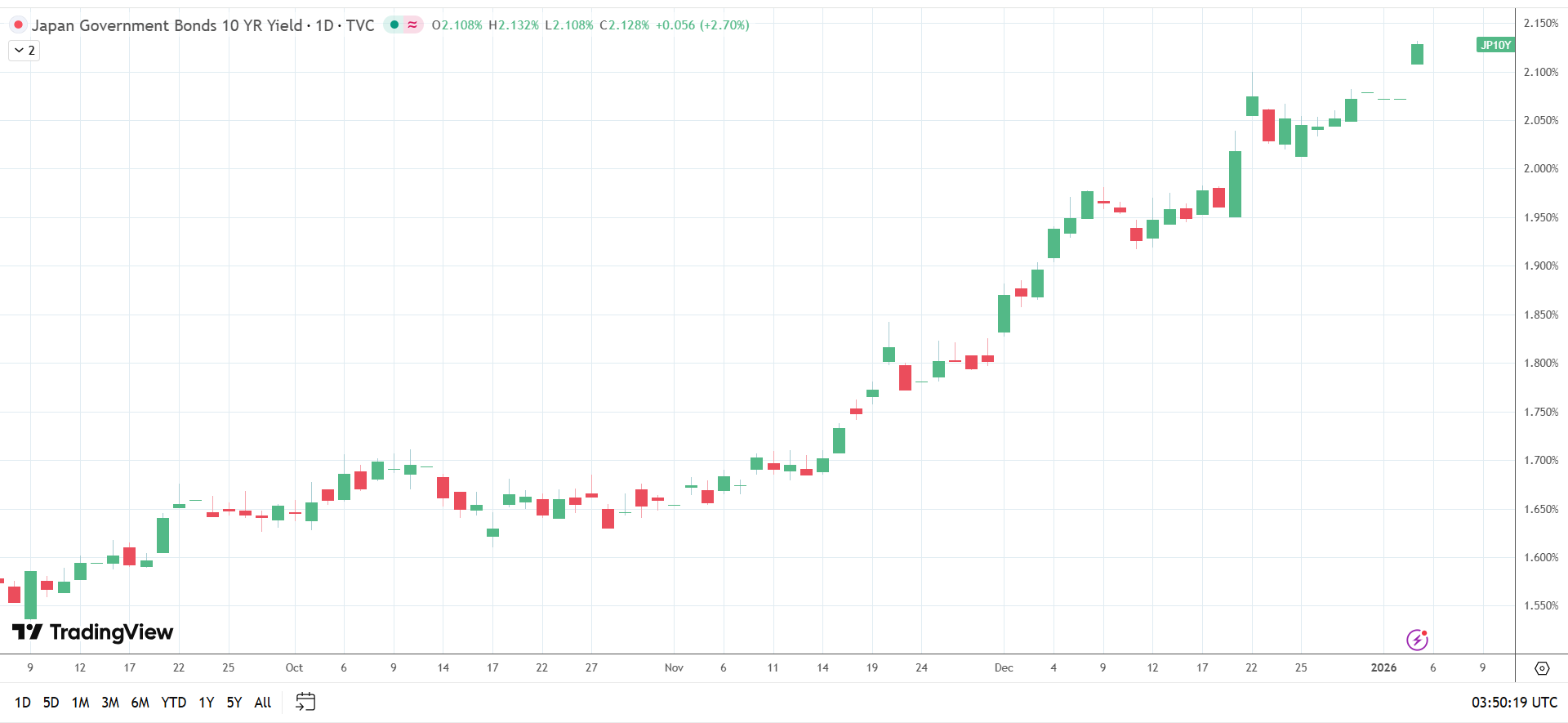
China Services PMI Holds Steady
While Japanese data and BoJ rhetoric influenced sentiment, Chinese economic indicators indicated a resilient economy at the end of Q4. The RatingDog China General Services PMI slipped from 52.1 in November to 52.0 in December. According to the December survey,
- Activity slowed to a six-month low.
- New order growth was also the weakest in six months, with new business from abroad declining.
- Employment fell for the fifth consecutive month.
- Higher wage and raw material costs pushed input prices upward for a tenth consecutive month, while service providers lowered output charges, citing increased competition.
RatingDog founder Yao Yu commented on the December PMI survey, stating:
“Overall, the services sector ended 2025 with a modest growth, high expectations profile. While the recovery in expectations provides psychological support for 2026 outlook, the contraction in employment and external demand volatility remain key constraints facing the sector.”
Mainland China’s CSI 300 and the Shanghai Composite Index gained 1.59% and 1.07%, respectively, in the morning session. December’s Services PMI underscored the need for monetary and fiscal policy support from Beijing, boosting demand for Mainland China-listed stocks.
US Manufacturing and the Fed in Focus
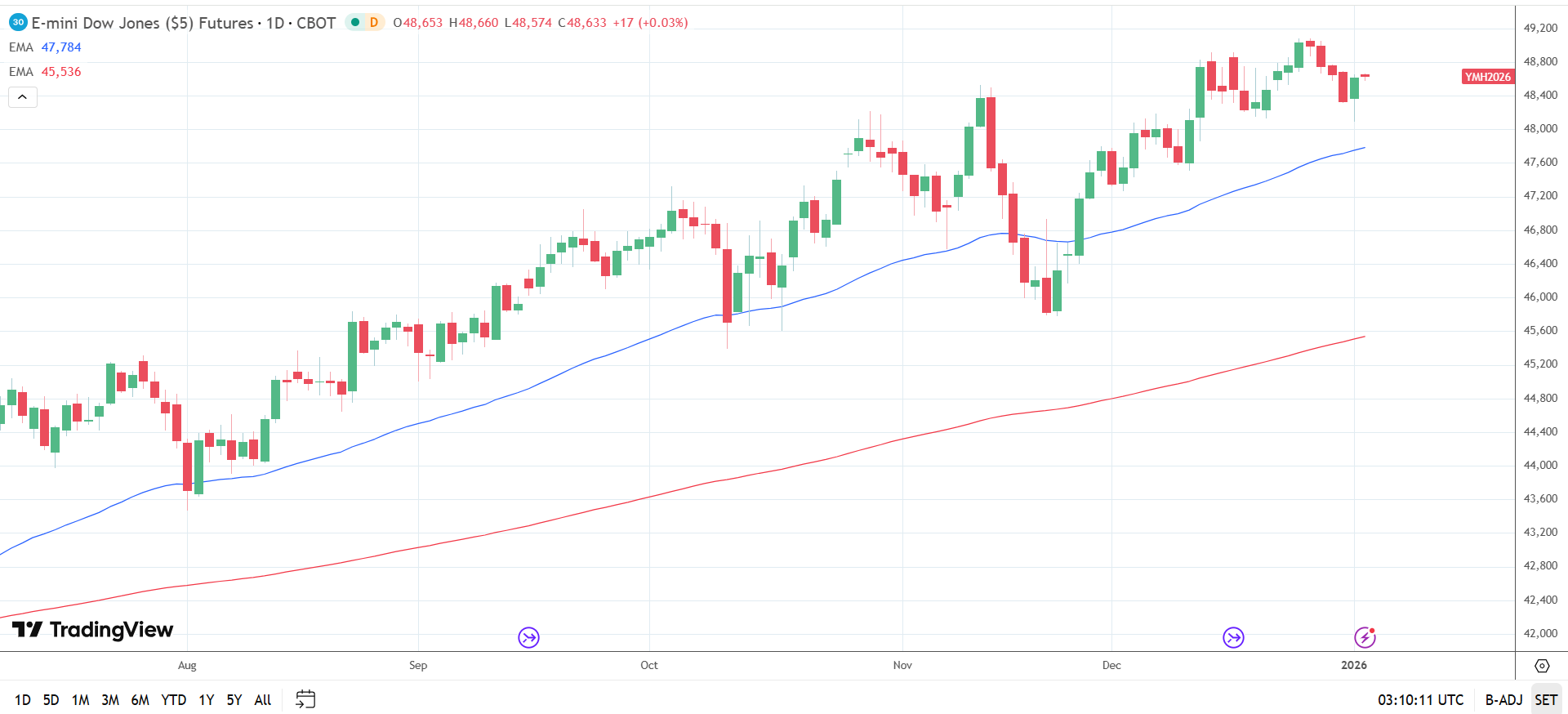
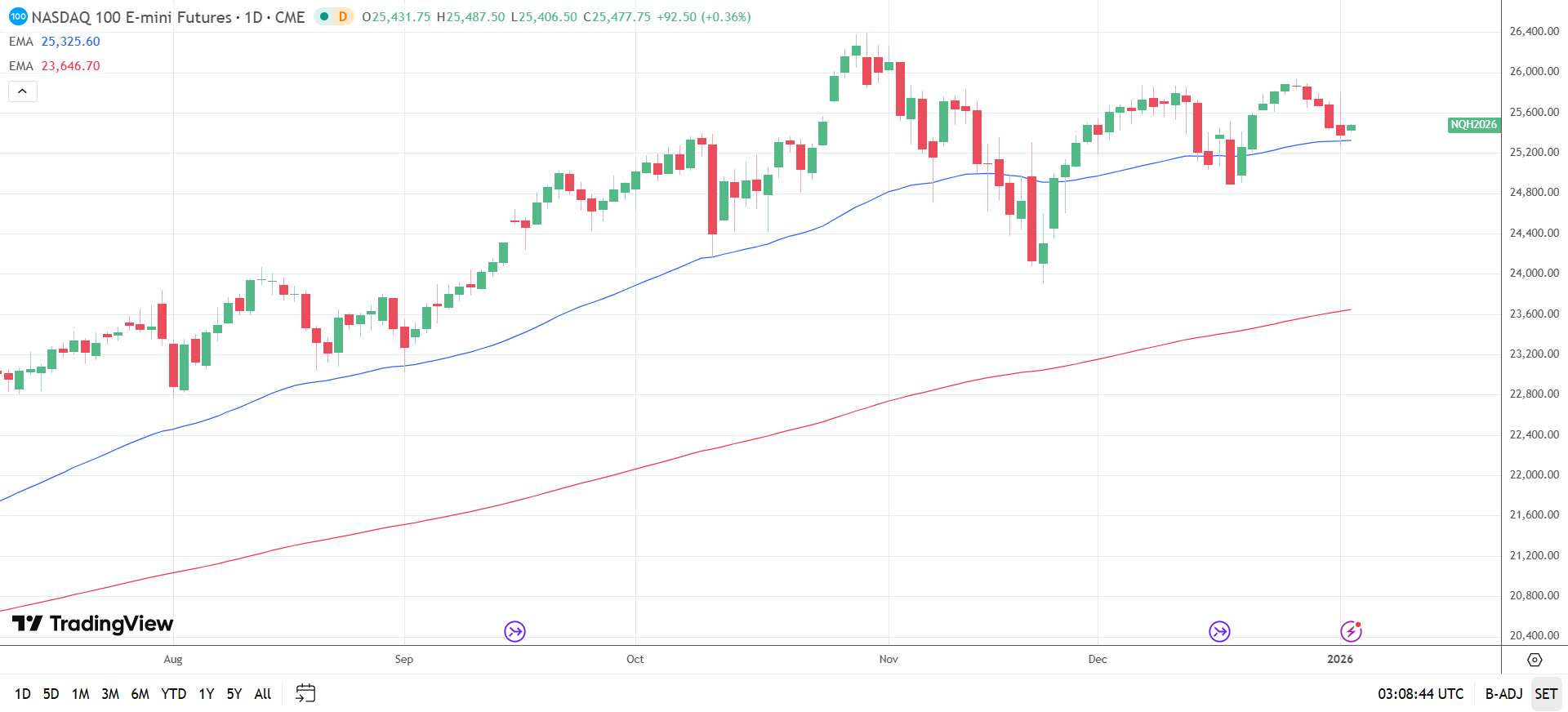
US futures advanced during the Asian morning session on Monday, January 5. The Nasdaq 100 E-mini and the S&P 500 E-mini gained 93 points and 11 points, respectively, while the Dow Jones E-mini edged 17 points higher.
Later on Monday, US economic data and Fed speakers will influence risk sentiment. Economists forecast ISM Manufacturing PMI to rise from 48.2 in November to 48.3 in December. A continued contraction across the manufacturing sector would support a more dovish Fed rate path, lifting sentiment.
However, traders should consider the sub-components, including prices and employment. Elevated input prices, reflecting the effects of elevated interest rates, combined with job cuts, would likely raise bets on a March Fed rate cut.
Beyond the PMI data, Fed speakers and geopolitical developments are also likely to influence risk appetite.
Increased support for a March Fed rate cut to bolster the economy would fuel speculation about multiple cuts in 2026. Lower borrowing costs would improve company earnings and equity valuations, reinforcing the bullish outlook for US stock futures.
According to the CME FedWatch Tool, the chances of a March Fed rate cut fell from 51.1% on January 2 to 48.4% on January 5. Meanwhile, the probabilities of a cut in April or June stood at 60.1% and 82.9%, respectively.
Key Technical Levels for Dow Jones, Nasdaq 100, and S&P 500
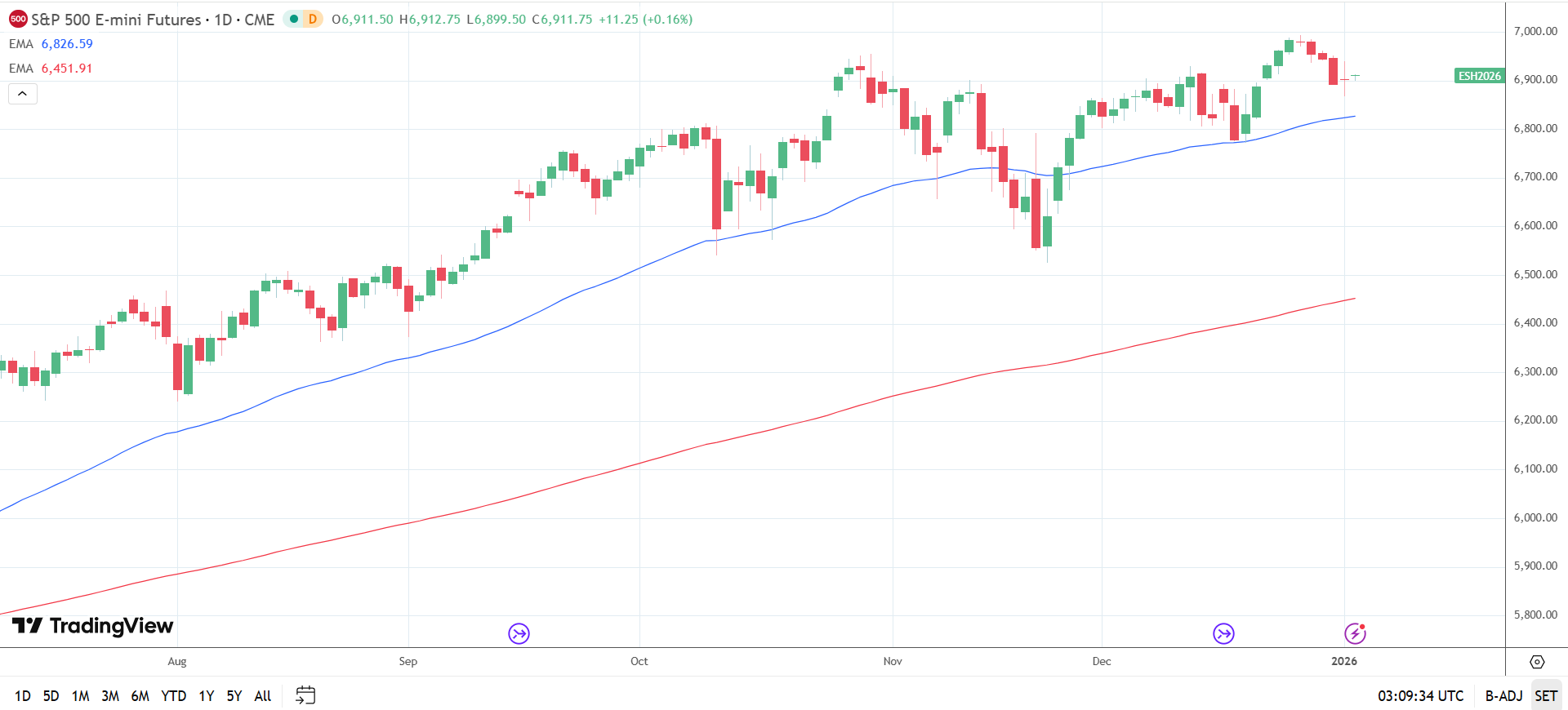
Monday’s gains left the Dow Jones E-mini, the Nasdaq 100 E-mini, and the S&P 500 E-mini trading above their 50-day and 200-day EMAs. The EMAs signaled a bullish short- to medium-term outlook, aligning with positive fundamentals.
Near-term trends will hinge on geopolitical developments, US data, Fed rhetoric, and BoJ comments. Key levels to monitor include:
Dow Jones
- Resistance: The December 26 record high of 49,086, and then 49,500.
- Support: 48,000 followed by the 50-day EMA (47,784).
Nasdaq 100
- Resistance: 26,000 followed by the October 30 record high of 26,399.
- Support: the 50-day EMA (25,326) and then 24,500.
S&P 500
- Resistance: the December 26 record high of 6,988, and then 7,000.
- Support: the 50-day EMA (6,827) and then 6,500.
Bullish Medium-Term Outlook: Fed Chatter and US Economic Data Key
In my opinion, the short-term price outlook remains cautiously bullish on hopes for a Fed rate cut, aligned with technicals. Additionally, speculation about an incoming Fed Chair favoring lower interest rates reinforces the constructive medium-term bias.
However, several events would likely challenge the bullish medium-term outlook, including:
- The Bank of Japan announces a neutral interest rate of between 1.5 and 2.5%, signaling a narrower-than-expected US-Japan rate differential.
- Strong US data and hawkish Fed rhetoric temper bets on a Fed rate cut.
- Geopolitical tensions intensify following the Venezuelan President’s capture.
Conclusion: Bullish Outlook Intact
In summary, a robust US economy, expectations of Fed rate cuts, AI-related investments, and a less hawkish BoJ policy stance support a cautiously bullish short-term and bullish medium-term outlook for US stock futures.
However, traders should closely monitor 10-year JGB yields, USD/JPY trends, and the Nikkei 225 in the near term. Yen intervention threats and hawkish BoJ policy signals would likely send JGB yields higher and, crucially, push USD/JPY sharply lower, bearish triggers.
Key levels to watch include a USD/JPY drop below 150 and 10-year JGB yields climbing to new highs. These levels would likely drag the Nikkei 225 lower, weighing on demand for US risk assets.
Despite the ongoing risk of BoJ hikes, US stock futures are likely to target new highs, with the Fed and earnings being the key drivers.
Follow our live coverage and consult the economic calendar for real-time market updates.