
US stock futures were mixed in early trading on Tuesday, January 27, as markets considered upcoming earnings, the Fed’s interest rate decision, and tariff headlines.
Several of the Magnificent Seven, including Apple (AAPL), Meta (META), Microsoft (MSFT), and Tesla (TSLA), are on the earnings calendar this week. Optimism about strong earnings boosted buying interest in tech stocks.
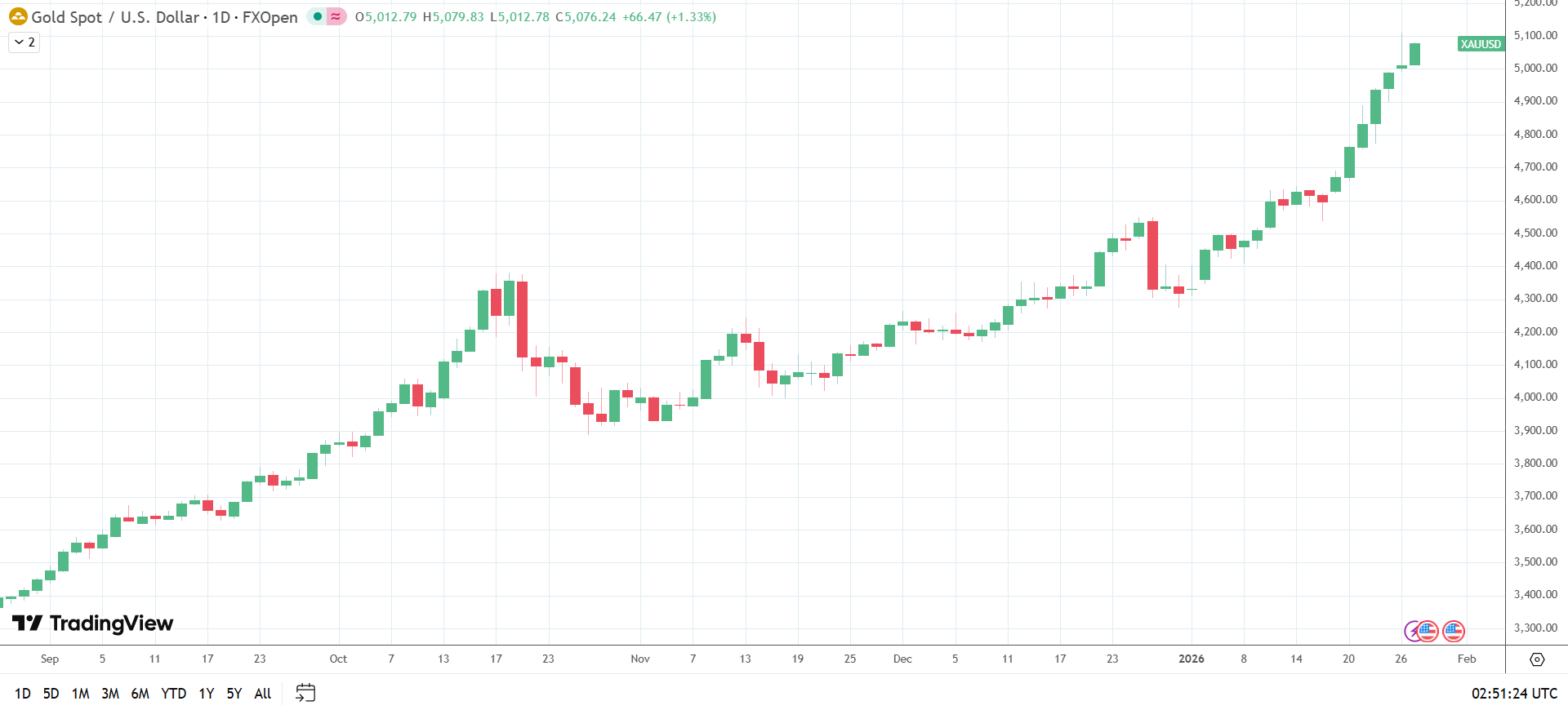
Meanwhile, fresh tariff threats and uncertainty ahead of the Fed’s interest rate decision and press conference bolstered demand for safe-haven assets. Gold climbed 1.35% to $5,077 in early trading.
Despite the mixed morning, expectations of a Fed rate cut in H1 2026, a strong US economy, and sentiment toward upcoming earnings support a bullish medium-term outlook for US stock futures.
Below, I’ll outline the key market drivers, the medium-term outlook, and the technical levels traders should watch.

President Trump Announces Tariff Hike on South Korea
US President Trump turned his attention to South Korea in the early hours of Tuesday, January 27, announcing:
“South Korea’s legislature is not living up to its deal with the United States. President Lee and I reached a Great Deal for both countries on July 30, 2025, and we reaffirmed these terms while I was in Korea on October 29, 2025. Why hasn’t the Korean legislature approved it? Because the Korean legislature hasn’t enacted our historic trade agreement, which is their prerogative, I am hereby increasing South Korean tariffs on autos, lumber, pharma, and all other reciprocal tariffs, from 15% to 25%.”
The latest tariff announcement followed Trump’s recent threats of tariffs against eight European NATO members and Canada. These threats underscored the ever-present risk of an escalation in geopolitical tensions.
Despite gold’s rise, the latest tariff threat failed to spook the Asian markets. South Korea’s KOSPI rallied 1.99% in morning trading.
Dow Jones Price Forecast
Every new Dow Jones analysis as it publishes, today's technical signal and key levels, live price — on one page.
See all Dow Jones forecastsChina Industrial Profits Rebound
While trade developments are key, upbeat Chinese economic indicators lifted sentiment. Industrial profits increased 5.3% year-on-year in December after falling 1% in November, signaling a shift in the supply-demand backdrop. Rising profits could lead to job creation and increased domestic demand, supporting a positive global economic outlook.
The Hang Seng Index joined the broader Asian markets in positive territory, advancing 1.15% to 27,074.
Yen Strength Remains a Headwind for US Risk Assets
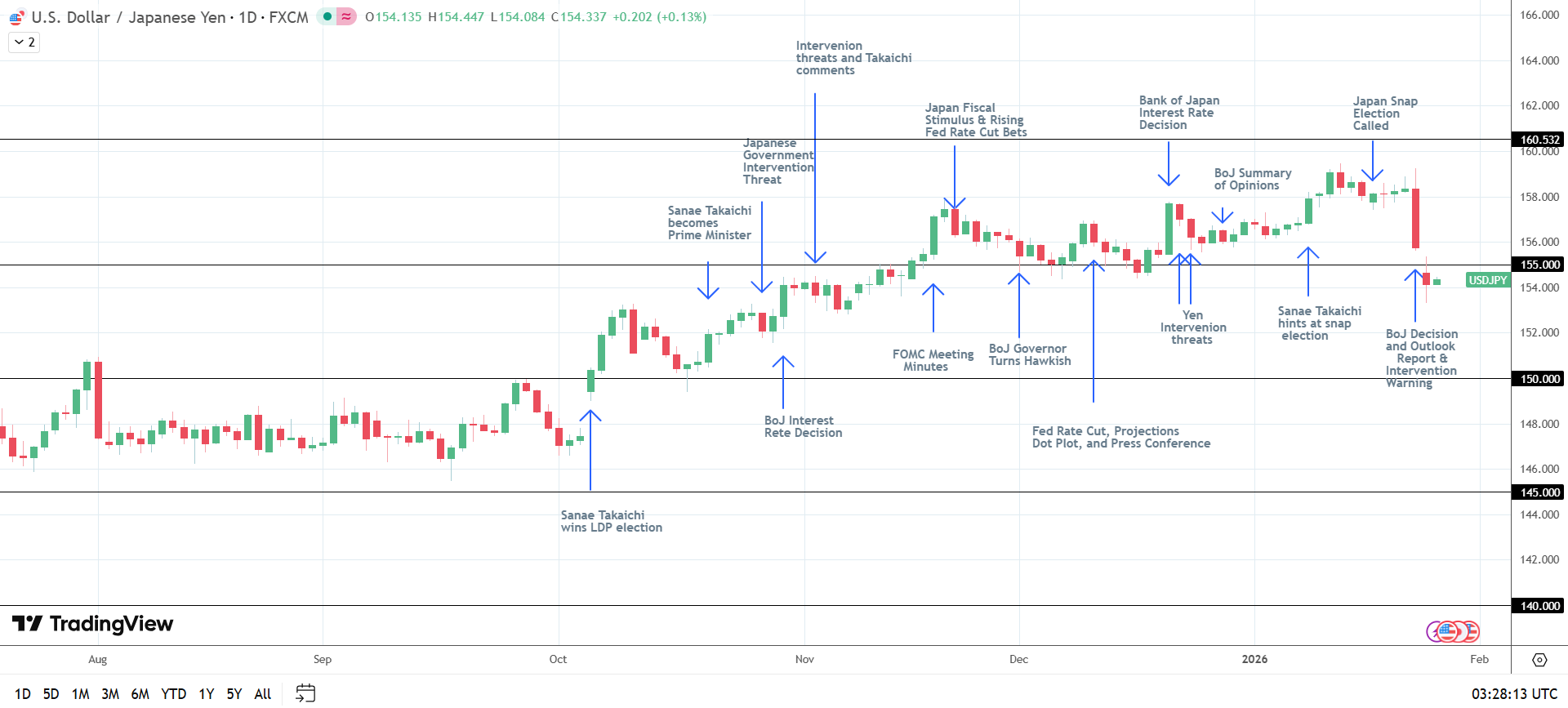
While Chinese economic indicators lifted sentiment, the stronger yen and elevated 10-year Japanese Government Bond (JGB) yields were headwinds. This week, USD/JPY plunged from 155.344 to a low of 153.302 before reclaiming 154. The sharp fall in USD/JPY fueled speculation about an unwind of yen carry trades into US assets, as seen in mid-2024.
Market concerns about Japan’s 240% debt-to-GDP ratio and Prime Minister Sanae Takaichi’s fiscal spending plans increased the risk premium for holding JGBs. 10-year JGB yields have climbed to their highest level in decades, weakening the yen.
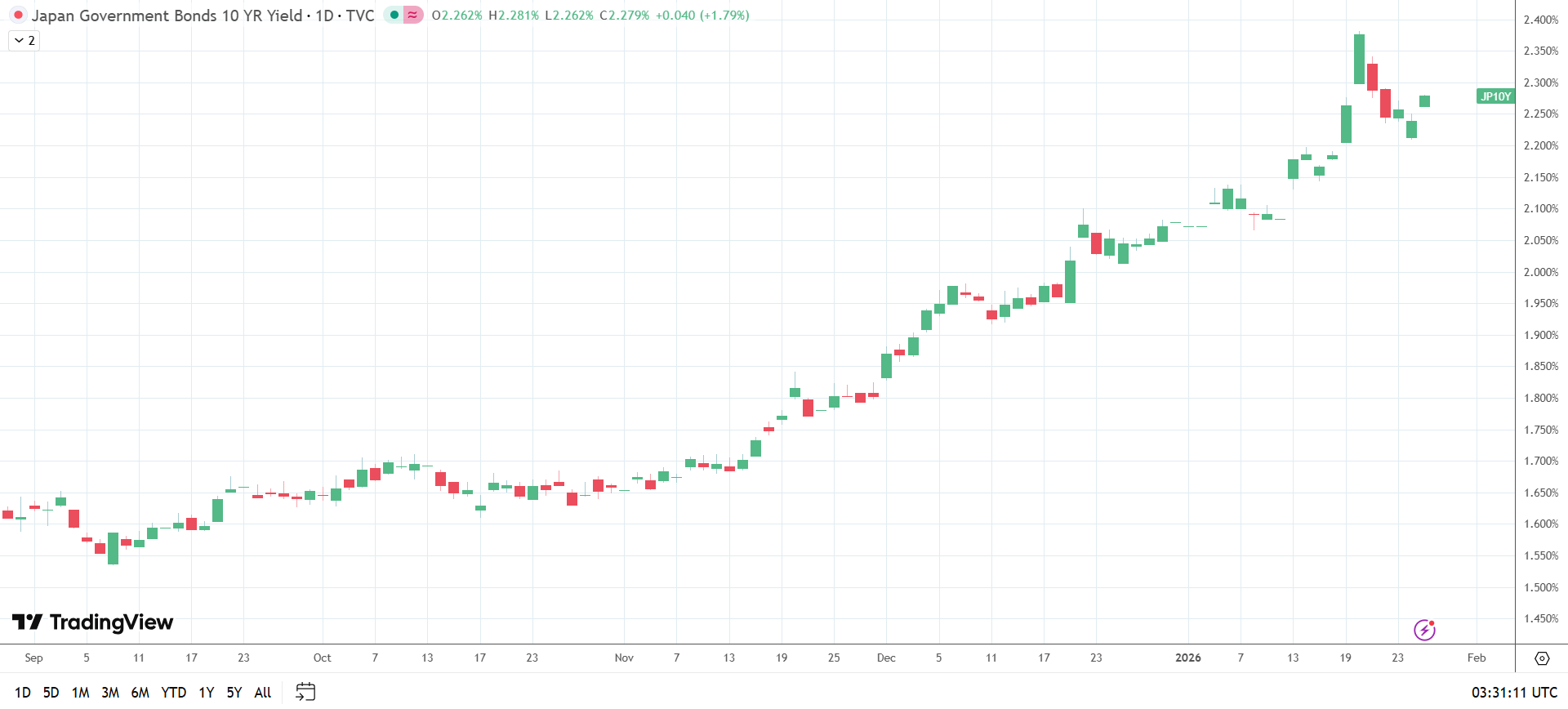
However, intervention warnings from the Japanese government and the Fed sent USD/JPY below 155, a key support level. This morning, USD/JPY steadied, climbing 0.13% to 154.337, easing market jitters.
Consumer Confidence, Earnings, and the Fed in Focus
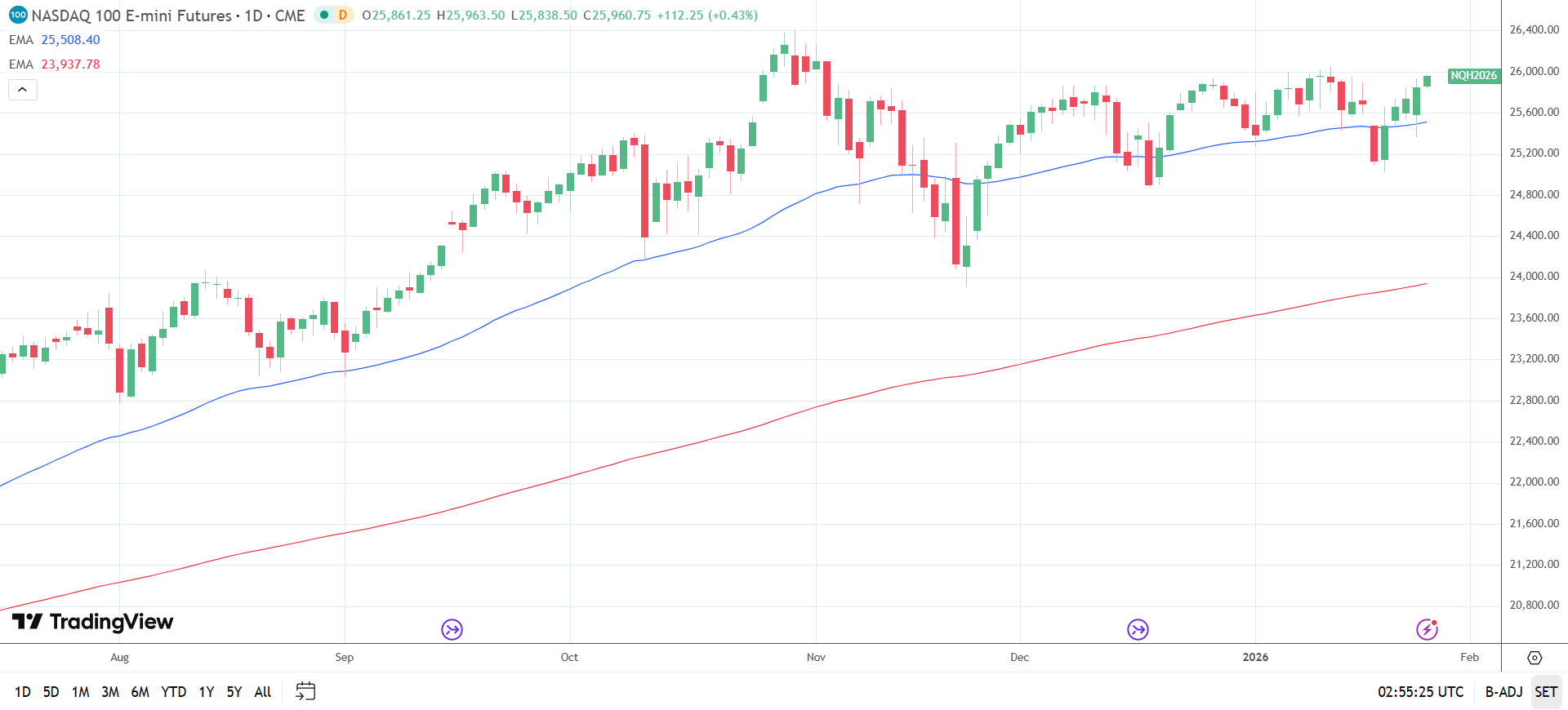
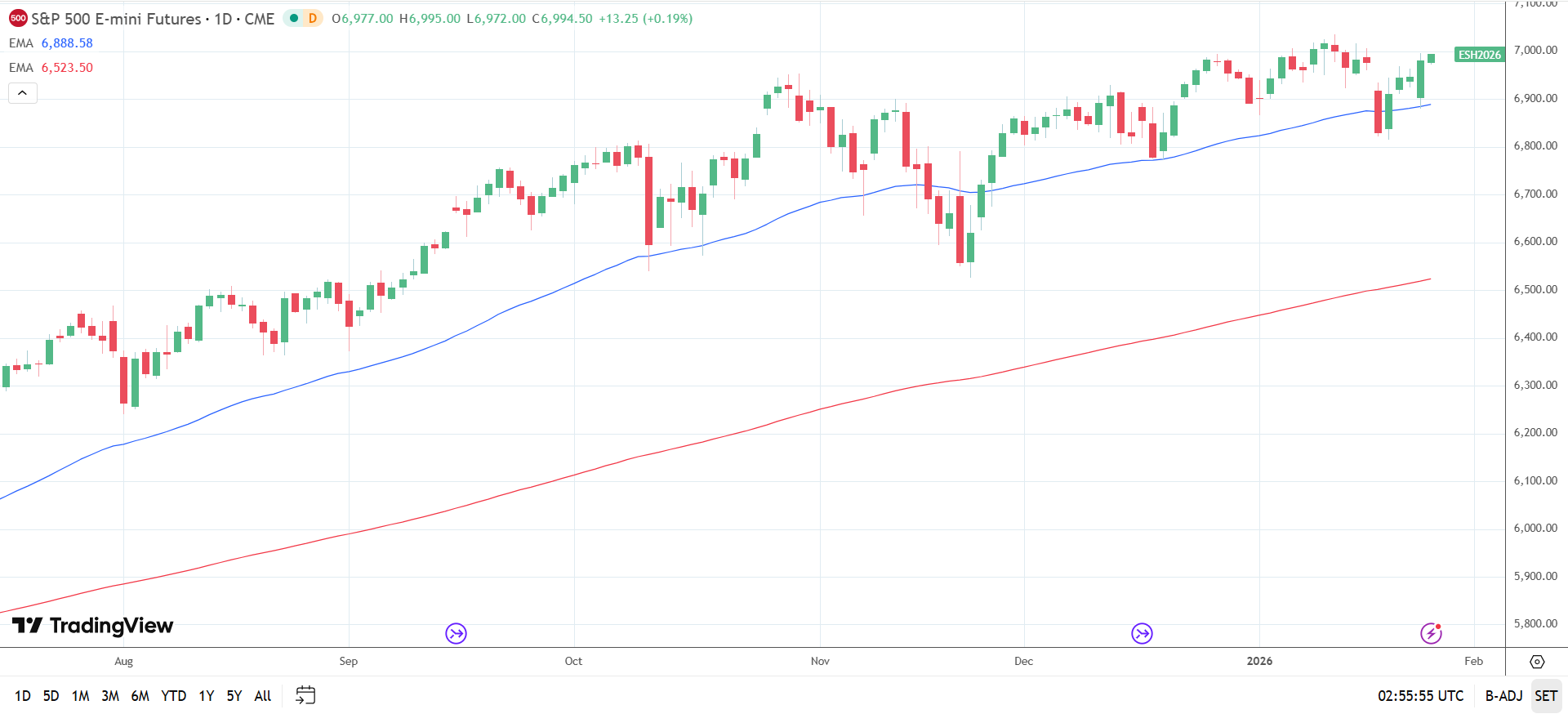
US futures saw mixed performances in the Asian morning session on January 27. The Dow Jones E-mini dropped 90 points, while the Nasdaq 100 E-mini and the S&P 500 E-mini climbed 112 points and 13 points, respectively. Market optimism toward the Mag-7’s upcoming earnings sent the Nasdaq and S&P 500 higher.
Later Tuesday, US consumer confidence data and corporate earnings will influence buying interest in US stock futures. Economists expect the CB Consumer Confidence Index to rise from 89.1 in December to 90.9 in January. Typically, rising confidence indicates a pickup in consumer spending, bolstering the US economy. For context, private consumption accounts for around 65% of US GDP.
However, corporate earnings will be key to the near-term trends for US index futures. On January 27, United Health Group (UNH), Boeing (BA), General Motors Company (GM), Texas Instruments (TXN), and American Airlines (AAL) are among the marquee names to announce earnings results. Uncertainty about the outlook for Dow Jones-listed companies likely weighed on the Dow Jones this morning.
Key Technical Levels for Dow Jones, Nasdaq 100, and S&P 500
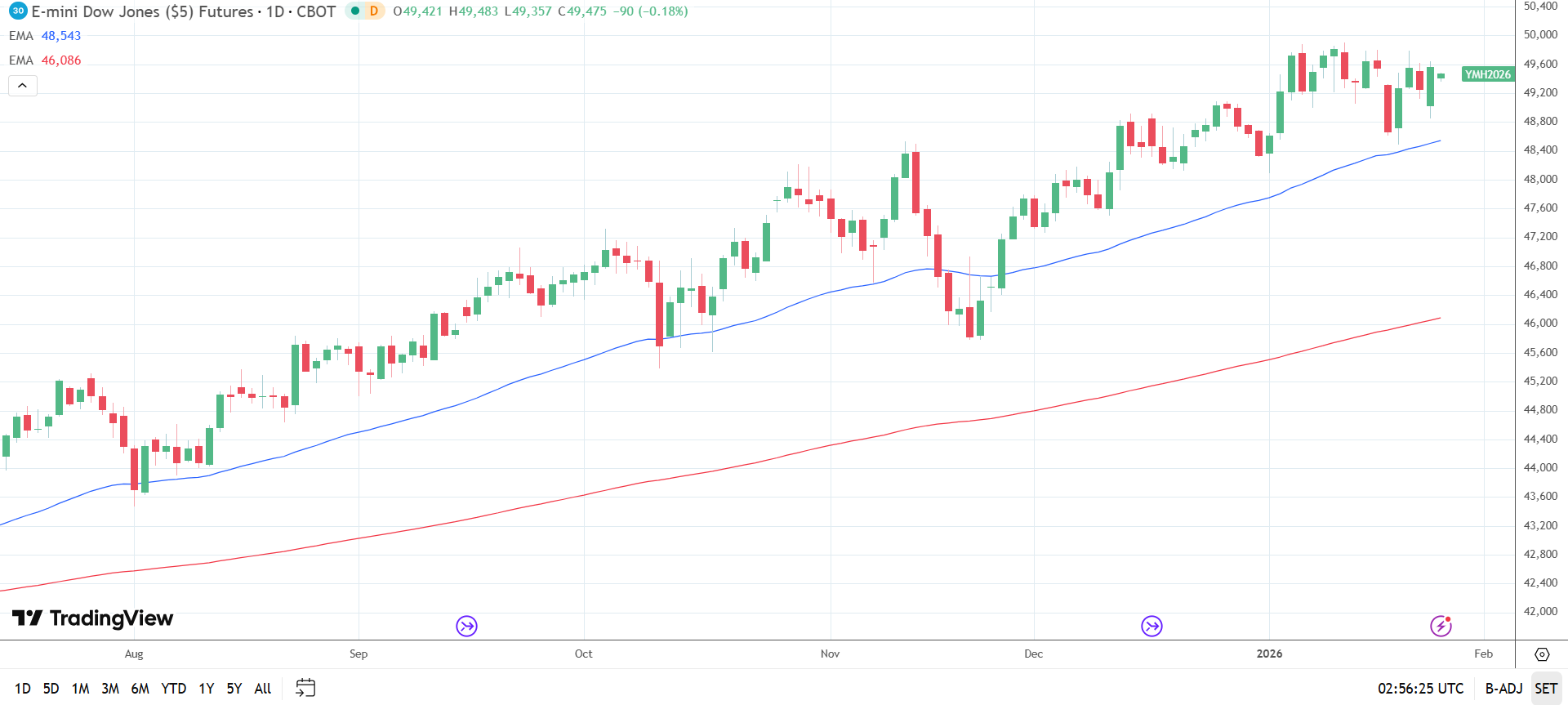
Despite the mixed morning, the Dow Jones E-mini, the Nasdaq 100 E-mini, and the S&P 500 E-mini traded above their 50-day and 200-day EMAs. The EMAs signaled a bullish bias, aligning with positive fundamentals.
Near-term trends will hinge on tariff-related headlines, USD/JPY trends, earnings, and US economic data. Key levels to monitor include:
Dow Jones
- Resistance: the January 13 record high of 49,901, and then 50,000.
- Support: 49,000 followed by the 50-day EMA (48,543).
Nasdaq 100
- Resistance: 26,000, followed by the October 30 record high of 26,399.
- Support: the 50-day EMA (25,508), 25,000, and then 24,500.
S&P 500
- Resistance: the January 13 high of 7,036, followed by 7,500.
- Support: the 50-day EMA (6,889) and then 6,500.
Outlook: Fed Rate Cut Bets, Economic Resilience, and Earnings Support Bullish Outlook
In my opinion, the short-term price outlook remains constructive. Market expectations of a Fed rate cut in H1 2026, and continued optimism over Q4 tech earnings, reaffirm the bullish outlook. These positive fundamentals align with bullish technicals for US equity futures.
However, several scenarios would derail the bullish medium-term outlook, including:
- An escalation in geopolitical tensions.
- The Bank of Japan announces a higher neutral interest rate (potentially 1.5%-2.5%). A narrower US-Japan rate differential may trigger an unwind of yen carry trades. Such an event would invalidate the short-term outlook.
- Strong US economic data and a hawkish Fed press conference would dampen bets on multiple Fed rate cuts in 2026.
- Corporate earnings and outlooks disappoint.
Conclusion: Bullish Outlook Intact
In summary, the strong US economy, a dovish Fed policy outlook, upbeat earnings, and a cautiously hawkish BoJ reinforce a bullish short- and medium-term outlook for US stock futures.
However, traders should closely monitor warnings of yen intervention, BoJ chatter, and USD/JPY trends. Yen interventions by the Fed and Japanese government, alongside hawkish BoJ rhetoric, could trigger a yen carry trade unwind, weighing on US equity futures.
Despite risks of an unwind of yen carry trades, US stock futures are likely to retarget their all-time highs if US economic data raises expectations of a June Fed rate cut. Fed rate cuts would have a more lasting effect on company earnings and equity valuations than narrowing US-Japan rate differentials.
Follow our live coverage and consult the economic calendar for real-time market updates.