Equity Bulls Shrug Off Higher Oil Prices
The S&P 500 added 0.1% to 7,173, and the Nasdaq Composite gained 0.2% to 24,887 – both clocking fresh records. However, it was a relatively narrow sector-level advance in the S&P 500, with just 3 out of 11 sectors gaining ground – a breadth reading that tempers some of the headline enthusiasm. Despite spending the majority of the day in the red, the Russell 2000 managed to finish the session with its head just above water. Meanwhile, the Dow Jones sat this one out and shed 0.1%, testing 49,167.
Oil prices remain elevated, with spot Brent Crude trading north of US$100/barrel, and WTI on the doorstep of climbing back above the widely watched figure. The underpinning is geopolitical: US-Iran peace talks have stalled, and the Strait of Hormuz has remained effectively closed since March. Iran put forward a new proposal to lift the blockade, but would push nuclear negotiations to a later date – something the White House has described as a red line. Given this ongoing uncertainty, and until a credible resolution emerges, oil prices will likely remain higher and continue to feed through to inflation expectations.
FX: USD Steady; BoJ Hawkish Hold Lifts JPY
In FX, the USD index ended Monday largely unchanged, despite gapping 0.8% higher at the open before surrendering those gains throughout the session. Flows are still mainly driven by the barrage of Middle East headlines, specifically the on-again, off-again peace talks between the US and Iran.
It is important to remember that five of the G10 central banks meet this week, the first of which made the airwaves overnight: the BoJ. The central bank voted to leave its policy rate unchanged at 0.75%, as widely expected by markets and economists, though the decision was reached by a 6-3 vote.
There were three dissenters – Hajime Takata, Naoki Tamura, and Junko Nakagawa – who voted for a 25 bp hike to 1.0%. This caught me off guard, as I was expecting a narrower vote split. Without the war in Iran, I believe the BoJ would have increased rates at today’s meeting. Policymakers are now clearly concerned about the second-round effects of inflation.
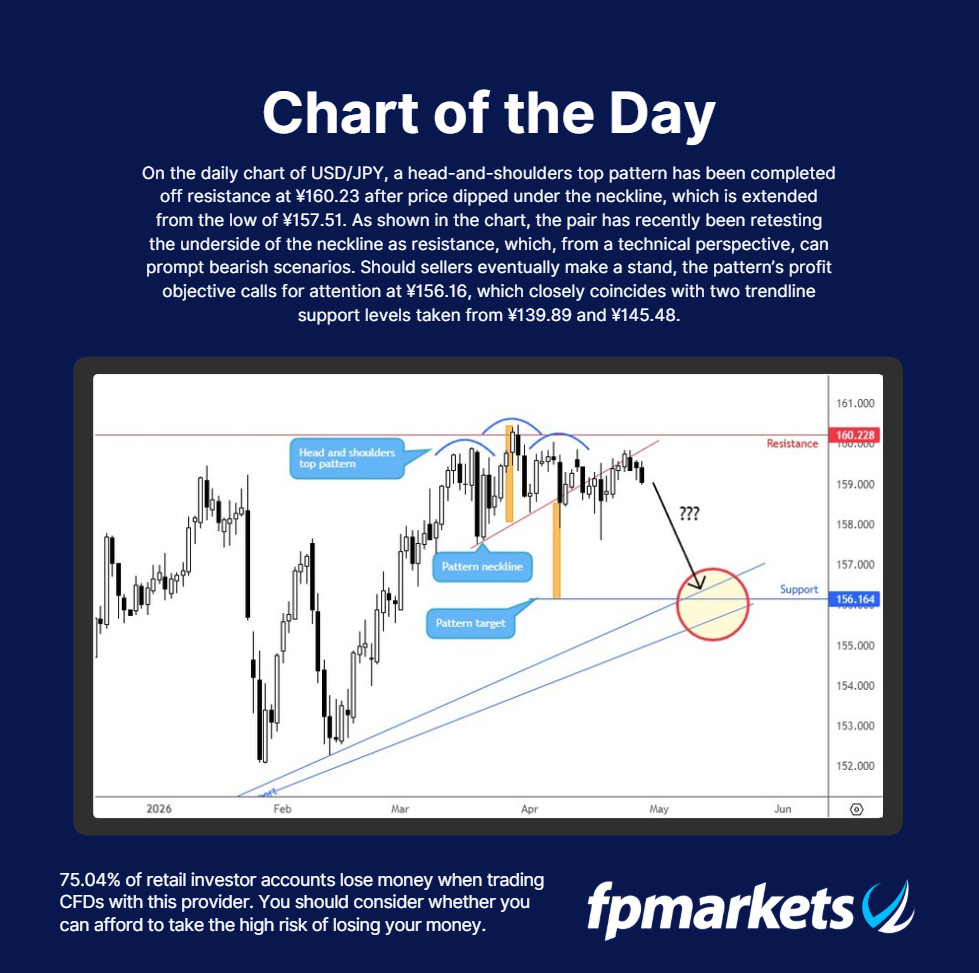
The BoJ decision is considered a hawkish hold, which gave the JPY a modest lift. The Research Team’s Chart of the Day also shows USD/JPY holding the underside of a head-and-shoulders pattern’s neckline, drawn from the low of ¥157.51.
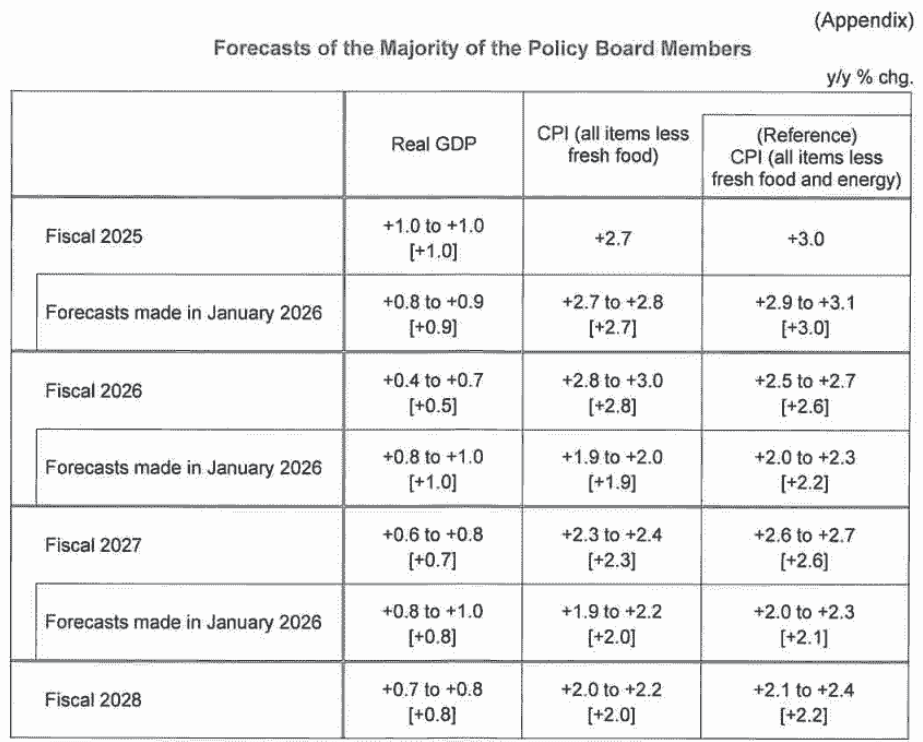
Adding to the hawkish tilt, the BoJ’s outlook report showed a downward revision of real GDP in 2026 to 0.5% from 1.0%, due to the Middle East conflict. However, the shock to growth is expected to be temporary, with 2027/28 forecast around 0.8%.
You will also acknowledge that CPI (excluding fresh food), a key measure of inflation for the BoJ, is expected to rise by 2.8% this year, 2.3% in 2027, and to reach the central bank’s target of 2.0% in 2028. Despite the hawkish hold, markets are pricing in a 50/50 call (+13 bps) for June’s meeting on whether the BoJ hikes, with a total of 44 bps of tightening implied by year-end – essentially two rate hikes.
Looking Ahead: Central Banks and Earnings
There is little on the economic calendar ahead today; focus will now shift to the BoC and Fed rate decisions tomorrow, as well as earnings. Five of the Mag 7 report results this week, with Alphabet (GOOG), Microsoft (MSFT), Amazon (AMZN), and Meta (META) airing after the close tomorrow. Earnings from Apple (AAPL) end the week on Thursday after the close.
Written by FP Markets Chief Market Analyst Aaron Hill