
US Dollar – A Safe haven in Turbulent Times
US-Iran tensions and disruptions to the Strait of Hormuz keep investors flocking to the US dollar as a place to hide and wait things out. That’s despite the US March consumer price index shooting up to 3.3% on a year-to-year basis , largely driven by the price of energy, while underlying inflation actually eased a bit to 2.6%. Meanwhile financial markets are banking on only limited easing from the Fed by 2026, but aren’t counting on it just yet – clearly putting a lot of emphasis on the data coming in as the US economy continues to chug along just fine and stubborn inflation is still a problem.

Euro – ECB Likely to Keep Rates Steady for Now
The ECB looks like they’ll keep rates unchanged at their April 29-30 meeting, keeping their deposit rate at 2.00% – and for good reason. The headline inflation rate is hovering just around the 2.0 to 2.2% mark next year, and that’s because energy costs are really weighing on things, but also because the economy is growing moderately, reaching an annual growth rate of 1.1 to 1.3%. Officials are being pretty cautious about weighing up the risks from geopolitics and trade.
Pound – Inflation Remains a Sticky Problem
UK inflation was at 3.3% on a year-to-year basis in March, right on target, and the core rate even edged up to 3.1%. The BoE looks likely to keep rates steady at 3.75% on the 1st of May, balancing out the pressure from energy driven price hikes against weakening signs in the labour market, meanwhile unemployment ticked up to 4.9%. But, all things considered, growth in the UK is still looking pretty decent in relation to the rest of the eurozone.
DXY Weakness hits 98.67 – Buyers can’t seem to escape Dollar Index Downward Trend
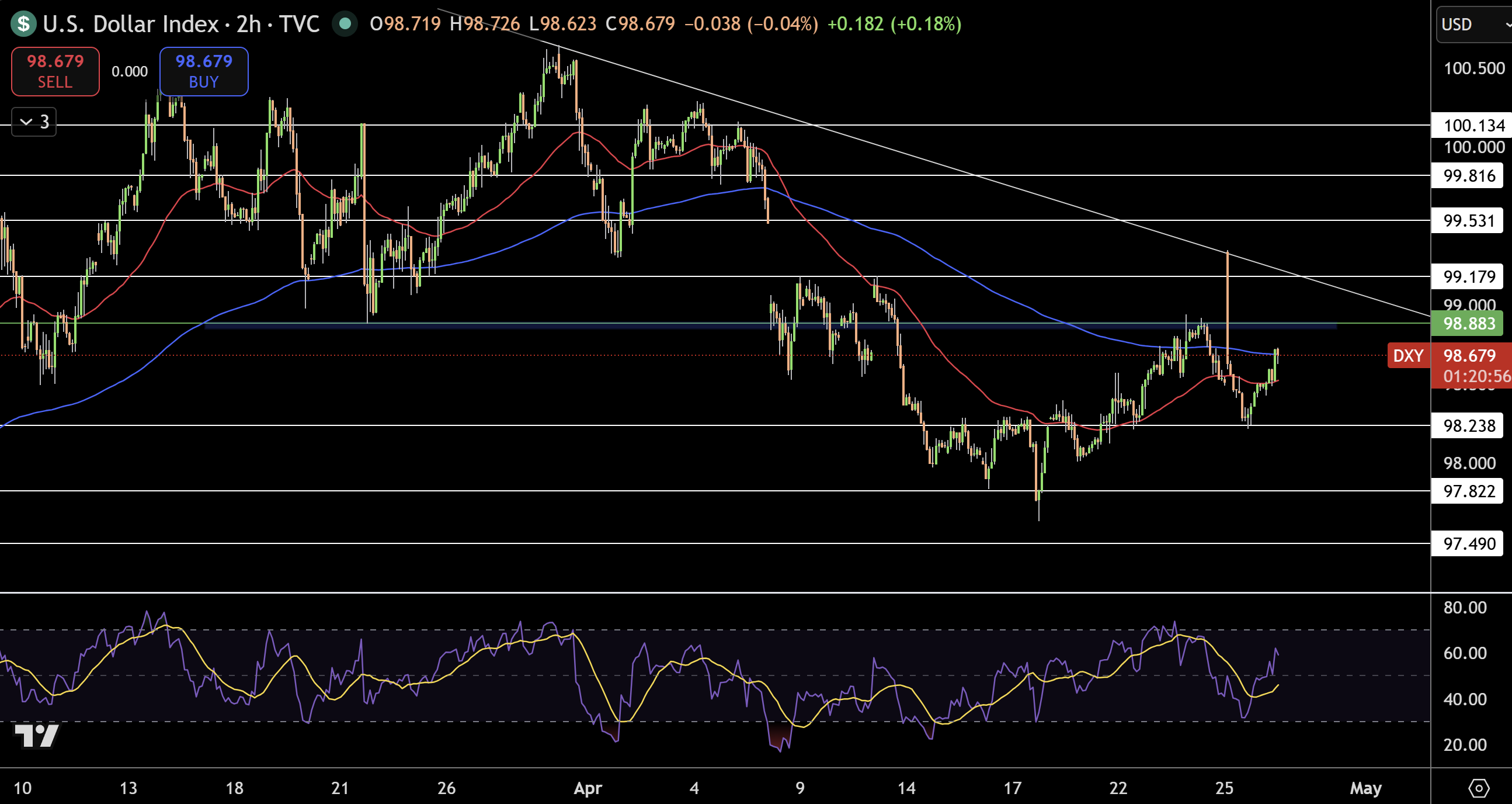
DXY is currently trading at 98.67, stuck below the downward sloping trendline that has consistently sunk every attempted rally. Candlesticks keep showing the pattern of repeatedly getting knocked back down near 99.18, which is no surprise given it’s a clear resistance level. The downward sloping moving averages are just another bearish sign to add to the list.
Elsewhere, the RSI is hovering around 44, which suggests that momentum is very weak but still not quite to the point of being oversold. The first line of defence for buyers is at 98.23, with a more significant support level located at 97.82.
GBP/USD Price Forecast
Every new GBP/USD analysis as it publishes, today's technical signal and key levels, live price — on one page.
See all GBP/USD forecastsBreak below 98.00 and watch as the price drops all the way to 97.49. On the other hand bulls will need a strong close above 99.18 to even think about challenging 99.53
Trade idea: Think about selling if we see a break below $98.20, and be prepared to stop out if we get a close above $99.20.
GBP/USD Steadies at 1.3508 – The Uptrend looks healthy but the Bulls are getting a bit tired
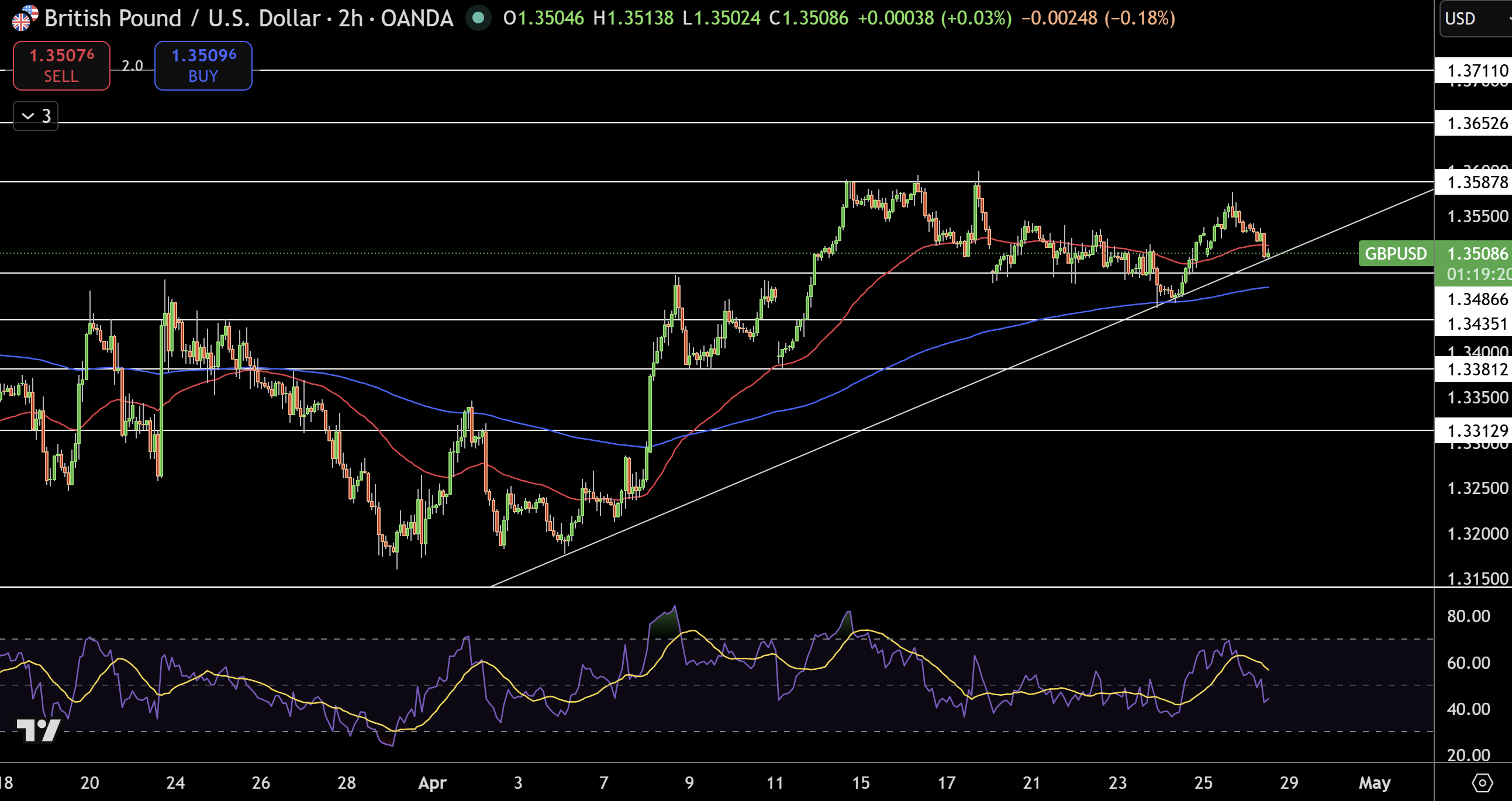
GBP/USD is currently trading at 1.3508, still sitting pretty just above its rising trendline. Candlesticks are showing some very small bodies, which might just be a sign that the market is getting a bit tired after its recent run. The moving averages are still generally bullish, which is good, but the RSI is currently hovering around 52 and showing a definite slowdown in momentum.
We’ve got some key support around 1.3486, and a bit of deeper support at 1.3435. Resistance is currently holding out at 1.3550, followed by 1.3588. If we can actually break above 1.3550, we might have a shot at 1.3652. But if we see a close below 1.3486, it’s probably time to start worrying about a bigger pullback.
Trade idea: If we see a break above $1.3550, it’s probably worth considering buying, with a stop loss set at $1.3480.
EUR/USD holds at 1.1695 – Breaking the Trendline Starts to Suggest a Big Shift
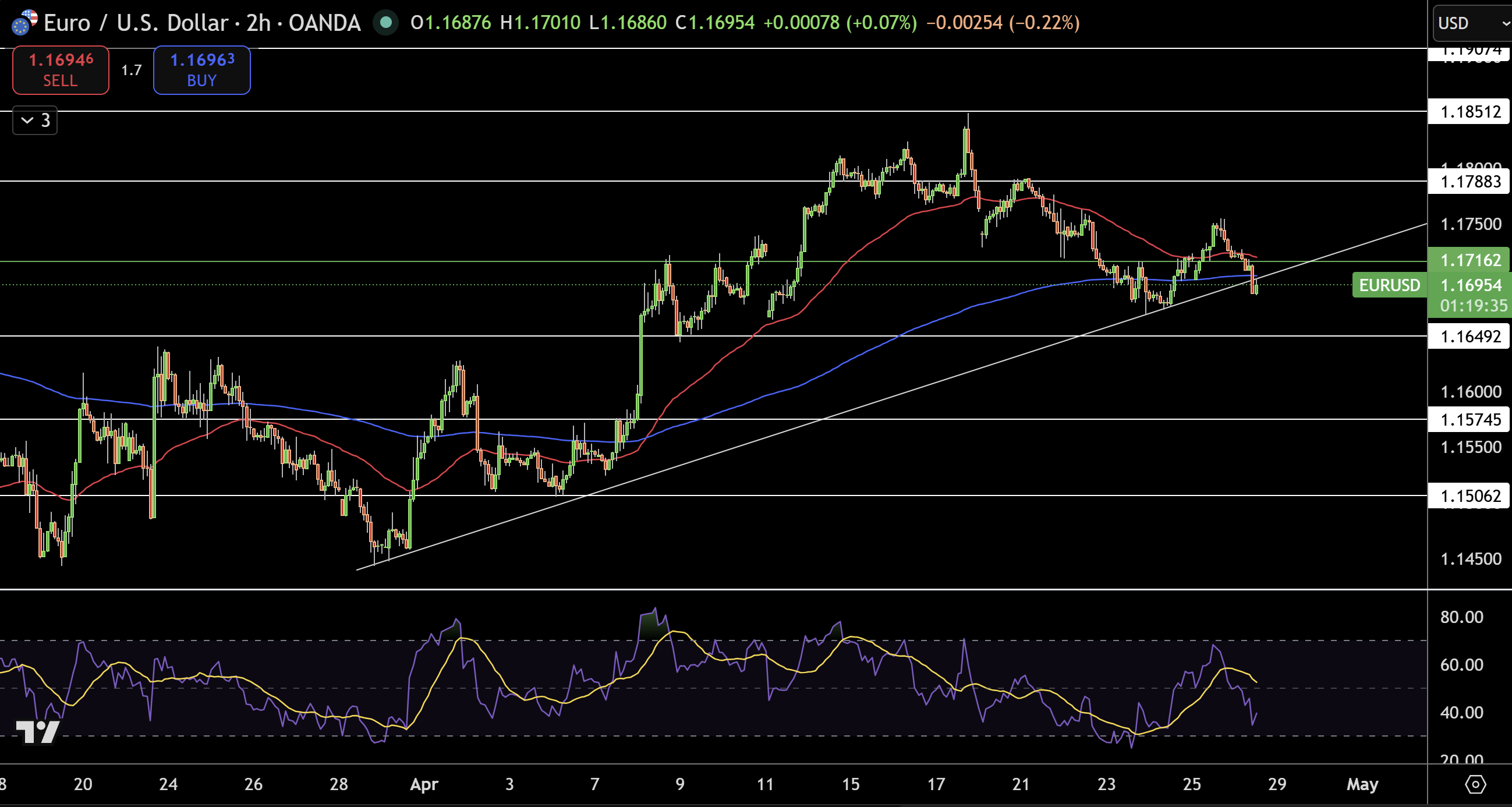
EUR/USD is currently trading at 1.1695, having just broken below its upward trendline. Candlesticks are showing the classic look of lower highs, which is a pretty clear sign that the momentum behind the bulls is waning. The moving averages are starting to flatten out, which might just be the first sign of a trend reversal.
Meanwhile, the RSI is stuck at 48 and is kind of leaning bearish. We’ve got some support around 1.1650, but we’ve also got a pretty solid resistance level capping us out at 1.1730. Any break below 1.1650 and we might see the price fall all the way to 1.1600.
But if we can manage to get back above 1.1730, we might even see some renewed upside momentum return.
Trade idea: If we see a break below $1.1650, it’s probably a good time to think about selling, with a stop loss set at $1.1735.