
A Speech the World Was Watching
Most had anticipated he would highlight progress toward completing core US military objectives, so that element raised few eyebrows. What rattled markets was his simultaneous vow to hit Iran ‘extremely hard’ over the next two to three weeks, and his threat to strike Iran’s electricity-generating plants if no deal is reached. This comes as the US continues to amass additional military assets in the region, including a third aircraft carrier now en route to the Middle East.

Escalate to De-escalate
Although I did not expect it, I feel Trump resorted to his usual escalate-to-de-escalate playbook, and while his speech is now in the rear-view mirror, his words will clearly shape sentiment today, with markets now trading with a clear risk-off tone. This morning, Brent and WTI spot prices are strongly north of US$100/barrel, up by around 7% each. Asia Pac stocks were also on the back foot – Japan’s Nikkei 225 is down 2.5% – European stocks are lower at the open, and US equity index futures are exploring deeper waters. The USD also caught a strong bid on safe-haven appeal, and US yields are rising across the curve.
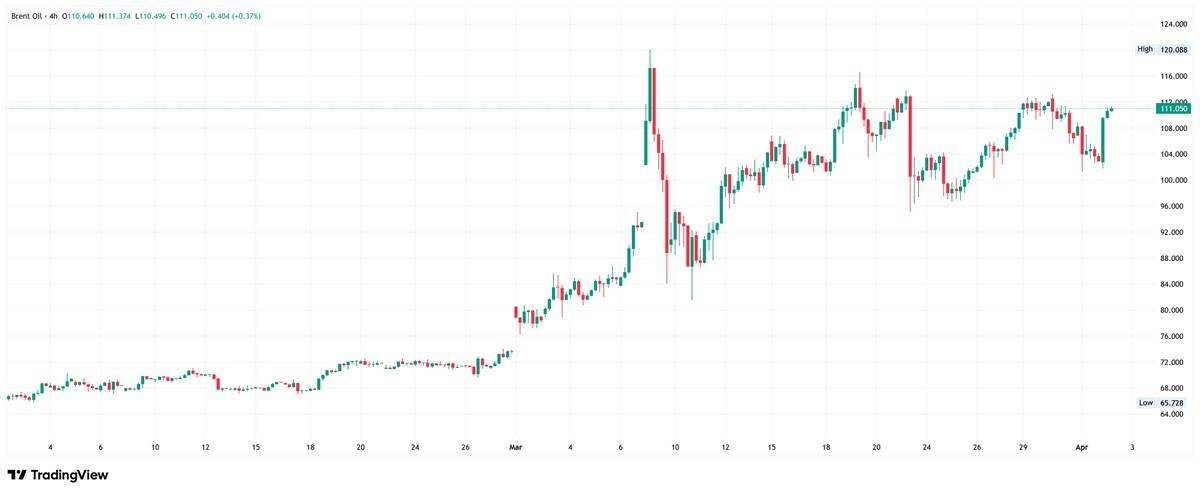
Ultimately, I am unsure what has changed – nothing in the speech alters the current situation. The Strait of Hormuz is largely blockaded, with plans to reopen it looking bleak; the only strategy that appears to be in place is Trump urging other countries to simply go and ‘take it’. Personally, this appears to be a President who is becoming increasingly frustrated with the entire situation, and when someone is ‘backed into a corner with no easy escape’, it can lead to impulsive and irrational decisions.
Macro Spotlight: ADP Steady; ISM Offers Solid Headline
On the macro front, the US March ADP non-farm payrolls print came in at 62,000, which was higher than the expected reading of 40,000, but largely matched February’s print of 66,000 (revised higher from 63,000). There was an even split between goods and services jobs, with small businesses surging ahead this month at 85,000, and education/health services leading the way at 58,000. Overall, this represents two steady months of job growth, albeit concentrated in healthcare.
The US March ISM Manufacturing PMI beat expectations for the third consecutive month of expansion at 52.7 from 52.4 in February, with production (55.1) particularly robust as firms work through backlogs. Customer inventories remain at multi-year lows, which should support production into Q2. A red flag within this report, of course, was the prices paid component surging to 78.3 from 70.5 in February – the highest since June 2022. Employment remains in contraction for the 30th straight month at 48.7, and new export orders slipped back below 50, with trade frictions still biting.
Brent Oil Price Forecast
Every new Brent Oil analysis as it publishes, today's technical signal and key levels, live price — on one page.
See all Brent Oil forecastsThese data come ahead of tomorrow’s US March NFP release, which is expected to show the US economy added 60,000 jobs following a loss of 92,000 in February, with unemployment forecast to remain steady at 4.4%.
The Fed is caught between a softening labour market and inflation accelerating. A weak NFP print combined with prices paid at 78 positions the Fed in stagflationary territory. Rate cuts look very difficult to justify while prices are rising; yet holding rates tight into a softening labour market carries its own risks. The data, for now, argues for patience.
Written by FP Markets Chief Market Analyst Aaron Hill