
In the previous weekly analysis, I expected Bitcoin (BTC) to extend its rebound toward $84,000 on improving risk sentiment after a strong US jobs report.
That call fell short. BTC briefly rallied toward $82,500 before reversing, ending the week down 4.80%. The S&P 500, meanwhile, hit a fresh record high and finished up 0.13%, highlighting Bitcoin’s short-term divergence from equities.
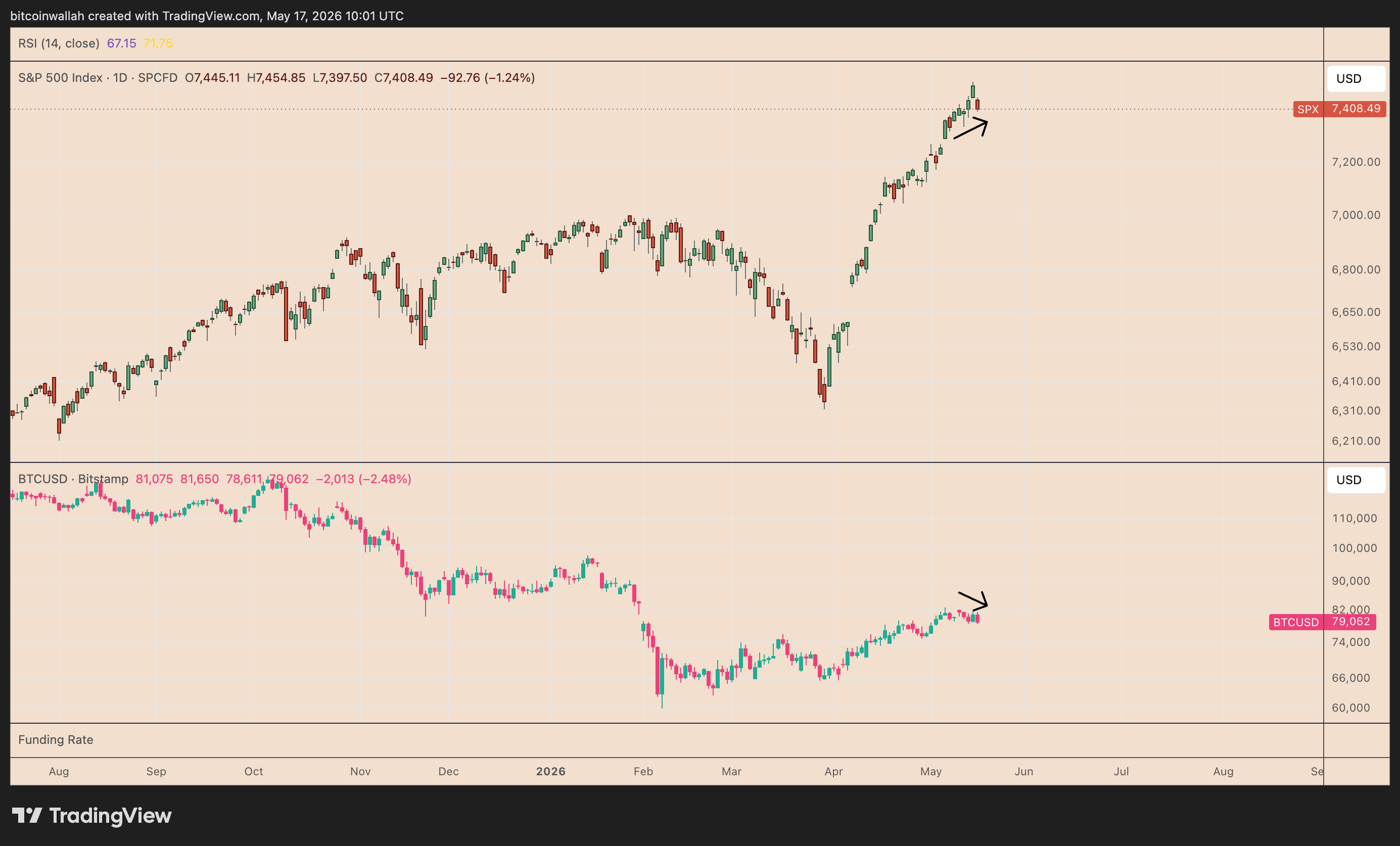
As I had feared, a higher-than-anticipated US inflation print curbed appetite for riskier assets like Bitcoin. A rising wedge pattern forming on the short-term charts furthered the downside outlook.

Key Events This Week: FOMC Minutes and NVIDIA Earnings
The FOMC minutes, due Wednesday, will show how Fed officials viewed inflation, labor-market strength, and future rate cuts.
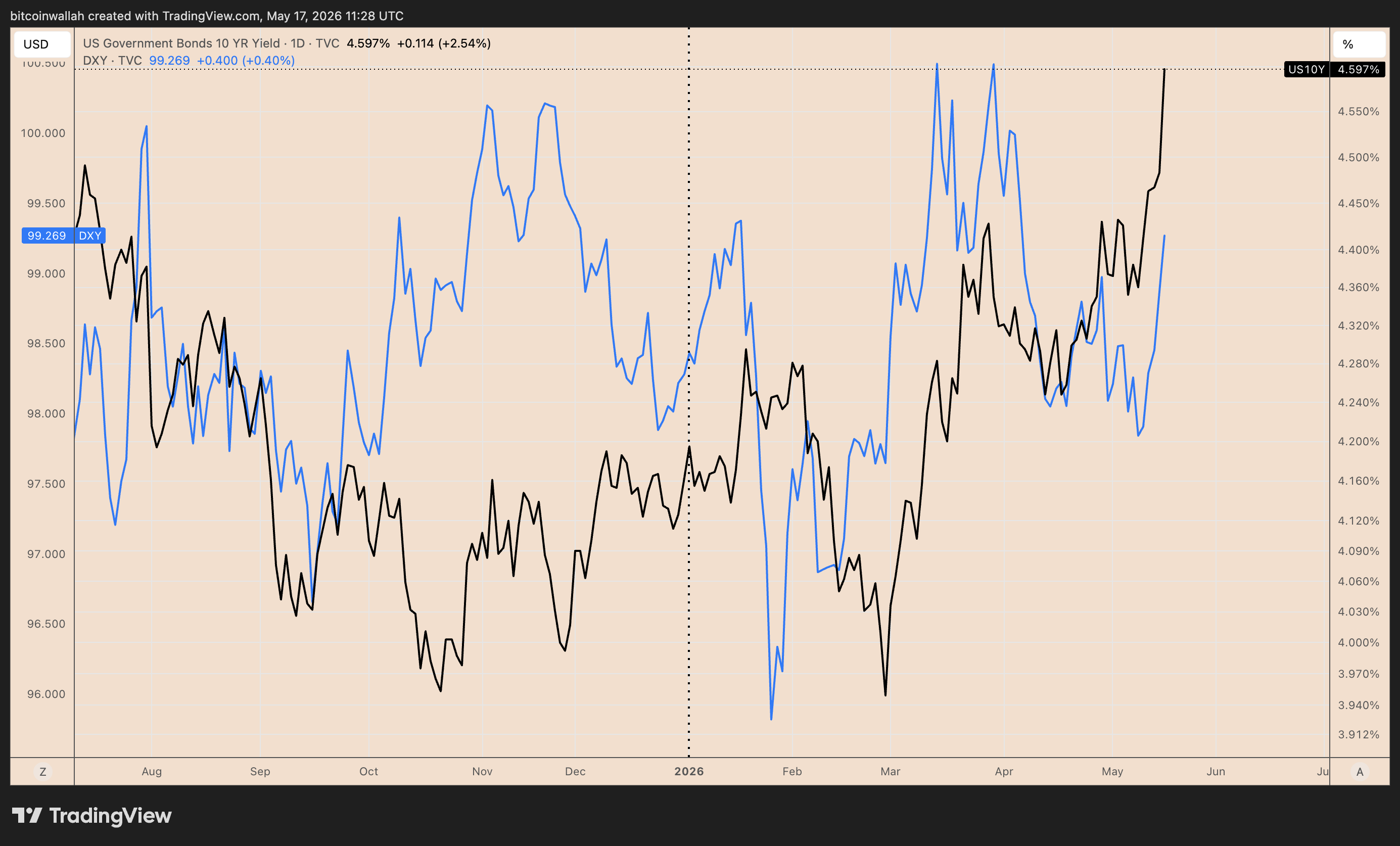
For Bitcoin, the key risk is a hawkish tone. Any sign that policymakers remain worried about inflation could lift Treasury yields and the US dollar, tightening financial conditions and pressuring BTC.
Still, macro may not be the only force driving Bitcoin.
Strategy (MSTR) has purchased over 100,000 BTC in 2026, absorbing roughly 250% of newly mined supply over the same period. That steady demand has tightened available supply and may soften Bitcoin’s reaction to negative Fed signals.
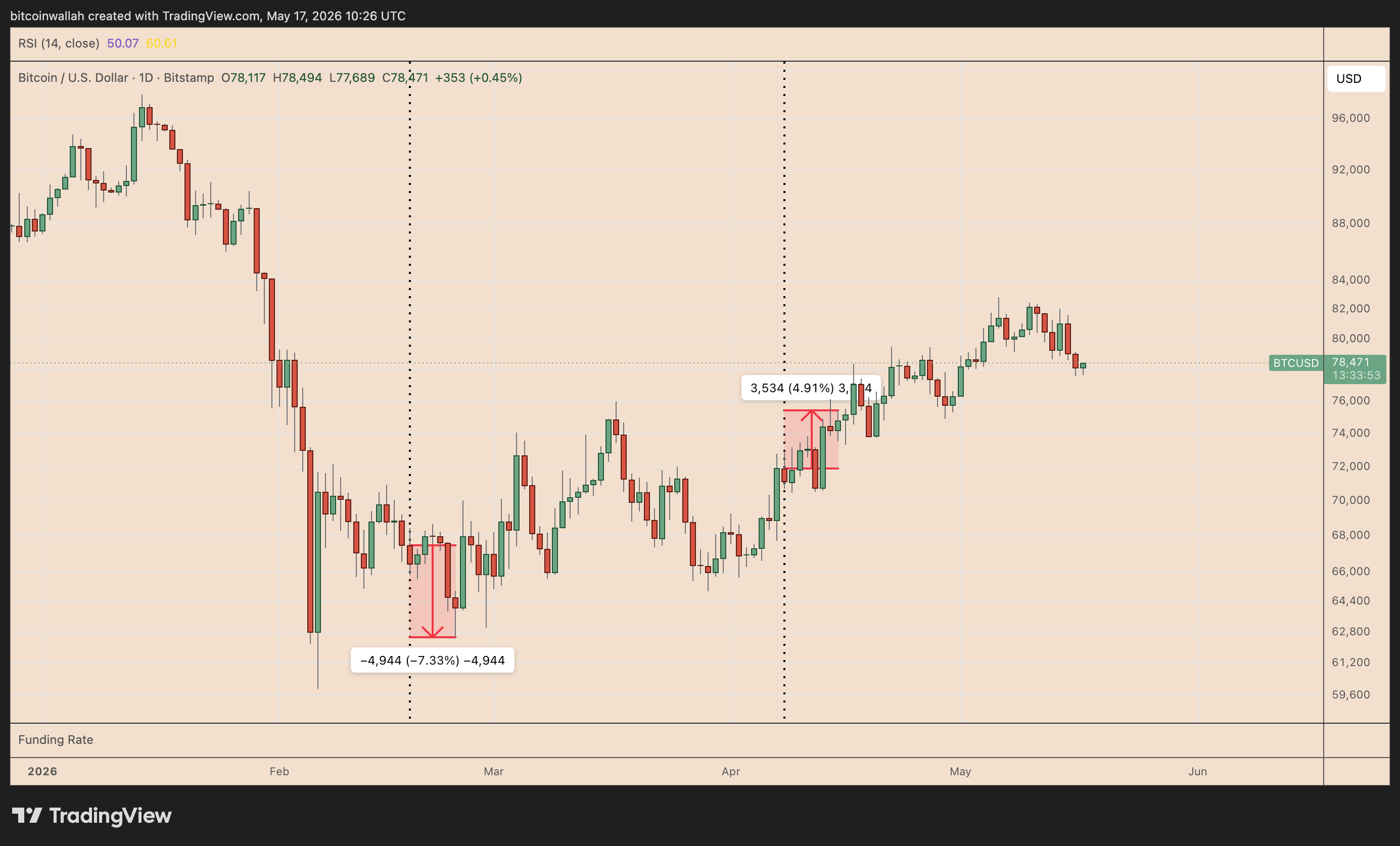
The previous FOMC minutes offer a useful precedent. The March minutes, released on April 8, showed officials worried that the Iran war could keep energy prices high, inflation sticky, and rate cuts delayed.
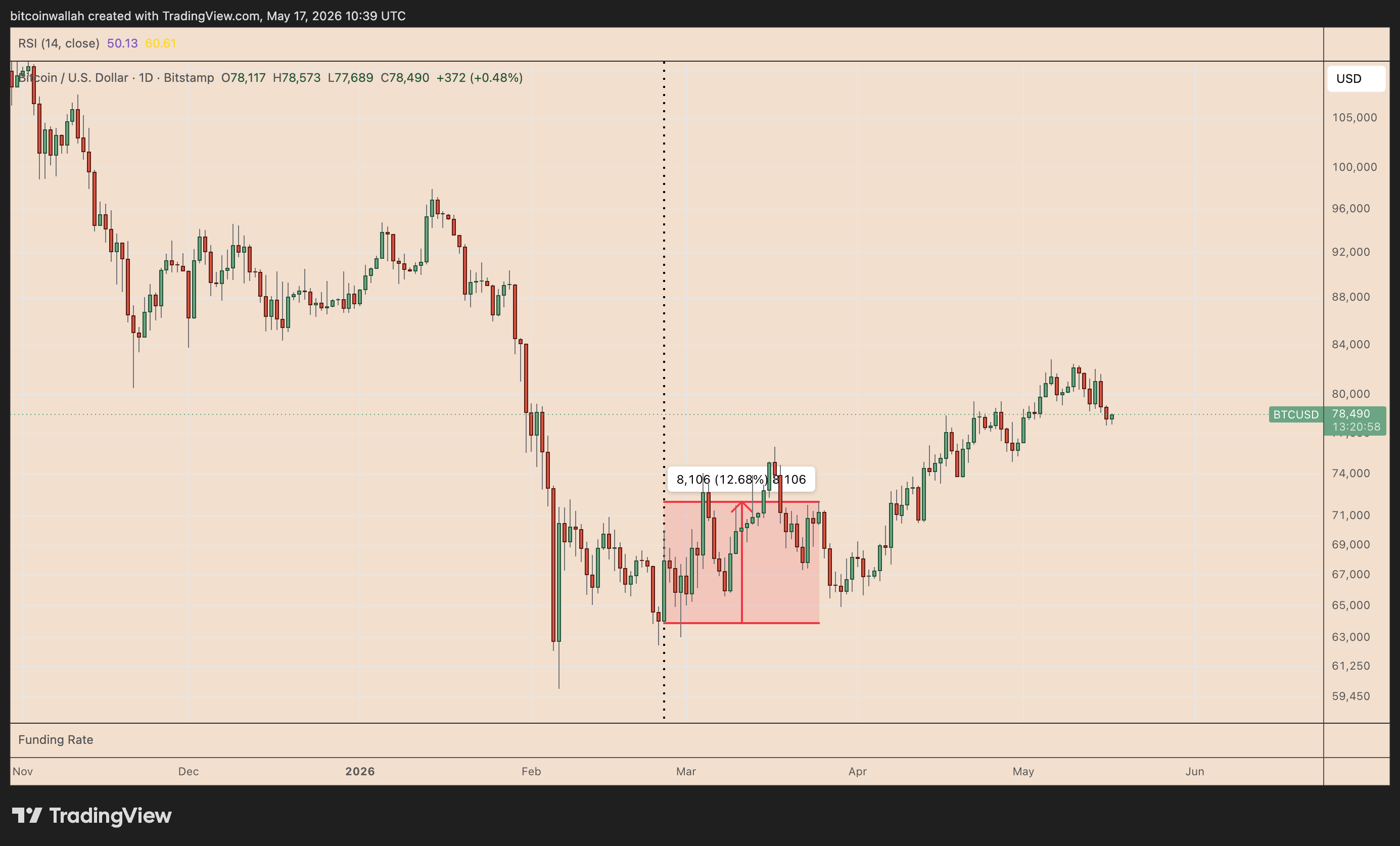
Yet BTC rose roughly 5% over the following week, suggesting that strong structural demand and tight spot supply can sometimes cushion Bitcoin against hawkish macro pressure.
A more balanced Fed tone, one that acknowledges inflation risks without ruling out future easing, would likely be more constructive for BTC.
That said, broader risk markets may be vulnerable to consolidation. The S&P 500 and Nasdaq Composite both hit fresh all-time highs this week and remain in bullish technical uptrends.
However, rising bond yields, renewed oil-price risk amid limited progress with Iran, and the effective end of Q1 earnings season could remove some of the momentum that has supported equities.
For Bitcoin, any pullback in stocks may weaken the risk bid, especially if it coincides with firmer yields and a stronger dollar.
Bitcoin Price Forecast
Every new Bitcoin analysis as it publishes, today's technical signal and key levels, live price — on one page.
See all Bitcoin forecastsNVIDIA Earnings Also Coming On Wednesday
The bigger risk event may be NVIDIA’s (NVDA) May 20 earnings.
Consensus estimates point to about $78.5 billion–$78.8 billion in revenue and $1.75–$1.77 in adjusted EPS, with traders pricing a potential 7% move in NVDA stock.
Still, the market’s real test will be guidance: Wall Street expects Nvidia’s second-quarter revenue outlook to land near $86 billion, meaning a Q1 beat alone may not be enough to keep the AI rally intact.
NVIDIA’s NVIDIA’s previous-quarter revenue jumped 73% year over year to $68.1 billion, led by a 75% surge in data-center sales to $62.3 billion. Yet NVDA still fell 15.45% in a month, showing that strong results alone may not be enough.
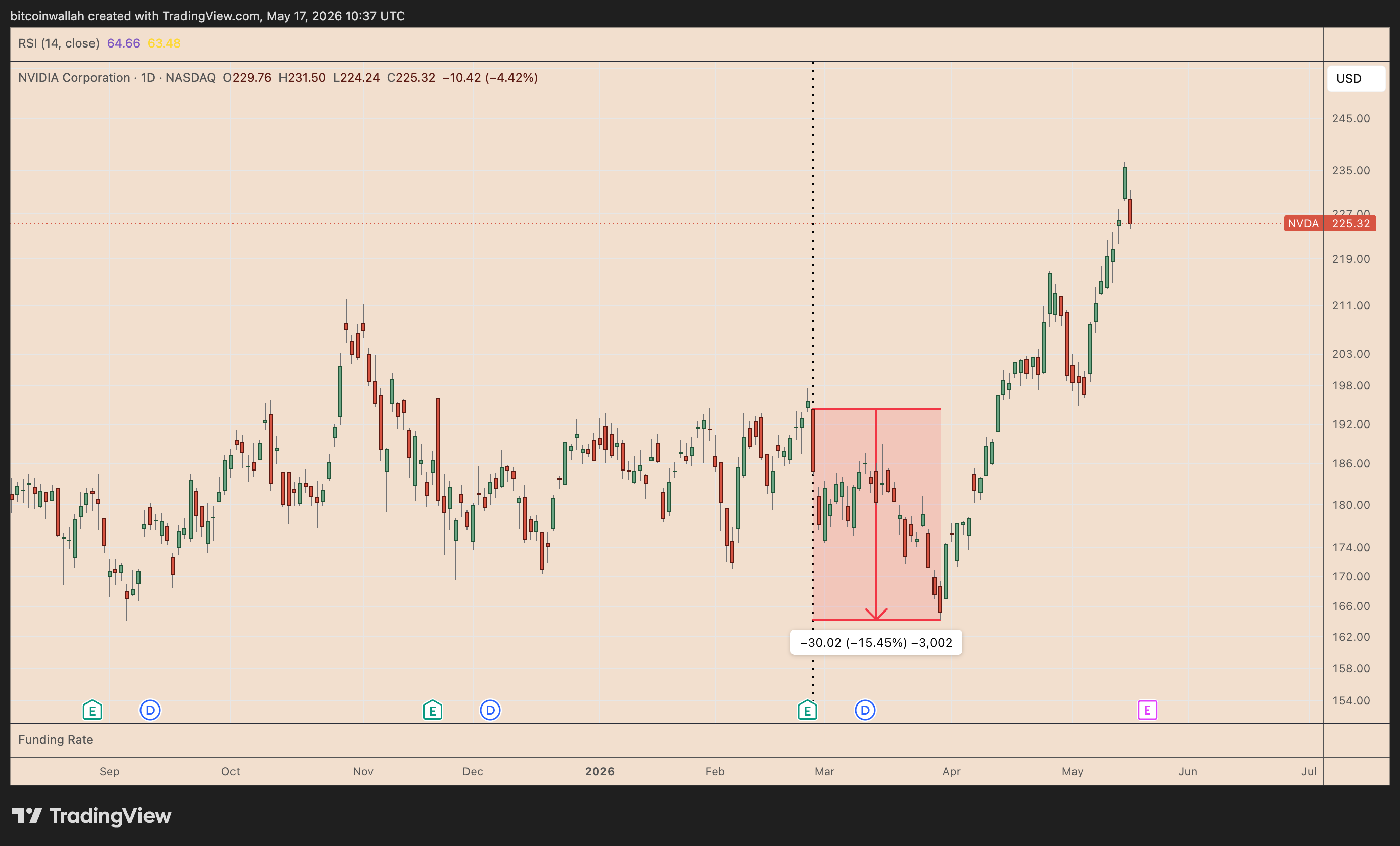
For BTC, the key signal is whether Nvidia keeps the broader risk rally alive. A strong outlook could support Bitcoin’s risk bid, while an underwhelming report may pressure semiconductors and high-beta assets.
Binance Stablecoin Inflows Signal Dip-Buying Interest
Binance stablecoin flows suggest some bulls may be preparing to buy Bitcoin’s latest dip.
On May 14, Binance recorded more than $1.5 billion in stablecoin net inflows, mostly from USDT deposits, according to data resource CryptoQuant. That marked a sharp reversal from earlier outflows, including nearly $1.3 billion withdrawn on May 12.
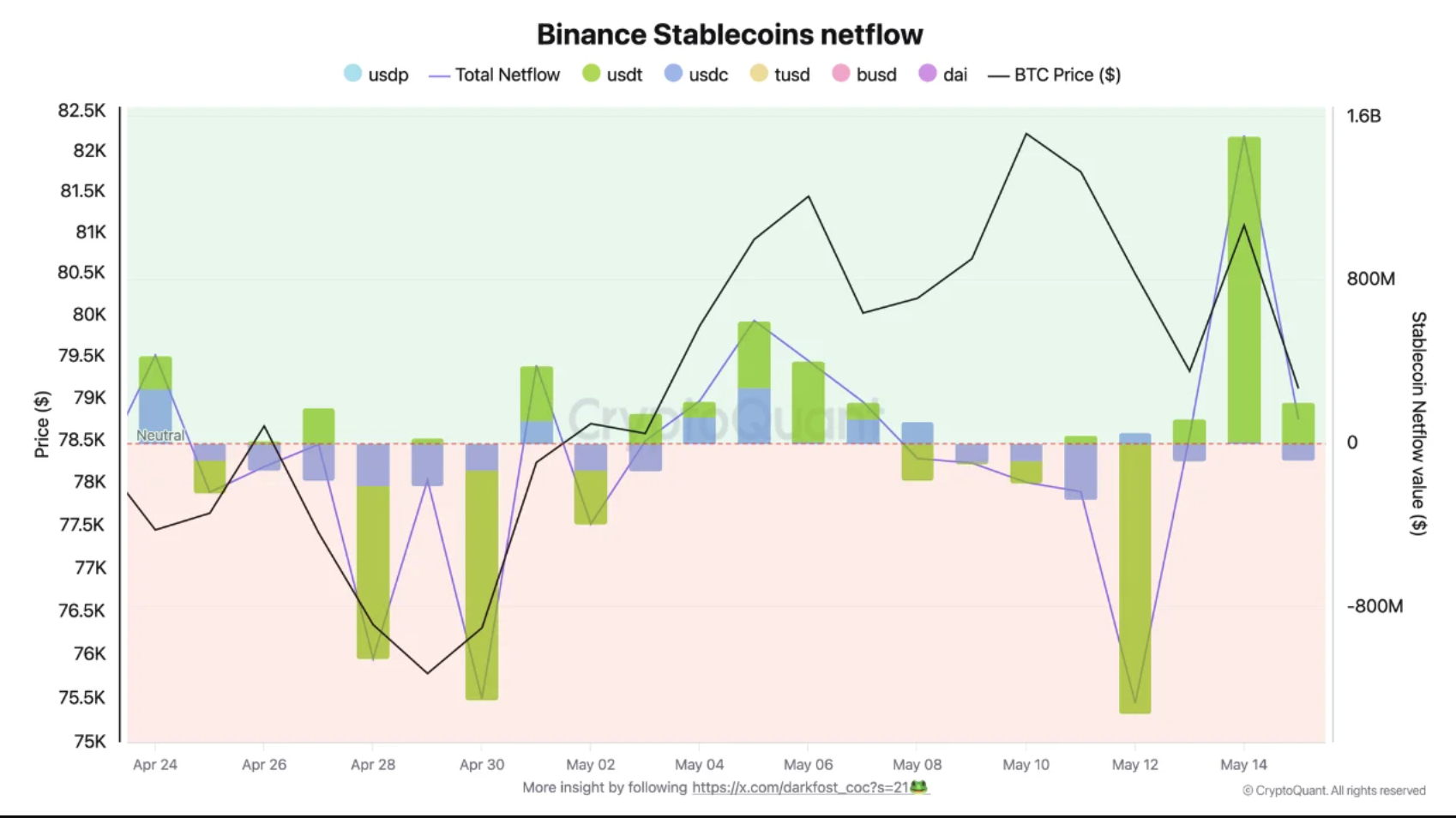
The inflows were mainly driven by ERC-20 USDT, while TRC-20 USDT outflows totaled only about $99 million, suggesting fresh liquidity entered Binance rather than a simple chain rebalance.
That is constructive for BTC because stablecoin inflows to exchanges often reflect capital waiting to be deployed.
Still, demand remains reactive: inflows strengthened as BTC approached $82,000, then weakened as price fell back below $80,000. Bulls now need more consistent positive netflows to confirm stronger dip-buying demand.
Bitcoin Rising Wedge Breakdown Targets $68,350
Bitcoin’s short-term technical structure has weakened after price broke a rising wedge pattern on the daily chart.
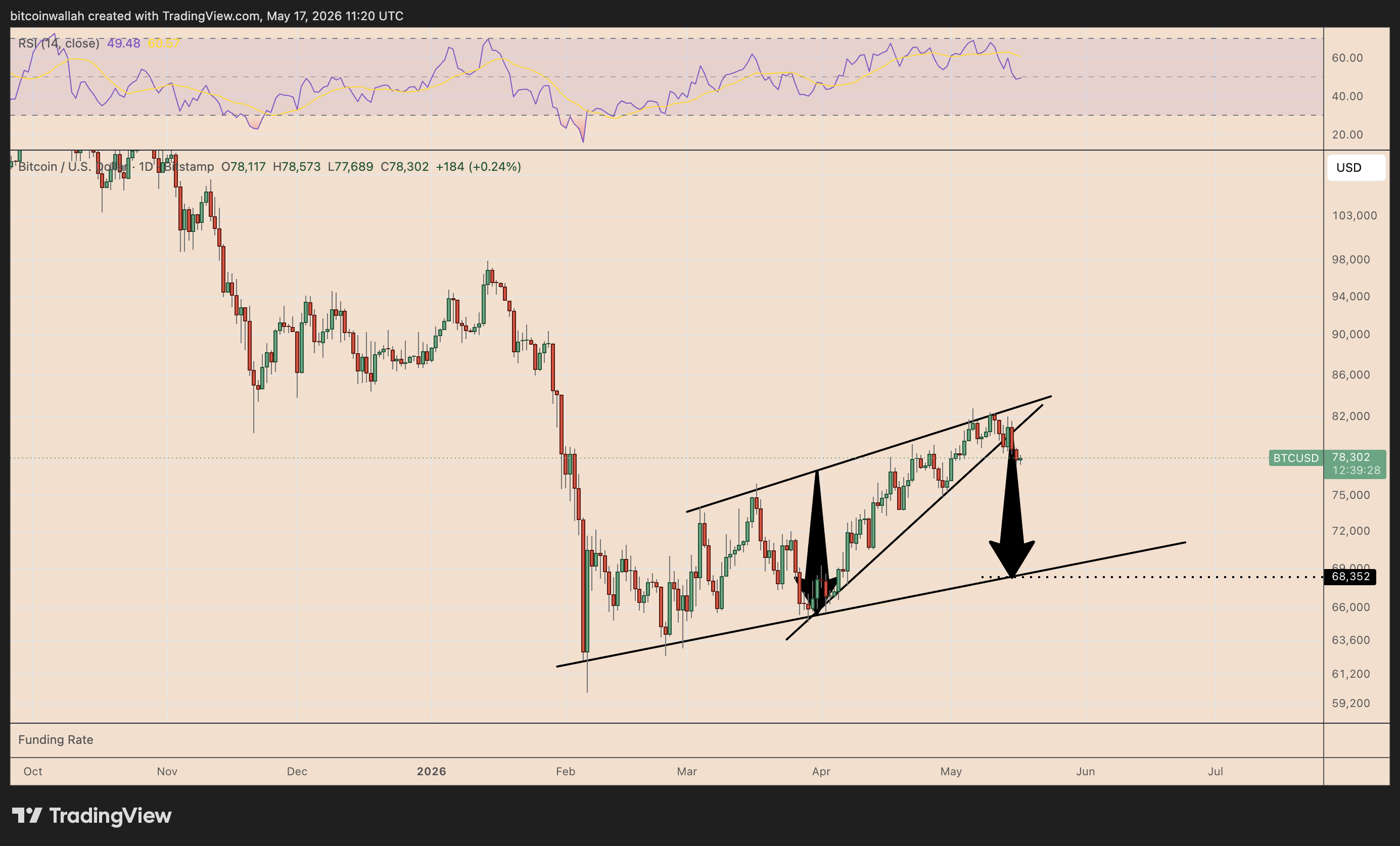
The setup points to a potential decline toward $68,350, based on the wedge’s measured move. That level also aligns with Bitcoin’s ascending trendline support, active since February, making it a key downside area for bulls to defend.
A successful retest could preserve the broader recovery structure. However, a decisive break below $68,350 would risk inBitcoin faces a pivotal week as Fed minutes, Nvidia earnings, and fresh Binance stablecoin inflows test whether BTC can hold key support or slide toward $68,350.
validating the higher-low pattern and open the door to a deeper correction.