Inflation Shock Wipes Out Silver’s Tariff-Fueled Rally
Spot Silver (XAGUSD) settled at $75.76 last week, down $4.32 or 5.41%. The week opened with silver pushing into the upper $80s on tariff optimism and closed near $76 after inflation data took a trapdoor to the whole move. I have seen silver do this before. It goes up fast and it comes down faster. Last week was the down version.

The Tariff Rally That Did Not Last
Silver did not start last week looking like a disaster. News of a possible truce on tariffs between the United States and China hit early and traders reacted immediately. Chinese factories are among the biggest consumers of silver in the world. Solar panels, electronics, computer chips. Any sign that trade barriers were coming down meant more industrial demand was coming and silver priced that in fast. The market took out the minor swing top at $83.06 and kept going toward $89.38. For a short stretch it looked like the move had legs.
It did not. The tariff headlines did not produce the breakthroughs traders needed to hold those levels and the inflation data that followed gave them a reason to sell everything they had just bought.
What the Inflation Data Did
April Consumer Price Index came in at 3.8% annually. Energy costs jumped hard. Everyday prices stayed elevated. One report and the entire rate cut calendar got repriced. Traders who had been positioned for cuts started unwinding and silver absorbed the liquidation on top of the profit-taking from the tariff rally. That is two rounds of selling hitting the same market inside the same week.
The Fed is not cutting into a 3.8% CPI print. The way I see it, that conversation is over for now. Some traders moved past cuts entirely and started pricing in the possibility of another hike before year end. That shift matters for silver the same way it matters for gold. Silver does not pay a yield. When the rate outlook moves against you, the opportunity cost of holding it goes up and the exit gets crowded fast.
Silver Price Forecast
Every new Silver analysis as it publishes, today's technical signal and key levels, live price — on one page.
See all Silver forecastsWhy Silver Got Hit Harder Than Gold
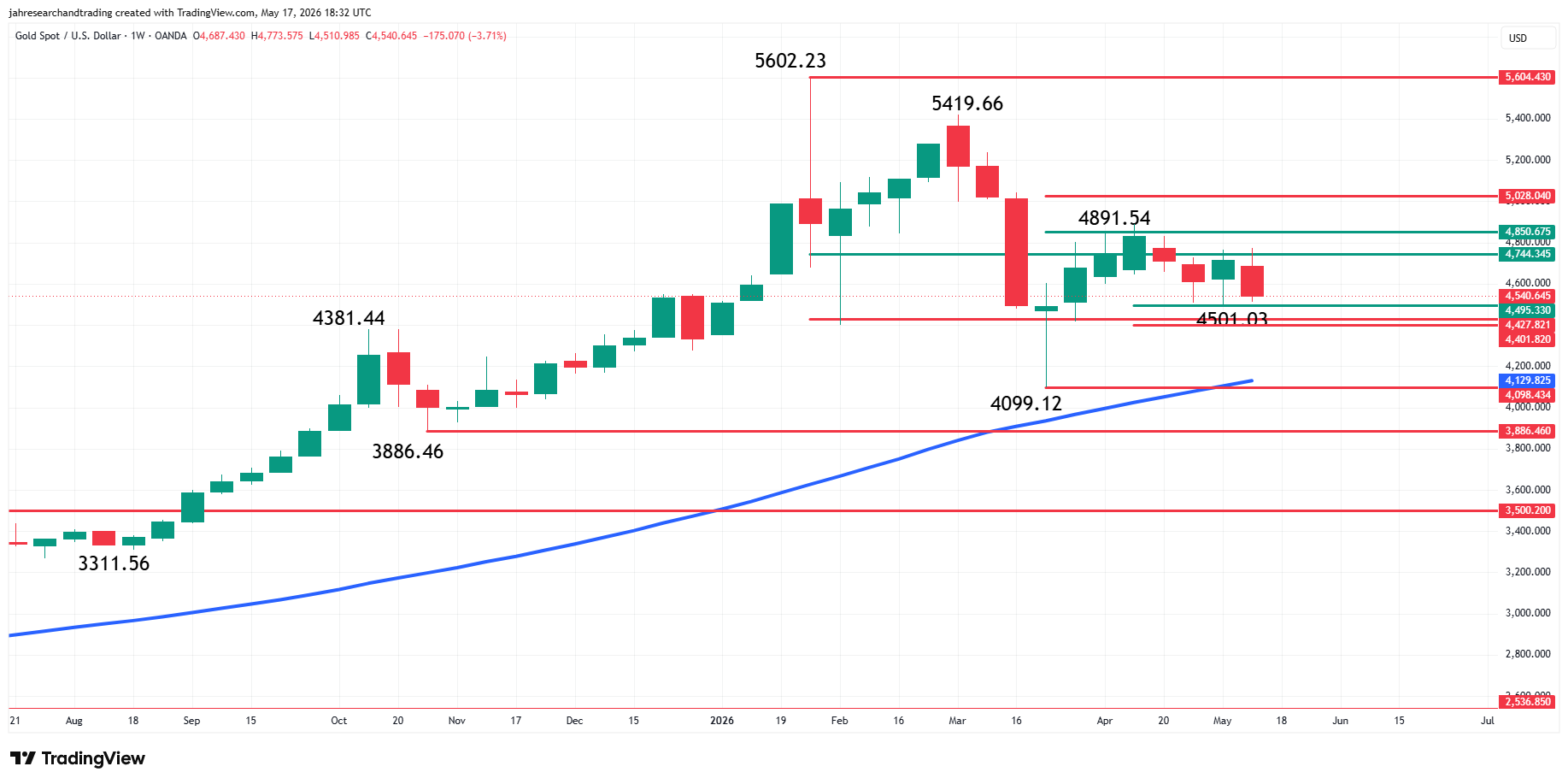
Gold dropped last week. Silver dropped harder. That spread tells the whole story. Roughly half to two thirds of all silver demand comes from industry. Factories, solar panels, electric vehicles, batteries, medical equipment. When interest rates stay elevated and businesses start pulling back on capital spending, that industrial demand softens.
Gold does not carry that risk. Gold buyers are mostly investors. Silver buyers include every manufacturer that needs the metal to make something. Higher rates threaten both the investment side and the industrial side at the same time and last week both got hit.
The Dollar Finished the Job
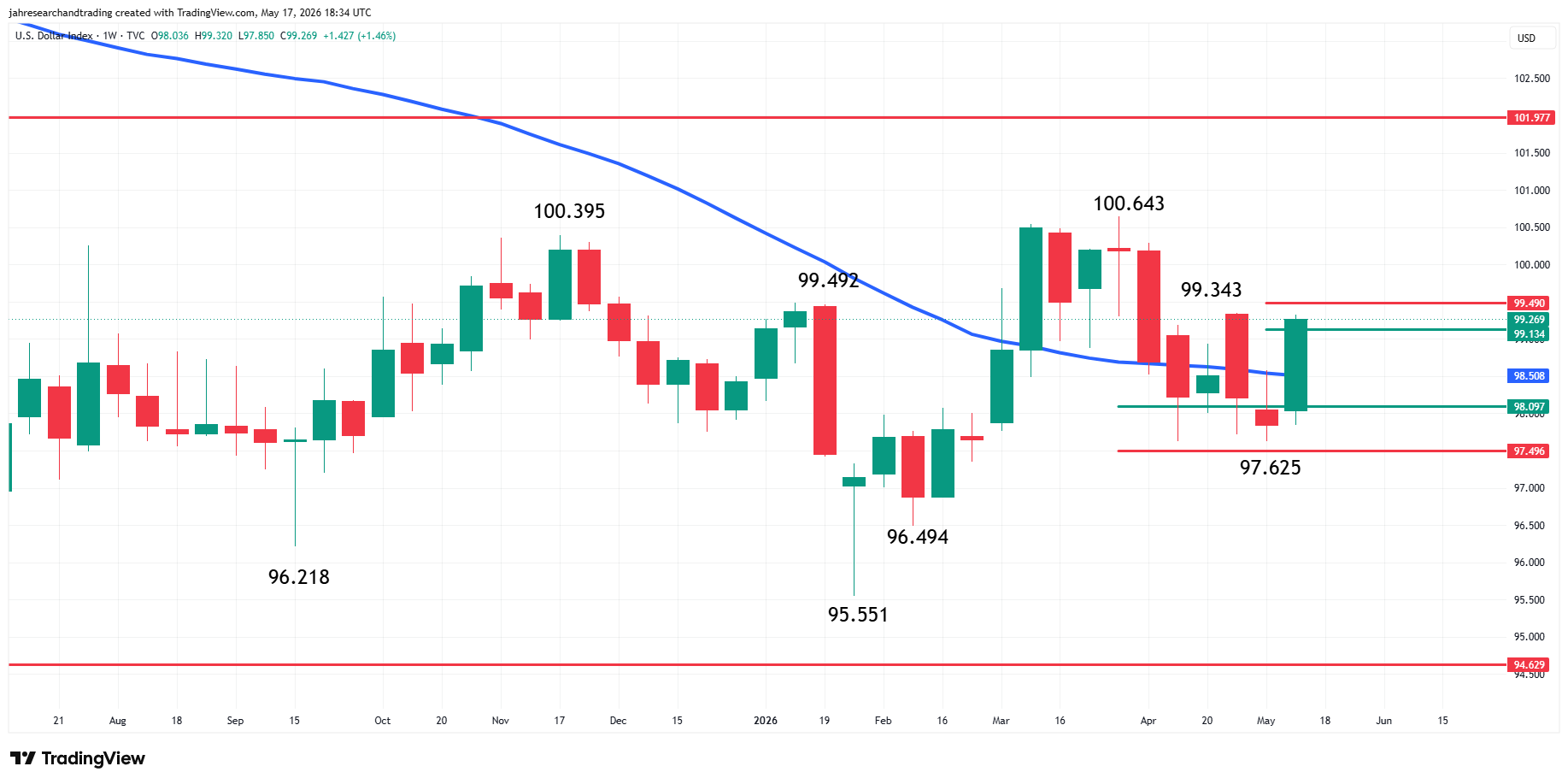
The U.S. Dollar Index ran hard last week on the back of rising yields and the repriced Fed outlook. A stronger dollar makes Spot Silver (XAGUSD) more expensive for every buyer outside the United States. That demand does not disappear overnight but it pulls back fast when the dollar is moving like that. Both forces running against silver simultaneously is not a setup the metal can fight through and last week it did not try.
Leverage Made the Move Bigger
Professional traders use borrowed money to hold large silver positions and when prices start falling the margin calls come fast. Forced selling is not rational selling. It does not care about support levels or value. It just hits the market until the position is covered. Reports of higher margin requirements on silver contracts added to the pressure by making large positions more expensive to hold. The liquidation fed on itself once key levels gave way and the weekly loss reflects that amplification as much as it reflects the fundamental shift.
Technical Outlook
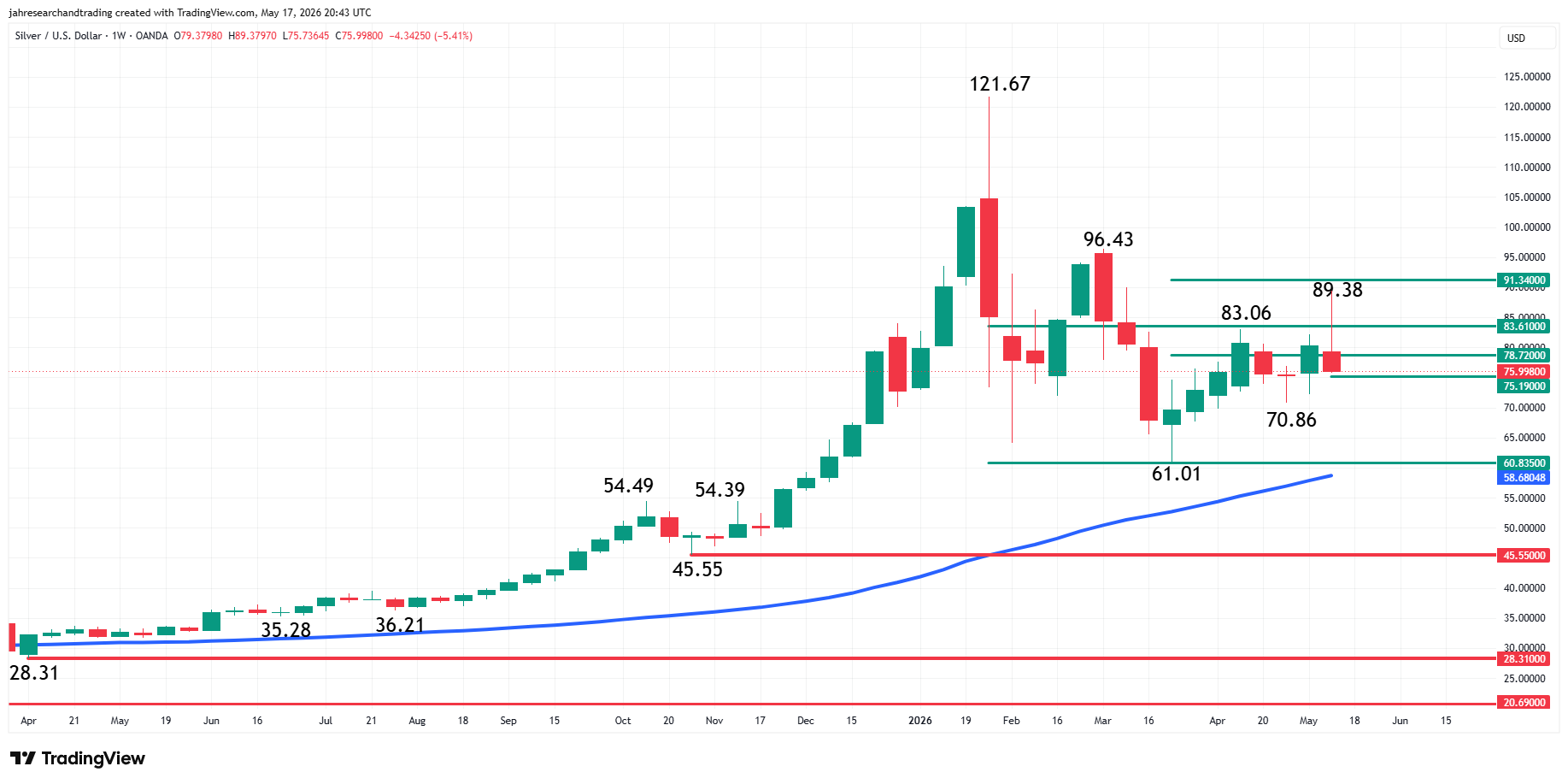
Last week, Spot Silver (XAGUSD) settled at $75.76, down $4.32 or 5.41%. The selling started at $89.38 as the market neared an important 50% level at $91.34. Prices surged earlier in the week when traders took out a minor swing top at $83.06.
The market closed inside a pair of 50% levels at $78.72 and $75.19. Trader reaction to this area will set the tone this week.
A sustained move over $78.72 will indicate the return of buyers. If this creates enough upside momentum then look for a surge into the intermediate pivot at $83.61. Taking out this level will open the door for a retest of $89.38.
A sustained move under $75.19 will signal the presence of sellers. This move will put a minor bottom at $70.86 on the radar as well as the main bottom at $61.01, more importantly, however, the 52-week moving average at $58.68.
What to Watch
The inflation story is not done and neither is the rate pressure that comes with it. The Fed has no room to move right now and the data is not giving it any. Until that changes, the opportunity cost of holding silver stays high and industrial demand faces the same headwinds it faced last week. The tariff optimism that opened the week is going to need real follow-through on actual trade agreements to bring buyers back at these levels. Hope trades do not hold in a 3.8% inflation environment.
The levels I am watching first are $78.72 to $75.19. Silver closed inside that pair of 50% levels and how it trades around that zone sets the tone for the week. Hold $75.19 and buyers get a chance to stabilize. Lose it and $70.86 is the next stop, with $61.01 and the 52-week moving average at $58.68 waiting below that. The $75.19 level is where this week’s trade starts.
More Information in our Economic Calendar.