



The US dollar gained against all other major currencies on 2 April in the aftermath of comments by the American President about hitting Iran hard without mention of a timeline for the end of operations. Forex traders are now looking ahead to the NFP on Friday, 3 April. This article summarises the context of the upcoming job report, then looks briefly at the charts of EURUSD and USDJPY.
Donald Trump’s speech on live TV on Wednesday evening ET increased nervousness in markets. The President estimated that the conflict would be over in two to three weeks without mentioning any specific objectives. There were more vague references to talks and threats to continue bombing, but none to the previous ultimatum to open the Strait of Hormuz.
Markets generally reacted nervously to the speech, with American light oil moving back above $100. Monetary policy has been somewhat out of focus in recent days as the probability of the Federal Reserve (Fed) holding at the current 3.5-3.75% until the end of the year remains around 80% according to CME FedWatch. Recent job reports have overall been significantly weaker than around this time last year:
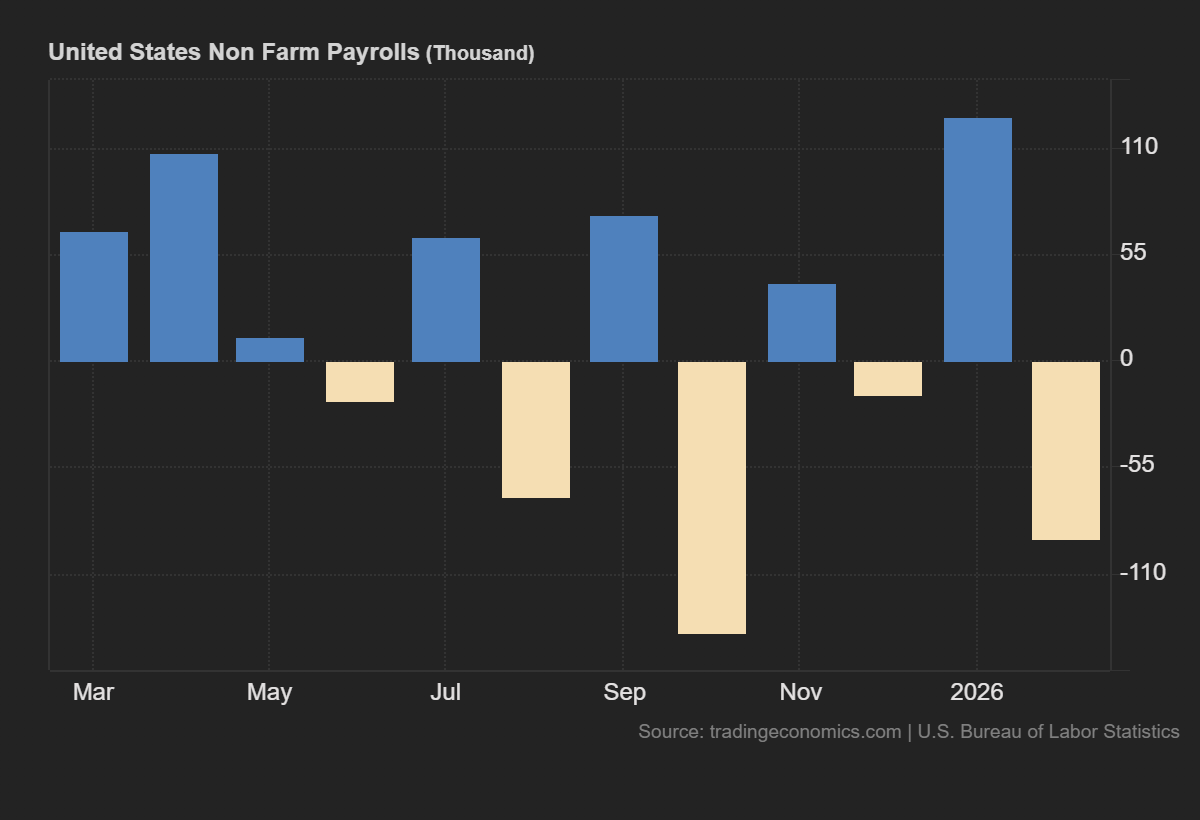
March 2026’s NFP in particular was much worse than the consensus, but in the context of the Gulf conflict, didn’t have as strong an effect on markets as might usually be expected. JOLT’s job openings on 1 April came in very close to the consensus, which might suggest that the surprise, if any, this month could be smaller.
Overall, the American economy certainly seems to have slowed down since last summer. Preliminary and second estimate GDP for the fourth quarter of 2025 were significantly weaker than the consensus:
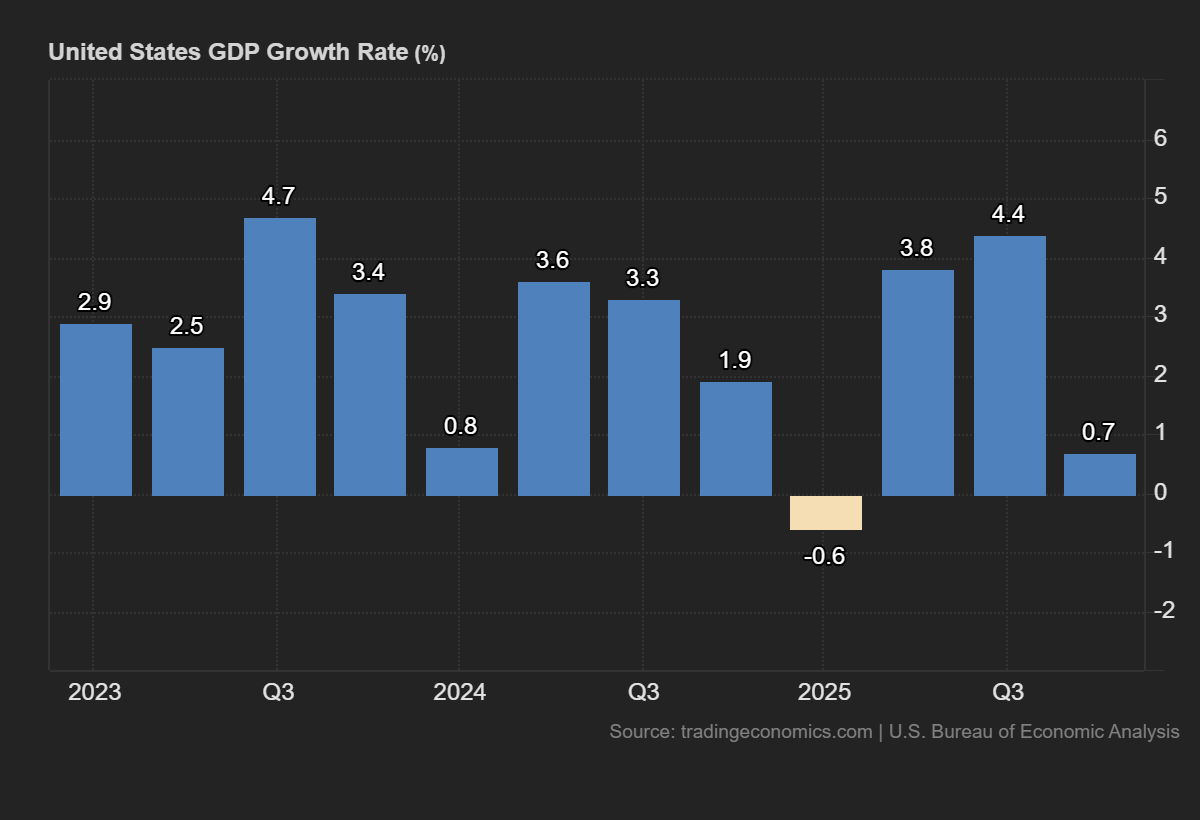
Weaker job numbers and so lower consumer spending definitely seem to be one aspect of lower growth in late 2025. The prospect of a recession seems unlikely or at least fairly distant for now, but the context of significantly weaker economic performance in the USA, even before recent higher prices for energy, makes the Fed’s job more difficult.
Euro-dollar Heads Back Down to $1.15
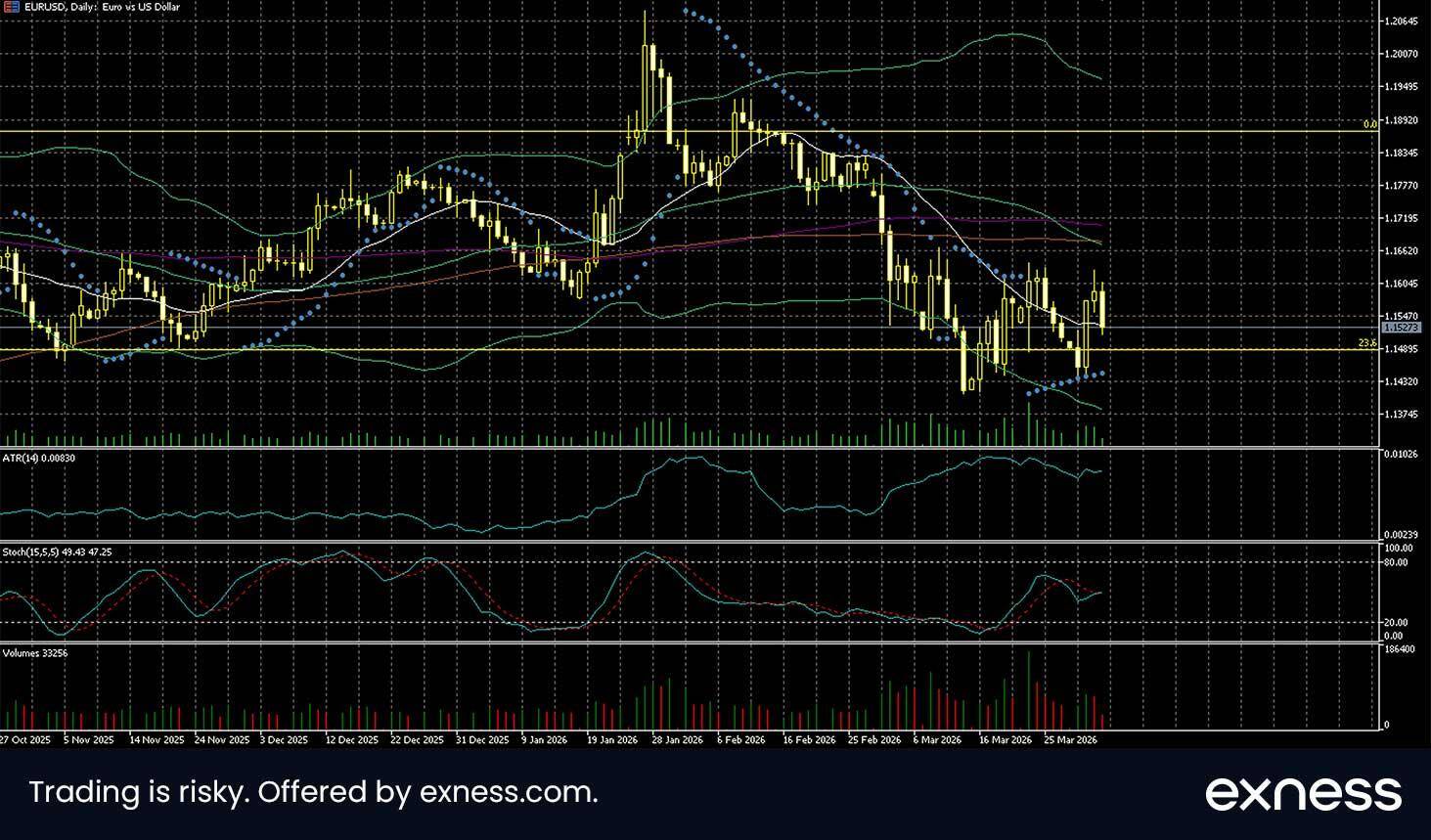
The dollar received inflows as a geopolitical haven after Donald Trump’s speech on 1 April about the Gulf conflict, gaining ground against most other major currencies. The differential in rates for EURUSD continues to favor the dollar but might decline towards the end of the year, with participants now starting to price in three hikes in 2026 by the ECB.
The 23.6% weekly Fibonacci retracement around $1.149 remains an important reference with a sustained movement below there in the near future, probably needing a clear fundamental driver. $1.14 seems like a clear possible medium-term support. With no indication of oversold from the slow stochastic or Bollinger Bands, the price might continue further down but with probably lower momentum than in early March.
A sustained bounce under the circumstances seems very unlikely. Volume of buying hasn’t increased significantly recently, with the exception of 23 March; $1.16 seems like a confirmed resistance for the time being. Apart from unexpected political or military developments, the next important event is the NFP on 3 April.
EUR/USD Price Forecast
Every new EUR/USD analysis as it publishes, today's technical signal and key levels, live price — on one page.
See all EUR/USD forecastsDollar-yen Holding Near Two-year Highs
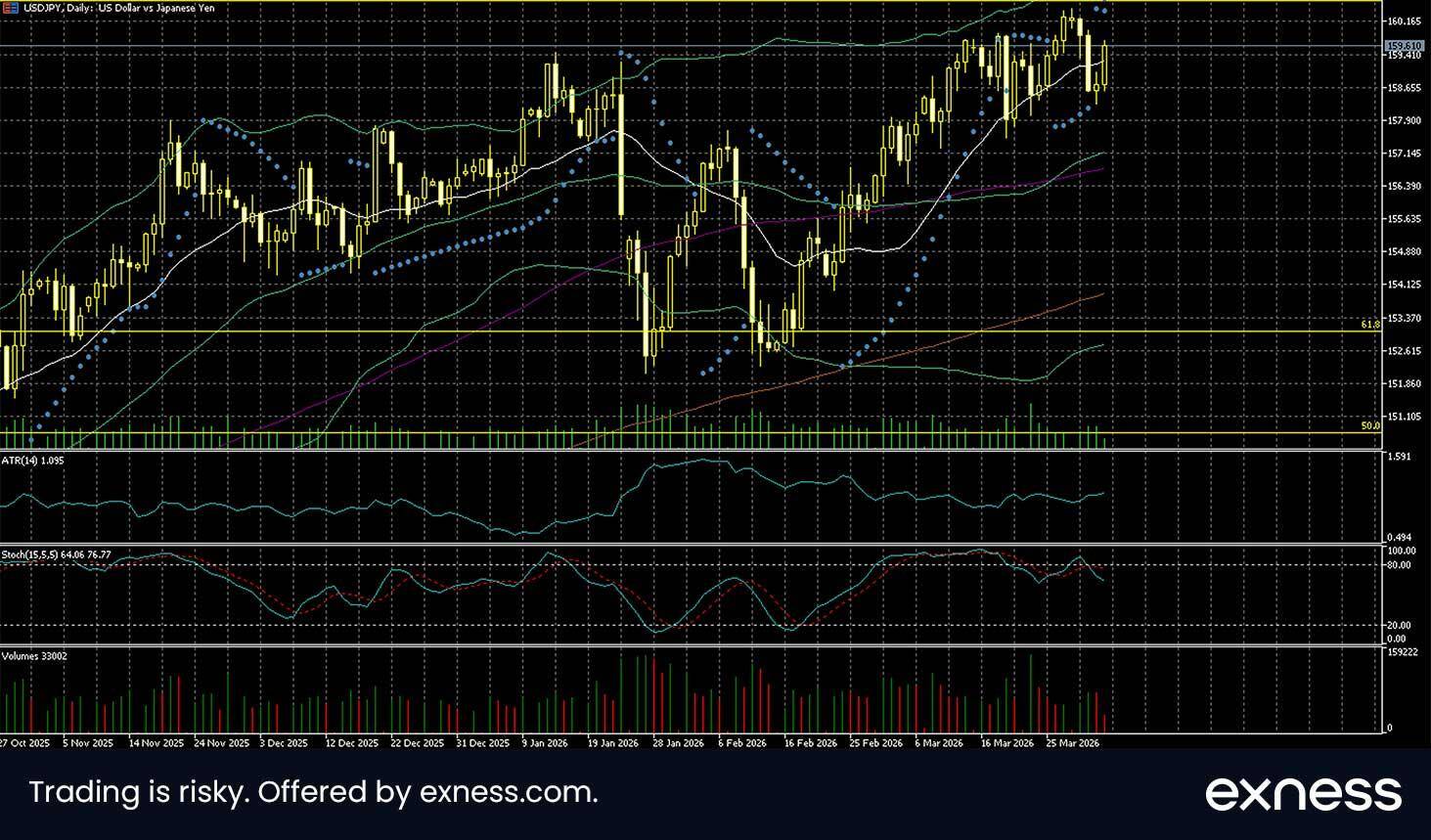
The yen hasn’t functioned in its traditional role as a haven in recent weeks, given the primarily geopolitical and military rather than economic nature of the current crisis. Japan imports the large majority of its crude oil from the Gulf and so is among the most vulnerable major countries to the closure of the Strait of Hormuz. Meanwhile, the consensus for a hike by the BoJ on 28 April has strengthened recently, with a probability of around 70% that the key policy rate will go up to 1%.
The 100% weekly Fibonacci retracement is set here to June 2024’s closing high, the likely area of intervention by the BoJ and possibly the government of Japan. The trend is (usually) your friend, of course, and there’s no signal of overbought here, but TA is unlikely to be very useful if the authorities step in directly to try to stabilize the yen.
In the event of an intervention, the 61.8% Fibo is a possible support, but absent such action the price seems very unlikely to decline that much in the near future. ¥158 as a round number and the area of 20 March’s bounce is a potential zone of interest. 3 April’s NFP will certainly provide short-term opportunities in both directions but even a particularly positive result is unlikely to drive a clear breakout above ¥160.
This article was submitted by Michael Stark, an analyst at Exness.
For the latest analysis, ideas for trading and more, follow Michael on X: @MStarkExness.
The opinions in this article are personal to the writer; they do not represent those of Exness. This is not a recommendation to trade.