Gold (XAU) price rebounded on Thursday after a sharp drop to the strong support of $3,950. This rebound is developed after the release of the core PCE price index data. The chart below shows that the core PCE price index increased by 3.4% YoY in May 2026. This level is the highest since October. Despite this data, the US dollar index corrected on Thursday which pushed the gold price slightly higher.
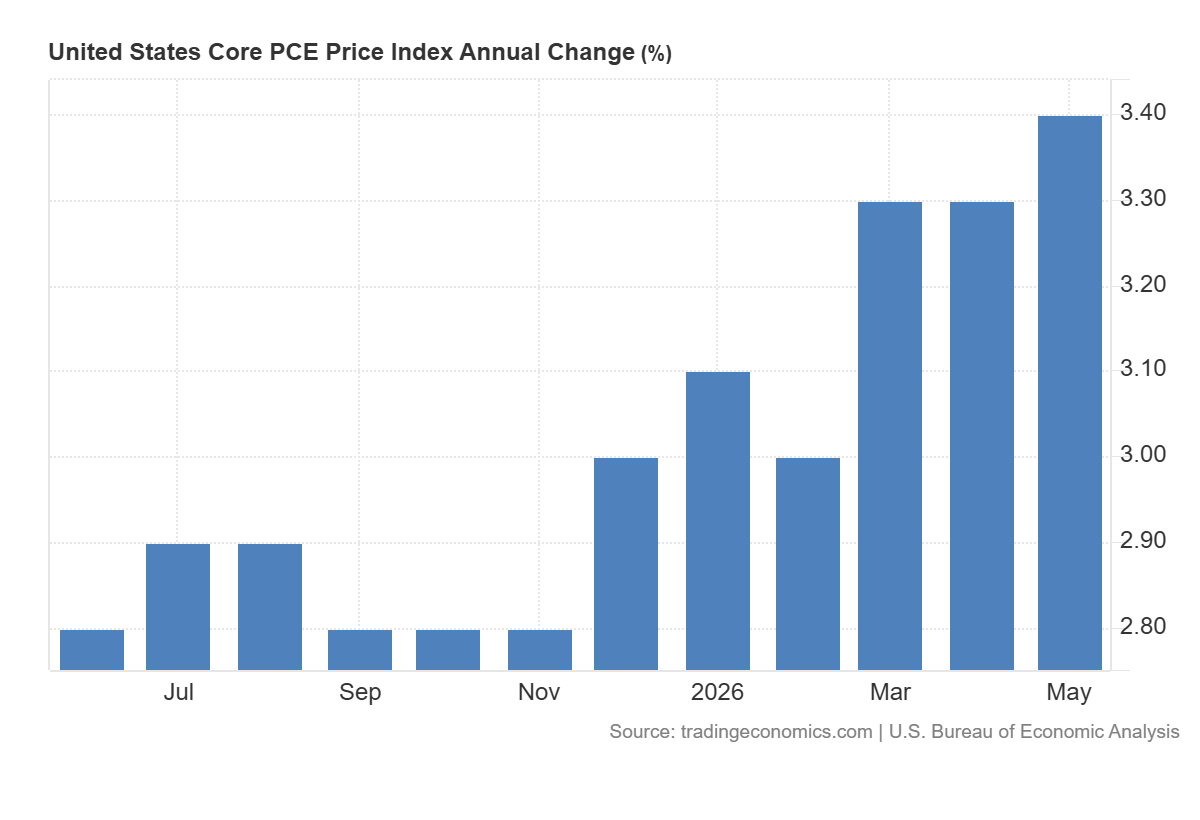
The Federal Reserve may remain cautious due to a slight increase in core PCE price index in May. This is bad news for gold as rising interest rates will lead to a decline in the demand for a non-yielding asset. Therefore, this rebound in gold will likely be capped and prices may remain under pressure in the short term.
Silver (XAG) also rebounded slightly after the release of data but remains under pressure. The slowdown in durable goods orders indicates sluggishness in the real economy which could drag on the industrial demand for silver.
The decline of oil prices is also significant for gold and silver. The drop in oil prices could help dampen inflation pressures, following the U.S.-Iran deal that helped calm fears over the Strait of Hormuz.
As the US dollar corrects from the 101.74, gold and silver may rebound from the current levels. But as long as the expectations of interest rate hikes persist, both metals could come under renewed selling pressure near resistance.

Gold Price Forecast: XAUUSD Rebounds from $3,950 Support
XAUUSD Daily – $4,350 Resistance Remains Key Breakout Level
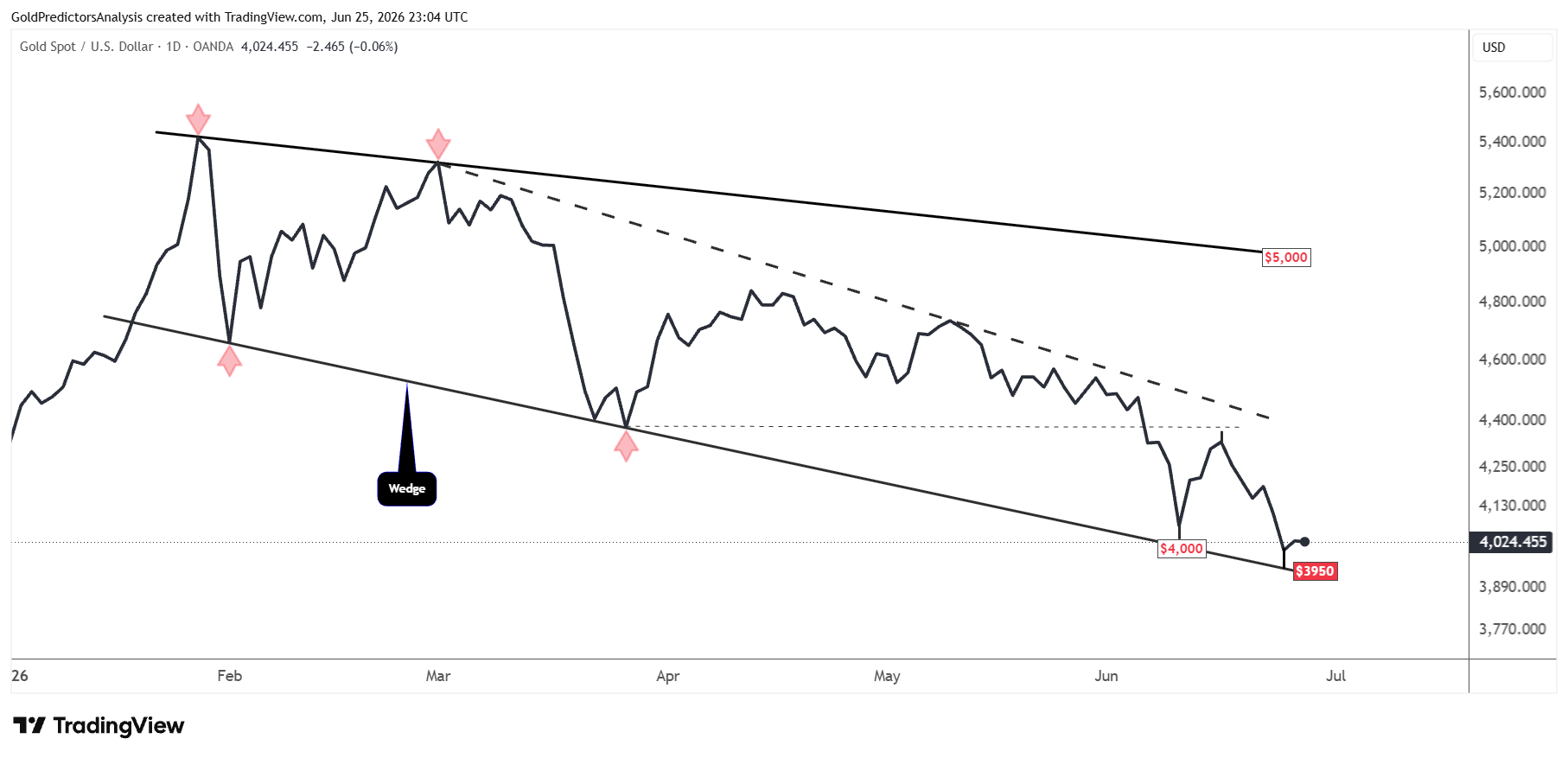
The daily chart for spot gold shows that the price hit $3,959 on Wednesday and initiated a rebound after the release of core PCE price index data. But the rebound is still very limited and the price remains under pressure.
This support at $3,950 is very important as seen by the formation of the wedge pattern. The price is still trading within this wedge pattern between $4,000 and $5,000. A break of these levels is required to define the next move in the gold market. The immediate resistance in spot gold remains at $4,350. A break above this level will indicate further upside towards the $5,000 area.
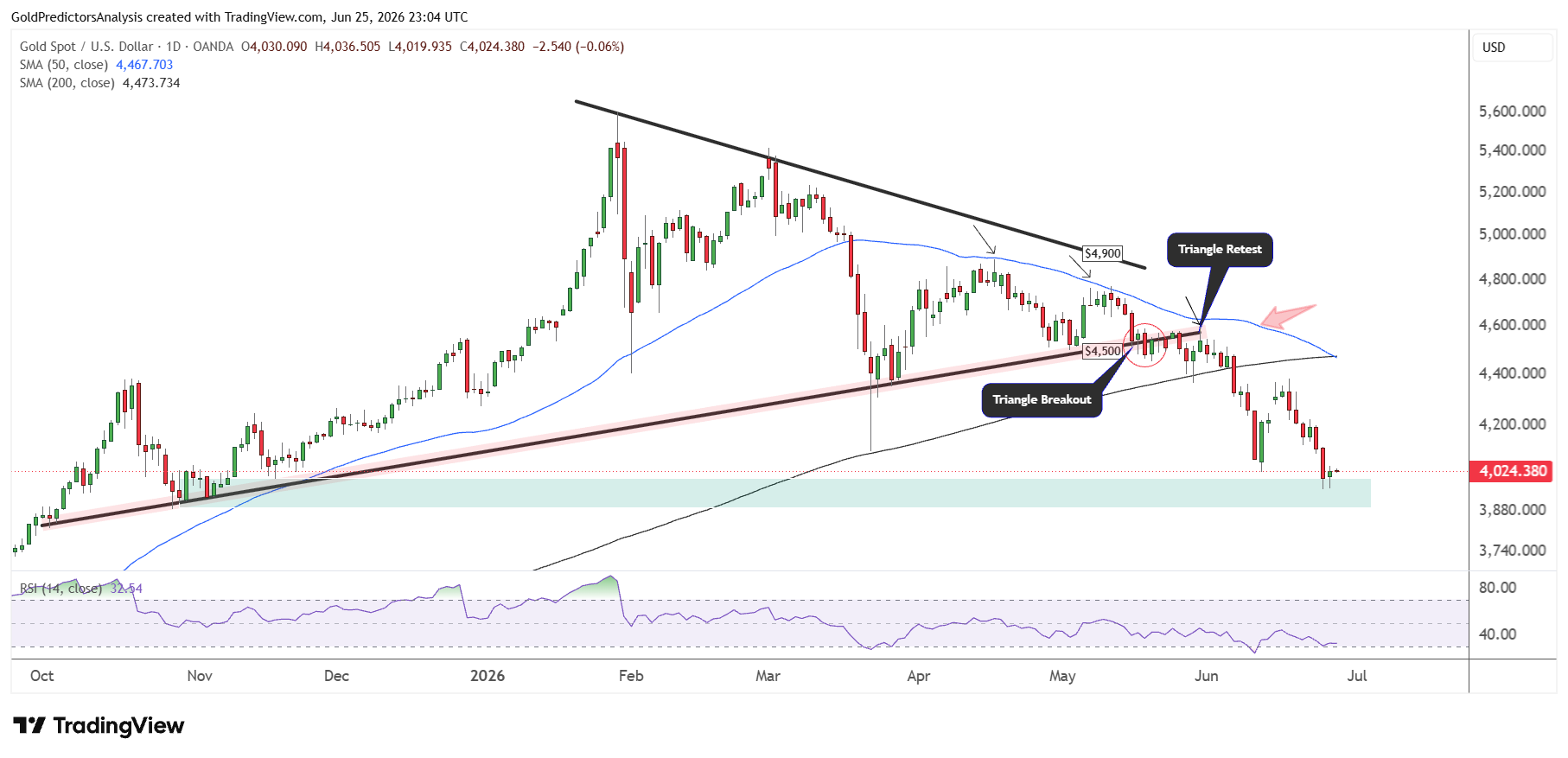
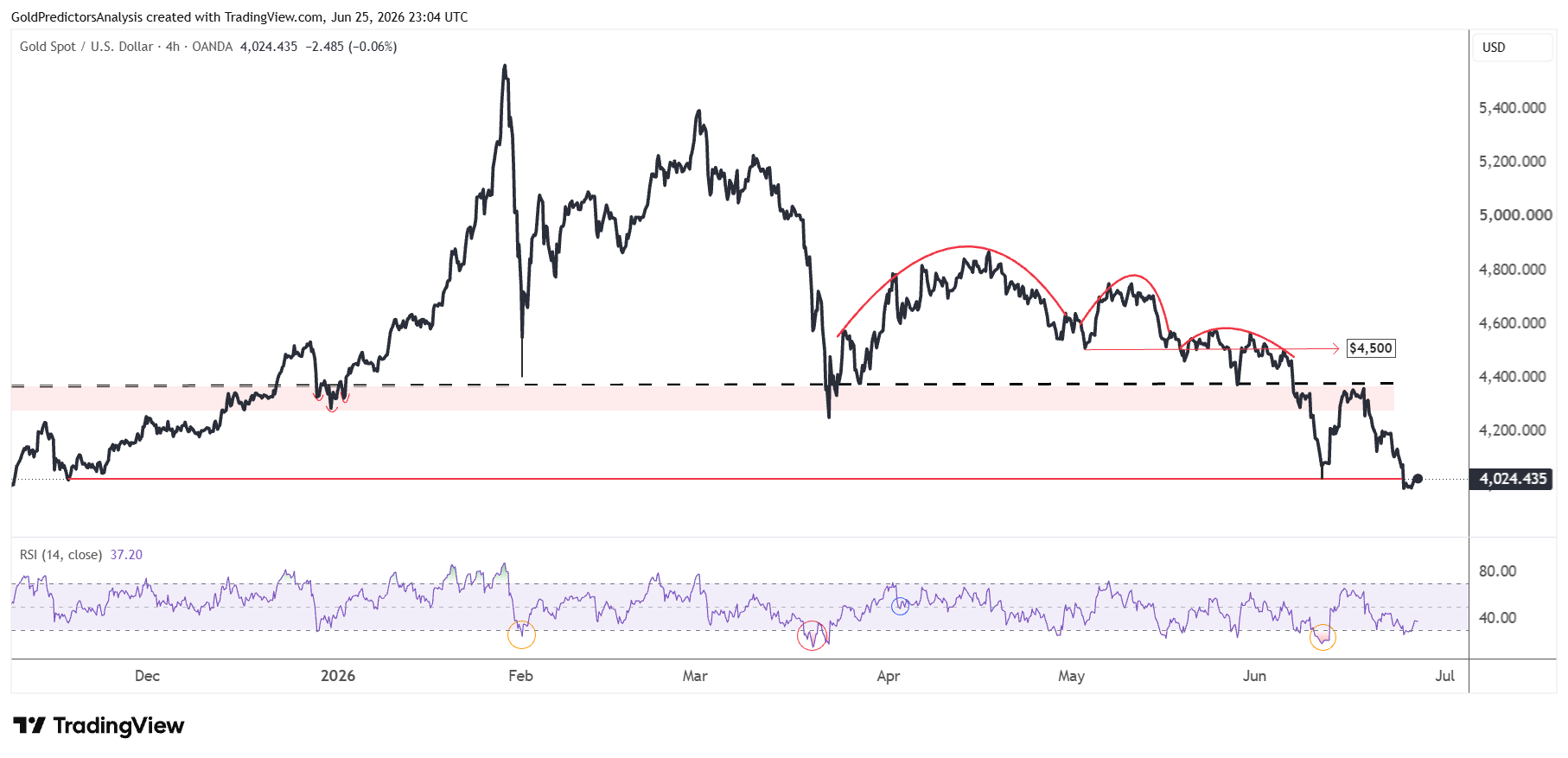
Another chart shows that the price has already hit the upper boundary of the green range, which is the support area seen by the symmetrical triangle formation. The breakout of the symmetrical triangle at $4,500 has opened the door for this target. Now, the price has already hit this target, and the RSI currently remains near oversold levels.
This indicates that gold may try to consolidate or rebound from current levels and look for the next direction. But a break below $3,950 will likely put further pressure on gold prices towards $3,850.
Gold Price Forecast
Every new Gold analysis as it publishes, today's technical signal and key levels, live price — on one page.
See all Gold forecastsXAUUSD 4-Hour Chart – Rebound Risk from Oversold Zone
The 4-hour chart for spot gold also shows the importance of the $3,950 support level. The price is consolidating around the current support zone. The RSI indicator is also oversold and indicates a rebound from current levels. But a break below $3,950 will put further pressure on the short term. A recovery above $4,350 is required to ease the bearish pressure in the spot gold market.
Silver Price Forecast: $55 Support Holds as Buyers Return
XAGUSD Daily – $72 Resistance Caps the Next Rally
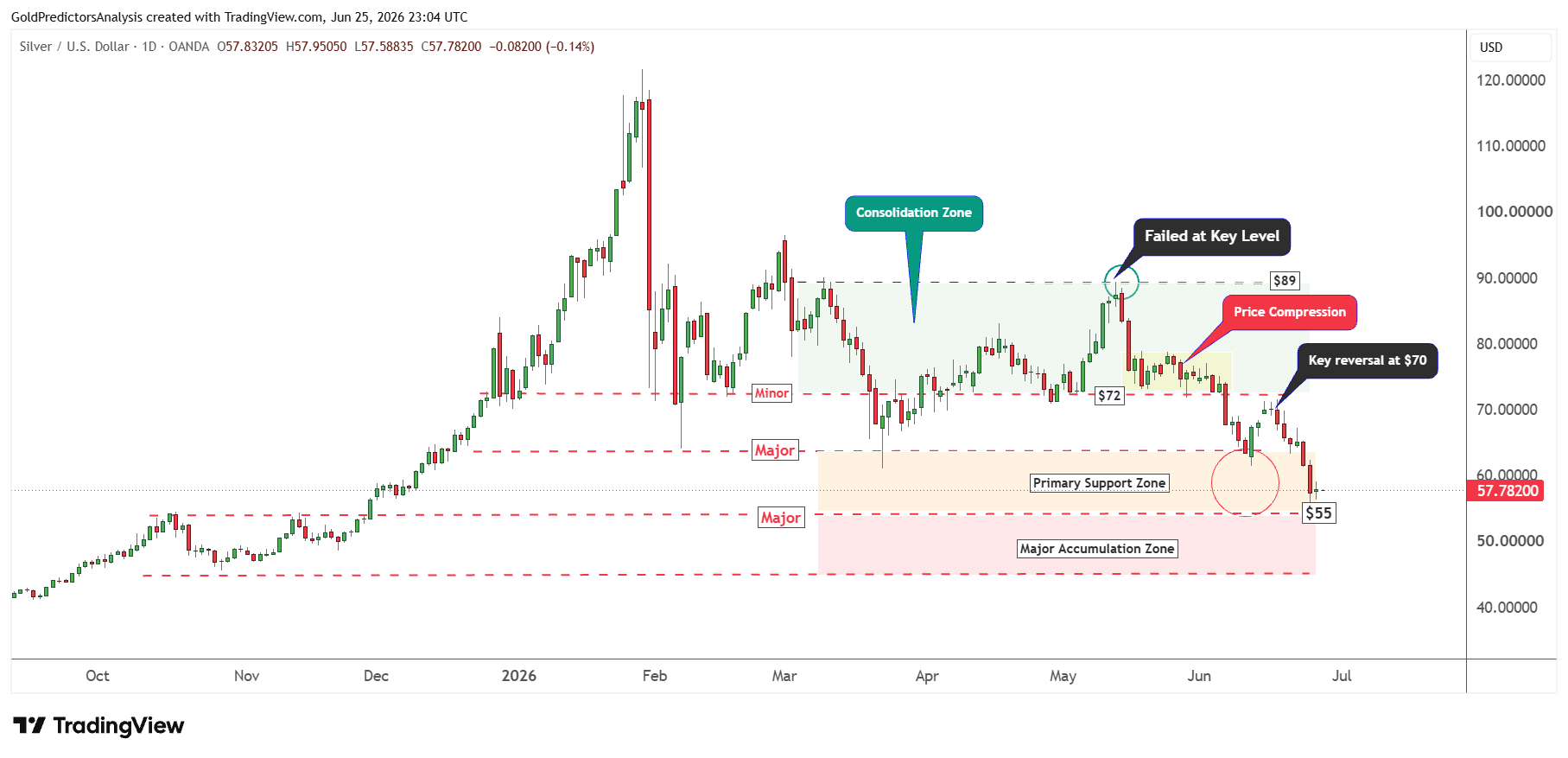
The daily chart for spot silver shows the importance of the current support level at $55. The price rebounded from the $55 region, which is the lower boundary of the primary support zone.
A break below $55 will likely push the silver price towards the major accumulation zone between $45 and $55. This zone is considered an accumulation zone for long-term investors. Therefore, if the silver price corrects further to the downside, it will likely attract fresh buyers within the $45 to $55 region.
XAGUSD 4-Hour Chart: $72 Rejection Points to Rebound Zone
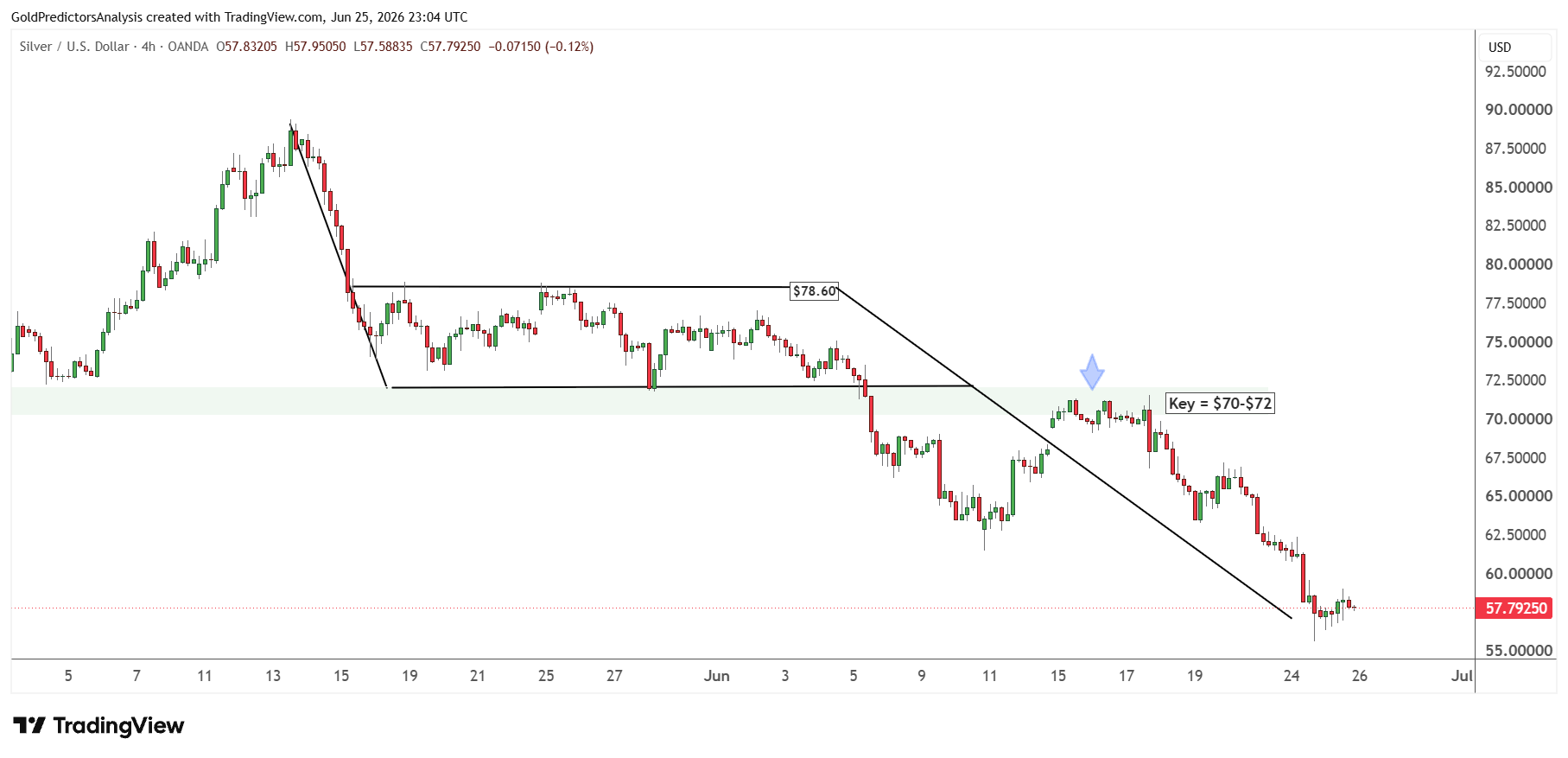
The 4-hour chart for spot silver also shows that the drop develops after failure at the $72 area. But prices are now approaching the target area, where they may trigger a rebound. The long-term support zone remains $50-$60.
Bottom Line
Gold and silver remain under pressure in the short term despite a rebound from the current support levels. Gold has support at $3,950, while silver has support at $55. A break below these levels will push the metals further down in the short term. The sticky core PCE inflation continues to give the Federal Reserve reason for pause and cap the upside potential in metals. Gold needs to break above $4,350, and silver needs to break above $72 to trigger a meaningful rally.