
Gold (XAU) price consolidates and stabilises on Monday after reaching its lowest level in over a month. The increased buying at the dip has helped the market recover from the previous losses, but primarily the higher oil price is still squeezing the market. Higher oil prices increase inflation expectations and this puts the Fed under pressure to maintain rates or even raise them. In the short term, the higher rates are negative for gold.
The conflict in the Middle East has led to a mixed situation for gold. On one hand, geopolitical risk helps demand for safe havens. At the other end, the oil shock is now spawning inflation worries, which are also driving yields and rate expectations up. Therefore, the gold has been unable to rally strongly upwards and is stuck in a sideways range. Investors are now on the lookout for the Fed minutes, which will reveal whether policymakers are more concerned about inflation and rising energy costs.
In the short term, silver (XAG) could come under even more pressure than gold. Silver reacts more to the higher rates because it is dependent on the physical market flows and industrial demand. Moreover, another headwind is India’s efforts to reduce silver imports, as India is among the largest silver consumers in the world. As long as the demand for silver continues to lag and the U.S. dollar and yields remain strong, silver prices could remain volatile. But sentiment in gold and silver could turn around quickly again if oil prices ease or geopolitical tensions improve.

Gold Technical Analysis – Decision Zone Defines the Next Major Move
The Primary Gold Structure
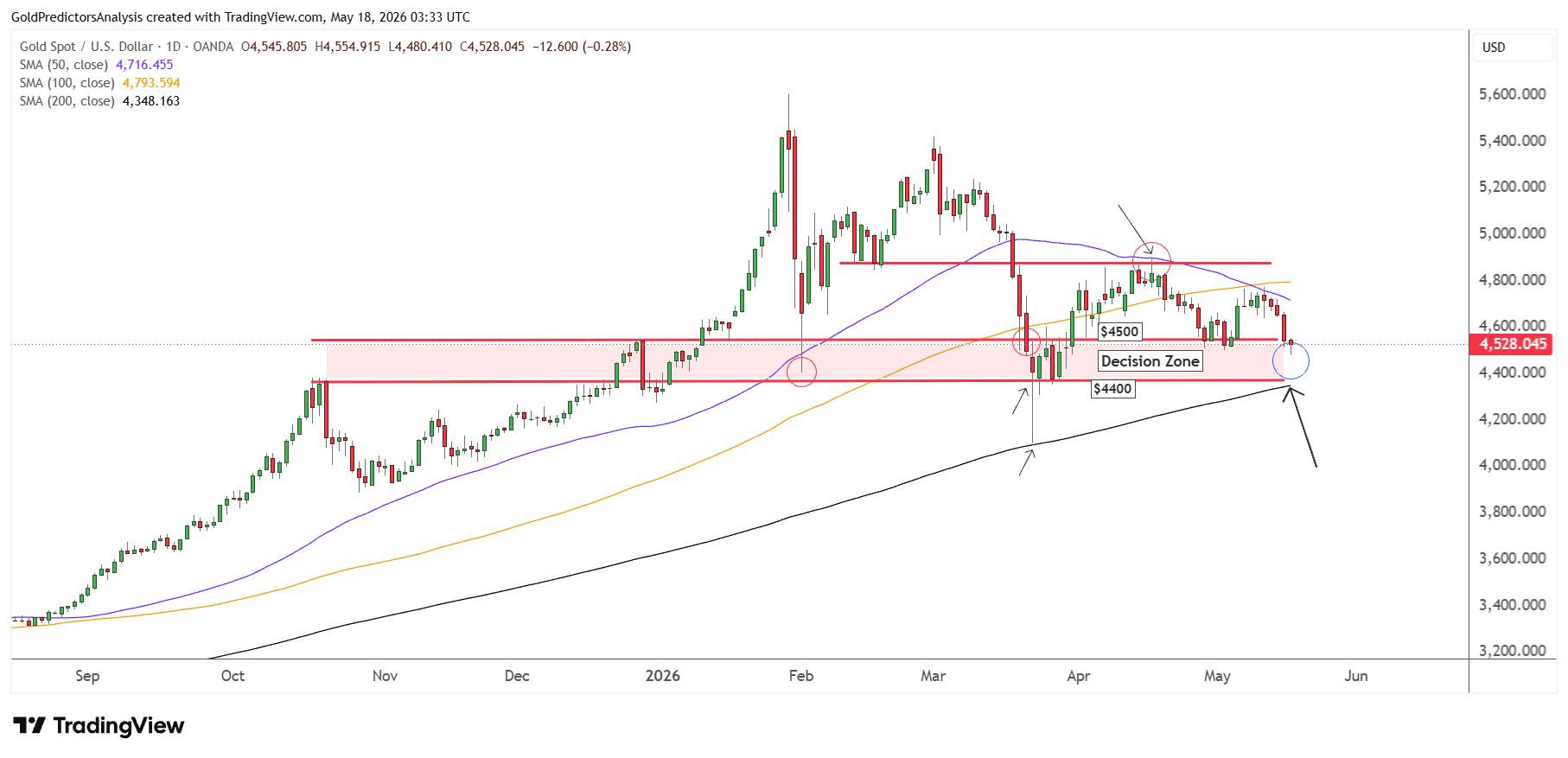
The daily chart for spot gold shows that the price hit the decision zone of $4,400 to $4,500 on Monday after a strong drop last week. This support zone has held for the past three months, as the price has been rising higher after hitting this level. As long as the support zone holds, the structure for gold remains bullish. But a break above $5,000 is still required to push prices higher.
The Short Term Momentum
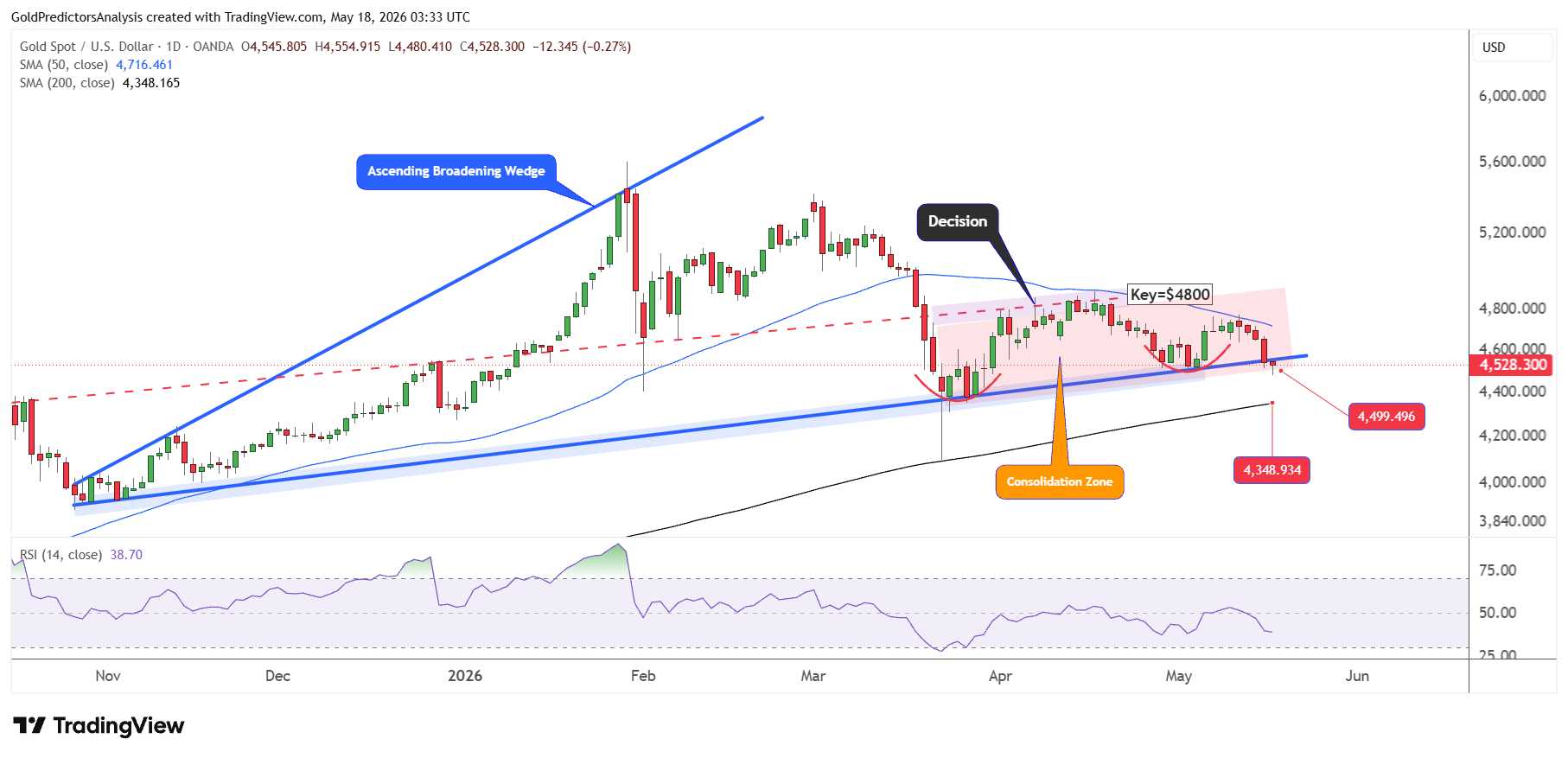
Another chart for spot gold shows the formation of an ascending broadening wedge pattern. The chart shows why the $4,500 level is significant for the short-term direction of the gold market. The price is compressing below the 50-day SMA and showing bearish price action. But the lower support line of the ascending broadening wedge is supporting the bullish momentum.
Gold Price Forecast
Every new Gold analysis as it publishes, today's technical signal and key levels, live price — on one page.
See all Gold forecastsA break below $4,500 will keep the drop toward the 200-day SMA at the $4,348 level. A break above the 50-day SMA at $4,800 will likely push prices toward $5,000. Then, a break above $5,000 will likely keep the strong bullish momentum in the gold market toward $6,000.
But the RSI is also below the mid-level, which keeps the negative trend in the gold market in the short term. As long as the price remains within the red zone, the overall short term direction remains uncertain.
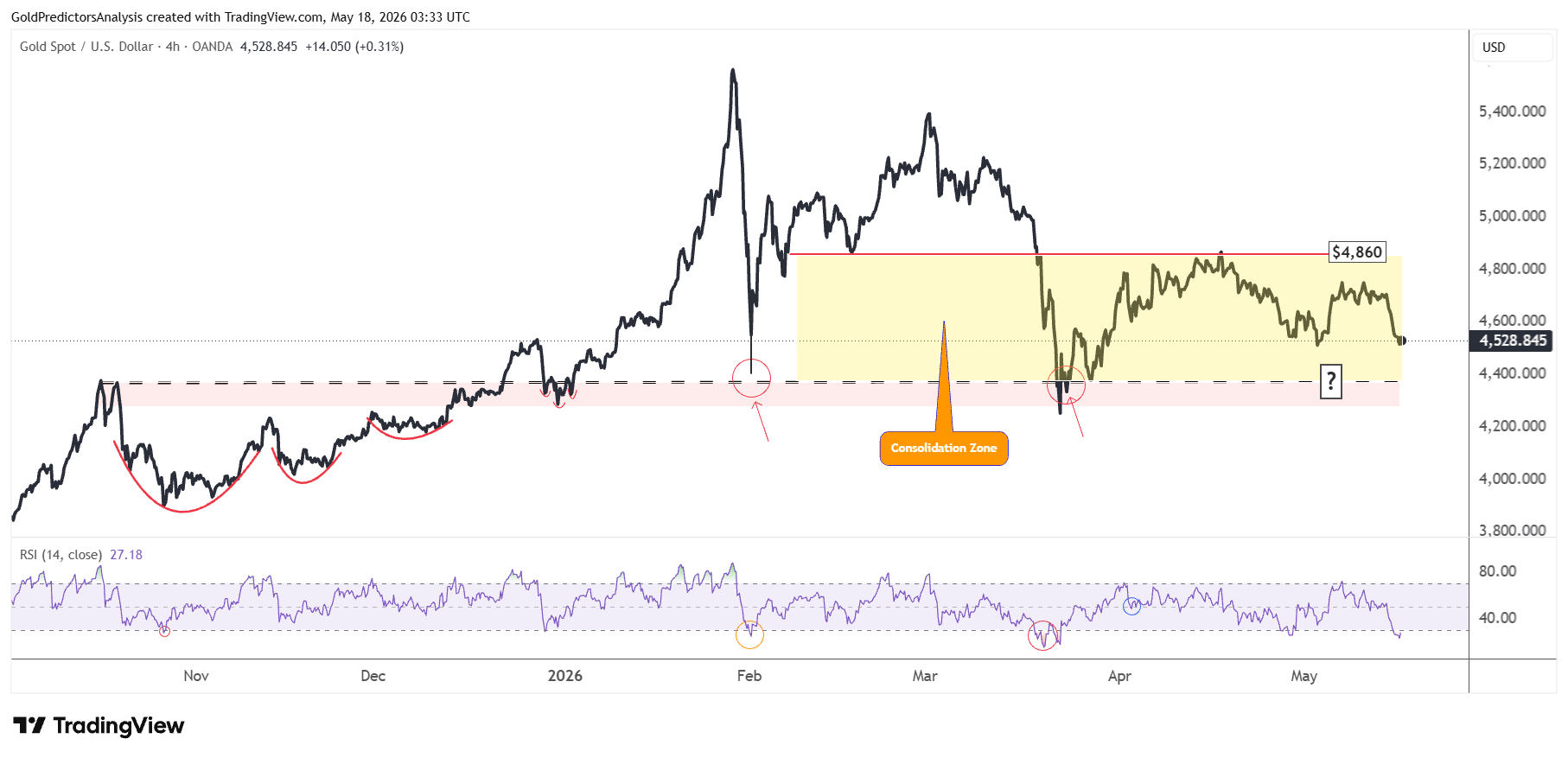
The 4-hour chart for gold also presents a strong consolidation. The chart shows that the short term price action for gold remains in the yellow zone between the $5,000 and $4,400 levels. The RSI has reached oversold levels and is calling for a rebound from current levels.
Silver Technical Analysis – Support Zone Decides the Next Bullish Move
The Primary Silver Structure
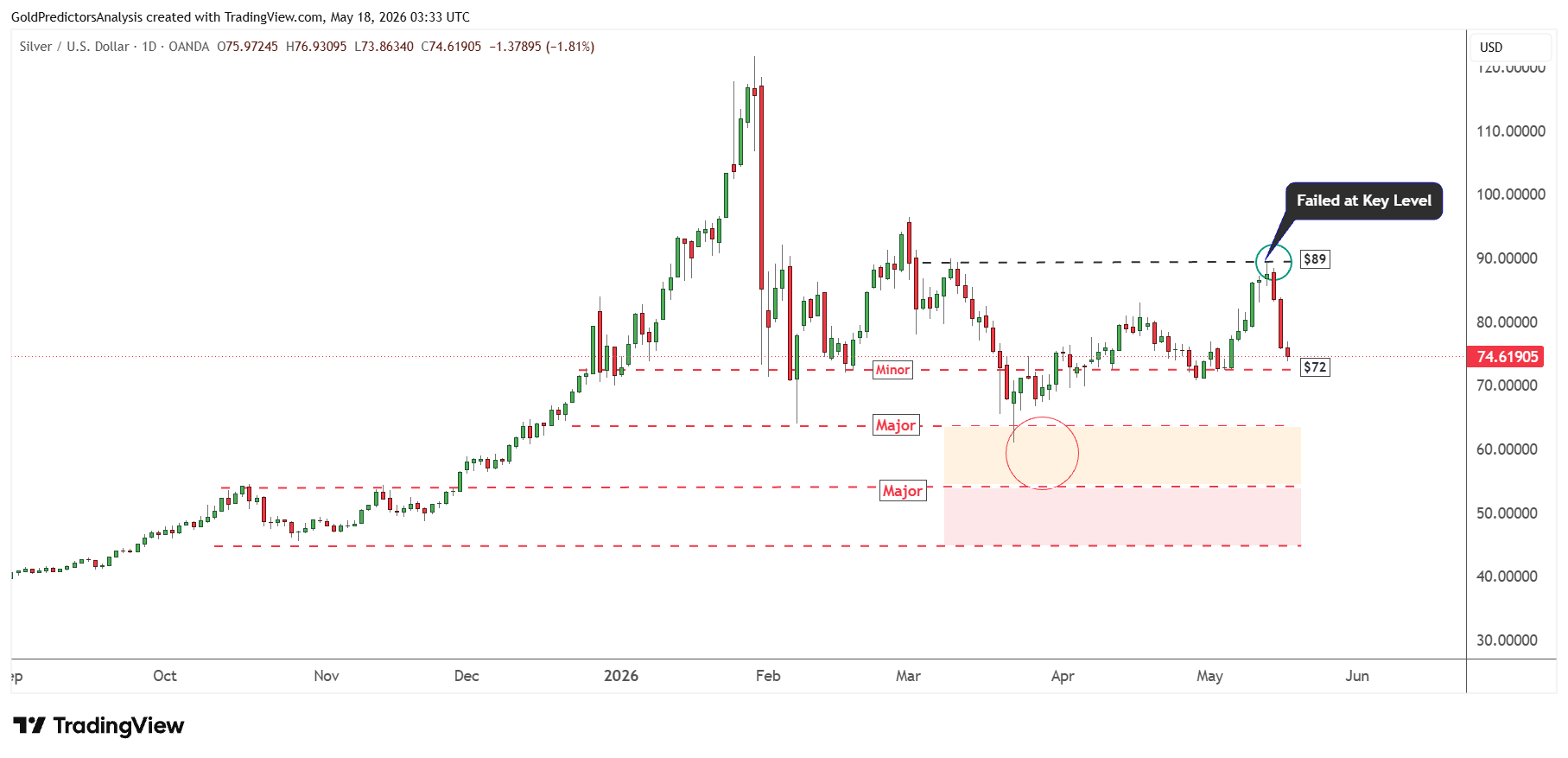
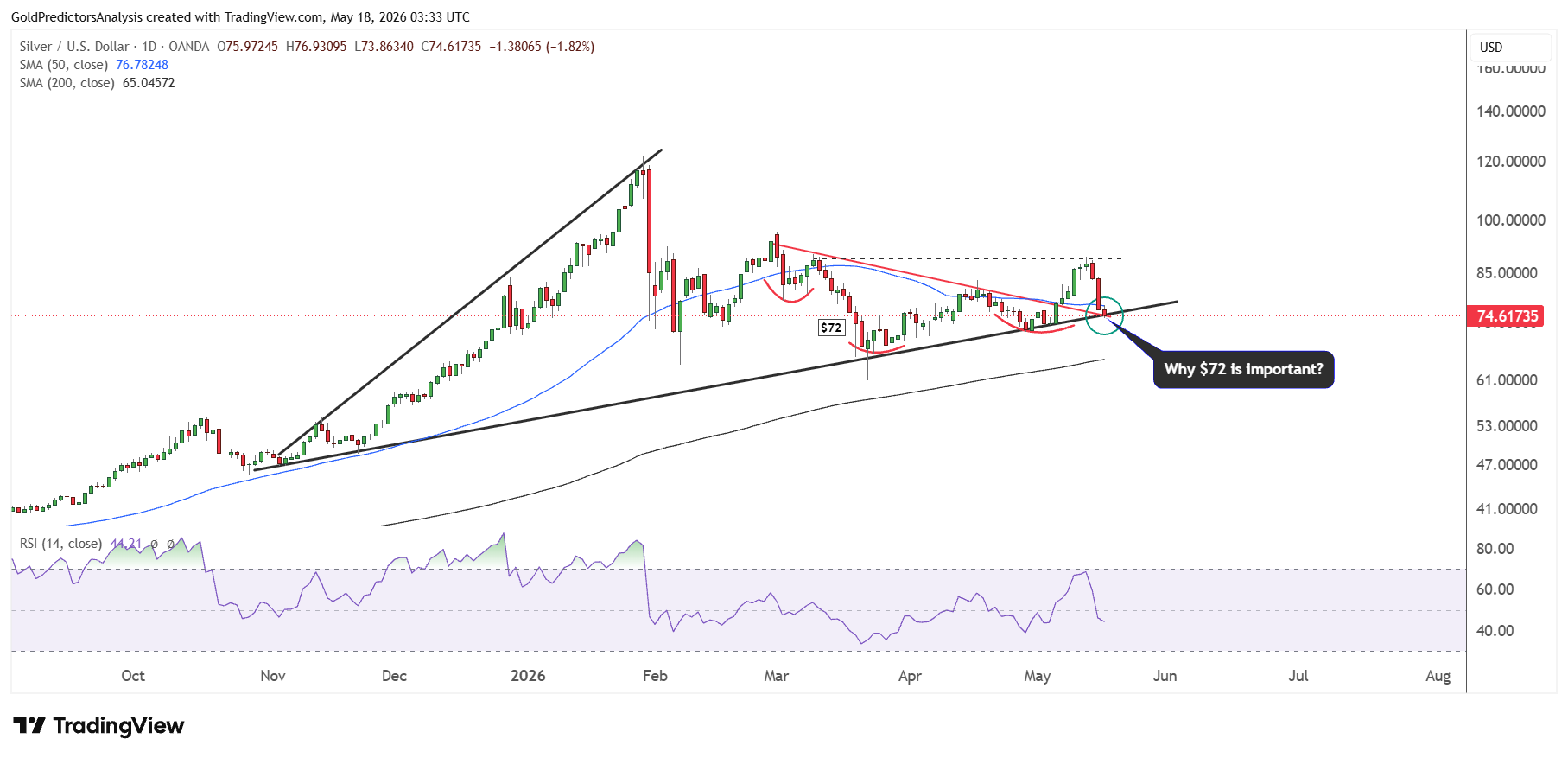
The daily chart for spot silver shows steeper decline after the price failed to break above the key level at $89. Despite this strong drop, the silver price failed to close below $72 last week, which keeps the price uncertain in the short term.
Silver requires a break below the $72 level to define further downside. A break below $72 will push silver toward the orange zone between $50 and $60. As long as the price remains above the red zone at $45, silver will likely remain bullish in the long term. The silver price must break above $89 to keep the bullish momentum.
Why $72 is important?
The daily chart for the silver market shows the importance of $72. It is evident that the $72 level is defined by the ascending broadening wedge pattern. This pattern is formed from the lows of October 2025 and the highs of January 2026.
This $72 support also aligned with neckline of the inverted head and shoulders pattern shown by the red trend line in the chart below. A break below this level will likely trigger drop toward the 200-day SMA at $65. However, a break below the 200-day SMA will indicate further downside toward the $50 area.
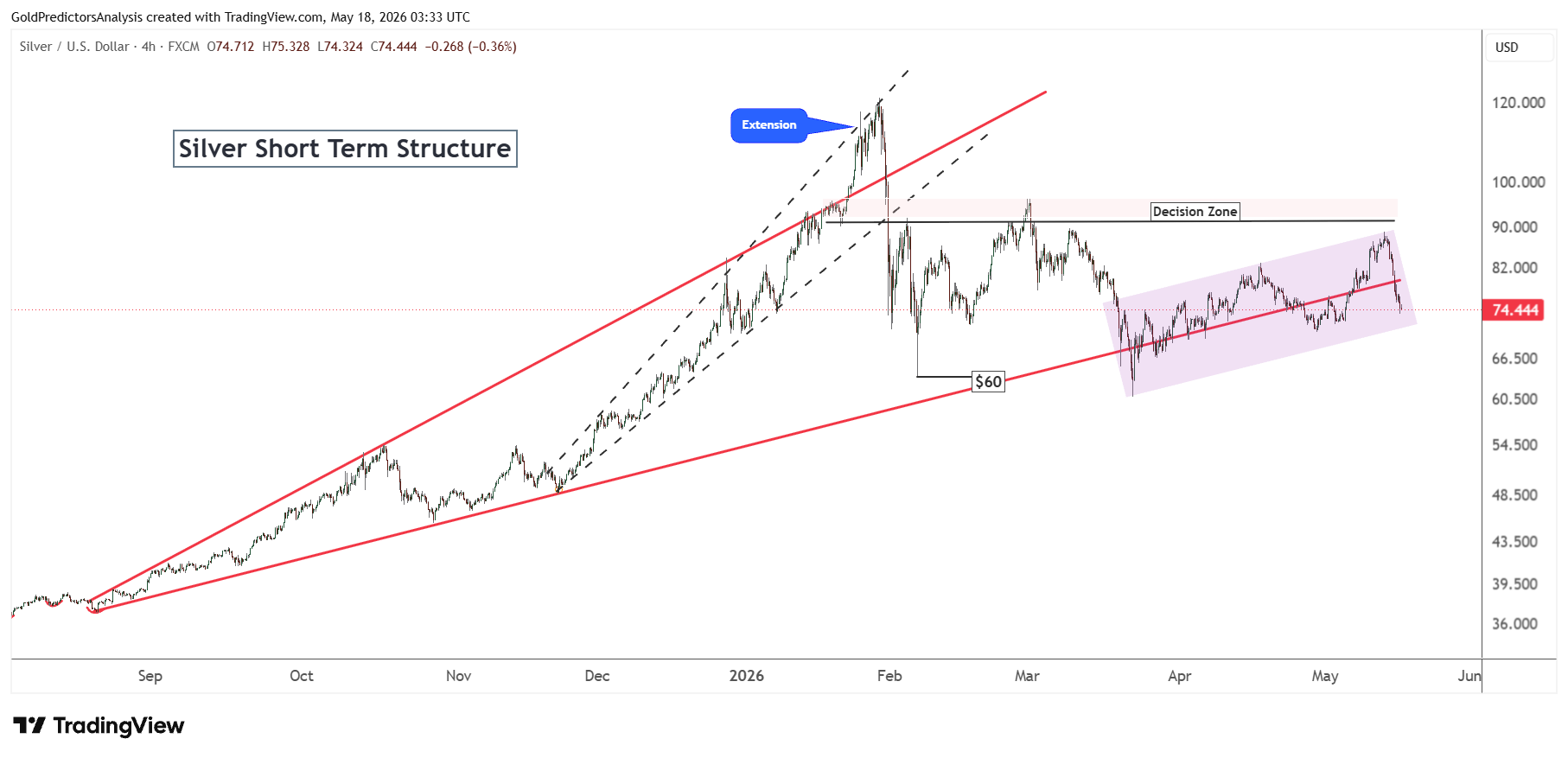
The 4-hour chart for spot silver shows that the silver price is consolidating around the support line of the ascending broadening wedge pattern. The chart highlights the decision zone between $90 and $95. A break above this zone will likely confirm the bottom and indicate further upside toward $120.
Bottom Line
Gold and silver are under near-term pressure due to rising inflation fears, higher yields and rising oil prices. Gold still remains within the support between $4,400 and $4,500, but it must break above $5,000 to validate the next big bull move. Silver appears more volatile with the $72 level crucial to monitor as a starting point. A break below $72 could offer further downside, while a break above $90 – $95 would signal a new bull run towards $120. Overall, the short term trend of both metals remains in consolidation mode, while the general direction remains bullish if the key support levels hold.
Read more: Is XAGUSD Set for a Bigger Drop Before the Next Rally?