


Dollar Weakness Gave Gold a Bid but the Fed Risk Has Not Gone Away
Spot gold rallied Wednesday on a softer dollar, not a war premium. The yen surged. The euro climbed ahead of the ECB. The dollar index dropped and overseas buyers stepped in. Gold responded immediately.
The other side of the trade is still there. Crude oil crossed a level that changes the inflation conversation. Treasury yields held firm. Rate-hike odds for September did not come in. PPI and CPI this week will settle which side of the gold trade has more weight.
At 13:54 GMT, Spot Gold (XAUUSD) is trading $4,418.65, up $62.95 or 1.45%.
The Yen Is Driving the Dollar Lower
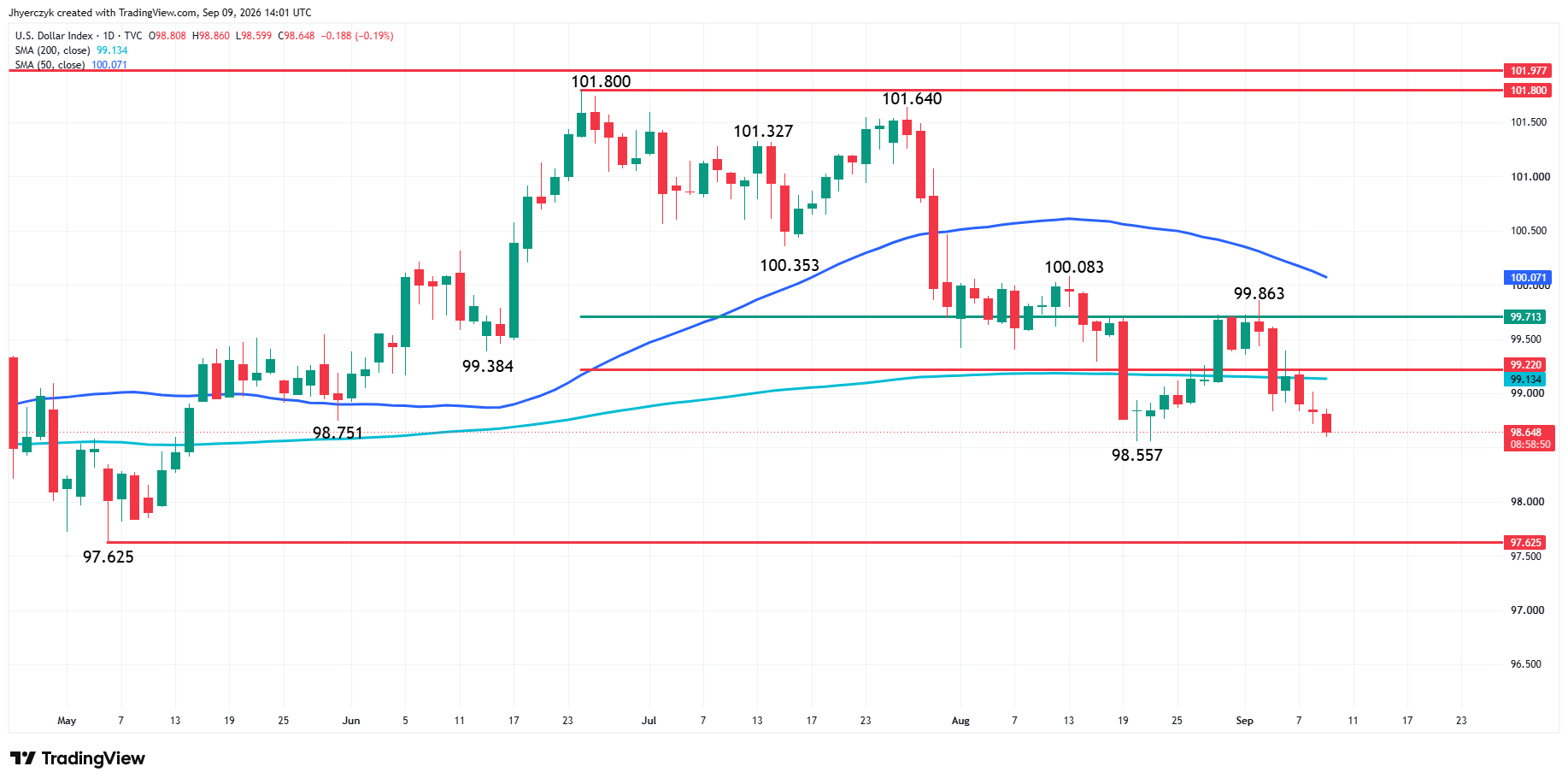
The yen traded near 153.32 per dollar Wednesday after reaching a seven-month high of 152.89 Tuesday. The currency has gained about 4% this month. Traders expect the Bank of Japan to raise rates by 25 basis points at its September 17-18 meeting. The carry trade is coming under pressure and the yen is the reason the dollar index is sitting at a two-week low.
The euro rose to $1.1641 as the European Central Bank is expected to raise rates Thursday. Two major central banks tightening in the same week put the dollar on the defensive across several currency pairs. Gold took what the dollar gave it Wednesday.
The dollar is not falling because the U.S. inflation picture improved. It is falling because the yen and the euro are repricing for their own rate moves. Those are separate trades.
Brent Through $100 Keeps the Inflation Problem Alive
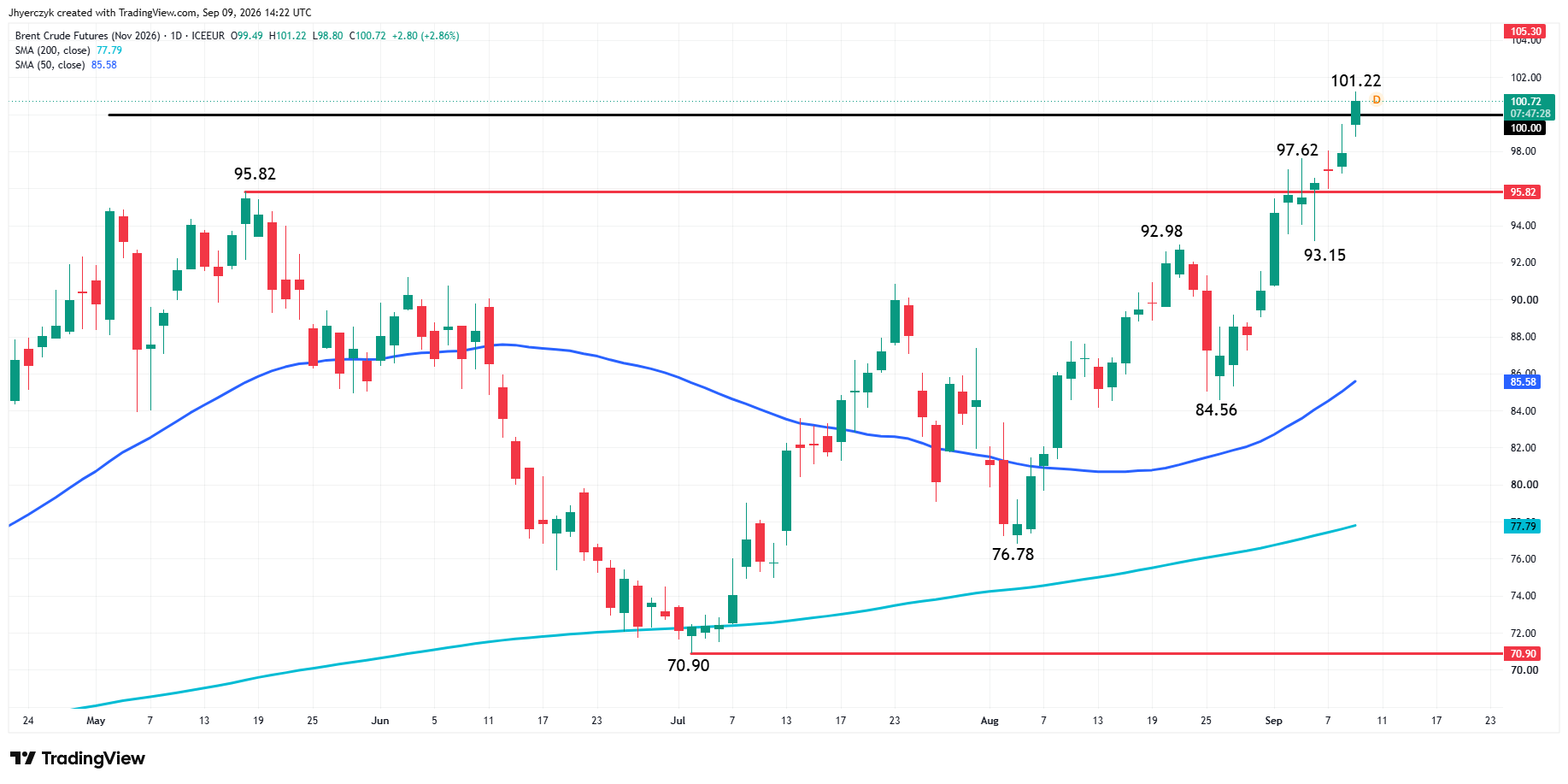
Brent crude pushed above $100 a barrel Wednesday for the first time since July 24. WTI ran above $95 after Iranian forces attacked shipping and a U.S. military base in Jordan. Washington said it had destroyed Iranian oil tankers. The conflict is escalating, not stabilizing. Gold traders already know what crude at these levels does to the rate conversation.
Gold Price Forecast
Every new Gold analysis as it publishes, today's technical signal and key levels, live price — on one page.
See all Gold forecastsTreasury Yields Are Not Backing Off
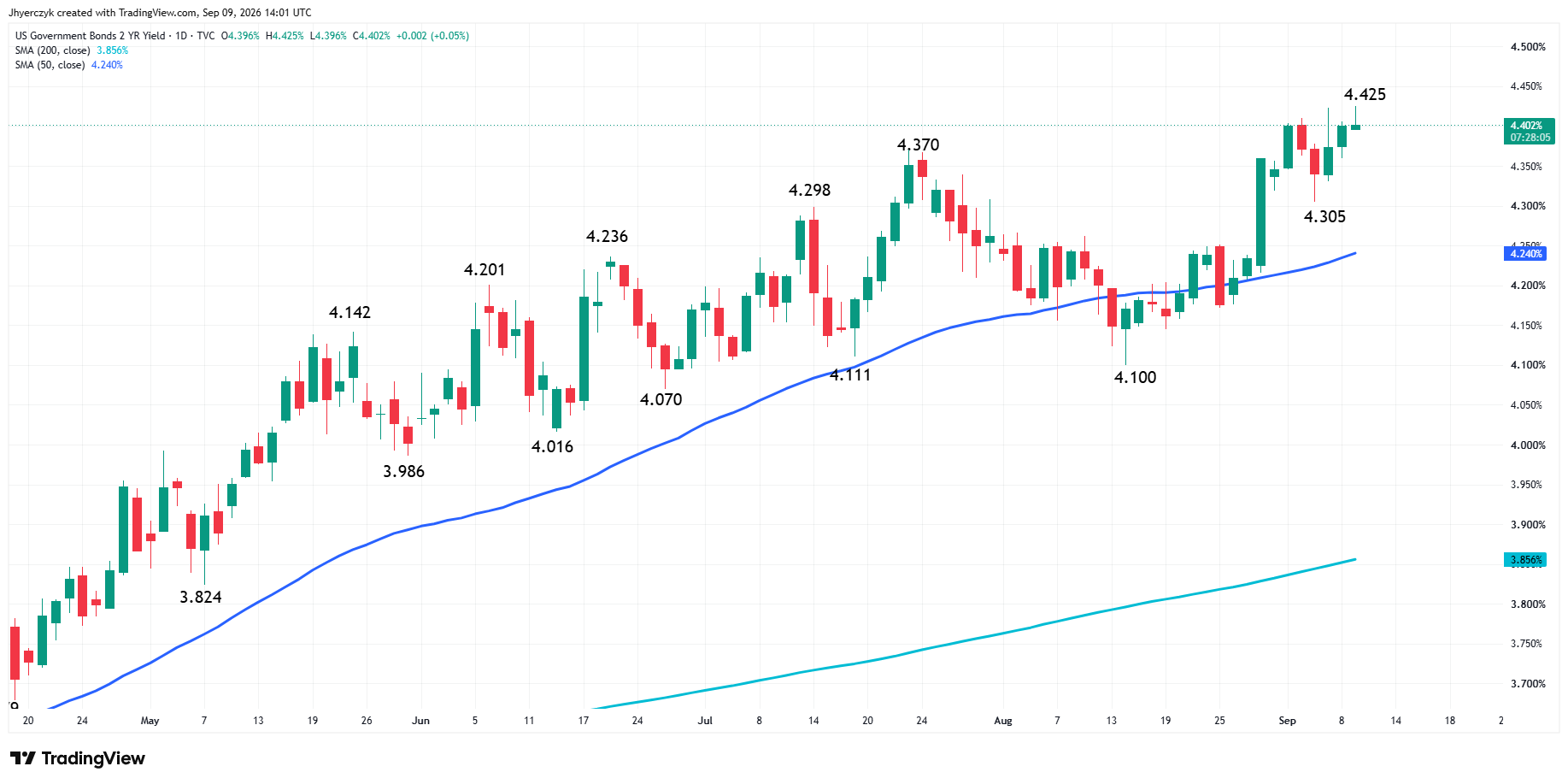
The two-year yield climbed above 4.42% Wednesday. The 10-year held near 4.81%. The 30-year was near 5.25%. None of those levels have come in despite the dollar weakness.
The two-year is the rate-sensitive end of the curve. It is still pricing the September hike as a live event. The 10-year and 30-year at these levels are keeping conditions tight.
PPI and CPI Land With Crude at These Levels
Thursday’s Producer Price Index and Friday’s Consumer Price Index are the last major inflation reports before the Fed meets September 15-16. Traders already have the September rate-hike probability near 60%.
A soft number gives gold buyers more room to work with while the dollar stays weak. A hot number after crude’s run through $100 puts yields back in control.
Daily Spot Gold (XAUUSD) Technical Analysis
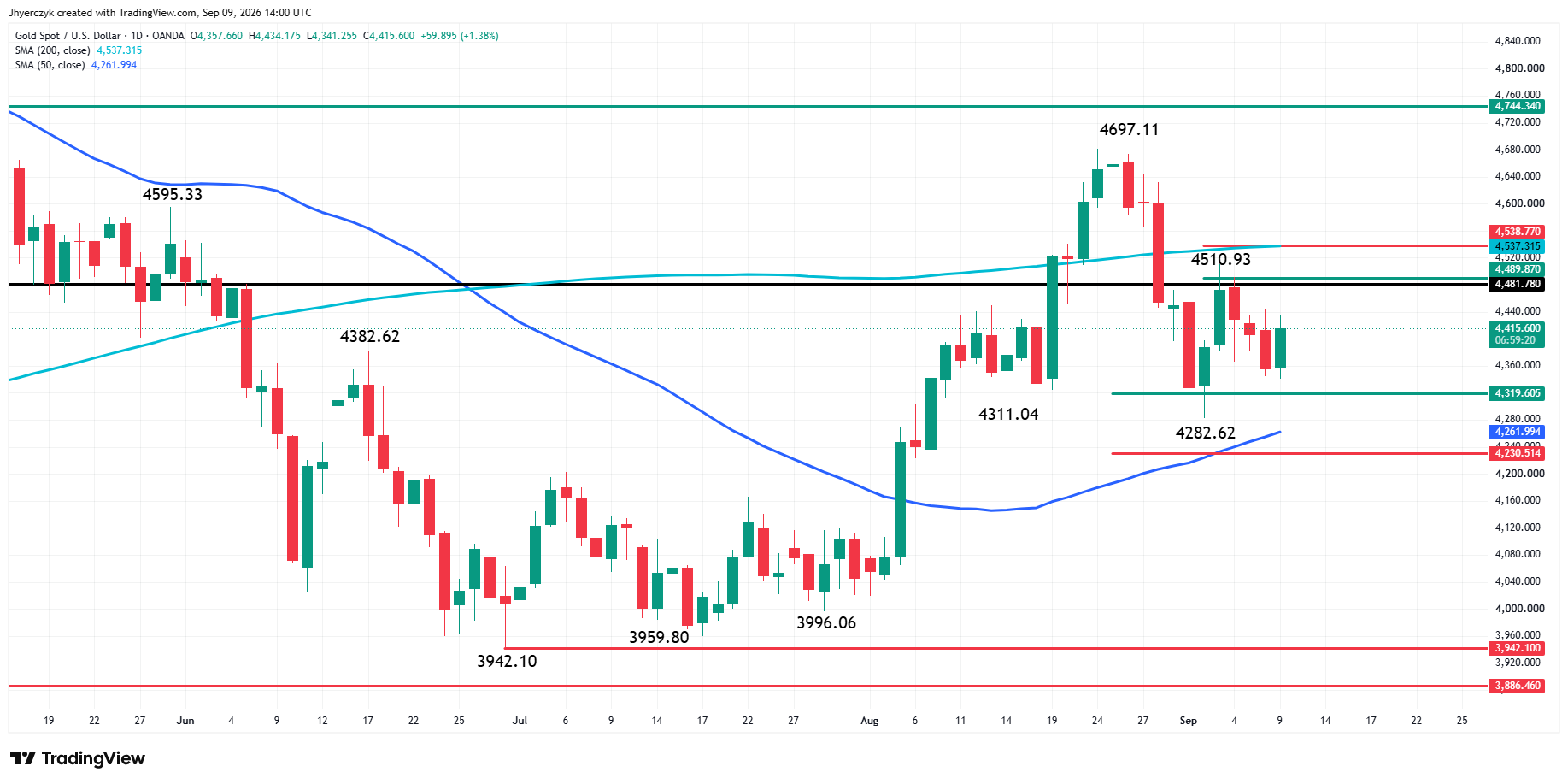
Spot gold is edging higher on Wednesday after recovering from an early session setback to $4,341.26. The rebound is now threatening to overtake yesterday’s high at $4,442.98, which would turn $4,341.26 into a new minor bottom.
The main trend is down according to the main swing chart. It turned down last week when sellers took out $4,311.04, trading down to $4,282.62. The subsequent counter-trend rally to $4,510.93 changed $4,282.62 into a new main bottom. A trade through this level will reaffirm the downtrend, while a move through $4,510.93 changes the main trend to up.
Looking at the retracement zones, resistance is $4,489.87 to $4,538.77. This zone stopped the rally at $4,510.93 on September 3. On the downside, the key support zone is $4,319.60 to $4,230.51. This area stopped the selling at $4,282.62 on September 2.
Moving average support is being provided by the 50-day at $4,262.18. Moving average resistance is the 200-day at $4,537.36.
The potential support cluster formed by the swing bottom at $4,282.62 and the 50-day moving average at $4,262.18 is the downside target. Counter-trend buyers could come in on a test of this area, but if it fails, the next trigger point for a near-term acceleration to the downside is the 61.8% level at $4,230.51.
A move through $4,510.93 could create the upside momentum to challenge the resistance cluster formed by the 200-day moving average at $4,537.36 and the 61.8% level at $4,538.77. The latter is a potential trigger point for an acceleration to the upside.
What to Watch
The dollar is doing the short-term work for gold. The dollar is doing the short-term work for gold. The BOJ and the ECB are both tightening within the next week, which is why the dollar index is sitting at a two-week low instead of rallying on crude above $100. PPI Thursday and CPI Friday are the last prints before September 16. The inflation data decides whether yields take control back from the currency trade.
The near-term lean is to the downside with the main trend down and a secondary lower top already in place. The support cluster at $4,282.62 to $4,262.18 is the downside target. The bias shifts bullish on a move through $4,510.93, which would change the main trend and open the resistance cluster near the 200-day. Wednesday’s rally is counter-trend until the market proves otherwise.
If you’d like to know more about how to trade gold, please visit our educational area.