The financial markets are responding to increased geopolitical tensions in Middle East. According to some reports, the United States may be on the verge of direct military confrontation with Iran. This possibility is altering behaviour for investors across asset classes. Gold (XAU) and silver (XAG) prices are rallying due to the safe haven demand while the oil price is rising due to fears of supply. On the other hand, Bitcoin (BTC) is dropping as traders rotate out of risk sensitive assets.

Military Buildup Fuels Global Market Anxiety
According to the recent intelligence and media reports, any escalation of conflict this time will be larger and last for weeks. This outlook is raising concerns about long term volatility of commodities, equities, and cryptocurrencies.
The military presence has also been reported to increase tremendously in the region with several aircraft carriers, warships, fighter jets and air defence systems deployed. A significant number of cargo flights carrying weapons and ammunition have been observed.
This development is sensitive to markets. Oil prices have risen above $65 per barrel on supply disruption concerns. The sudden move in the energy market will be translated into global financial market.
Safe-Haven Commodities Lead the Market Response
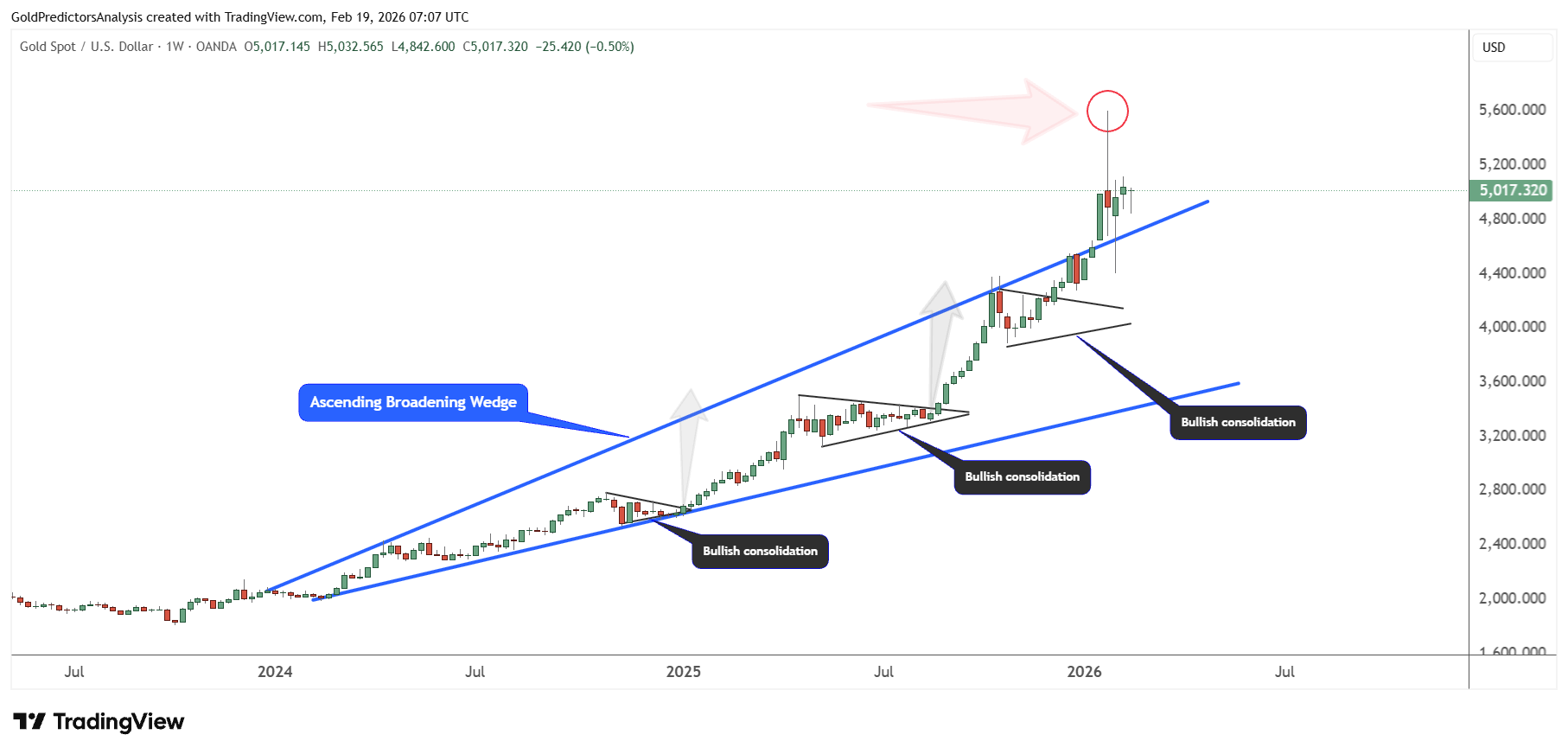
Commodity markets have been the most immediate beneficiaries of risk premiums in geopolitics. Gold, silver and oil all advanced as tensions ratcheted, with precious metals experiencing among the strongest reactions. Gold has been holding above $5,000 while silver (XAG) and platinum (XPL) are building bullish momentum.
Gold Price Forecast
Every new Gold analysis as it publishes, today's technical signal and key levels, live price — on one page.
See all Gold forecastsThe weekly chart for spot gold shows the formation of a strong bullish hammer above the ascending broadening wedge pattern. This formation indicates that the gold price is entering the next phase of growth, which will likely continue further upside in the next few months. The emergence of the ascending broadening wedge pattern indicates increased volatility, which may introduce strong moves in gold.
Bitcoin Drops as Investors Reduce Risk Exposure
The Bitcoin price moved in the opposite direction from safe havens. The price dropped below key support level of around $75,000 and traded lower. This divergence between gold and Bitcoin is becoming more apparent during this period of geopolitical stress.
When uncertainty increases, institutional and macro investors move capital first into commodities and government bonds. Cryptocurrencies are usually under selling pressure during first phase of fear-induced market movements.
The Bitcoin price has broken $75,000 and reached $50,000-$55,000 in February. This drop is structural, as seen by the formation of a rounding top pattern at $120,000 and then the formation of bear flag pattern.
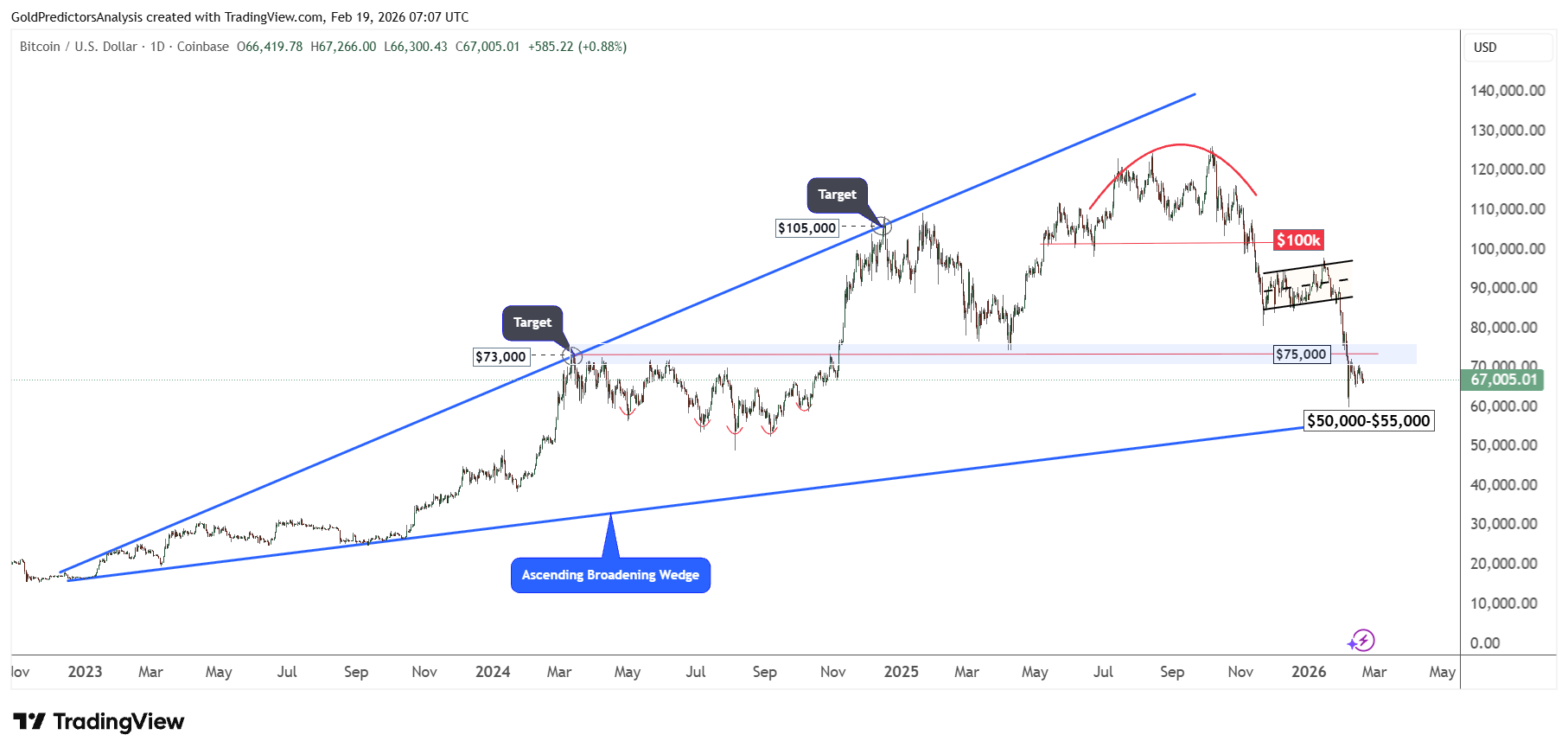
These bearish patterns introduced strong drop in Bitcoin. The price is now approaching $50,000-$55,000, which is the strong support of the ascending broadening pattern. Therefore, the bitcoin price will likely rebound from this level. A break above $100,000 is required to complete this correction.
Gold–Bitcoin Divergence Highlights Risk-Off Rotation
The current divergence between gold and Bitcoin points to a recurring pattern in times of geopolitical stress. The precious metals tend to be the first to react as investors fear for their money. On the other hand, cryptocurrencies are typically seen reflecting caution and lowering of risk appetites in first stages of uncertainty.
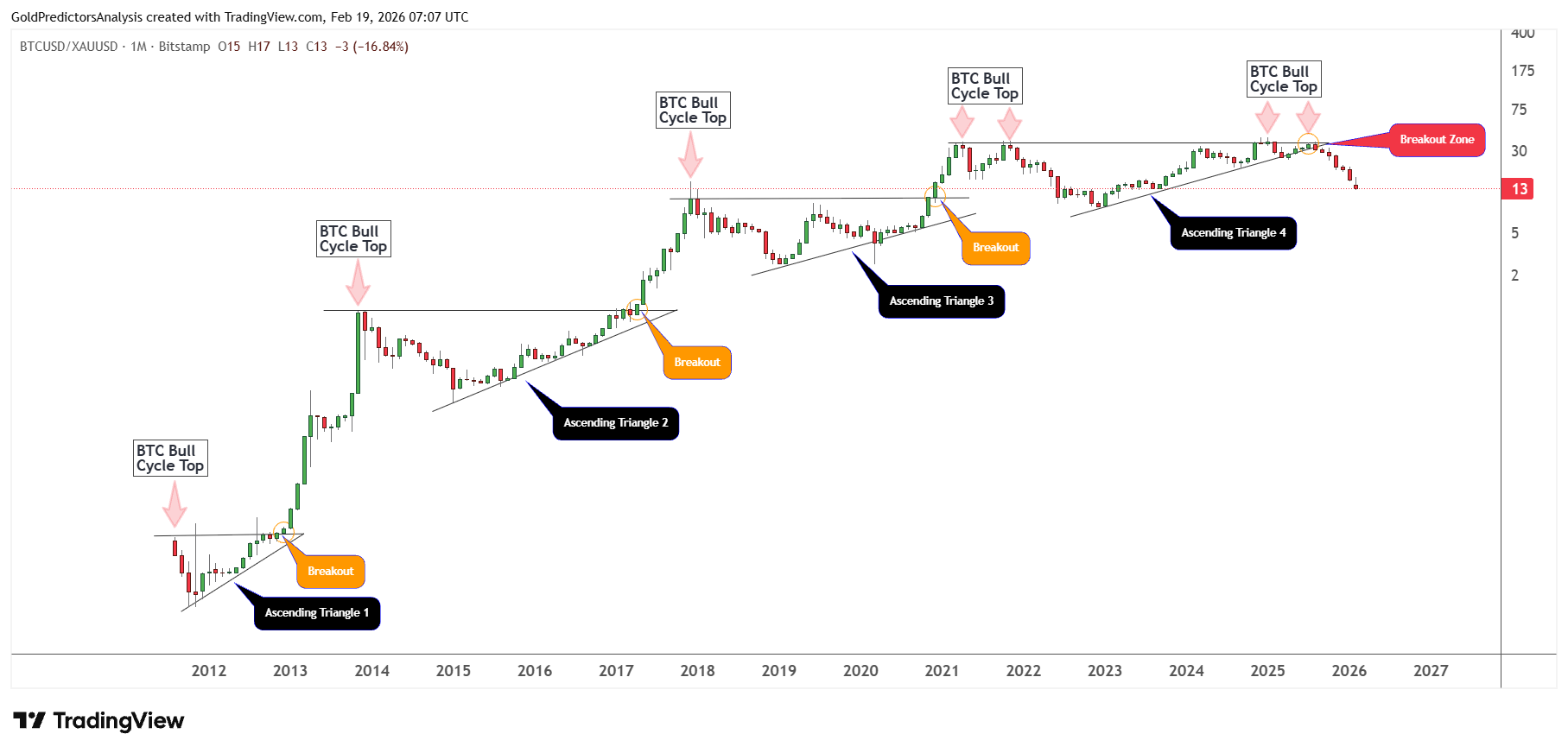
The bitcoin to gold ratio further tells the story of price movement in both assets. The ratio has formed a topping pattern at the historical reversal zone and initiated a drop. After breaking from the 29 level in October 2025, the ratio has dropped to the first support at the 13 level. A break below this level will likely initiate further downside towards the 9 level. This breakdown in the ratio indicates strong gold price momentum as compared to Bitcoin.
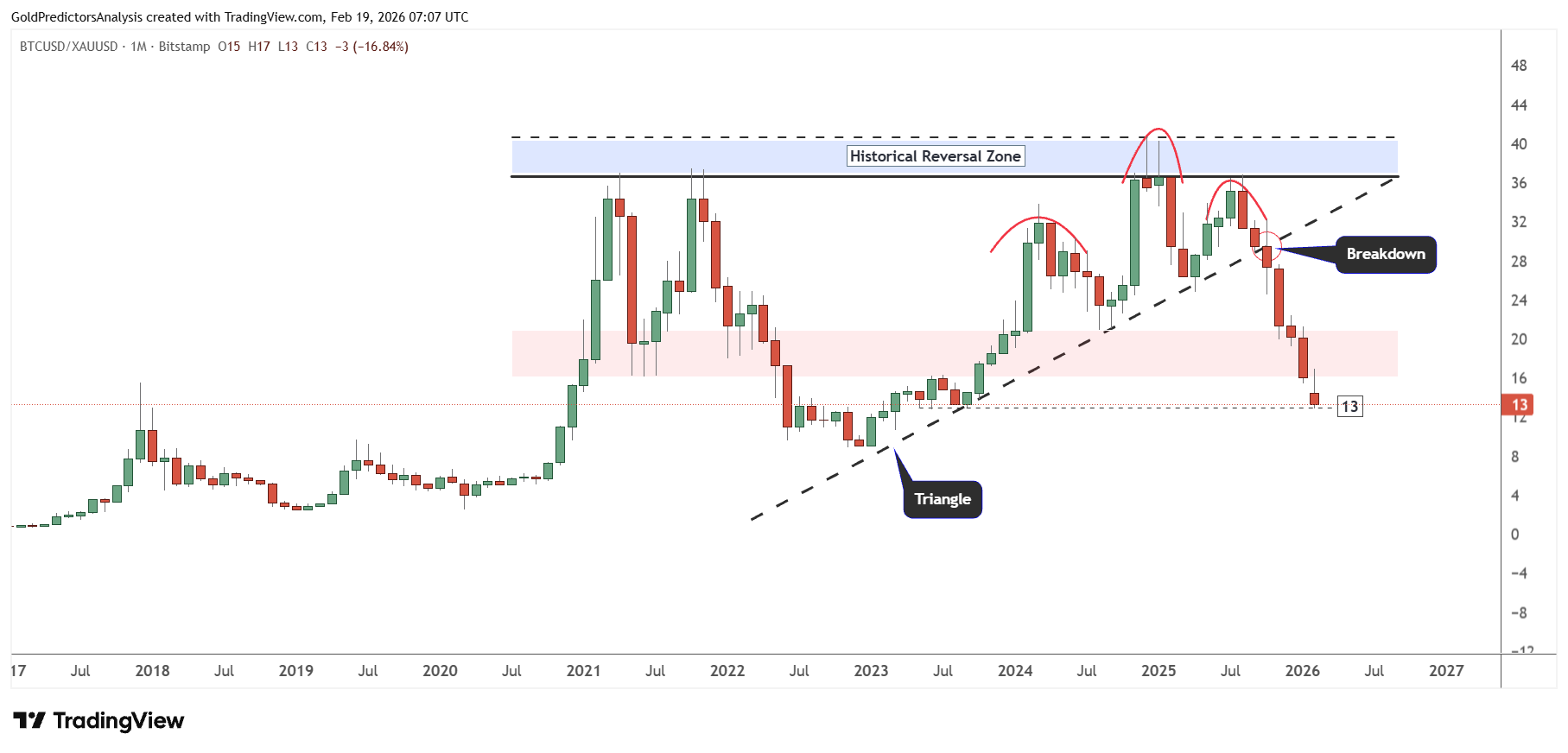
The emergence of triangle is further clear on the log scale chart, which shows the 13 and 9 levels as the most important support levels. As the ratio approaches the 9 level, the bitcoin price may attempt to form a bottom pattern.
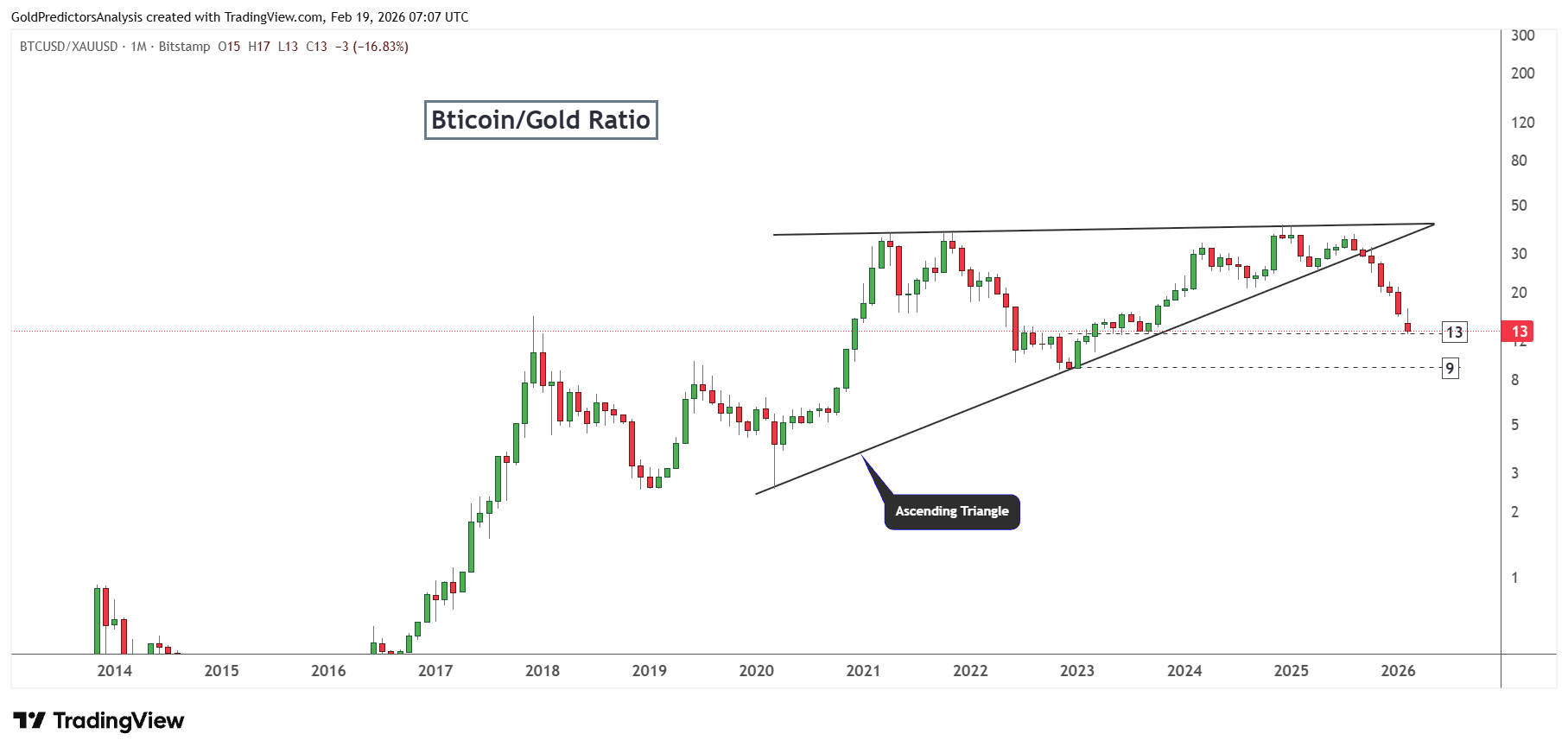
The Bitcoin to gold ratio has been trading in cyclical patterns. It has been forming the ascending triangle pattern each time after the bitcoin price peak. It is observed that Bitcoin peaks in November 2013, December 2017, April 2021, and January 2025, which were accompanied by a strong reversal in the ratio. However, when ratio breaks the ascending triangle pattern, Bitcoin leads and continues to trend higher.
Conclusion: Gold Leads While Bitcoin Searches for Stability
Gold and Bitcoin are responding very differently to the increase in geopolitical risks. Investors are moving into safe haven assets while Bitcoin is coming under pressure due to weaker risk appetite. This divergence indicates that in times of fear capital first looks for stability before moving back into higher-risk assets. Gold is enjoying good momentum and Bitcoin is attempting to find a bottom near key support levels. The gold to Bitcoin ratio also promises this rotation in favour of precious metals. Looking forward, the direction of both assets will depend on whether tensions escalate or ease.
If you’d like to know more about how to trade gold and silver, please visit our educational area.