


Rising Wedge Breakdown Sets Bearish Tone
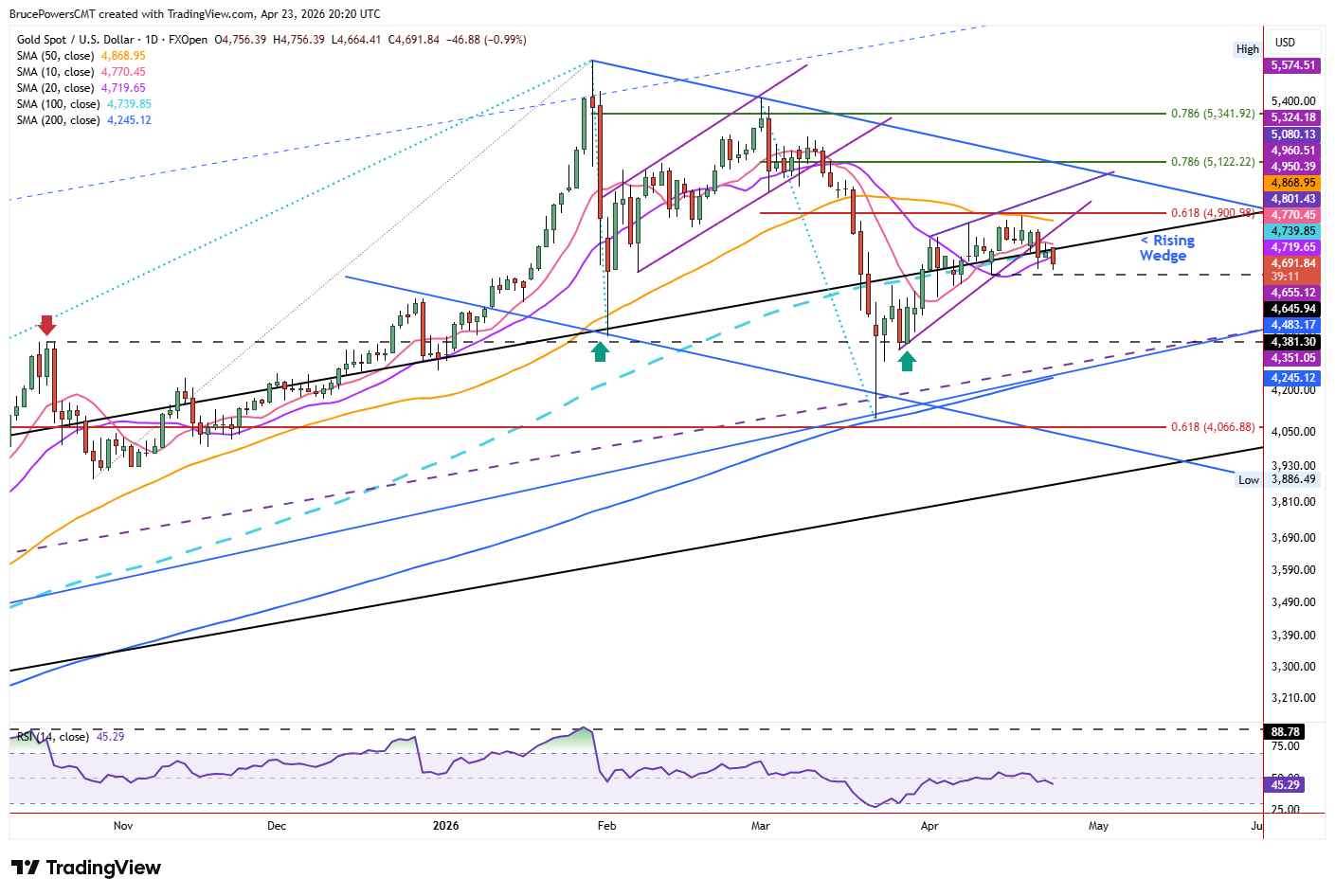
Gold triggered a breakdown from a rising wedge on Tuesday with a drop below $4,737. Since then, it has been progressing in bearish fashion. An inside day consolidation completed on Wednesday, with resistance shown near the 10-day moving average, while the closing of the session was below resistance near the 100-day moving average. Those are short-term bearish signals, which led to a bearish continuation on Thursday to an eight-day low of $4,664. Although that was not much below earlier levels, it reinforced downside momentum emerging from the wedge breakdown rather than showing any meaningful recovery attempt.
Moving Averages Shift from Support to Resistance
Support has been seen around the 20-day moving average following the breakdown. But that average broke on Thursday and looks likely to confirm with a daily close below it today. The current level is around $4,720. Although bearish momentum has been lacking a decline below the interim swing low of $4,640 will further confirm bearish implications from the wedge trigger, strengthening the case for continued downside follow-through.
Downside Targets Within Broader Bull Structure
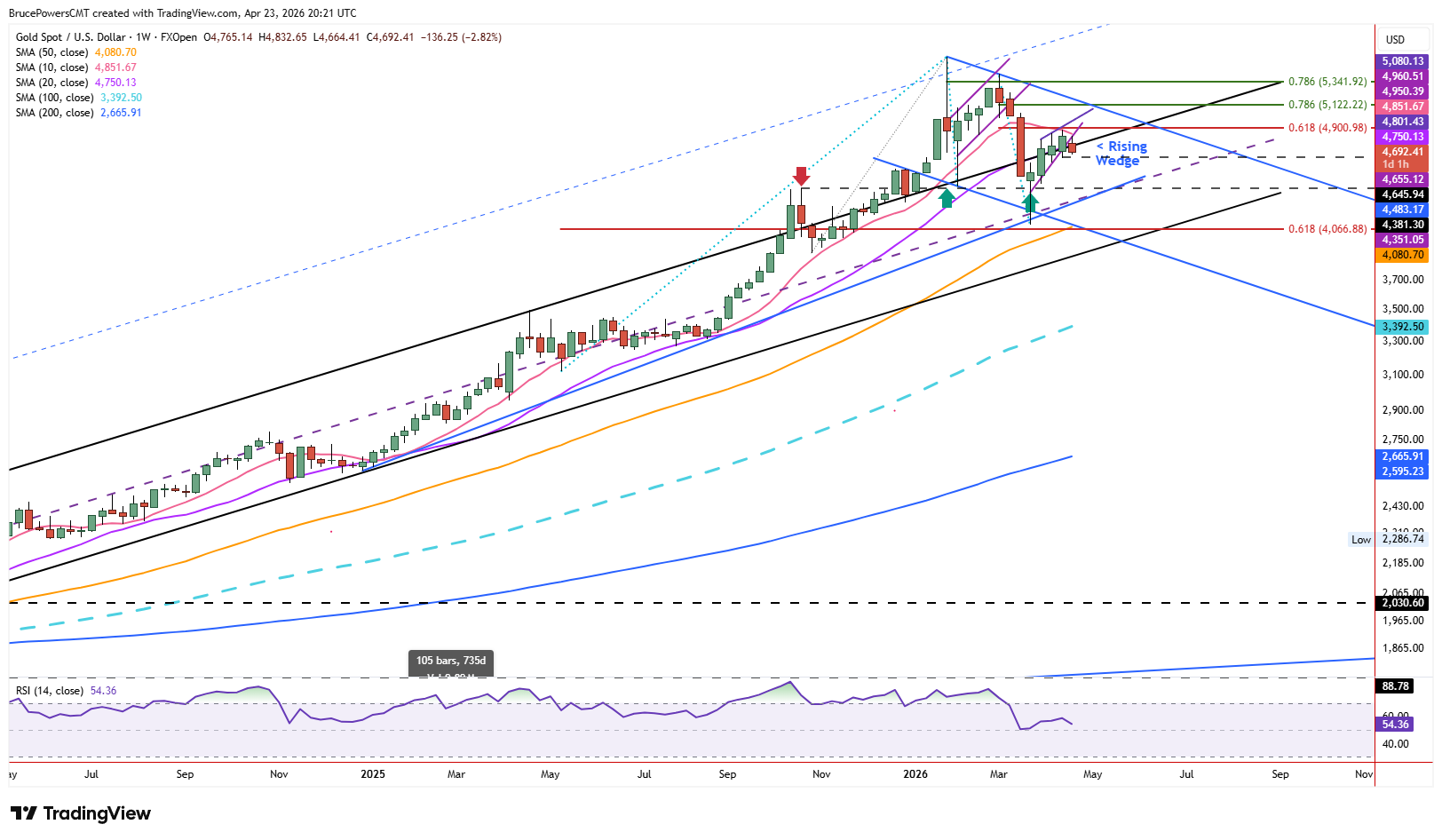
An initial target zone is marked as a range from February low of $4,402 to the October high at $4,381. If that zone fails as support, then the 200-day moving average near $4,245 becomes a potential target. It was clearly represented support for the March low of $4,099 and is anticipated to do so again. The long-term bull trend remains intact for gold and that average is a key support indicator for that trend, meaning corrective pressure is still occurring within a broader bullish structure rather than a full trend reversal.
Key Resistance Levels Define Bearish Risk Boundary
The bearish scenario will start to show signs of potential failure on a rally above Wednesday’s high of 4,772, as that would also put gold back above the 10-day moving average, a sign of strength. Key resistance is represented by the 50-day moving average, which was specifically shown to be resistance at the top of the wedge at $4,890 and has since declined slightly to $4,869. All breakouts require additional confirmation as they are subject to potential failures. In other words, what is anticipated to happen doesn’t happen, or it happens for a while and then reverses unexpectedly, underscoring the importance of price confirmation rather than assumption when evaluating continuation or reversal risk.
If you’d like to know more about how to trade gold and silver, please visit our educational area.