


The conflict in the Persian Gulf may soon enter its third month. While the Strait of Hormuz is not physically closed, the complexity and risk of navigating the passage have created a functional bottleneck that disrupts roughly 20% of global oil flows. This geopolitical tension has sent key crude oil benchmarks soaring since late February. Brent Crude surged more than 60%, briefly topping $119.50 per barrel, while WTI at one point spiked by as much as 78% from its pre-conflict levels. Although both benchmarks have since retraced, prices remain sustained near $100 per barrel, representing a net increase of more than 20% since the start of the hostilities.
This massive energy shock has forced a rapid reassessment of inflation outlooks and interest-rate paths at the world’s major central banks. For retail traders, the implications are clear: we are seeing heightened volatility in the most liquid pairs, including EURUSD, GBPUSD, and USDJPY, alongside fresh opportunities in gold CFDs as investors seek safe-haven assets.
Inflation
The primary transmission mechanism of this conflict is cost-push inflation. With crude oil and liquefied natural gas (LNG) supplies under threat, energy costs have spiked globally. In the United States, gasoline prices have climbed toward $4.25 per gallon, pushing Consumer Price Index (CPI) projections toward 3.5% for the summer of 2026—a level that is substantially above the Federal Reserve’s 2.0% target.
The Eurozone and the UK are facing a severe stagflationary threat as high energy costs mean inflation is being imported directly. This has forced the European Central Bank (ECB) to revise its 2026 inflation forecast upward to 2.6% (from 1.9% pre-conflict) and the Bank of England (BOE) to signal that inflation will remain significantly higher than previously expected, with recent market revisions pushing projections toward 4.0% (up from 2.5% previously).
Japan faces similar risks. As a major energy importer it is particularly exposed to the ramifications of the Persian Gulf conflict. The OECD consensus for Japanese inflation stands at 2.4% for 2026, while recent economist polls show core CPI being revised upward by 0.2–0.4 percentage points across several quarters due to the direct pass-through of rising energy costs.
Central Bank Response
‘Before the conflict, the market theme for 2026 was a pivot toward lower interest rates, but the war has effectively paused that narrative’, says Kar Yong Ang, a financial market expert at Elev8 broker, adding that high oil prices effectively act as a tax on consumers, destroying aggregate demand within the economy. Normally, when demand falls, central banks would cut rates, but presently they are unable to do so while energy-driven inflation remains unanchored.
Brent Oil Price Forecast
Every new Brent Oil analysis as it publishes, today's technical signal and key levels, live price — on one page.
See all Brent Oil forecastsCurrent market pricing reflects this global hawkishness, with the Fed now expected to keep rates unchanged at least until March 2027, while the ECB, BOE, and BOJ all face roughly even odds for 25-basis point hikes as early as June. For traders, this synchronized shift toward ‘higher for longer’ rates across the G7 countries underscores a fundamental change in the global macroeconomic landscape.
The Federal Reserve
Although the U.S. Gross Domestic Product (GDP) forecast for 2026 has been trimmed only modestly to around 2.3% (reflecting energy-cost drag on consumption and investment), market monetary policy expectations have shifted dramatically. The latest interest rate swap data indicates a less than 20% chance of even a single 25-basis point cut from the Fed this year, representing a sharp change from the three cuts previously anticipated. However, Fed minutes show some officials worry that a prolonged conflict could trigger stagflation (higher prices plus weaker growth), which potentially opens the door to extra cuts later if labour markets soften.
The European Central Bank
The ECB faces perhaps the most acute pressure due to Europe’s heavy reliance on energy imports. ECB President Christine Lagarde has kept rates steady, warning that while growth is slowing, the risk of ‘second-round effects‘—where energy costs lead to higher wages and service prices—remains too high to allow for easing. This cautious stance is reflected in the ECB’s decision to trim GDP growth projections to 0.9% from 1.2%, as Governing Council members emphasize patience in the face of a persistent oil supply shock.
The Bank of England
Similarly, the BOE has adopted a wait-and-see approach, delaying planned cuts to combat an aggressive inflationary backdrop. The UK now faces the sharpest growth downgrade among G7 nations, with the OECD cutting its GDP outlook to 0.7–0.8% while inflation projections climb toward 4%. The hawkish BOE shift was underscored in March when all BoE members who previously favored a cut moved to a hold position.
The Bank of Japan
Japan is also feeling the strain, as its central bank remains under mounting pressure to tighten policy. With underlying inflation hovering near the 2% target, higher import costs and the weak yen (which has lost approximately 13% in value against the U.S. dollar and 16% against the Euro over the past year) are likely to contribute to higher consumer prices in the future. Thus, the BOJ is increasingly likely to justify further rate hikes.
Currencies
The conflict has produced classic risk-on/risk-off swings. The U.S. dollar initially strengthened on higher U.S. yields and delayed Fed cuts, but periodic de-escalation headlines have triggered short-term sell-offs. In the long run, however, the U.S. dollar (USD) remains the primary beneficiary. Its status as a safe-haven currency, combined with the U.S. being relatively energy-independent compared to Europe, is likely to keep the USD relatively strong.
Conversely, both the euro (EUR) and the British pound (GBP) will likely continue to struggle as GDP growth forecasts were slashed, with energy-intensive economies in Europe likely facing a technical recession if the blockade persists. While EURUSD and GBPUSD have shown some resilience lately, they remain highly sensitive to any renewed blockade news.
Higher imported inflation may support the yen in the short term (via delayed BOJ easing or even a near-term hike), but persistent energy-cost drag on GDP may limit any sell-offs in USDJPY. Traders should watch the BOJ meeting on April 28 for any fresh upward tweak to the 2026 outlook—that will be the next big JPY catalyst.
Gold
On the face of it, the synchronized shift toward higher rates should be bearish (negative) for gold (XAUUSD). However, the reality is more complex. Gold initially spiked on geopolitical fears, hitting multi-year highs near $5,430 per ounce in early March, but as of mid-April, prices have stabilized in the $4,600–4,800 range. For the year to date, XAUUSD is still up some 9.0%.
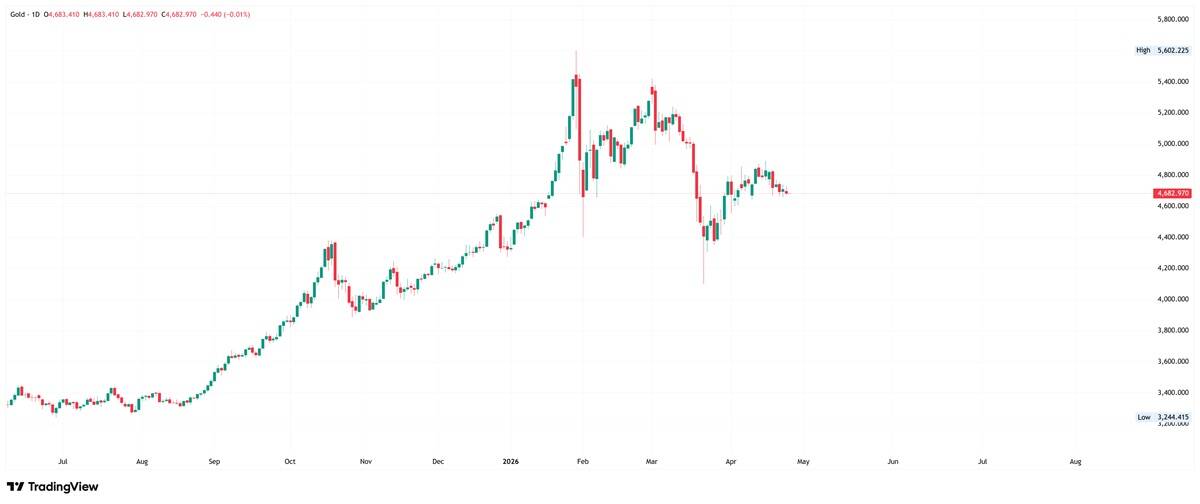
A protracted war could see gold test new psychological highs as real interest rates (adjusted for high inflation) remain low or negative. However, a robust U.S. Dollar and climbing bond yields may act as a firm cap on further gains. For CFD traders, gold currently presents a prime opportunity for range trading, as the metal is squeezed between two conflicting forces: persistent geopolitical conflict supports safe-haven demand, while sustained, oil-driven inflation—which forces central banks to maintain aggressive interest rates—acts as a heavy anchor on the upside. Technically, $4,500–5,000 is an established range for now, and XAUUSD continues to remain in a long-term bullish trend.
However, regardless of the baseline outlook, wild market swings remain a constant threat as long as the geopolitical climate remains so fragile. We are living through a period of historic uncertainty where headlines can shift sentiment in seconds. Consequently, Ang Kar Yoong emphasizes that the key to survival is disciplined risk management. Traders should exercise extreme caution around high-impact events such as oil inventory data, central bank minutes, and any diplomatic breakthroughs in U.S.–Iran negotiations. In this environment, volatility creates opportunity—but only for those who size their positions appropriately and ensure their stop losses are strictly respected.
Disclaimer: This article does not contain or constitute investment advice or recommendations and does not consider your investment objectives, financial situation, or needs. Any actions taken based on this content are at your sole discretion and risk—Elev8 does not accept any liability for any resulting losses or consequences.
Elev8 is a global broker that takes trading to a new level.