
Nasdaq Pulls Back Monday
The Nasdaq Composite fell 0.30% in the first hour of trading Monday while the S&P 500 sat flat to lower and the Dow slipped slightly. Geopolitical risk is running the early tape. Strait of Hormuz tension and stalled Iran talks pushed oil higher overnight and that’s keeping investors cautious heading into a week with no margin for error.

Oil Is Running the Show Again
Hormuz headlines hit overnight and the equity market felt it before the open. Stalled Iran talks and tighter shipping conditions pushed crude higher and that reset inflation expectations fast. Investors who spent April buying every dip are suddenly looking at a Fed that can’t cut while oil runs. That’s the shift happening right now and it’s showing up in early price action across all three indexes.
Qualcomm Surges
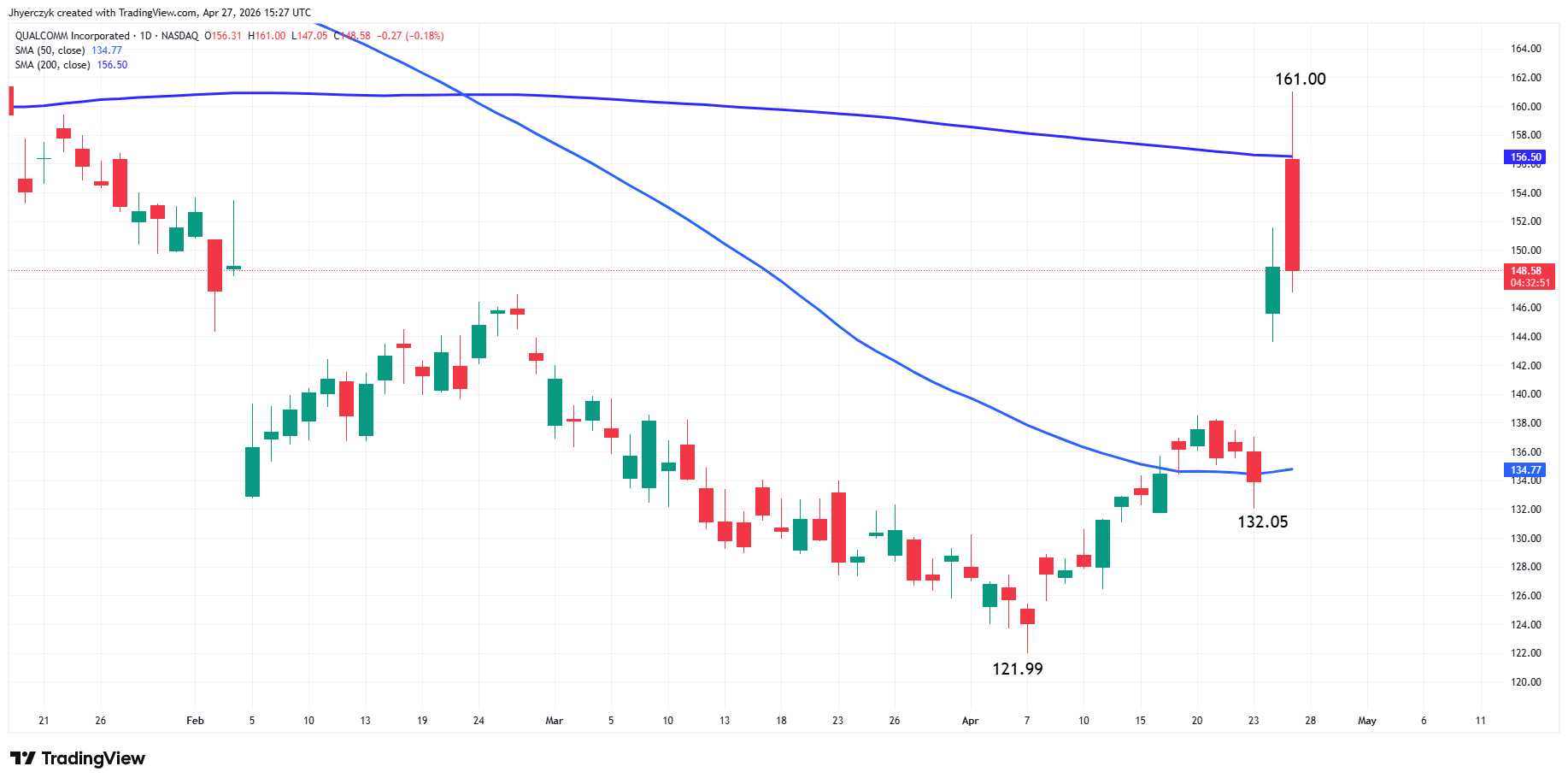
Qualcomm jumped 7% Monday on reports it’s partnering with OpenAI to develop AI chips for smartphones. Production is targeting 2028. The gain is real but context matters. Qualcomm is still down for the year, which tells you the stock has ground to make up before this headline changes the longer-term momentum picture.
Technical Outlook
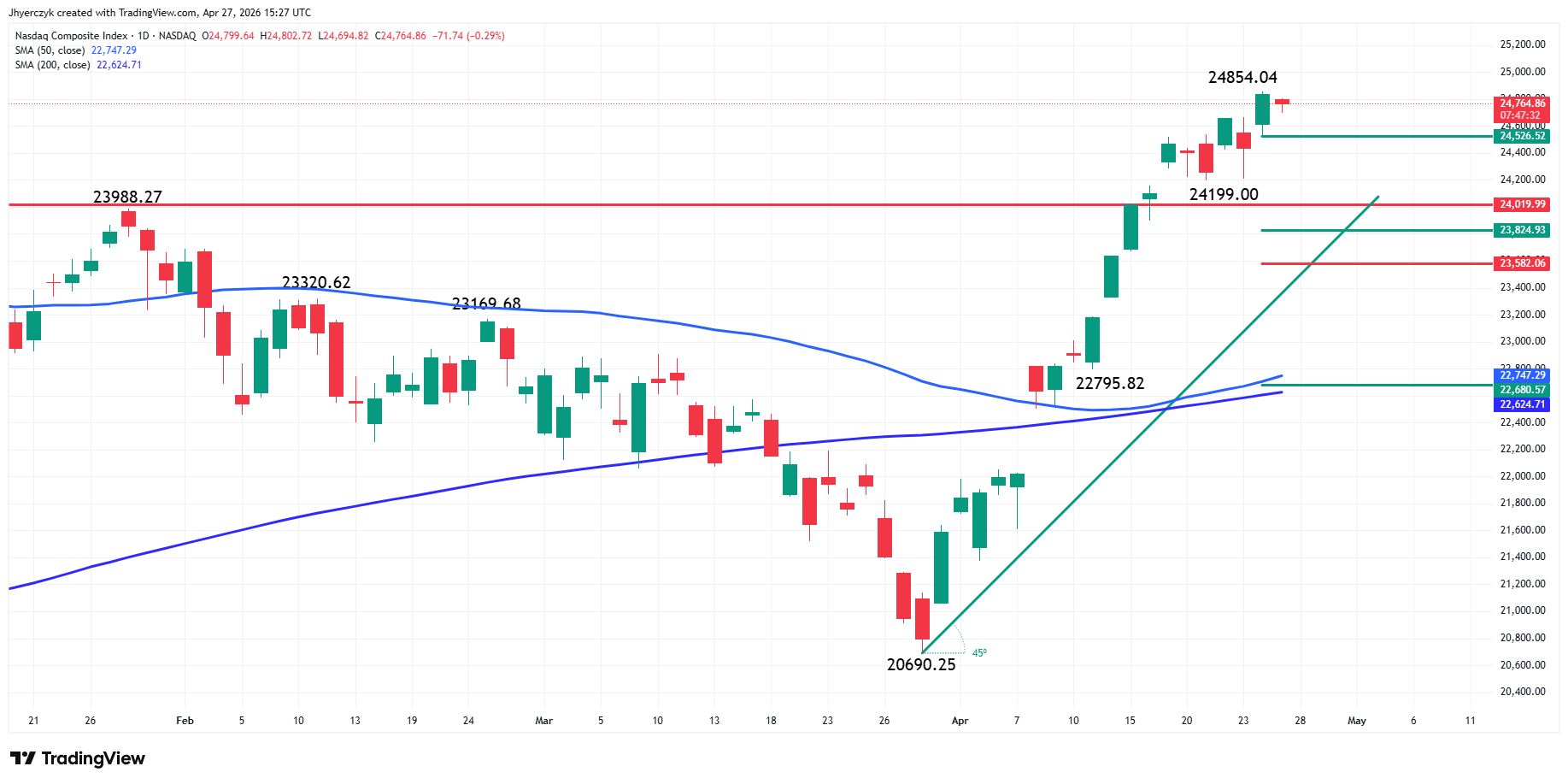
The Nasdaq Composite is lower and treading water after the first hour of trading on Monday. The tech benchmark is inside Friday’s range, suggesting investor indecision and impending volatility. The index is essentially giving the investor a choice, buy strength and play for a breakout over 24854.04, or play for a pullback to a zone that you perceive as value.
The breakout scenario is interesting but cautious because if you measure the distance from swing high to swing high, you can see that there hasn’t been much follow-through lately despite the uptrend. From a short-term perspective, the moves have been attractive for the quick out crowd, the traders who buy the breakout then sell on the first down tick. For longer term traders, buying strength the last two weeks has really helped or hurt their current positions, but it can mess up their average price if they size wrong or fail to exit on a stop at the right place and at the right time.
NASDAQ 100 Price Forecast
Every new NASDAQ 100 analysis as it publishes, today's technical signal and key levels, live price — on one page.
See all NASDAQ 100 forecastsThe current extremely short-term range is 24199.00 to 24854.04. This is creating a 50% level at 24526.52. A pullback to this level today may attract some fresh buying from traders hoping for a quick turnaround and a new record high.
The second level to watch for new entries is the swing bottom at 24199.00. It’s just the standard buy at support play with a lean under the swing bottom. Other traders may be looking at the former top at 24019.99 as a new entry under the “old tops become new bottoms” rule. A trade off this price will be interesting because it will bring into the conversation the possibility of a delayed bull trap.
The bigger swing on the radar is 22795.82 to 24854.04. Its 50% to 61.8% retracement zone represents the closest value zone at 23824.93 to 23582.06. This is where the most renewed buying activity is likely to show up if tested.
We’re not calling for a top, but preparing for a pullback. There is no resistance right now, only trend line and Fibonacci projections. Since the market reached 24854.04 and retreated, that’s resistance per se. If sellers can take out Friday’s low at 24524.37 then we’ll be able to name it a new minor top.
The best sign of a major top will be the formation of a dramatic higher-high, lower-close, close below the opening and close below the session’s mid-point.
What I’m Watching
Oil and geopolitics are setting the tone this week and neither is showing signs of easing. On the Nasdaq, Friday’s low at 24524.37 is the first line I’m watching. Lose it and the minor top is confirmed. Hold it and the bulls still have a case. Big Tech earnings and the Fed decision later this week are the two events that could either extend the rally or accelerate the pullback.
More Information in our Economic Calendar.