



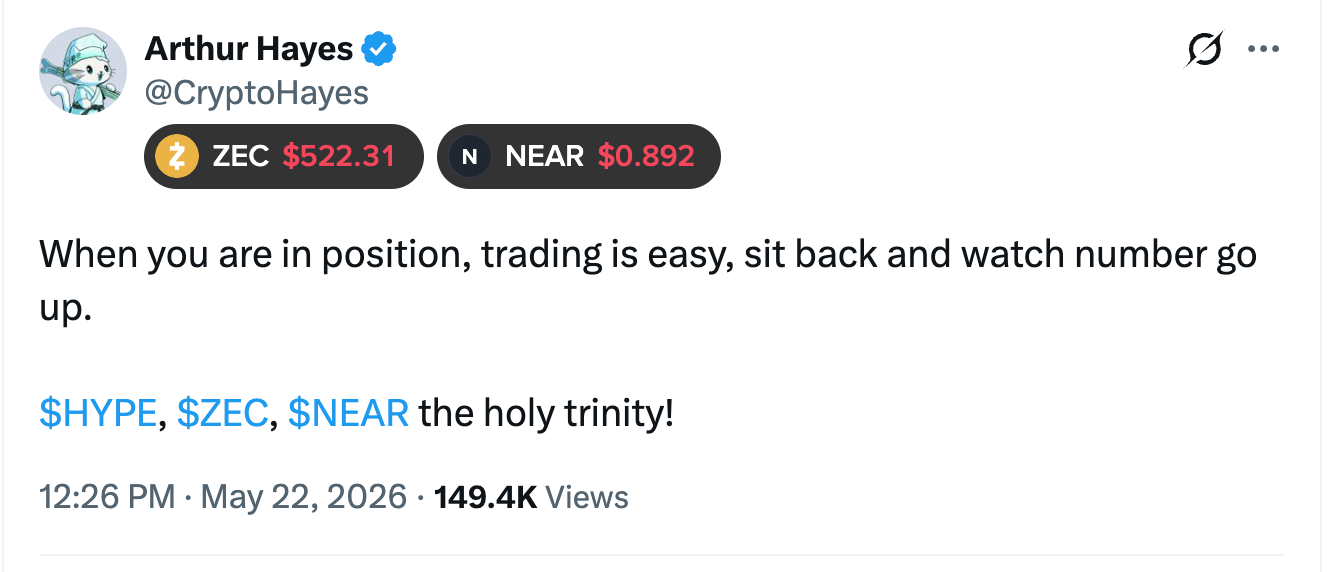
The call is gaining attention because each token sits at the center of a different 2026 narrative: decentralized trading, financial privacy and AI-powered cross-chain execution.
But the bigger question is whether this “trinity” has enough hard data behind it to deliver another major rally, or whether traders are simply chasing three overheated stories after large price gains.
Let’s find out.
HYPE: Hyperliquid Has Real Revenue, But Valuation Risk Is Rising
Among the three tokens, HYPE has the clearest fundamental case.
Hyperliquid, a decentralized exchange, has become one of the highest-revenue projects in crypto, supported by strong perpetual futures volume and a token model that directs most trading fees toward the Assistance Fund, which buys HYPE.
As of May 28, Hyperliquid had generated nearly $662 million in annualized revenue and was processing a combined $190 billion volumes in perpetual and spot trades on a 30-day rolling basis.
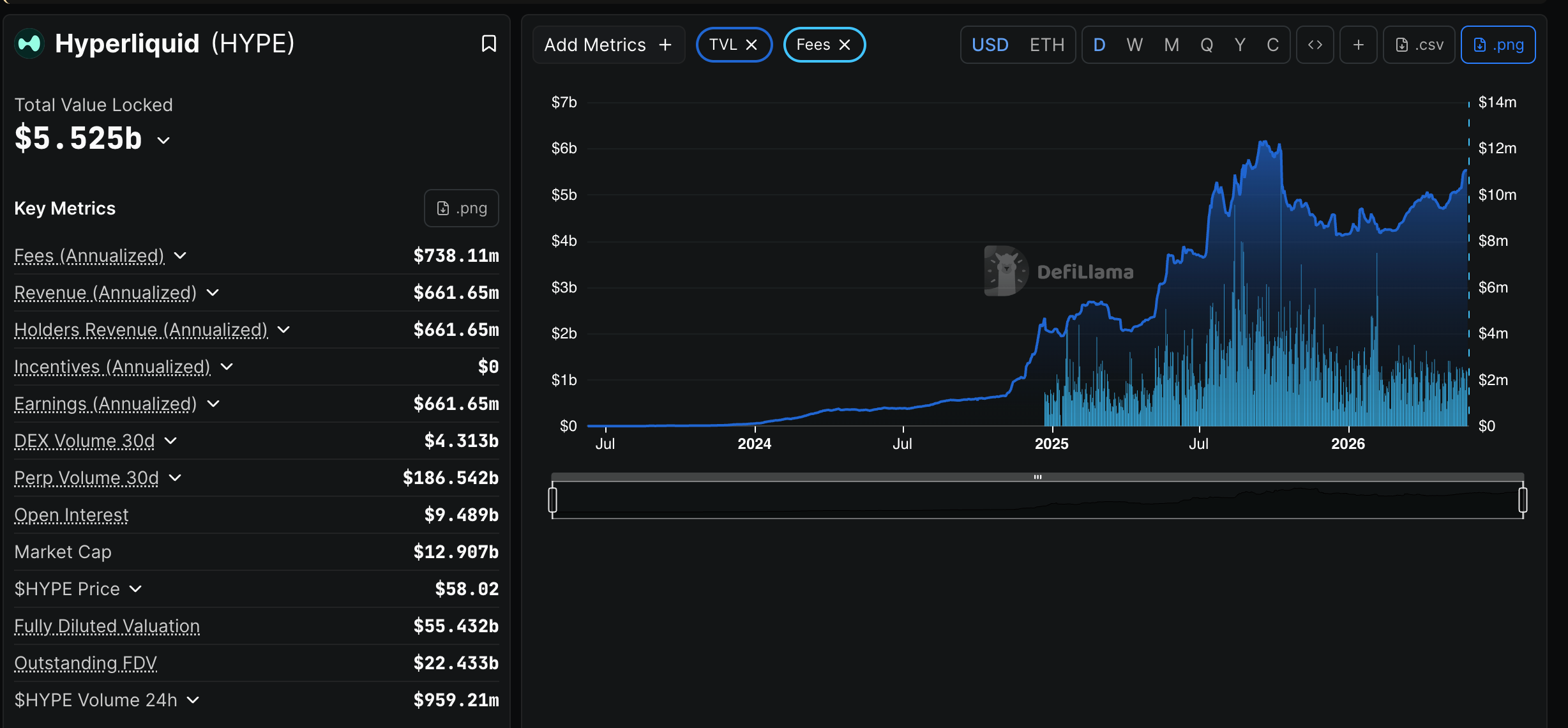
That matters for HYPE because the token has a more direct link to platform activity than many altcoins. If trading volumes rise in a risk-on 2026 market, Hyperliquid’s fee generation and buyback structure could continue supporting demand for HYPE.
HYPE Risks: Lower Volumes, Slower Demand
HYPE already trades as if Hyperliquid will keep gaining market share from centralized exchanges and rival decentralized perpetuals.
That leaves little room for disappointment. If volumes slow, fee revenue falls, or market makers migrate elsewhere, the token could quickly lose its premium.
An upcoming unlock of 9.92 million HYPE, worth more than $560 million, for core contributors also creates supply pressure risk. Also, if trading volumes cool, revenue-linked buyback narratives weaken fast.
HYPE has the best fundamentals of the three, but the upside depends on whether revenue growth can justify a very rich valuation.
Hyperliquid Price Analysis: Overvaluation May Prompt a 20% Dip
HYPE has fallen by nearly 13% since establishing its record high at around $65 earlier in May, coinciding with a correction in its overvalued relative strength index (RSI) readings on the daily chart.
In other words, HYPE is signaling an upside exhaustion after rallying by more than 200% since January: it’s too expensive at this time.
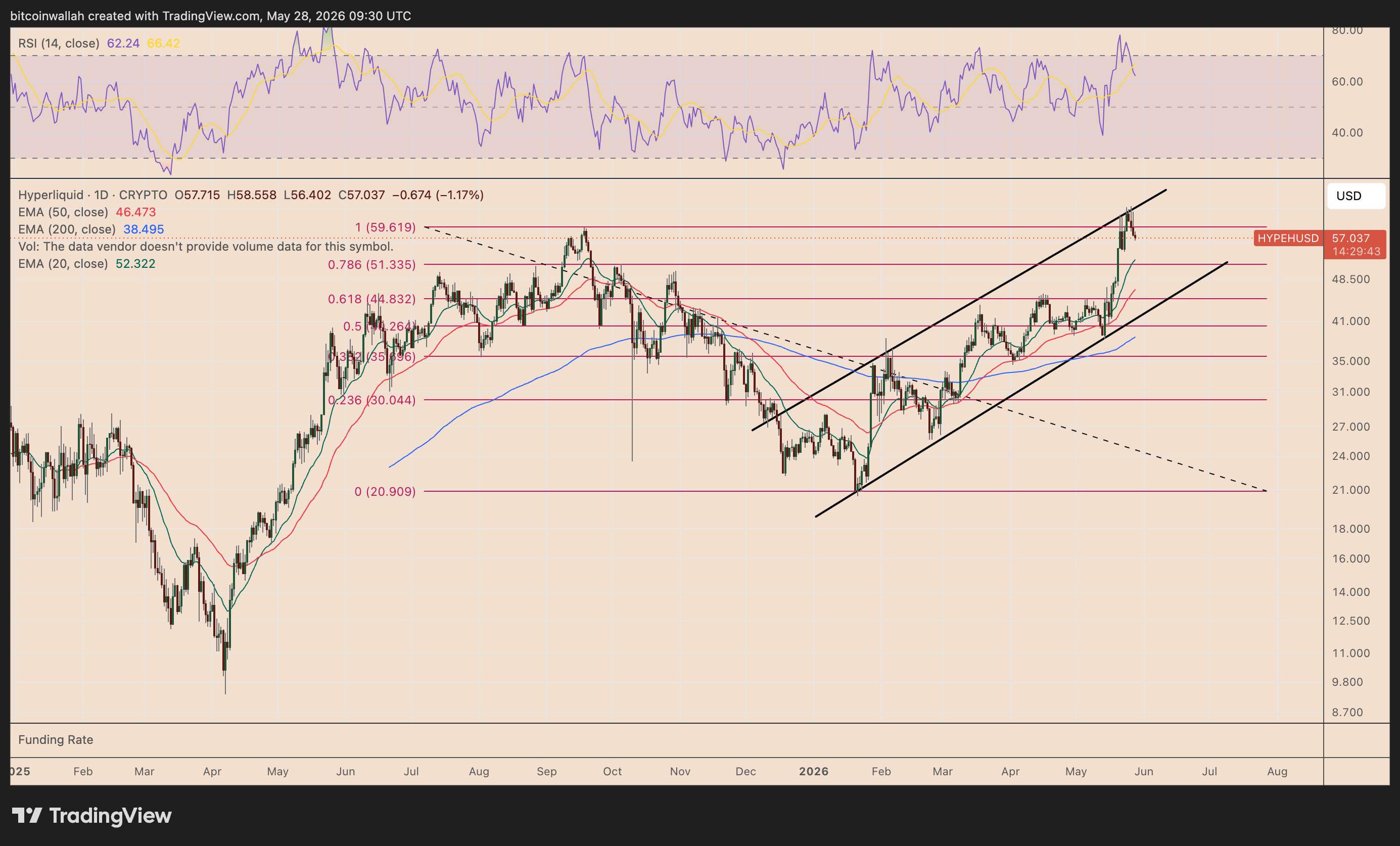
Meanwhile, HYPE’s ongoing correction is happening inside its prevailing ascending channel pattern. Its price failed to break above the channel’s upper trendline, leading to decline, which may extend toward the lower trendline area if history is any indication.
The lower trendline area is around the $40–$44 range, aligning with 0.5–0.618 Fibonacci retracement zone. That amounts to a 20% potential decline in the coming days.
ZEC: Zcash Has the Strongest Narrative, But Not the Strongest Fundamentals
Unlike HYPE, ZEC’s bull case is less about revenue and more about repricing after years of underperformance.
Traders are treating Zcash as a privacy hedge as Bitcoin remains transparent, stablecoins face heavier surveillance, and institutions increasingly value transaction confidentiality.
That narrative has some on-chain support. ZEC’s shielded supply has risen to about 4.9 million ZEC, or roughly 30% of supply, from around 11% at the start of 2025. That suggests actual privacy usage is rising.
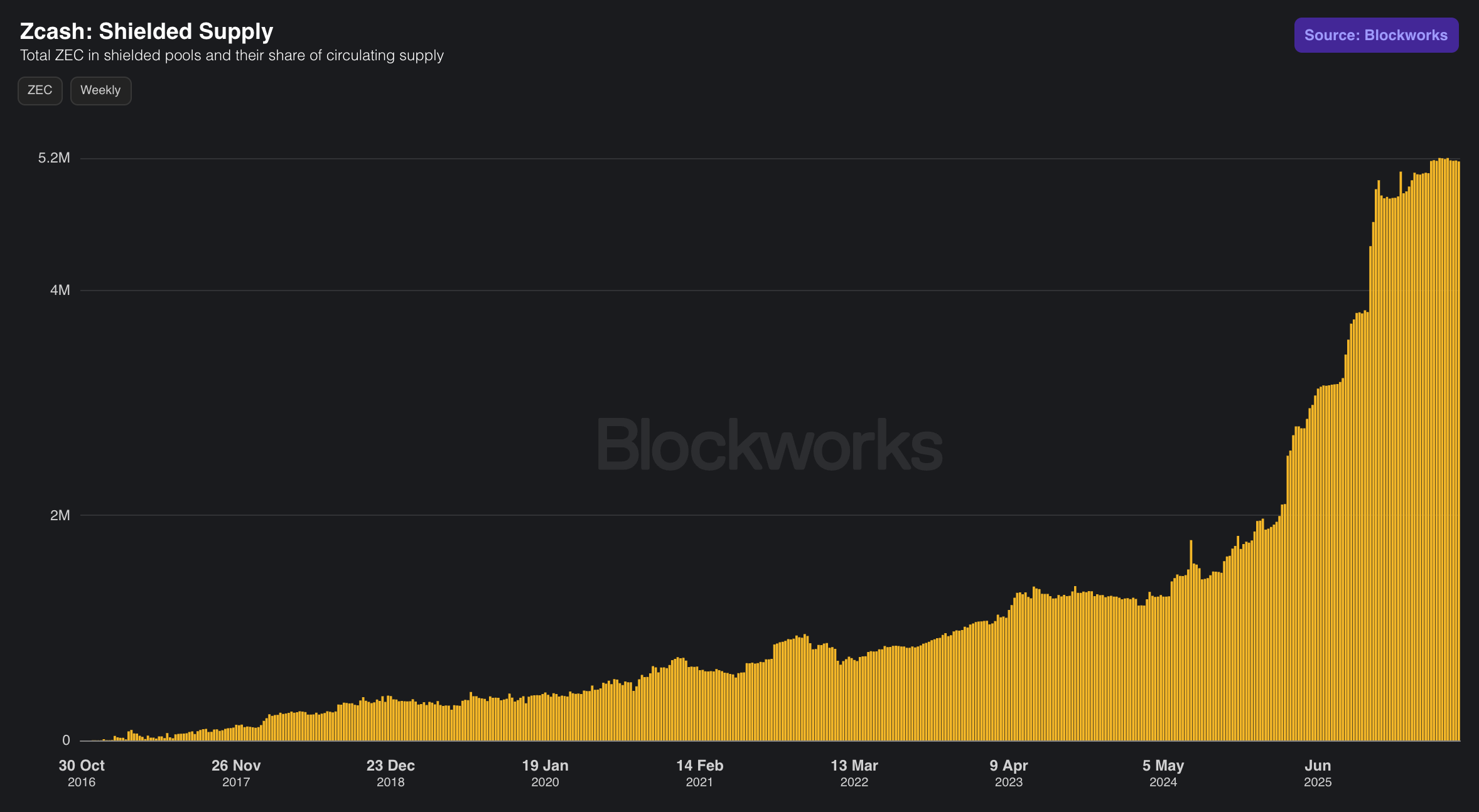
If investors start treating ZEC as “private Bitcoin,” the token could keep attracting capital seeking scarce, privacy-focused exposure.
The Zcash Risks: Privacy Narrative Can Fade
Zcash privacy is optional, not mandatory, and user behavior can weaken anonymity when funds move between transparent and shielded addresses. Regulation is the bigger overhang.
Renewed pressure on privacy coins could hurt listings, liquidity and institutional demand.
So ZEC can boom in 2026, but its upside depends more on narrative persistence than fundamentals. It is Hayes’ highest-beta trinity trade, not the safest one.
Zcash Price Forecast: A 450% Rally Setup is Brewing
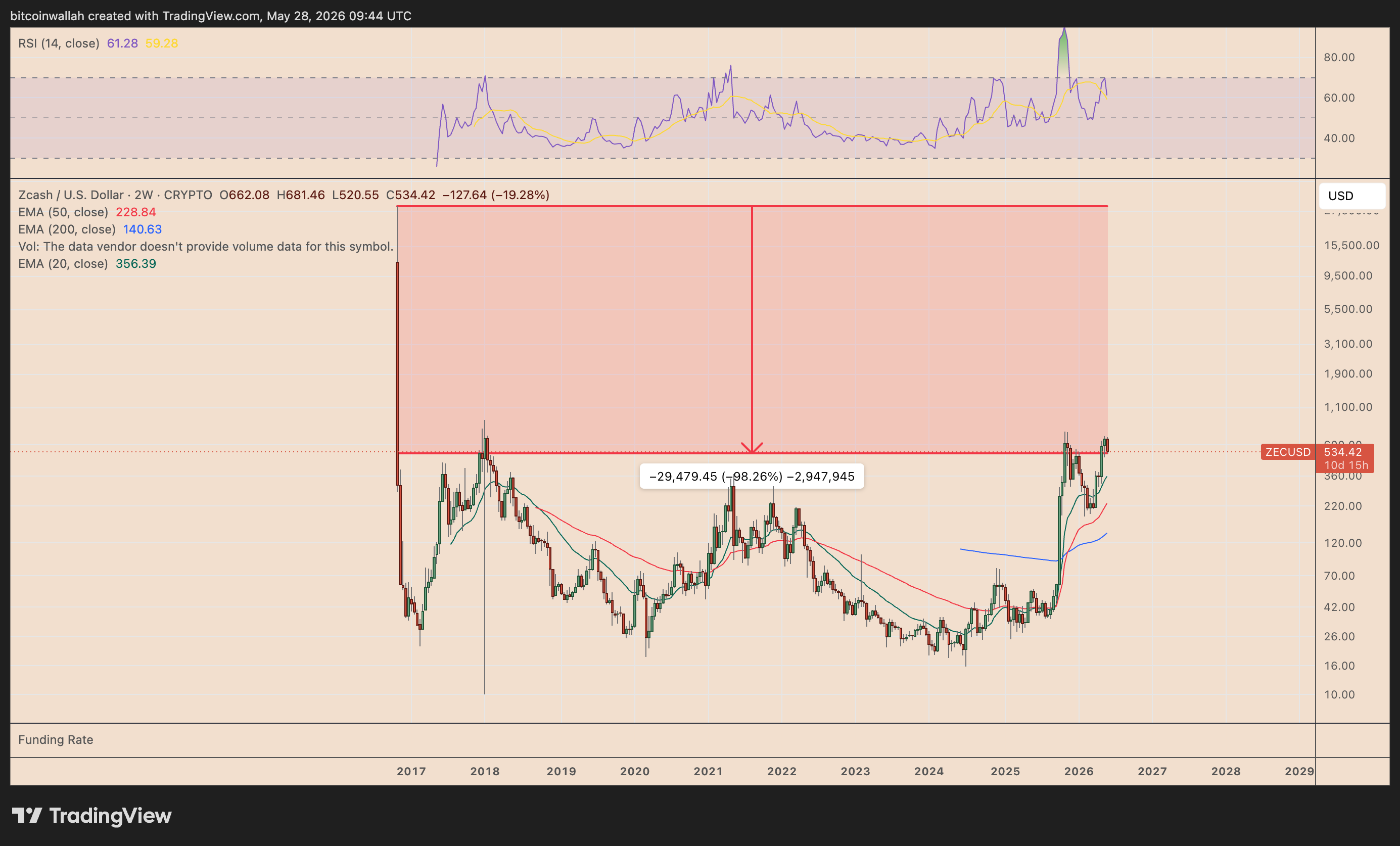
ZEC has entered the handle stage of a large cup-and-handle reversal, keeping its bullish breakout setup intact.
The pattern’s neckline sits near the $669–$744 resistance zone, where a decisive close could confirm upside continuation. Based on the cup’s depth, the measured target sits near $3,000, implying roughly 450% upside from current levels.
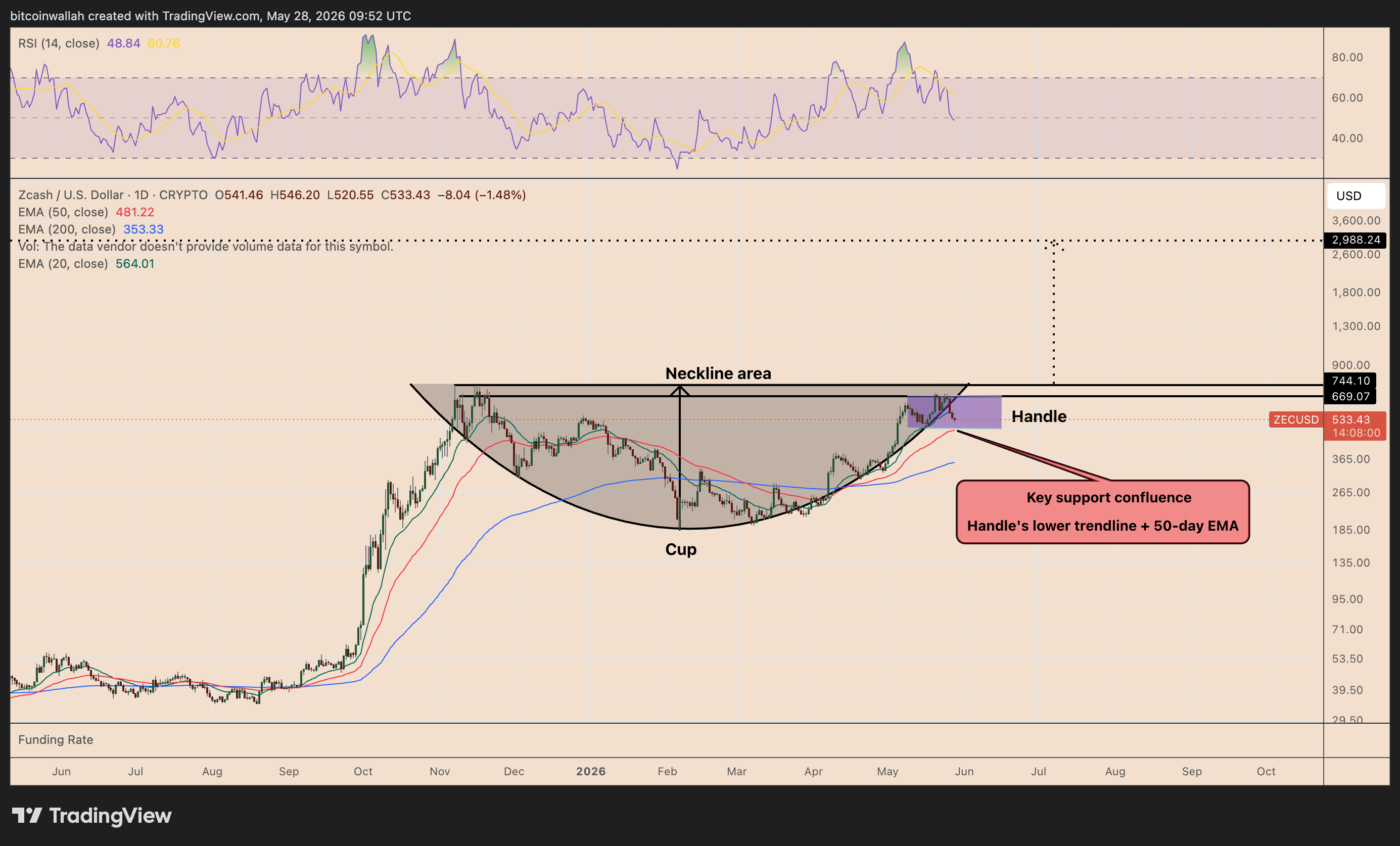
However, the setup remains vulnerable while ZEC trades inside the handle.
A break below the handle’s lower trendline, which aligns with the 50-day EMA near $481, would weaken the bullish structure and could trigger a deeper correction toward the 200-day EMA around $350, down about 35%.
NEAR: The AI and Intents Story Is Promising, But Token Value Capture Is Still Unproven
NEAR has the most conditional bull case in Hayes’ trinity.
Its appeal no longer rests on being another layer-1 blockchain. The stronger narrative is NEAR Intents, a system that lets users, services and potentially AI agents move assets across chains without manually using bridges, multiple wallets or fragmented liquidity.
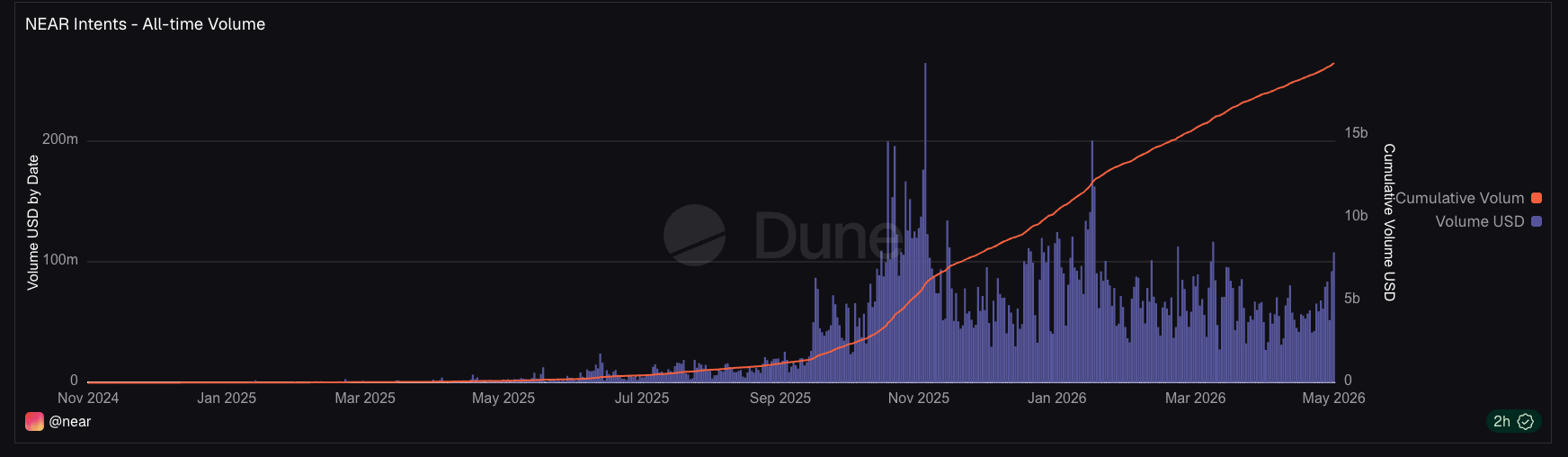
That fits the 2026 chain-abstraction theme. NEAR Intents has already processed roughly $19 billion–$20 billion in cumulative volume and generated about $32 million–$40 million in fees, according to data resource Dune Analytics.
NEAR Risks: No Proofs Of Sustained Demand Like HYPE’s
Intents volume is promising, but it is not yet clear that this creates enough sustained demand for the NEAR token itself.
A protocol can process volume without necessarily making the token explode unless fee capture, buybacks, staking demand, or token sinks become powerful enough.
Hayes explains the narrative transmission mechanism, not the hard token-capture mechanism.
He gives a reason why NEAR could become more important, but he does not fully prove that Intents volume must translate into sustained NEAR token demand through fees, burns, staking, or buybacks.
NEAR Price Prediction: AI Token Risks 20% Pullback
NEAR’s latest weekly candle signals rejection near the 0.236 Fibonacci retracement at around $2.65, a level that has repeatedly acted as a reliable pivot across the chart.
The long upper wick shows buyers failed to hold the breakout, raising the risk of a pullback toward the 50-week EMA near $2.00. That would imply a roughly 15%–20% decline from current levels.
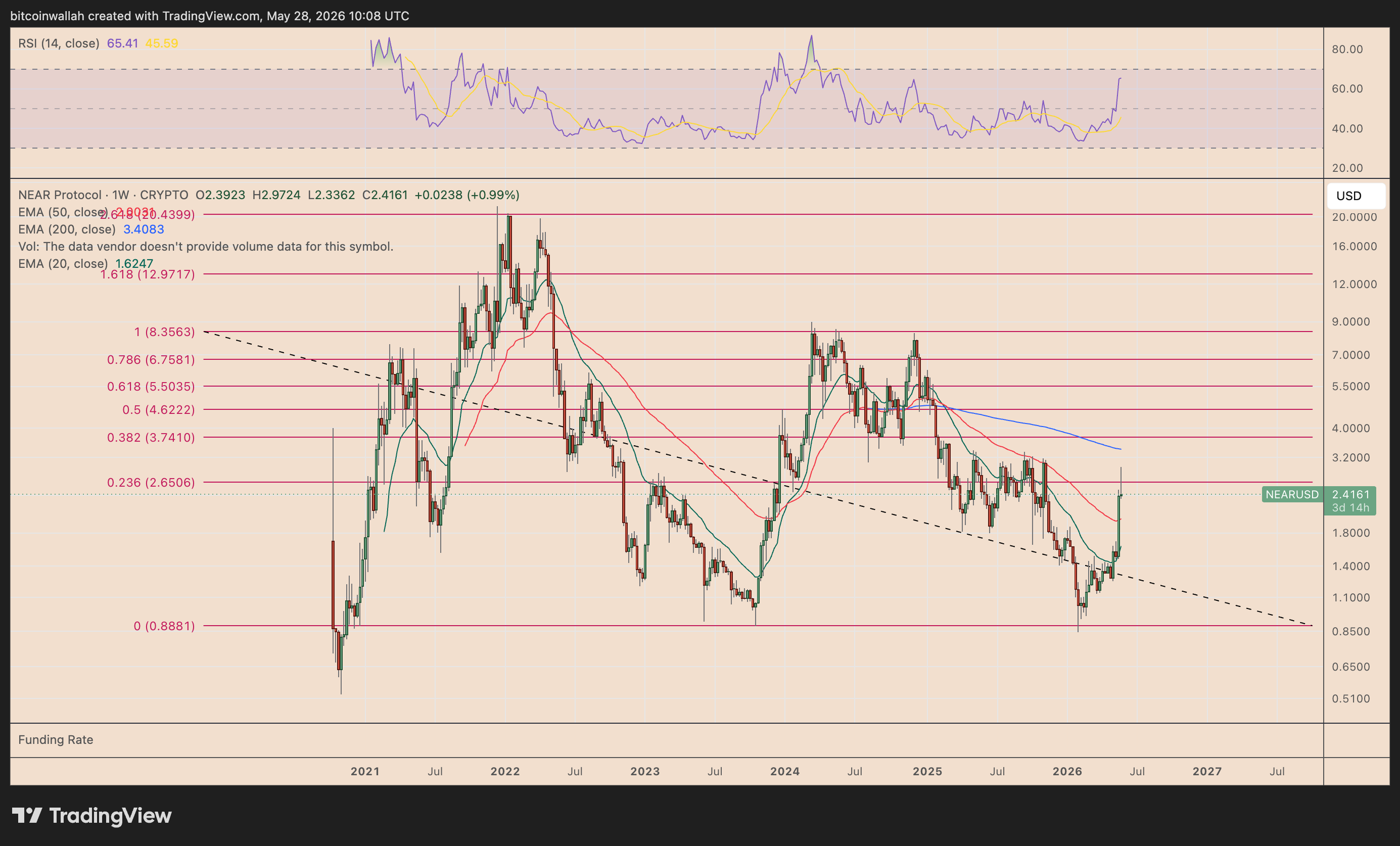
The downside risk is amplified because the Fib resistance aligns with weakening momentum after NEAR’s sharp rebound from sub-$1 levels. Unless bulls reclaim $2.65 decisively, the recovery may cool before any larger trend reversal develops.