Fed Holds but Three Dissents Keep the Hawks Alive
The Fed held rates at 3.5% to 3.75% and the immediate event risk came off the table, but Kevin Warsh did not give the market permission to relax. Three officials voted to hike. The statement kept inflation language elevated. And Warsh spent the press conference refusing to offer forward guidance while making clear the committee has no tolerance for missing its 2% target.
The FOMC vote was 9-3. Cleveland’s Beth Hammack, Dallas’s Lorie Logan and Minneapolis’s Neel Kashkari preferred a quarter-point increase. The headline was a hold. The vote was the message.

The Hold Removed the Shock, Not the Risk
The market came in pricing a meaningful chance of a hike and the Fed took that off. Buyers who were positioned for a surprise stepped in. But three dissents for tighter policy make it impossible to call this dovish, and Warsh made sure nobody tried.
He said the Fed has no tolerance for an inflation target above 2%. He described materially higher nominal and real yields across the Treasury curve as a notable change since June. He declined to offer any policy guidance beyond saying the committee would act when necessary and appropriate.
That leaves September wide open. The Fed gets two more inflation reports and two more jobs reports before that meeting. The three dissents mean the burden is on incoming data to prove the hike is not needed, not on the Fed to prove that it is.
The market wanted clarity. Warsh gave it less forward guidance instead.
Gold Price Forecast
Every new Gold analysis as it publishes, today's technical signal and key levels, live price — on one page.
See all Gold forecastsStocks Snap Back but the Dow Stays Down
The Nasdaq Composite pushed up 0.4% during the press conference after being down nearly 1.6% at its low. The S&P 500 turned positive by 0.1% after falling as much as 1.2%. The Dow stayed down 575 points, or 1.1%.
Technology caught the bid fastest because the hold removed the immediate rate shock from a sector already dealing with the semiconductor break and AI spending doubts. The Dow had a different problem. Crude near $90 after President Trump’s threat to respond hard to Iran’s missile attack kept the industrial average under pressure through the inflation channel. The rotation trade that was carrying the Dow earlier in the week could not work with oil running that hot.
The Fed did not create the energy problem. It inherited it. But Warsh’s inflation message means the stock market cannot price a friendlier rate path while crude is heading the wrong direction.
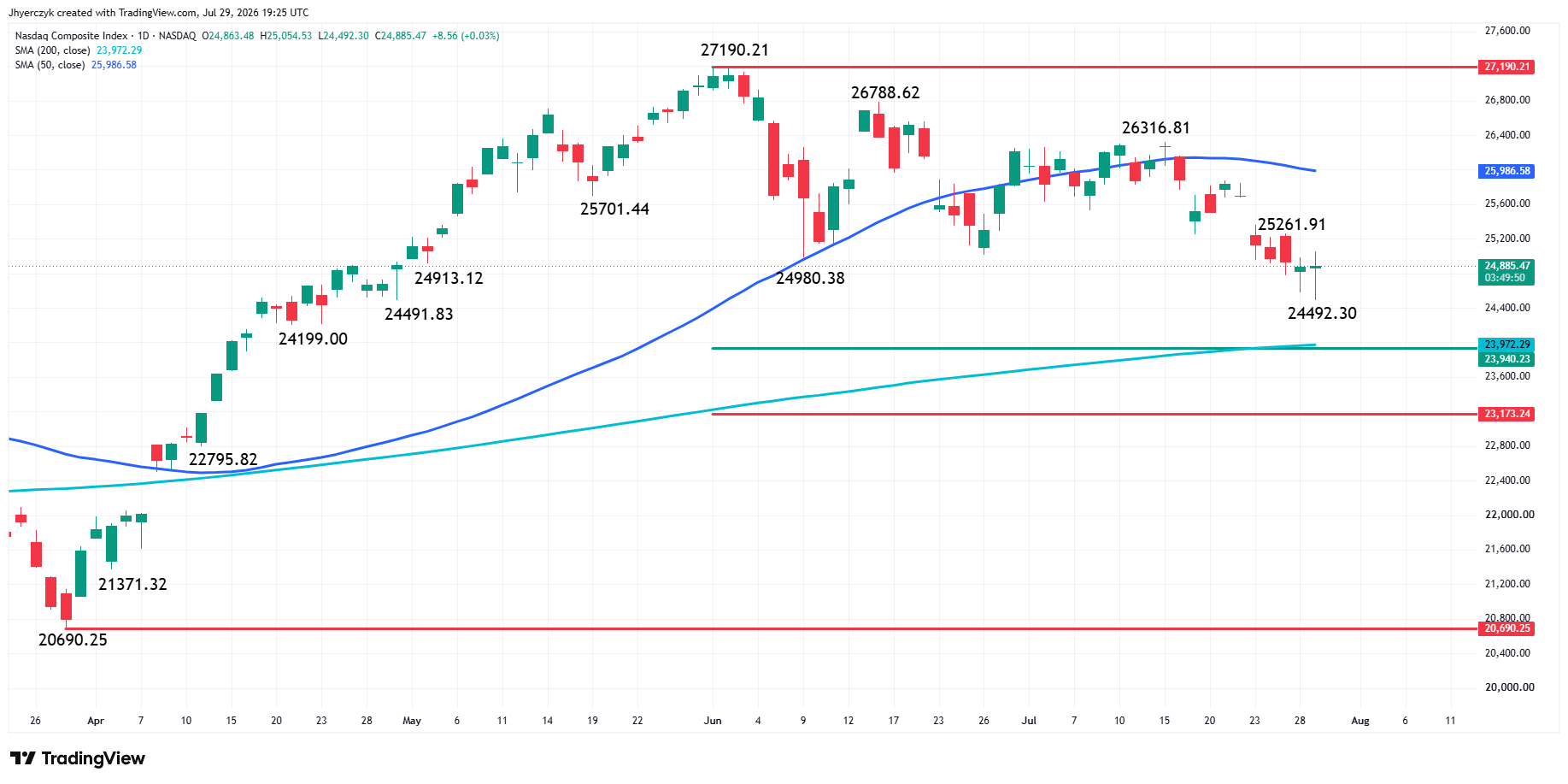
Technically, the tech-weighted Nasdaq Composite Index (IXIC) snapped back from an earlier test of its lowest level since April 30 at 24492.30. The subsequent rebound has put the index in a position to post a potentially bullish closing price reversal bottom. If confirmed, it could trigger the start of a 2 to 3 day counter-trend short-covering rally.
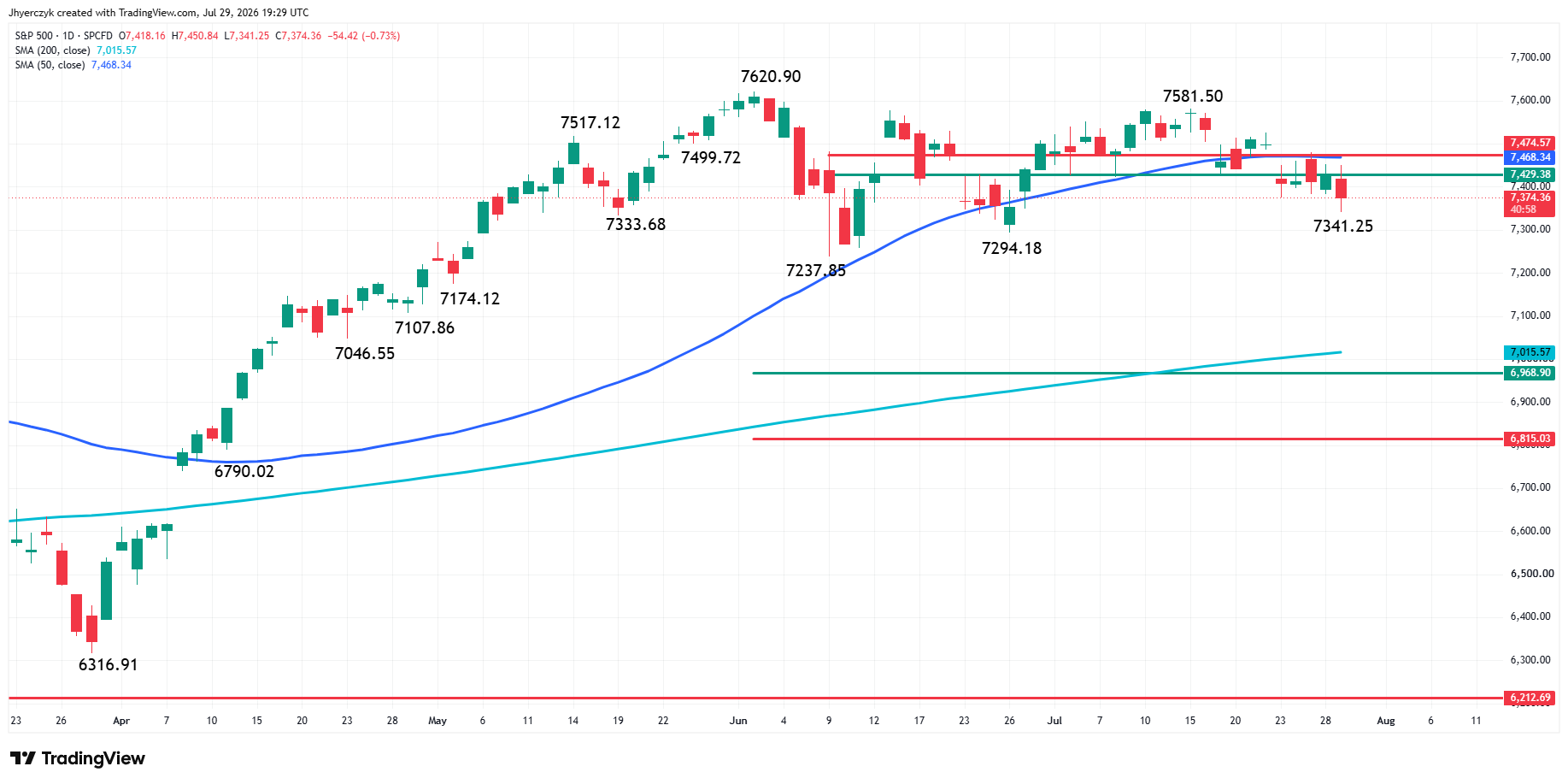
The benchmark S&P 500 Index is trying to recover from a steep loss but having trouble turning higher for the session. The earlier low at 7341.25 held above the previous main bottom at 7294.18, but the index is still facing headwinds at the short-term retracement zone at 7429.38 to 7474.57. The index remains under the 50-day moving average at 7468.39 so we could be just looking at an intraday rally in a weak market. Buyers would have to overtake the 50-day MA to shift momentum to the upside in my opinion.
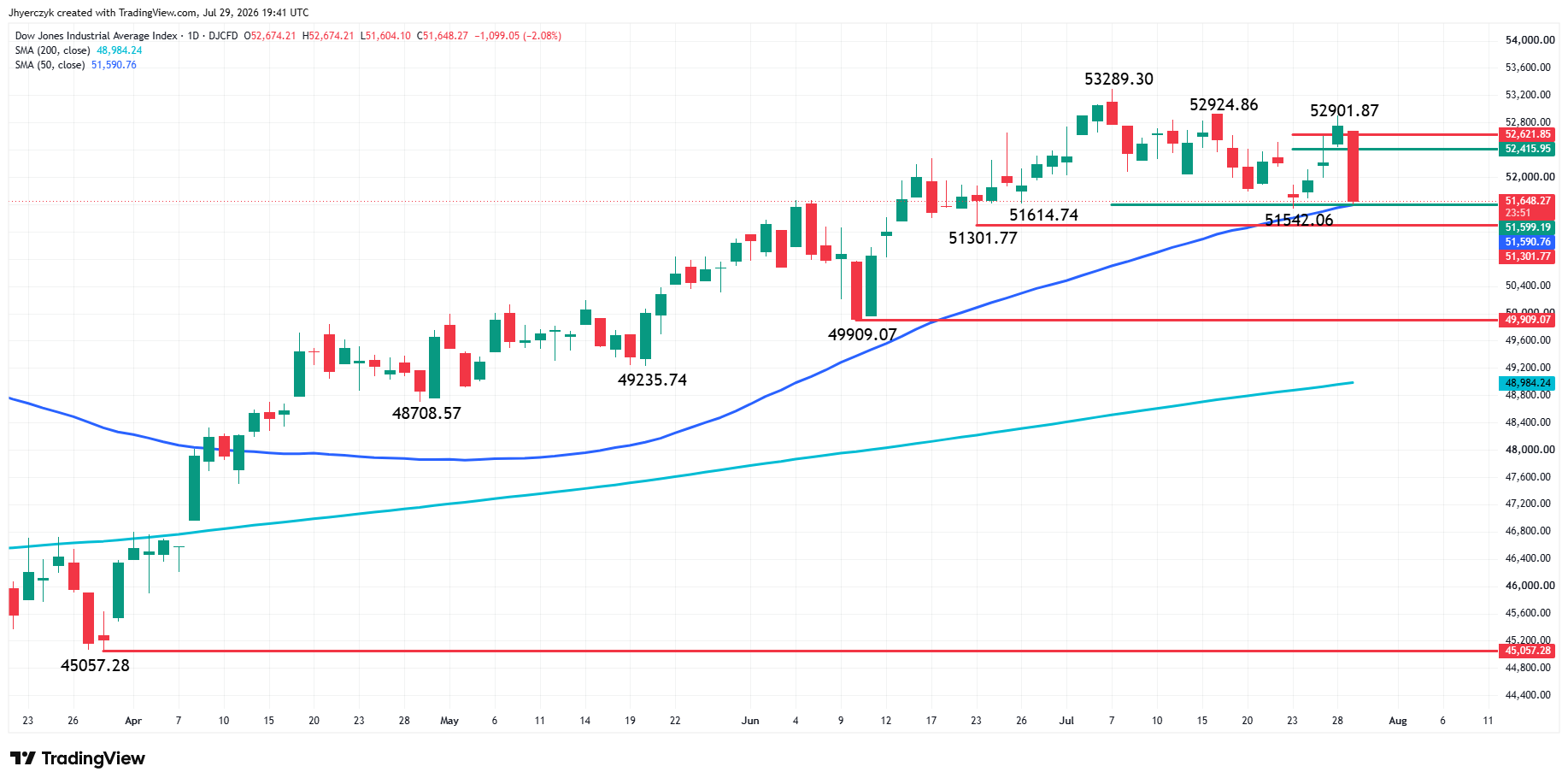
The blue chip Dow remains the weakest of the three majors. It is now down over 1000 points and the selling appears to be getting stronger into the close.
The current intraday low at 51711.38 has put the Dow within striking distance of the short-term retracement zone at 51599.19 to 51301.77 and the 50-day moving average at 51592.37.
Investors face a potential plunge under the swing bottom at 51301.77 with 49909.07 the next likely downside target.
Dollar and Yields Back Off After the Hold
Treasury yields and the dollar both eased on the decision, confirming the market had carried more immediate hike risk than the result delivered. The two-year yield fell to 4.281% from 4.316% before the announcement. The 10-year slipped to 4.627% from 4.637%. The WSJ Dollar Index dropped 0.2% after trading flat earlier in the session.
Traders took off positions built ahead of the meeting. That is not the same thing as abandoning September. The three dissents keep the tightening bias intact and Warsh’s refusal to forecast keeps the market from getting comfortable with any timetable. The next reaction depends on whether inflation and labor data give the committee cover to move or a reason to wait.
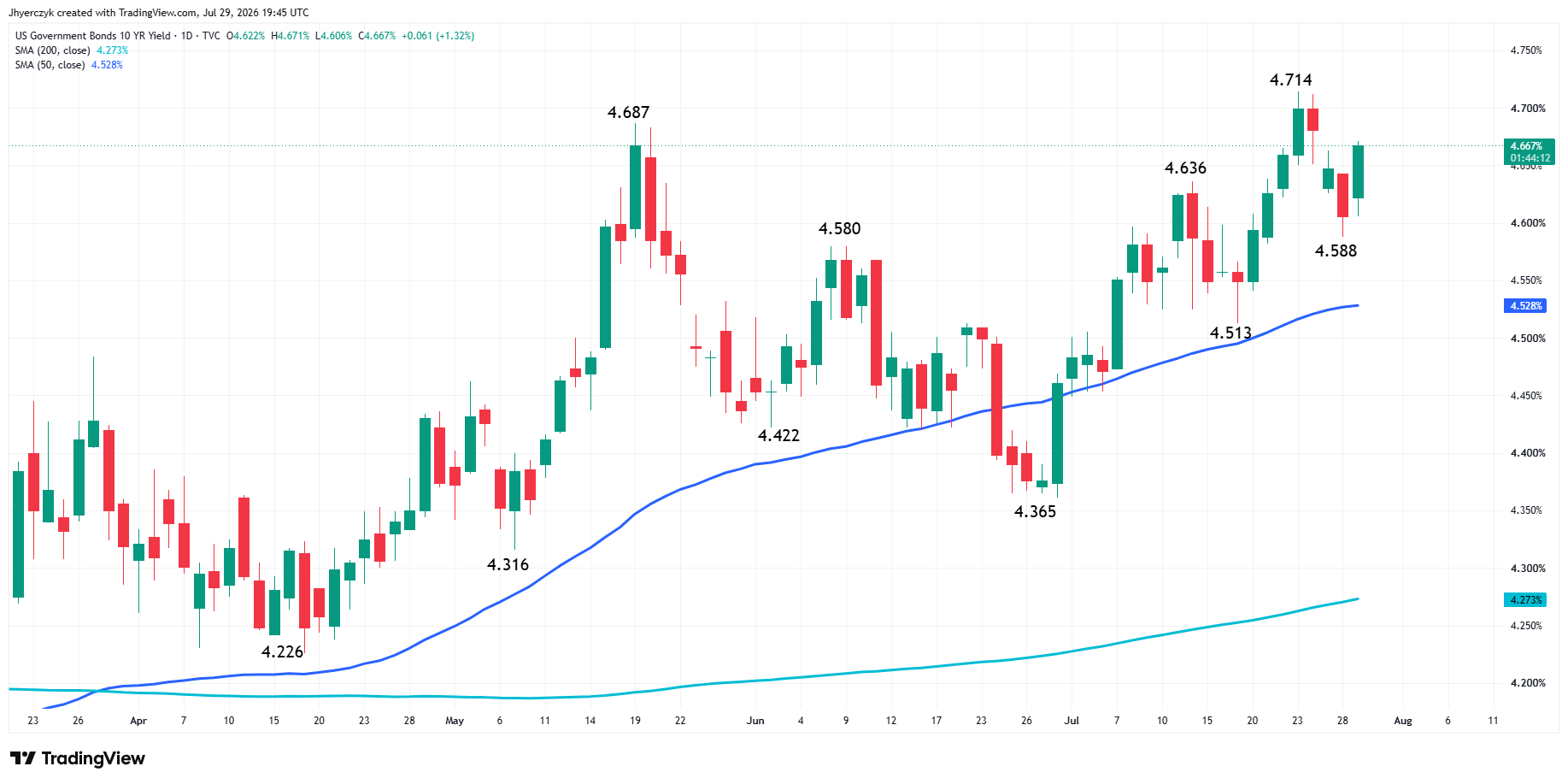
10-year U.S. Treasury bond yields are still advancing into the close, but still well off the recent swing top at 4.714%. Today’s price action has made 4.588% a new minor bottom.
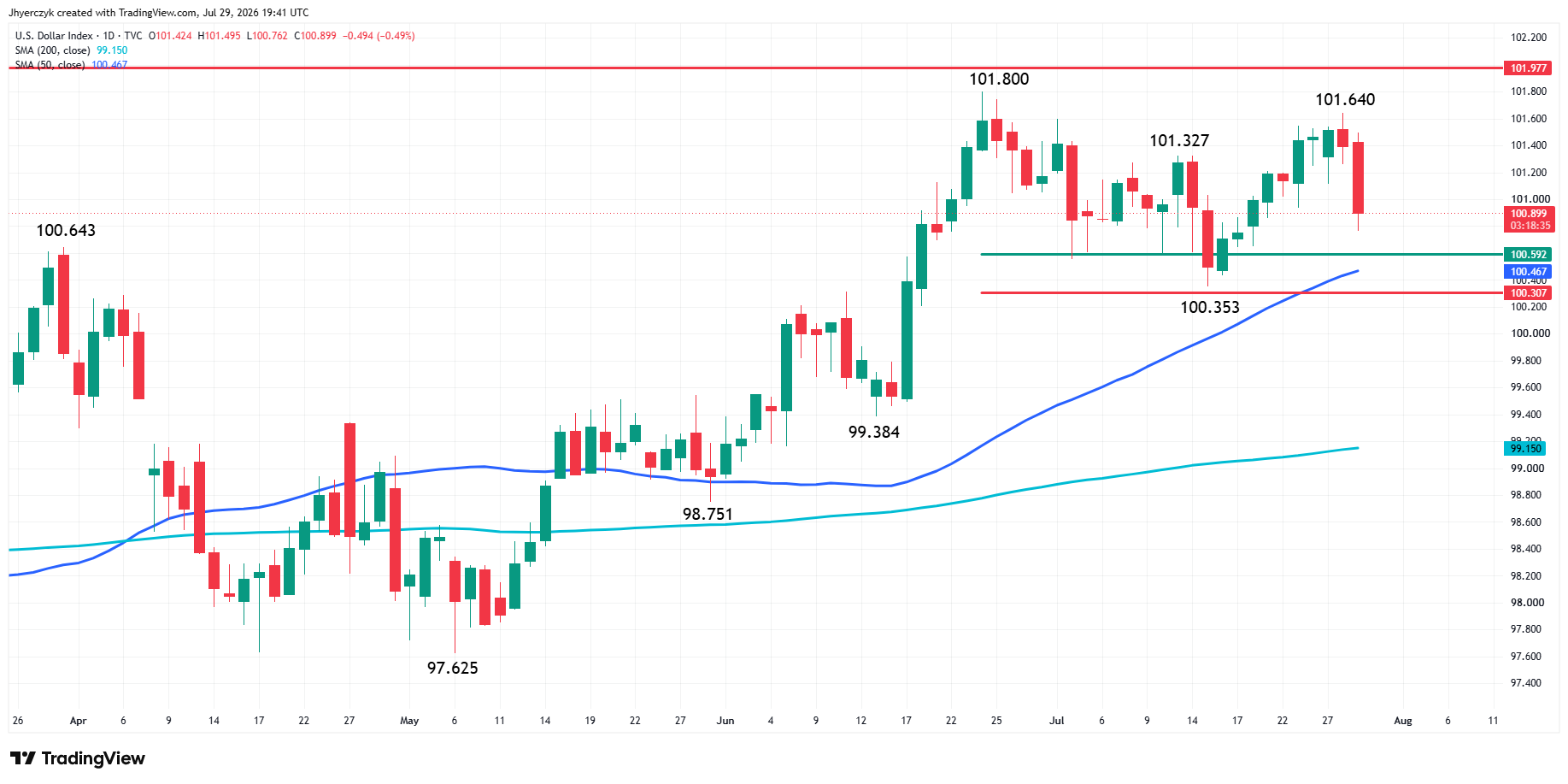
The U.S. Dollar Index (DXY) is tanking into the close with enough momentum for a near-term test of the retracement zone at 100.592 to 100.307. Inside this zone is the 50-day moving average at 100.466 and the main swing bottom at 100.353. Taking out the lower end of the range at 100.307 will mean that four potential support layers have failed. This could lead to an even steeper decline with the swing bottom at 99.384 and the 200-day moving average at 99.149 the next likely targets.
Gold and Silver Whipsaw on Competing Signals
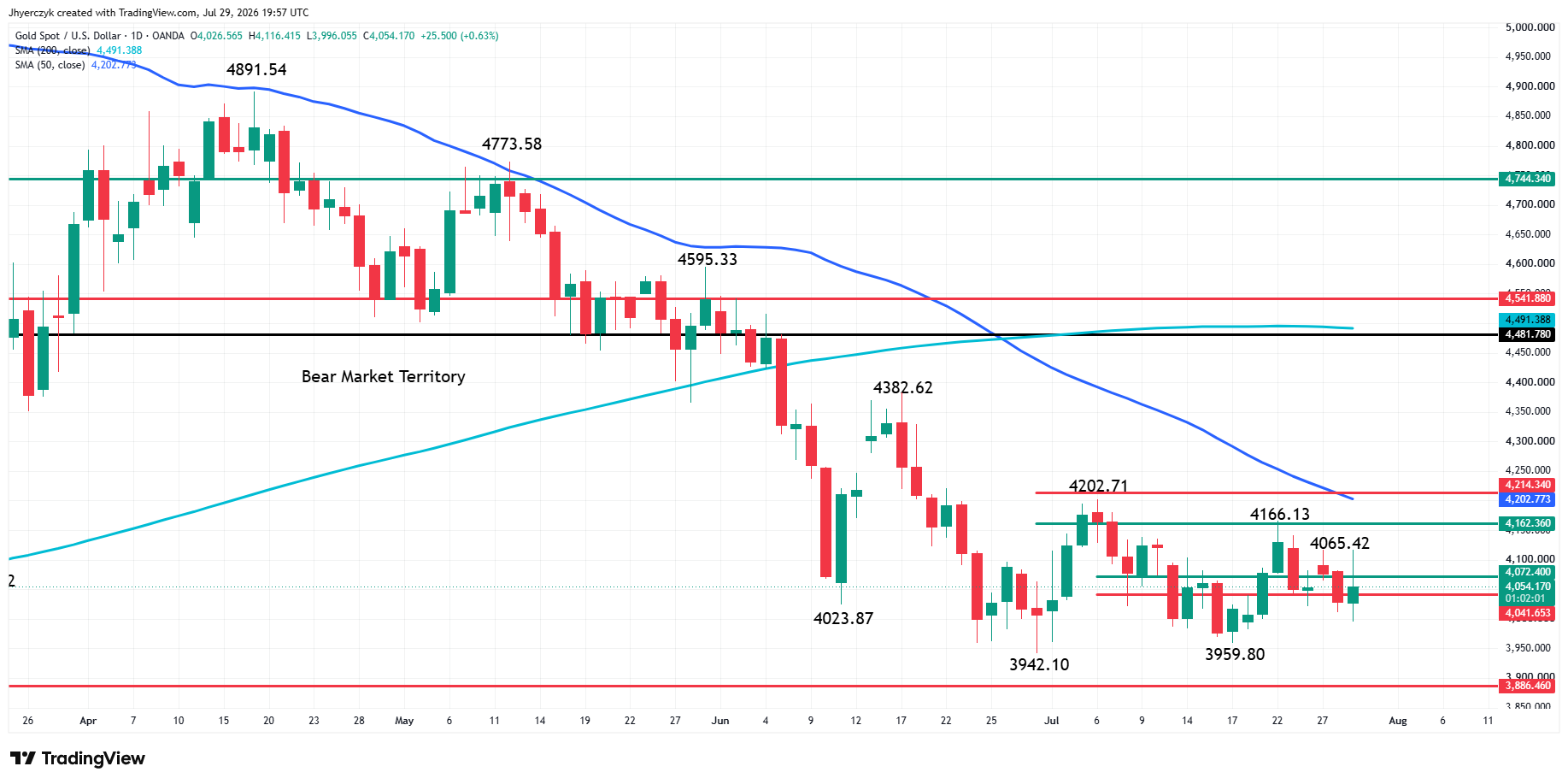
Spot gold (XAUUSD) is whipsawing after the FOMC decision and Warsh press conference. The market continues to straddle a key retracement zone at $4072.40 to $4041.75. Trader reaction to this area will likely determine its near-term direction.
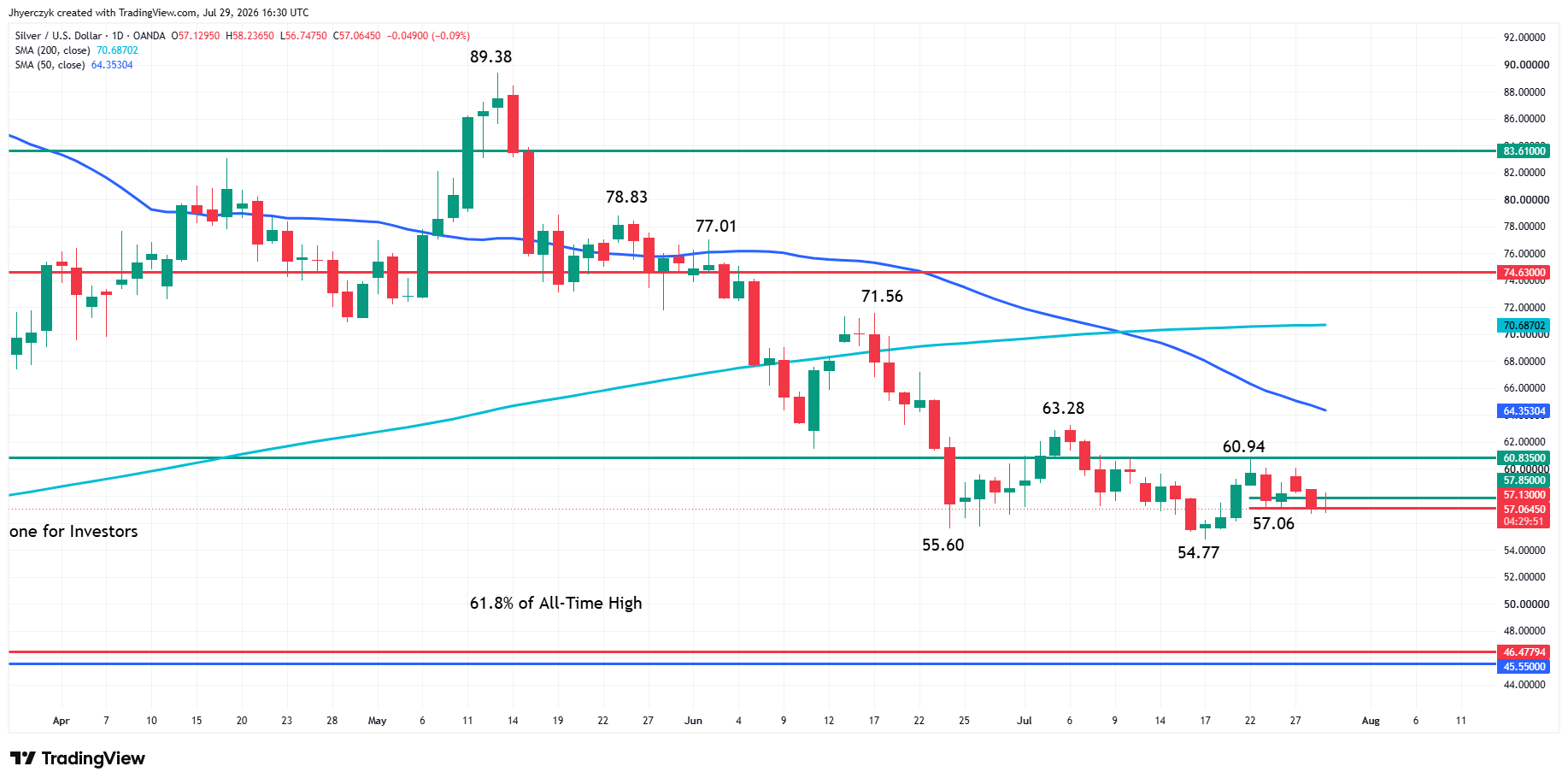
Spot silver (XAGUSD) is producing similar price action with the key area the retracement zone at $57.85 to $57.13. Like gold, trader reaction to this area will likely determine the near-term direction of silver.
The later rise in Treasury yields and the drop in the U.S. Dollar are likely offsetting each other, leading to the volatile reaction in XAUUSD and XAGUSD.
Every Data Point Now Carries More Weight
There was no dot plot and no projections to anchor expectations. The statement stayed short. Warsh made clear that the committee wants markets to react to data rather than wait for the Fed to signal each move in advance. That is a different regime than what traders had been operating under, and it means every inflation report, jobs number and oil headline between now and September carries more weight because there is no guidance cushion between the data and the next decision.
What to Watch
Wednesday’s relief rally came from what the Fed did not do, not from what it said. Three dissents, no forward guidance and an inflation message that stayed firm is not the combination that lets the market stop worrying about September. Thursday’s GDP and PCE data is the first real test of whether the hold survives contact with the numbers. The dissenters already have their argument on the record. A firm PCE print hands them the data to back it up, and the rate trade goes right back to where it was before the decision. The market is not going to wait for September to reprice that risk.
The Dow’s 1000-point drop says the oil and rate trade are working together against the broader market. The Nasdaq found a potential reversal pattern off the lows but needs to prove it can hold. The dollar is falling toward its 50-day with real momentum, and if that level breaks, the unwind in long positioning accelerates. Gold and silver are caught between falling dollar support and rising yields, and the direction out of that stalemate depends on which signal Thursday’s data confirms.
More Information in our Economic Calendar.