
For years, Strategy—formerly MicroStrategy—became synonymous with one simple investment philosophy: buy Bitcoin and never sell it. Under the leadership of Executive Chairman Michael Saylor, the firm transitioned from a software provider into the top corporate Bitcoin holder globally, aggressively using debt and equity markets to accumulate cryptocurrency.
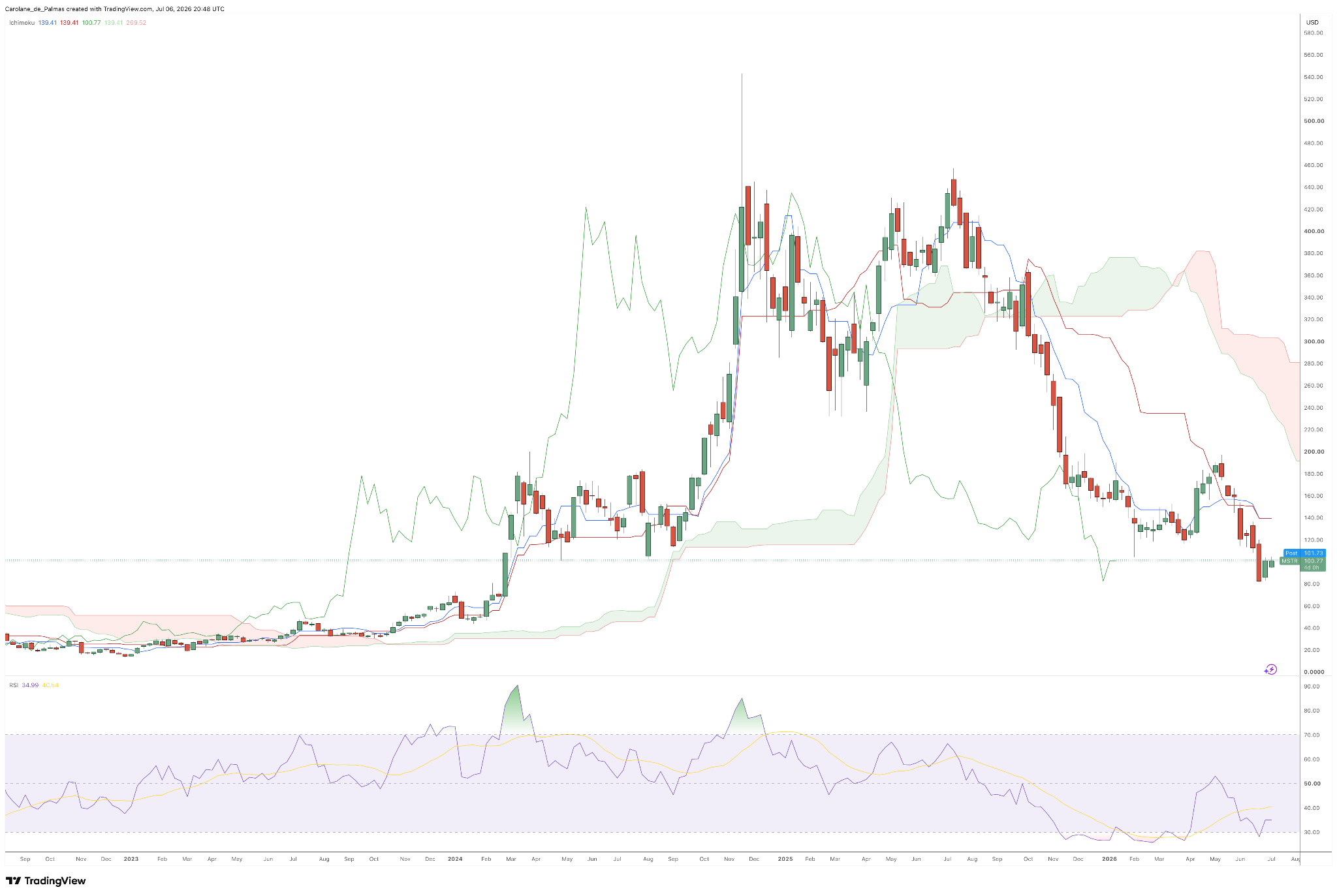
That strategy turned Strategy shares into one of Wall Street’s most popular Bitcoin proxies, often outperforming the cryptocurrency during bull markets. But after a prolonged decline in Bitcoin prices and mounting pressure from preferred dividend obligations, the company has begun adopting a far more flexible approach.
Its latest capital management framework marks one of the biggest strategic shifts since Strategy first embraced Bitcoin in 2020. Rather than simply accumulating more BTC, management is now balancing liquidity, shareholder returns and capital structure while still maintaining long-term exposure to the world’s largest cryptocurrency.
For traders and investors, understanding this evolution is becoming just as important as following Bitcoin itself.

Strategy: From Software Company to the World’s Largest Bitcoin Treasury
Strategy’s transformation has been one of the most remarkable corporate pivots in recent market history. Founded in 1989 as MicroStrategy, the company originally specialised in enterprise analytics and business intelligence software. Although its software business remains profitable today, it has gradually become secondary to what is now its defining business model: holding Bitcoin on behalf of shareholders.
The shift began in 2020 when founder Michael Saylor invested the company’s excess cash into Bitcoin as protection against inflation and currency debasement. Since then, Strategy has repeatedly issued common shares, convertible bonds and preferred securities to finance additional Bitcoin purchases. This aggressive approach has allowed the company to build the largest corporate Bitcoin treasury in the world, holding today more than 840,000 BTC or 4% of total BTC supply worth tens of billions of dollars.
Rather than valuing Strategy solely on its software operations, investors increasingly treat the company as a leveraged Bitcoin investment. During periods of rising cryptocurrency prices, Strategy shares have often delivered larger percentage gains than Bitcoin itself, thanks to financial leverage and investor enthusiasm.
To reinforce this identity, the company officially rebranded from MicroStrategy to Strategy, reflecting its ambition to become what management calls the world’s first Bitcoin Treasury Company.
However, the same leverage that amplified returns during the bull market also increased financial pressure once Bitcoin prices weakened.
Why Strategy Is Changing Its Bitcoin Playbook
Michael Saylor spent years insisting that Strategy’s Bitcoin holdings were strictly a long-term play, firmly stating they would never sell. That narrative helped build investor confidence and supported the company’s ability to continually raise capital for additional purchases. Today, however, market conditions have forced a more pragmatic approach.
Strategy recently unveiled a comprehensive Digital Credit Capital Framework designed to strengthen its balance sheet while preserving long-term Bitcoin exposure. Rather than relying exclusively on issuing new shares to raise cash, management is now actively managing its capital structure.
The company has established a dedicated USD reserve exceeding $2.5 billion to cover preferred dividends and debt interest payments, providing well over a year of liquidity without requiring immediate financing.
Strategy has also authorised up to $1 billion of preferred share buybacks alongside another $1 billion common share repurchase programme when management believes the stock trades below intrinsic value.
Perhaps the biggest change is the introduction of a Bitcoin monetisation programme.
Instead of maintaining a strict “never sell” philosophy, Strategy can now sell portions of its Bitcoin holdings under specific circumstances, including replenishing cash reserves, funding preferred dividend payments, reducing debt obligations or financing share buybacks.
Management insists these sales will remain disciplined and represent capital management rather than a reversal of its long-term conviction in Bitcoin.
Chief Executive Officer Phong Le described the new philosophy as a transition from one-way capital issuance to active capital management. In other words, the company intends to issue securities when valuations are attractive and repurchase them when they become undervalued.
For investors, this marks a significant evolution. Strategy is no longer simply accumulating Bitcoin regardless of market conditions: it is actively managing its financial resources to support shareholder value.
What Strategy’s New Approach Could Mean for Traders and Investors
The biggest question facing investors is whether Strategy can continue acting as a leveraged Bitcoin investment while becoming a more financially resilient company.
The company reported an unrealised multi-billion-dollar loss on its Bitcoin holdings after cryptocurrency prices fell below its average acquisition cost. At the same time, Strategy sold several thousand Bitcoin coins at prices below its average purchase price to fund preferred dividend payments and strengthen its cash reserves.
Although these sales represented only a tiny fraction of its total holdings, they broke one of the market’s long-standing assumptions—that Strategy would never sell Bitcoin under any circumstances. And this shift has broader implications.
First, Strategy may become less predictable as a constant buyer of Bitcoin. During previous bull markets, investors viewed the company as a reliable source of ongoing institutional demand. Future purchases are now likely to depend on market conditions, financing costs and valuation.
Second, investors are paying closer attention to Strategy’s valuation relative to its Bitcoin holdings. Historically, the company’s shares traded at a significant premium because investors expected management to continuously issue stock and buy more Bitcoin. As that premium narrows, buybacks may become more attractive than additional BTC purchases.
Finally, Strategy’s decisions could increasingly influence both its own share price and Bitcoin itself. Because the company controls roughly 4% of Bitcoin’s supply, any significant buying or selling activity has the potential to affect market sentiment.
Despite these changes, management continues to describe Bitcoin as its primary treasury reserve asset and remains committed to long-term ownership. Rather than abandoning its Bitcoin strategy, Strategy appears to be entering a more mature phase in which liquidity management, balance-sheet strength and shareholder returns carry greater weight alongside cryptocurrency accumulation.
For traders, this means Strategy shares are evolving beyond a simple Bitcoin proxy. Future performance will increasingly depend not only on Bitcoin’s direction but also on management’s capital allocation decisions, financing strategy and ability to balance financial discipline with long-term digital asset exposure.
Sources: Strategy, Reuters, CoinDesk, Investopedia, Barron’s, The Wall Street Journal, Yahoo Finance