



Currencies Reflect Divergent Monetary Policies and Economic Fundamentals
Dollar, euro and pound rates are still subject to conflicting central bank policies and economic forces as of July 7. On the one hand, the U.S. Federal Reserve’s wait-and-see policy in the face of ongoing core inflation is sustaining dollar rates on the basis of expectations for a relatively tight rate setting in the foreseeable future; on the other hand, there is domestic demand and the status quo for dollars as reserve currency.
A mix of divergent fiscal settings and disparate inflation pressures in various parts of the euro zone and the European Central Bank’s push toward price stability characterize the euro. Policy pass-through in the area remains contingent on a range of national policies, keeping rates sensitive to growth and wage data.
As with other currencies, the Bank of England is considering both services inflation and softness in economic growth, and its policy path is a function of these variables, alongside UK fiscal policy and labor market trends, and relative policy settings for other central banks, which is what largely drives the cross rates with the dollar and euro.
Divergent inflation paths, fiscal settings and growth resilience in the three economies create two-sided risks, with trade and capital flows further driving currency differentiation, as markets seek to discern which central bank will best provide stability and growth.

DXY Holds $100.93 – Fibonacci 0.618 Retest on 1D
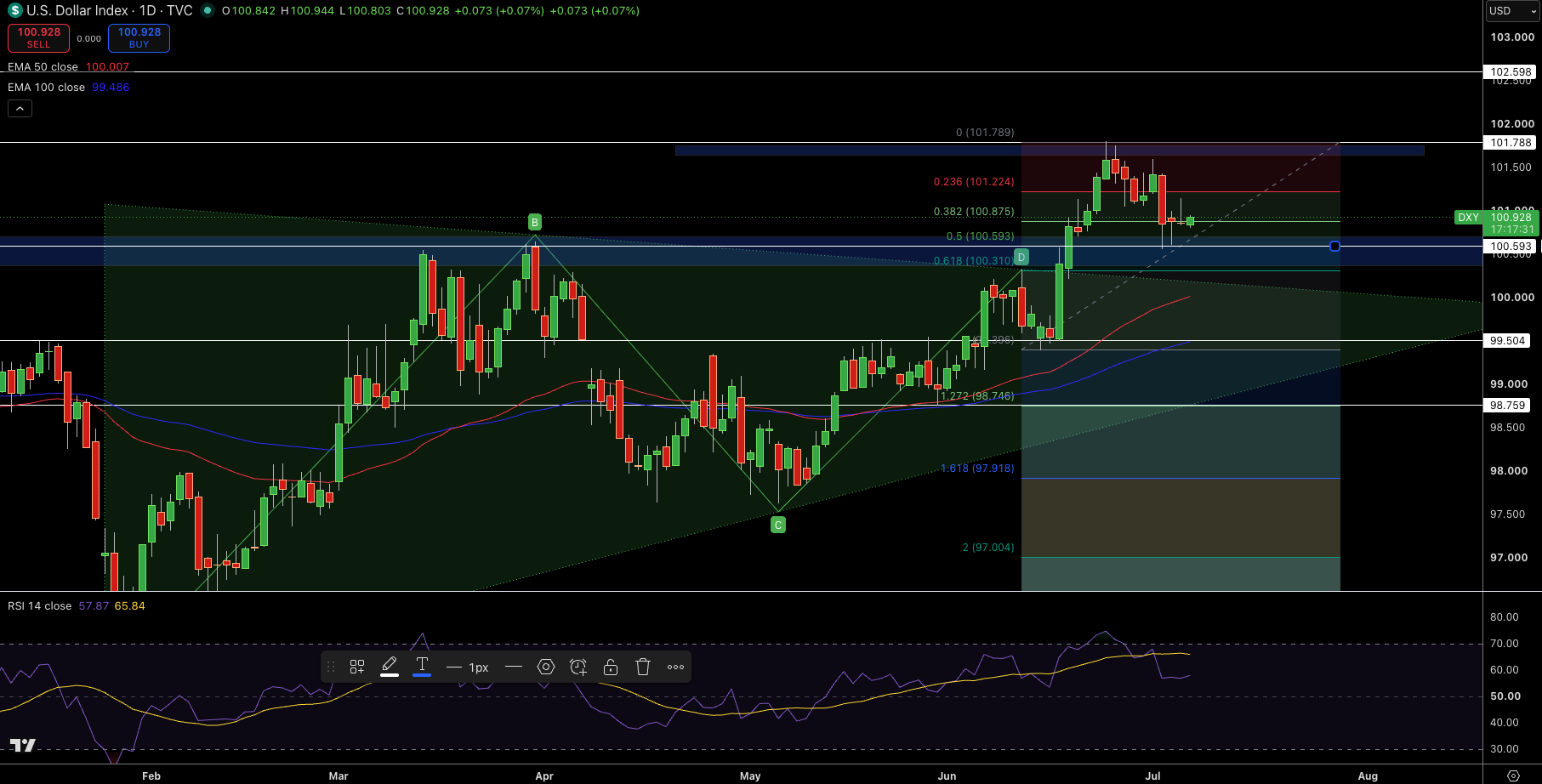
DXY is sitting at $100.93 on the daily time frame. Following a breakout from the $97.67 low, buyers retested the 0.618 Fibonacci retracement zone around $100.31, creating green and red mixed candles. The asset continues to make higher highs, suggesting the upside remains intact above the $100.31 price level and its ascending white trendline.
With RSI hovering around 58, the DXY maintains a neutral-to-bullish bias. The $100.31 zone now serves as a breakout pivot point, per the volume profile, while the next 103 Fibonacci extension sits near $103.09 within the next couple of weeks. The market continues trading in an ascending channel and the higher highs/lows structure keeps the trend bullish.
Trade Idea: Buy at $100.93 with a target of $103.09 and a stop loss under $100.31.
GBP/USD Price Forecast
Every new GBP/USD analysis as it publishes, today's technical signal and key levels, live price — on one page.
See all GBP/USD forecastsGBP/USD Holds $1.3380 – White Descending Trendline Test on 4h
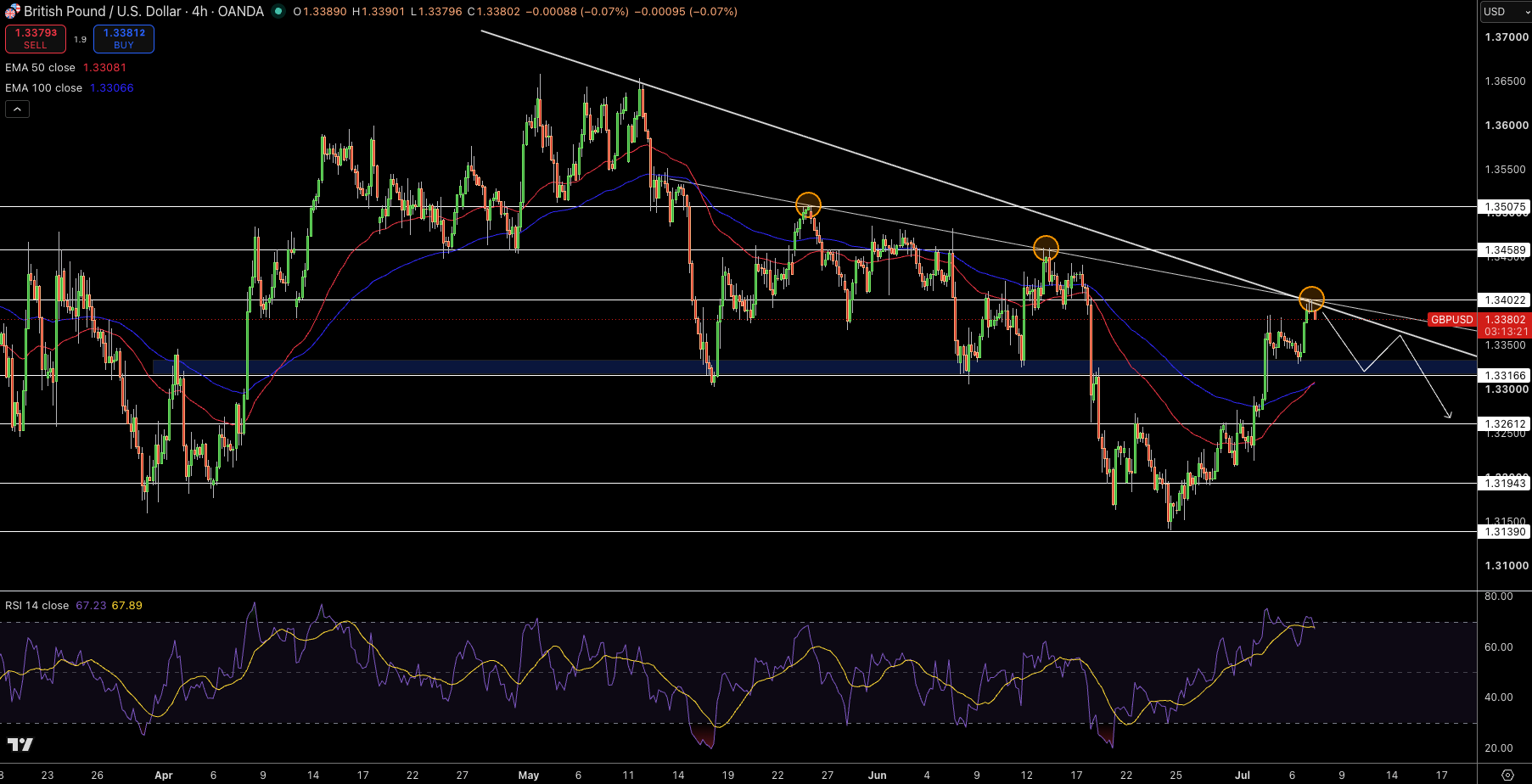
GBP/USD is trading at $1.3380 within the 4h timeframe. After getting rejected off the red moving average around $1.337, buyers tested the descending white trendline around $1.3380 and formed green and red mixed candles. The price creates bullish rejection wicks and continues to keep higher highs within the chart. Currently, RSI sits around 67 and is still neutral on the 4h timeframe.
The $1.331 to $1.338 zones are a pivot area, per the volume profile, with the next zone of support around $1.325 to $1.331. GBP/USD still trades in a bullish trend and is still neutral and above its trendline. Higher highs and lows are still in place, and the trendline continues to hold the price higher within the trading range.
Trade Idea: Buy at $1.3380 with a target of $1.345 and a stop loss under $1.325.
EUR/USD Holds $1.1430 – EMA 50 Defense on 4h
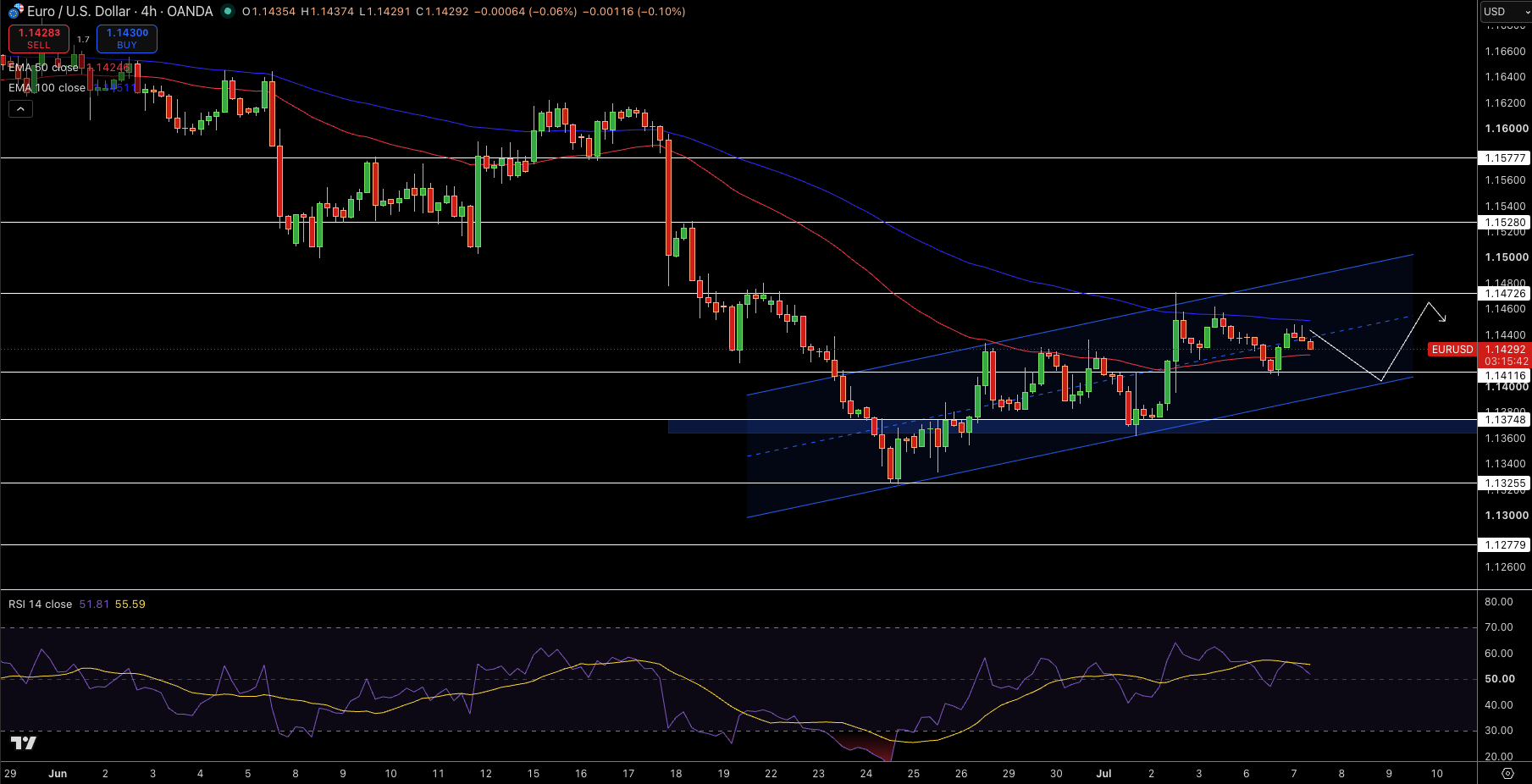
EUR/USD is trading at $1.1430 within the 4h timeframe. After getting rejected off the red moving average around $1.162, buyers retested the 50 EMA around $1.1419 and formed green and red mixed candles. The price creates bullish wicks and continues to keep higher lows within the chart.
Currently, RSI sits around 52 and is still neutral on the 4h timeframe. The $1.140 to $1.150 zones are a pivot area, per the volume profile, with the next zone of resistance around $1.155 to $1.162. EUR/USD still trades in a bullish trend and remains neutral and above its 50 EMA. Higher highs and lows are still in place, and the 50 EMA continues to hold the price higher in the near-term.
Trade Idea: Buy at $1.1430 with a target of $1.155 and a stop loss under $1.140.


