
Oil prices rose slightly on Tuesday, but the rebound was weak. Brent oil settled at around $73.30 and WTI oil settled at $69.20. The market has returned to levels that were seen before the Iran war. That indicates that traders are no longer paying a big geopolitical premium. While the immediate risk has eased in the Middle East, the market is still cautious as the U.S.-Iran relations can shift quickly.
Now the supply outlook is gaining more importance for oil prices. In June, the UAE raised its crude production above 3.8 million bpd, the highest since April 2020. OPEC+ also agreed to ramp up output targets from August, up from June and July increases. These supply gains limit the upside potential for oil prices as a potential influx of crude could come at a time when oil demand growth is not guaranteed.
Now, the market demand will determine the next big move in oil prices. Traders will be monitoring China closely as a slowdown in demand from China could take a toll on prices again. Saudi Arabia also lowered its selling price for Arab Light crude to Asia in August. This indicates growing competition among buyers in Asia. This price reduction also indicates that the demand environment is less favorable. That means oil prices may struggle to pick up unless the real demand rises and absorbs the supply.

WTI Oil Forecast: $66 Support Holds Key for Next Move
The daily chart for WTI oil shows that the price has hit the strong support of $66. The price is now consolidating above this level to find the next move. Overall, the $66 to $74 area remains a strong support band, whereby the next move will likely depend on the breakout of these levels. A break below $66 will continue the momentum towards the $60 to $55 area.
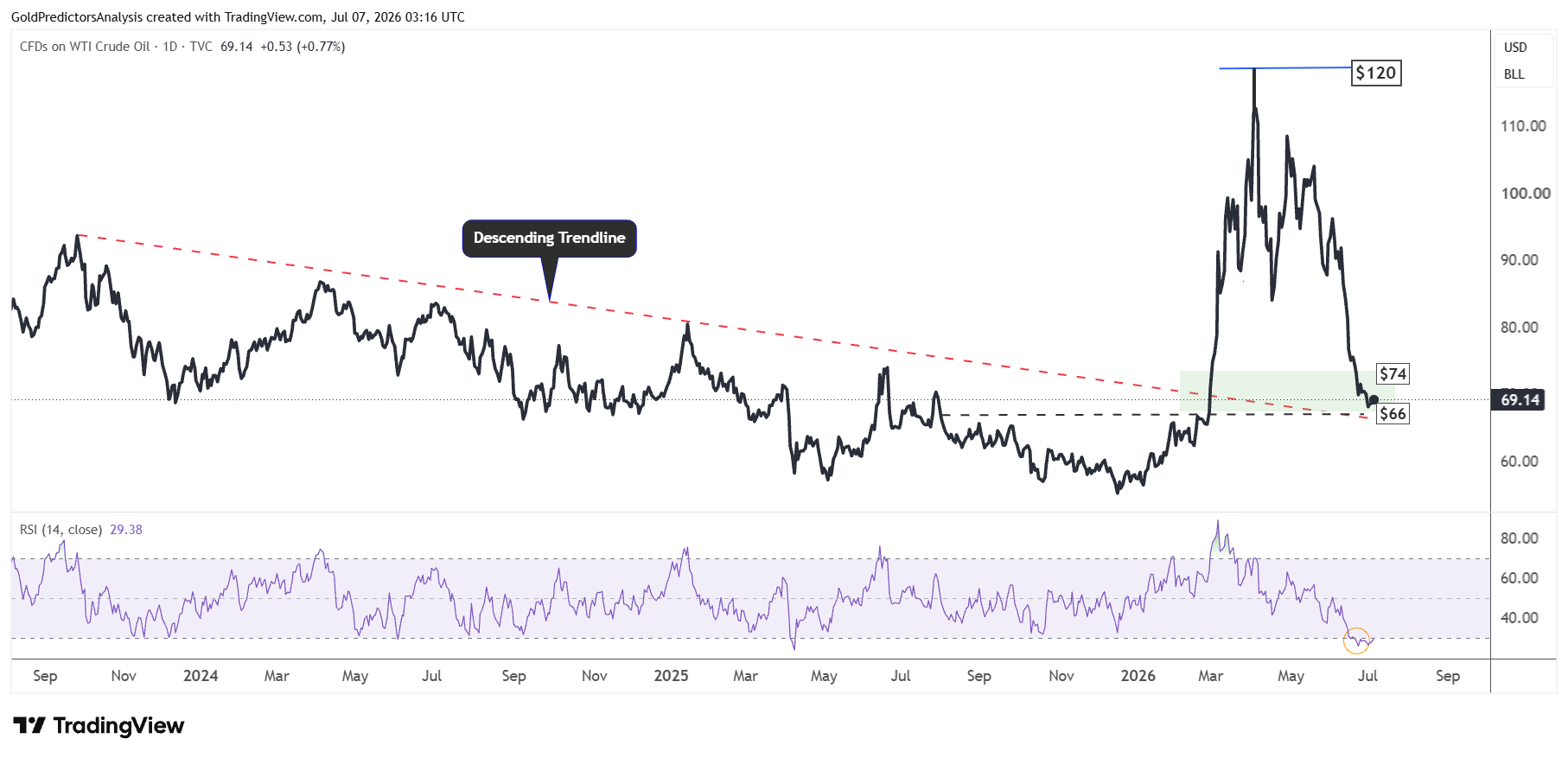
However, the RSI indicator shows extremely oversold conditions, which indicates a rebound from current levels in the WTI market.
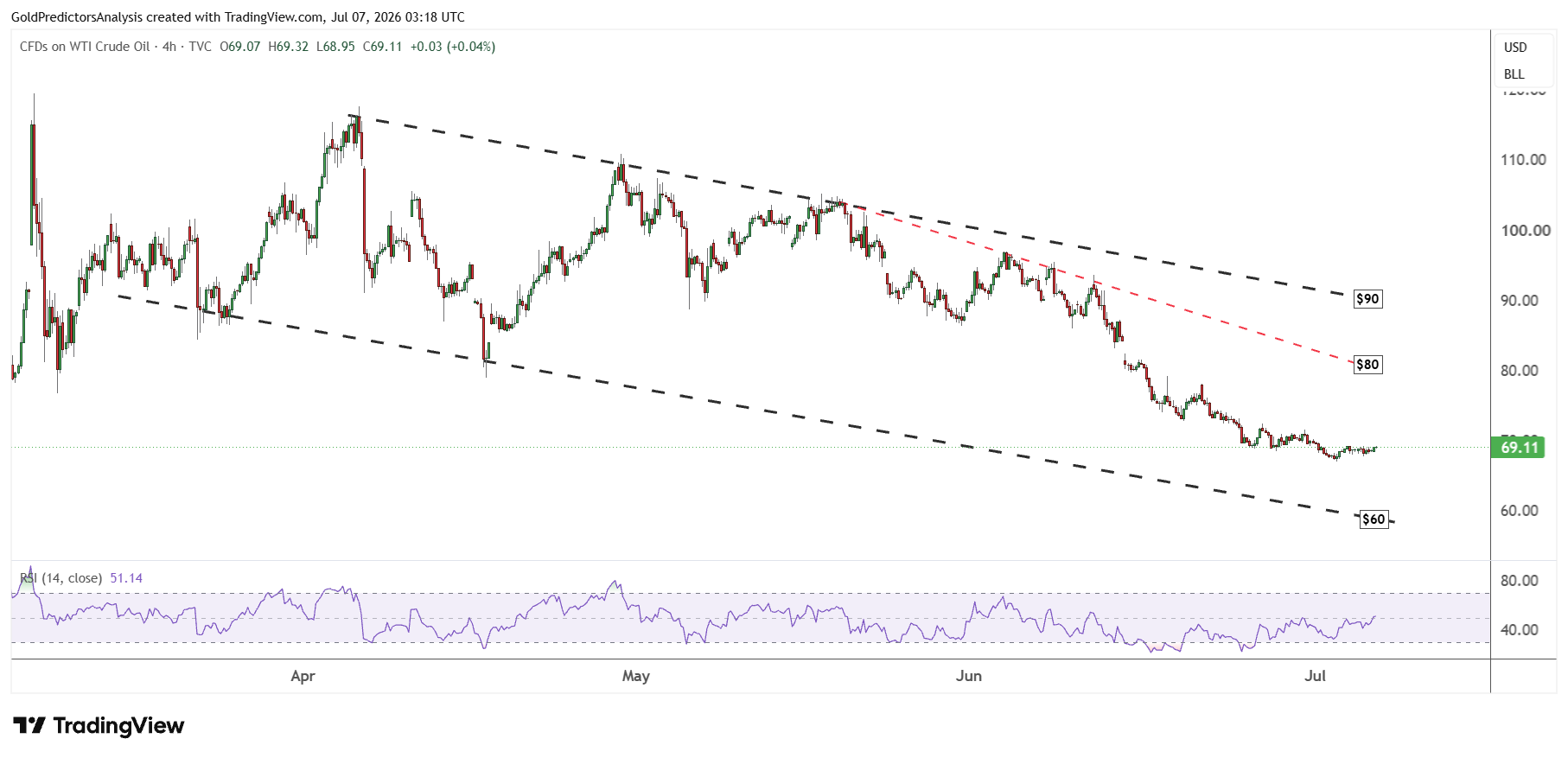
The 4-hour chart for WTI oil also shows that the price has been consolidating around this level during the past two weeks. The immediate resistance remains the $80 area, which is defined by the descending trend line.
A break above $80 will push the price above the trend line towards the $90 area. This resistance is defined by the descending channel pattern.
On the other hand, a break below $67 will push WTI towards the $60 area at the lower end of the descending channel pattern.
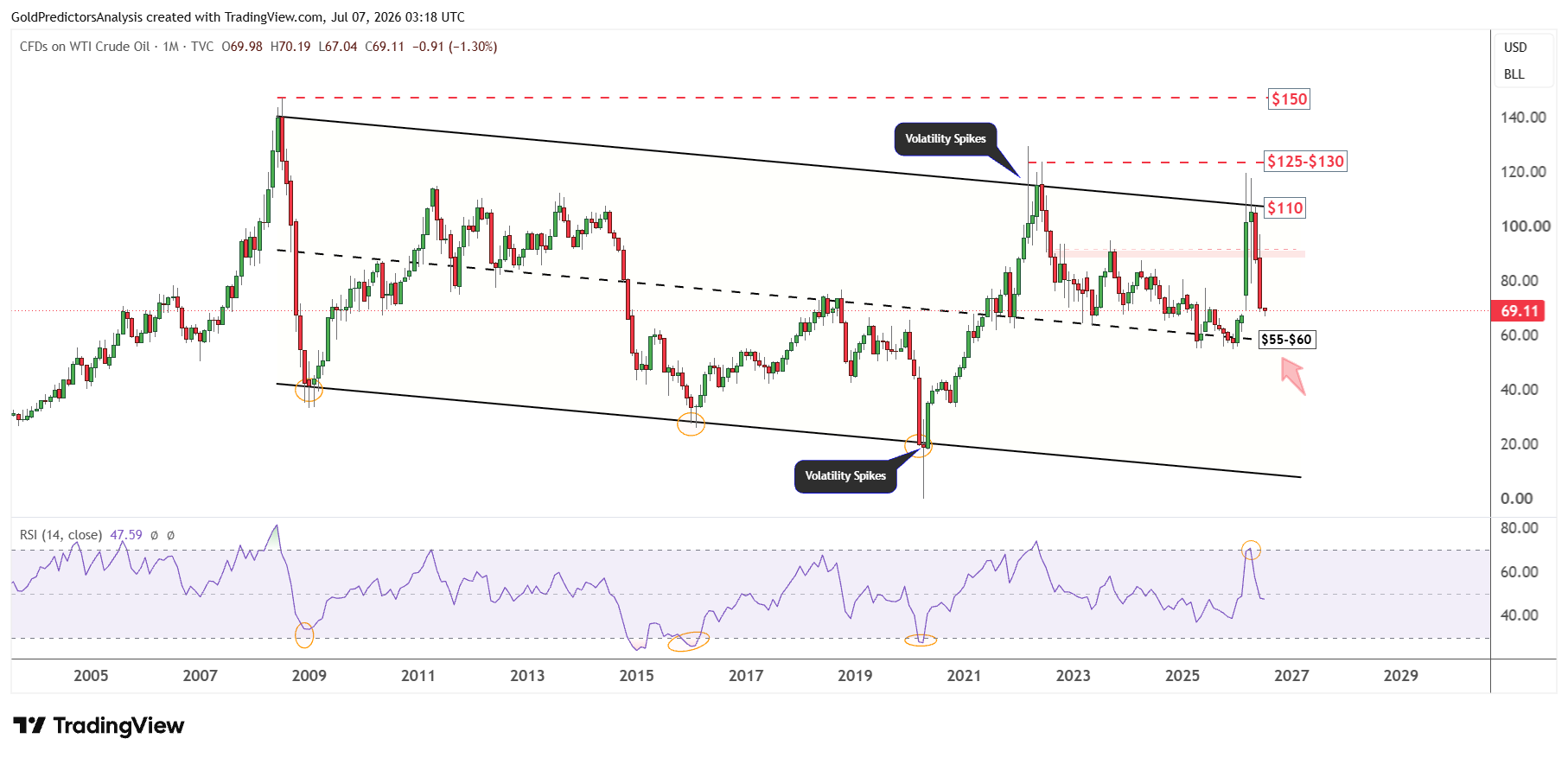
The long-term outlook for WTI remains uncertain as the price failed to break the $110 area on a closing basis. The strong support remains the $55 to $60 area, whereby the next move in the crude oil market will depend on the pivot of $55. The RSI has also broken the mid-level, which indicates further downside in the short term.
Brent Oil Price Forecast
Every new Brent Oil analysis as it publishes, today's technical signal and key levels, live price — on one page.
See all Brent Oil forecastsBrent Oil Forecast: $72–$74 Support Zone Comes into Focus
The daily chart for Brent crude oil shows that the price remains under bearish pressure after the drop from the $120 area. Now, the price has also broken the $80 level and pushed towards the $72 to $74 support. The price is now consolidating within this support to find the next move. A break below $70 may push the price towards the $68 area, which is the support seen by the red dotted trend line.
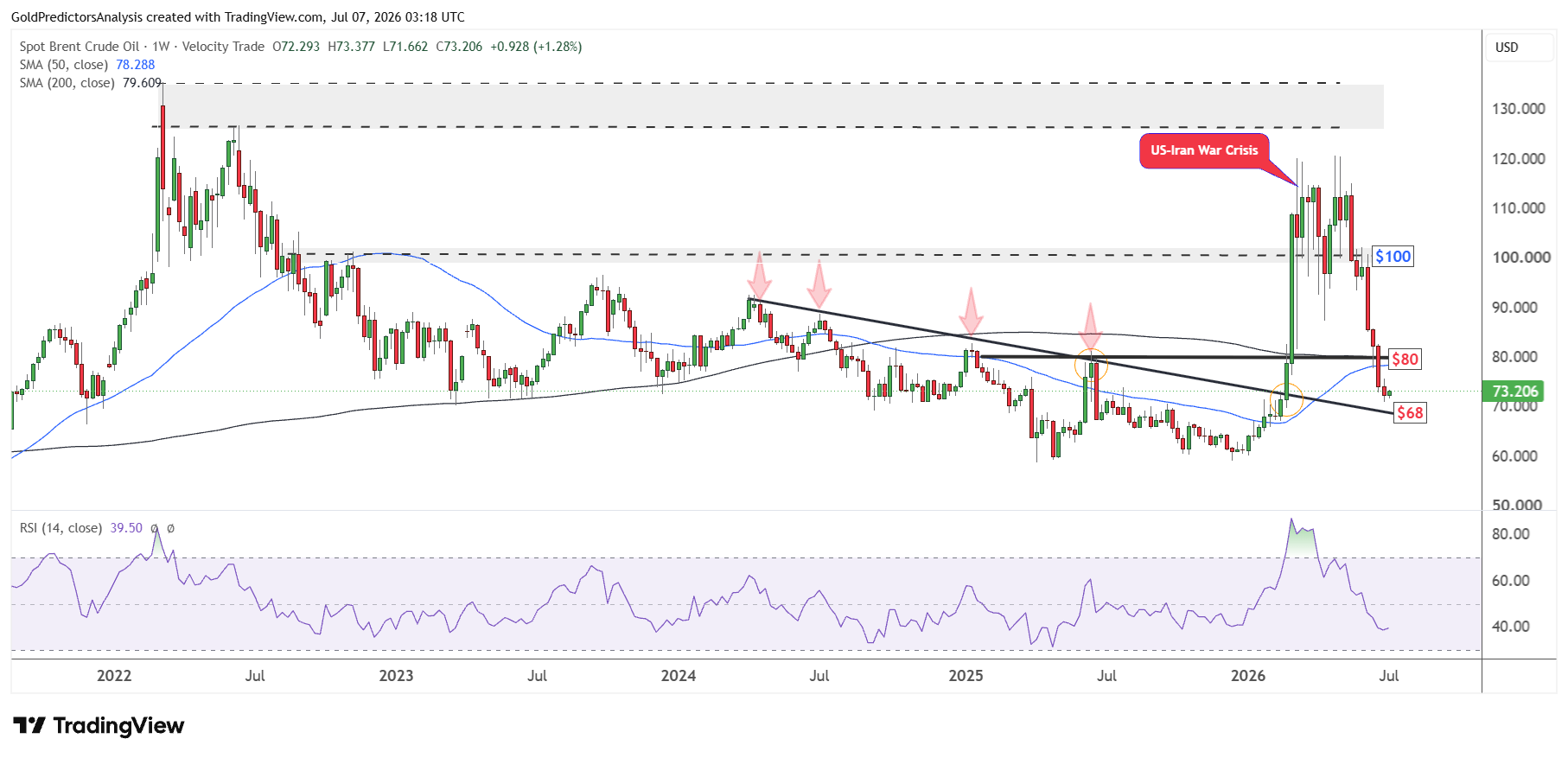
The RSI has been consolidating within the oversold levels, which indicates that the next move in Brent crude oil is likely to develop soon. A recovery above $80 will push Brent crude oil towards $90. But a break above $90 will likely push Brent crude oil towards $120.
The weekly chart for Brent oil shows that the price remains below $80. As long as the price remains above $68, the possibility of a rebound may develop back towards the $80 area. But a strong recovery above $80 will likely signal that Brent crude oil may push further higher in the short term.
Bottom Line
Oil prices continue to be at an inflection point with supply growth and subdued demand signals. The easing geopolitical risk has removed some support from the market but higher output from OPEC+ and the UAE may keep pressure on prices. WTI oil needs to maintain the $66 support level to prevent further declines back to the $60-$55 range. As long as the Brent remains above $66, the possibility of a rebound remains. A move above $80 in both markets will support the positive outlook in the short term.
Read more: WTI Selloff Deepens as Brent Tests $70