On Friday, January 9, Japanese household spending surged in November, fueling speculation about a Bank of Japan rate hike, spotlighting USD/JPY.
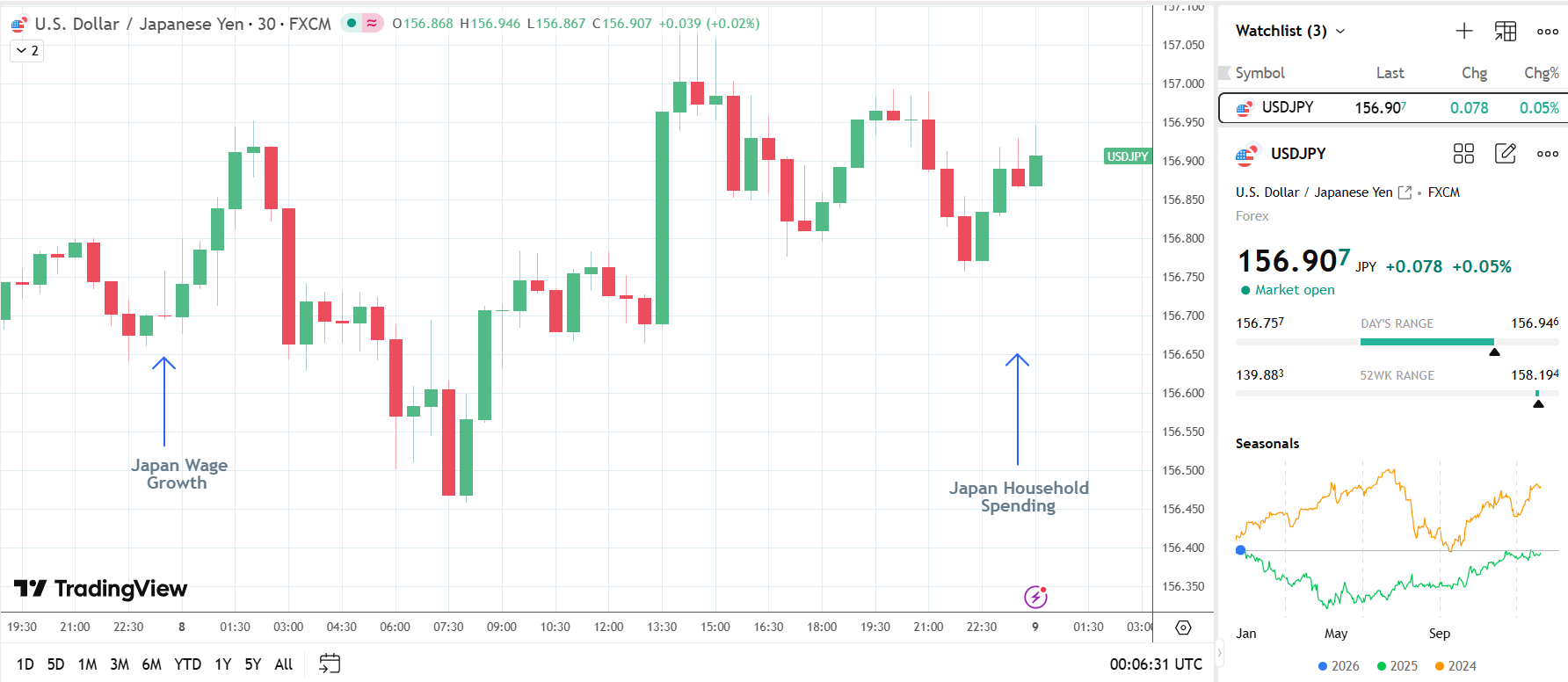
The household spending figures contrasted sharply with wage growth data for November, which suggested a potential pullback in consumption at the end of the year. The conflicting reports left the USD/JPY pair around the 157 level and, crucially, the Japanese government’s yen intervention zone (157-160).
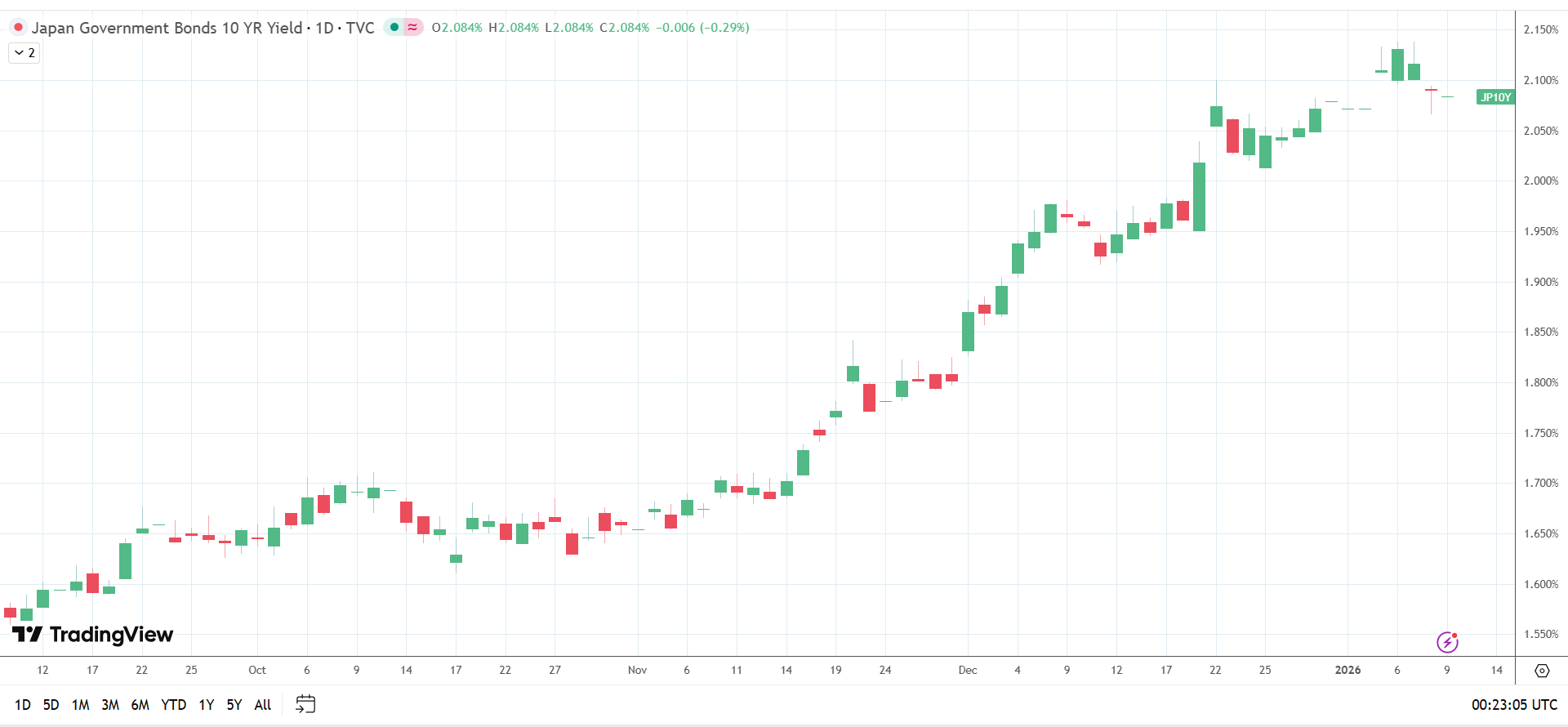
The sharp rise in household spending had a muted effect on 10-year Japanese Government Bond (JGB) yields, underscoring the significance of the weaker wage data. Nevertheless, the outlook remains bearish for USD/JPY, given the prospects of Fed rate cuts and eventual BoJ rate hikes.
Below, I’ll discuss the macro backdrop, the near-term price catalysts, and technical levels traders should closely watch.

Household Spending and Inflation Implications
Japanese household spending jumped 6.2% month-on-month in November, recovering from October’s 3.5% decline. Year-on-year, household spending increased 2.9% compared with a 3.0% drop in October.
November’s spending data will give the BoJ hawks a firmer footing to push for a higher neutral interest rate and rate hikes. Robust consumer spending would fuel demand-driven inflation, supporting a more restrictive monetary policy stance. Furthermore, private consumption accounts for roughly 55% of Japan’s GDP growth.
Given the Bank of Japan’s focus on the economic momentum and prices, the November household spending figures support a more hawkish BoJ policy stance. This week, BoJ Governor Kazuo Ueda signaled further rate hikes if prices and the economy aligned with the Bank’s projections.
USD/JPY Price Forecast
Every new USD/JPY analysis as it publishes, today's technical signal and key levels, live price — on one page.
See all USD/JPY forecastsWage Growth Raises Caution
In contrast, November’s wage growth figures suggested the need for caution against monetary policy tightening in Q1 2026. Average cash earnings rose 0.5% YoY in November, down sharply from October’s 2.5% increase, while overtime pay increased 1.2% YoY (October: 2.1%).
Typically, softer wage growth, coupled with a weak yen, weakens households’ purchasing power, curbing consumption. A pullback in consumer spending would cool demand-driven inflation and signal a loss of economic momentum, supporting a less hawkish BoJ rate path.
The USD/JPY trends reflected the greater influence of the wage growth data on expectations of a BoJ rate hike. The USD/JPY pair was up 0.05% to 156.907 in early trading on Friday, January 9. Despite the mixed numbers for November, economists expect wages to rebound in December, supporting the bearish short- to medium-term outlook for USD/JPY.
East Asia Econ commented on recent Japanese economic data, including November’s wage growth data, stating:
“The BoJ’s quarterly regional Sakura report shows conditions holding up, and the dip in consumer confidence in December isn’t concerning, given the post-March bounce. Wage growth in November was mixed, but can be expected to rebound in December on stronger bonuses.”
US Jobs Report: Key Near-Term Catalyst
Later on Friday, the highly anticipated US jobs report will influence expectations of a March Fed rate cut. Economists expect nonfarm payrolls to increase 60k in December after rising 64k in November, while forecasting unemployment to fall from 4.6% to 4.5% in December. Furthermore, economists forecast average hourly earnings to increase 3.6% YoY in December, up from 3.5% in November.
Weaker-than-expected labor market data would raise bets on a March Fed rate cut. A more dovish Fed rate path would weigh on demand for the US dollar, sending USD/JPY lower.
According to the CME FedWatch Tool, the chances of a March Fed rate cut fell from 43.2% on January 7 to 41.6% on January 8. Stronger-than-expected US Services PMI data tempered expectations of a March cut. The ISM Services PMI increased from 52.6 in November to 54.4 in December, signaling a robust US economy.
Today’s US jobs report will be key for the near-term USD/JPY price outlook. Fading bets on a March Fed rate cut would challenge the bearish short-term outlook and send USD/JPY higher.
However, expectations of BoJ rate hikes, a new Fed Chair potentially favoring lower rates, remain key drivers. These fundamentals support a bearish medium-term outlook for USD/JPY.
Technical Outlook: Key Levels to Watch
For USD/JPY price trends, traders should assess the technicals and closely monitor the fundamentals.
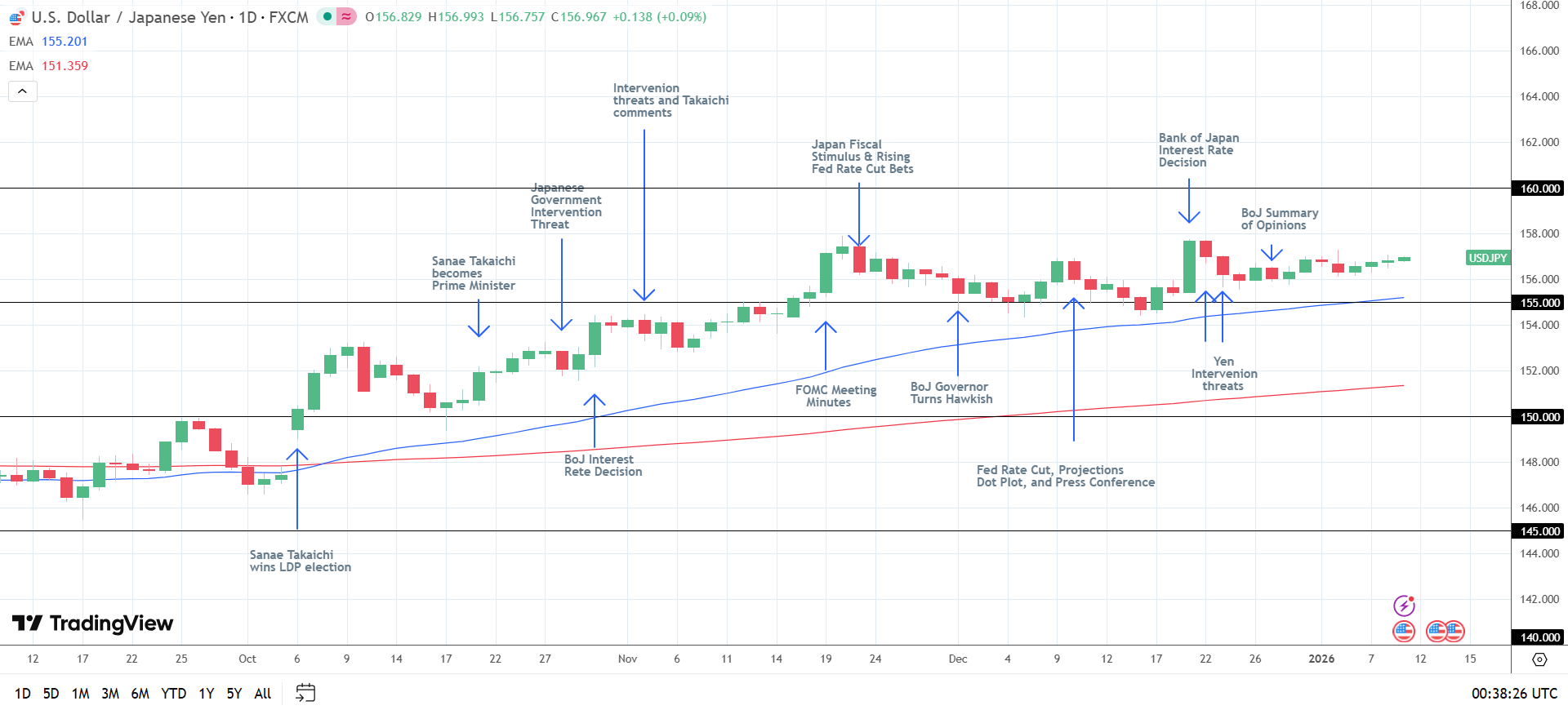
Viewing the daily chart, USD/JPY trades above its 50-day and 200-day Exponential Moving Averages (EMAs), signaling a bullish bias. While technicals remain bullish, bearish fundamentals have evolved, countering the technicals.
A break below the 50-day EMA and the 155 support level would indicate a bearish near-term trend reversal, bringing the 200-day EMA into play. If breached, 150 would be the next key support level.
Crucially, a sustained drop below the 50-day and 200-day EMAs would reinforce the bearish medium-term price outlook.
Position and Upside Risk
In my view, bets on BoJ rate hikes, potential threats of yen intervention, and expectations of Fed rate cuts support a negative price outlook. However, the BoJ neutral interest rate and upcoming US jobs data will be crucial, given the focus on US-Japan rate differentials.
A higher neutral interest rate (1.5%-2.5%) would indicate multiple BoJ rate hikes and a narrower US-Japan interest rate differential. A narrower-than-expected rate differential would likely trigger a yen carry unwind, pushing USD/JPY toward 140 over the longer term.
However, upside risks to the bearish outlook include:
- Dovish BoJ commentary and a dovish neutral interest rate (1%-1.25%).
- Upbeat US jobs report.
- Hawkish Fed rhetoric.
These scenarios would send USD/JPY higher. However, the threat of yen interventions is likely to cap the upside at the 158 level, based on the latest communication.
Read the full USD/JPY forecast, including chart setups and trade ideas.
Conclusion: Neutral Rate and Fed Path in the Spotlight
In summary, the USD/JPY trends will hinge on the BoJ’s neutral rate and the Fed rate path.
A hawkish neutral rate (1.5%-2.5%) would indicate a hawkish BoJ rate path. Additionally, dovish Fed rhetoric would boost expectations of narrower rate differentials, reaffirming the bearish outlook for USD/JPY.
Notably, a stronger yen could trigger the unwinding of yen carry trades, which would likely push USD/JPY toward 140 over the longer 6-12 month time horizon.
For more in-depth analysis, review today’s USD/JPY trading setups in our latest reports and consult the economic calendar.