Stocks Slide as Iran Keeps Strait Closed and Oil Surges Toward $100
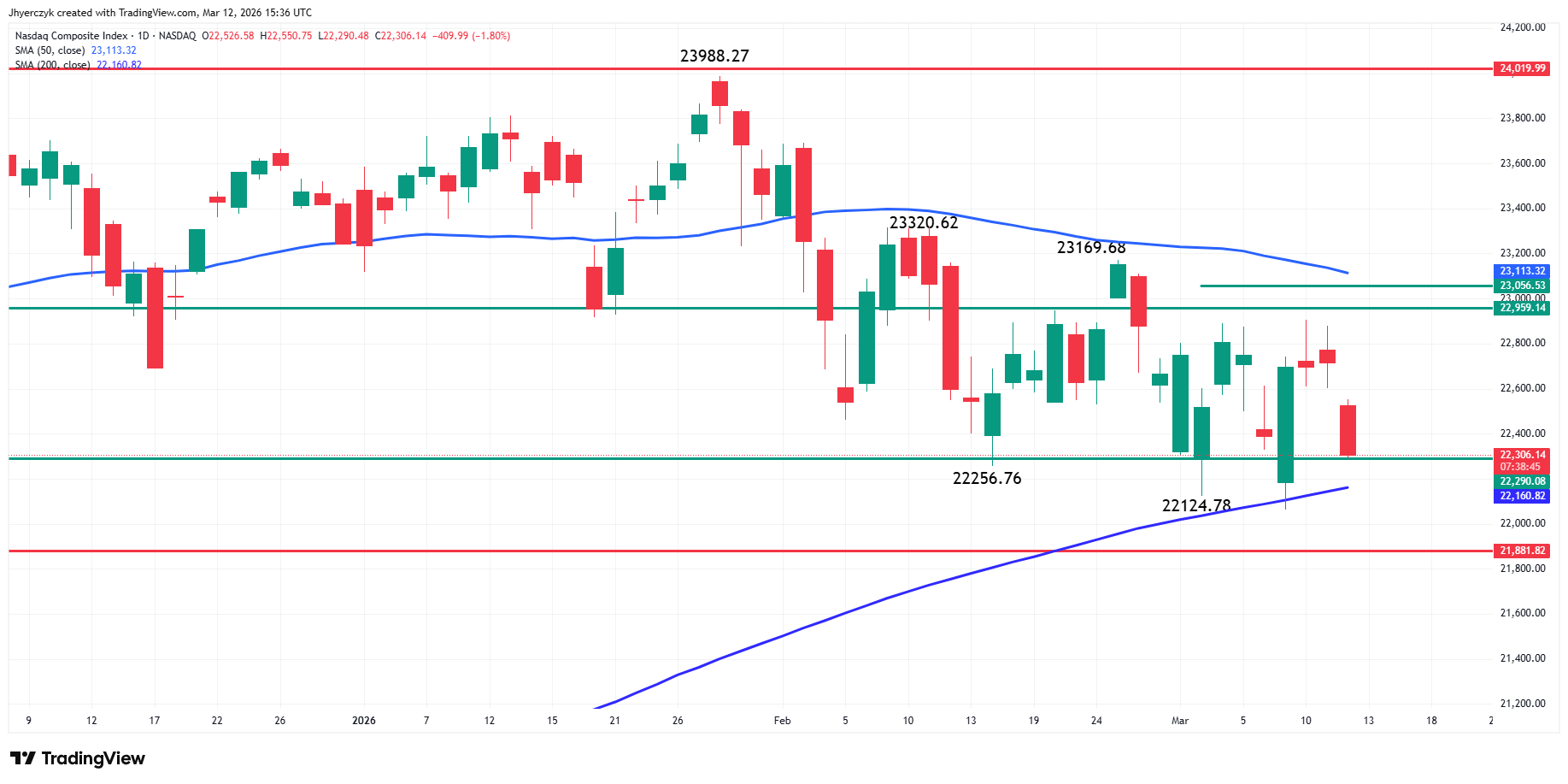
The major U.S. stock indexes are sharply lower mid-morning as oil prices surged because traders are worried about supply problems while the war involving Iran continues. Investors are also worried about inflation pushing Fed rate cuts further into the future. Much of the stock market rally over the past few years has been driven by the prospect of lower rates so higher-rates for longer is something investors weren’t expecting.
Dow Down 676, S&P and Nasdaq Follow
At 15:04 GMT, the blue chip Dow Jones Industrial Average is down 676 points, about 1.4%. The blue chip S&P 500 Index dropped 1.3% and the tech weighted Nasdaq Composite declined 1.7%.
Iran’s New Supreme Leader Says Keep the Strait Closed
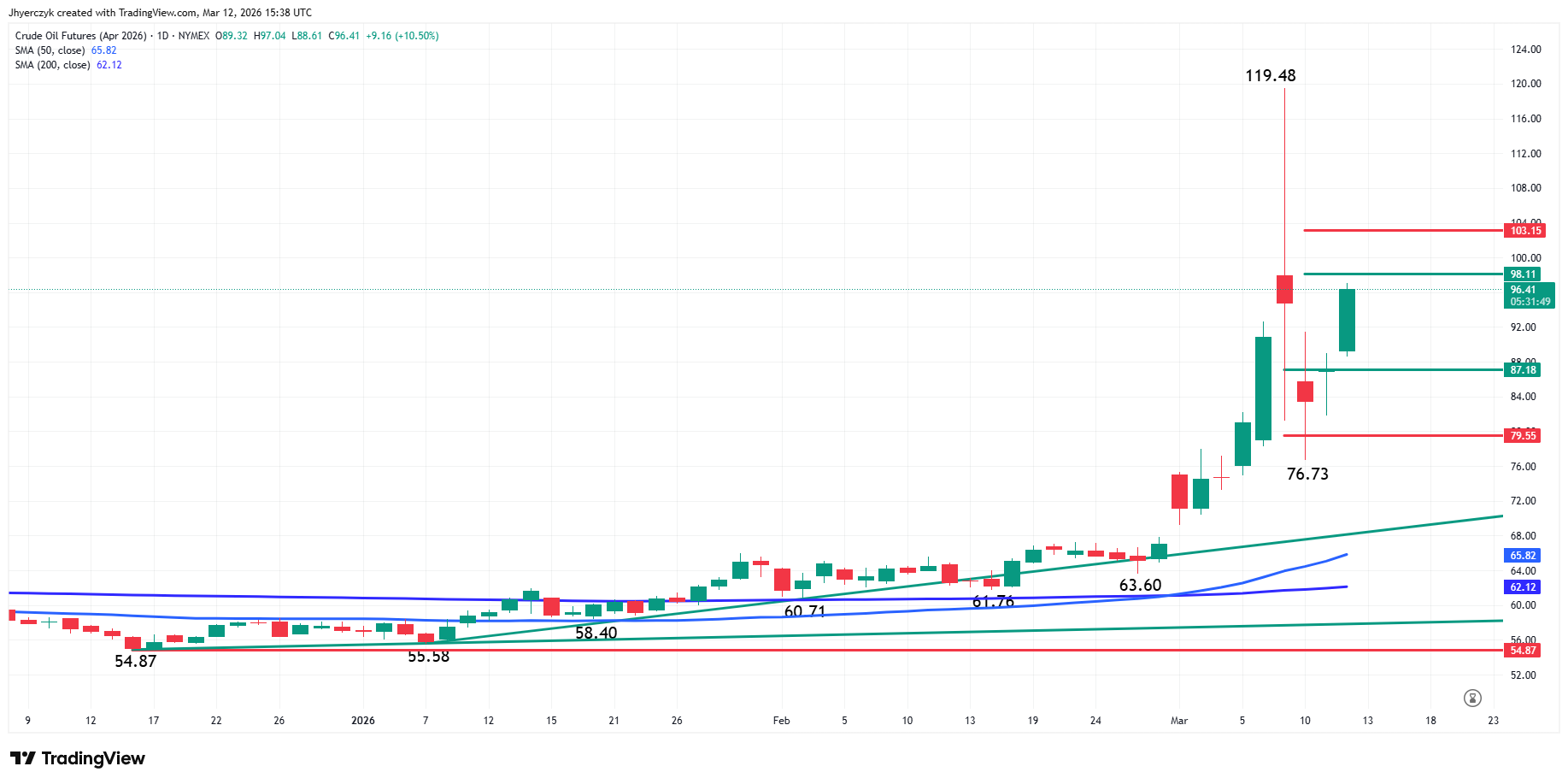
Oil prices are on the rise again after Iran’s new Supreme Leader Mojtaba Khamenei, said the Strait of Hormuz should stay closed as a way to pressure Israel and the United States. U.S. crude oil benchmark West Texas Intermediate (WTI) jumped about 9% to around $95 per barrel. Brent crude, the global benchmark, rose about 8% to roughly $100 per barrel.
Trump’s Mixed Messages Aren’t Helping
President Trump has been optimistic about the war ending sooner than expected, but his messages are being perceived as mixed, in my opinion. He recently said we won the war, meaning the United States, but he said so while ignoring the key issues like the halting of traffic through the Strait of Hormuz and infrastructure damage to several key OPEC producer facilities. Between Trump’s comments and the resilience of Iran, in my opinion, traders should continue to brace for short-term volatility and start positioning for a longer-than expected war.
U.S. Navy Not Ready to Escort Tankers Until End of March
While Khamenei was sounding confident in his comments, U.S. Energy Secretary Chris Wright appeared to be less sure of the government’s next strategic move. He said Thursday that the U.S. Navy is not ready yet to escort oil tankers through the Strait, but it could be able to do so by the end of March. Two weeks is a long time to wait in a market that has the capability of swinging $10 a day in this hostile environment.
Brent Oil Price Forecast
Every new Brent Oil analysis as it publishes, today's technical signal and key levels, live price — on one page.
See all Brent Oil forecastsIran Controls the Price of Oil and They Know It
One analyst from Vital Knowledge, Adam Crisafulli hit it on the head when he said that while the U.S. and Israel may have the stronger military power, Iran’s government has the power to control crude oil prices in an attempt to put pressure on Trump. I believe that this situation can drive prices for both Brent and WTI and hold prices above the key psychological level of $100. Not only does a prolonged move over this level drive down investor sentiment, but it also will have a major impact on global inflation, growth and central bank policy.
Goldman Sachs Pushes First Rate Cut to September
It has already shifted the forecast from Goldman Sachs, which changed its expectations for interest rates. The firm still believes the Fed will cut rates this year, but now expects the first cut in September instead of June. As I said earlier, the stock market feeds on lower rates so this will be a burden for investors, but not as bad as a rate hike.
More Information in our Economic Calendar.