Stocks Open Mixed as Peace Talk Optimism Fades Fast
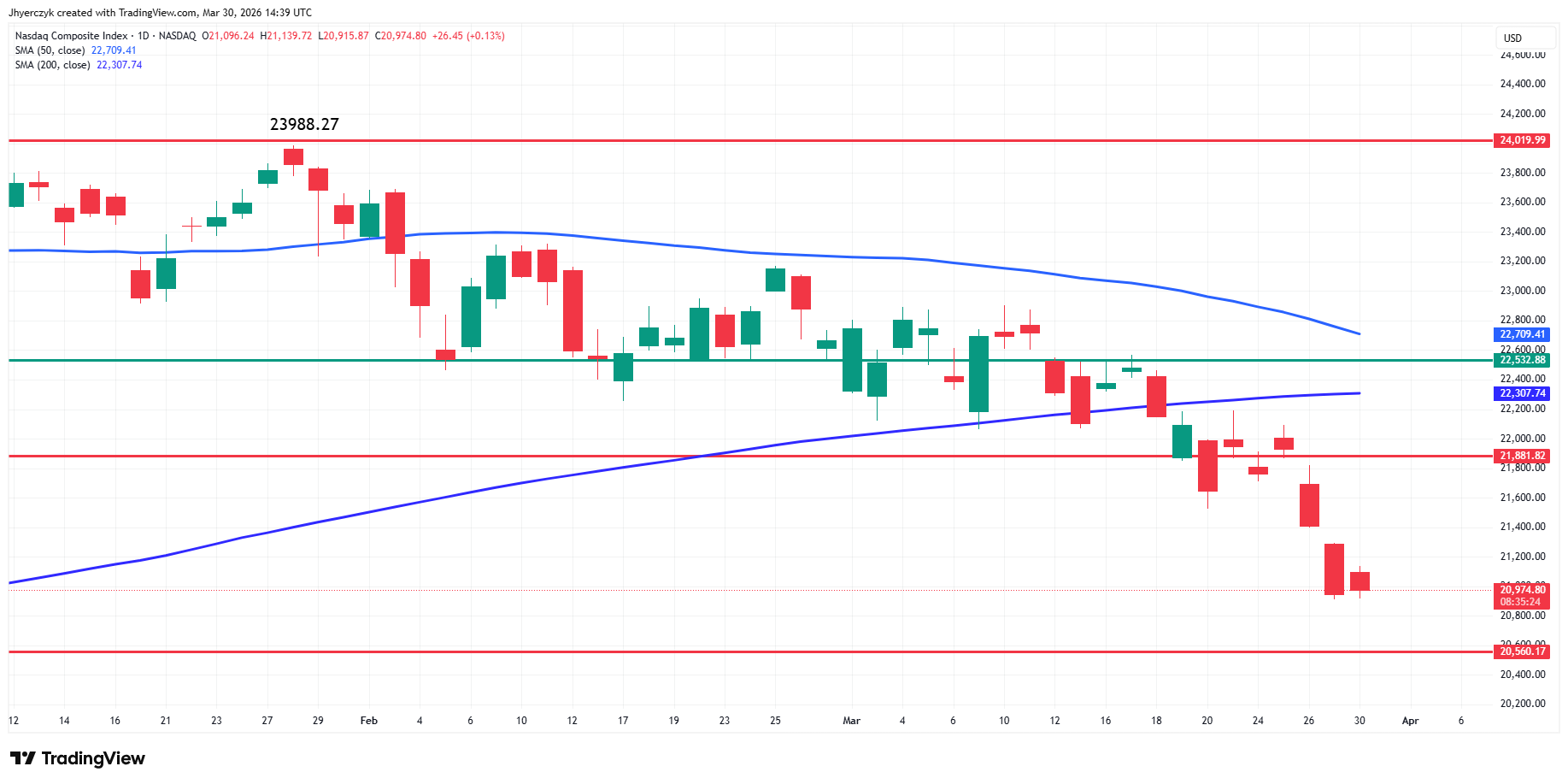
The major U.S. stock indexes are putting in a mixed performance shortly after the opening on Monday. Initially stocks moved higher as investors reacted to signs of easing tensions in the Middle East after President Trump made comments suggesting progress toward ending the war with Iran. Other reports also contributed to the early optimism including one that Tehran had accepted much of a proposed agreement. Another said that Iran had allowed more oil shipments through key routes.
Traders, betting on hopes that a major global supply disruption could be avoided, drove the indexes sharply higher on the opening, but those gains faded and the indexes fell from their highs, with the Nasdaq Composite turning lower. The early price action suggests this week could be a volatile one with risk on and risk off trading controlled by the headlines.

Oil Above $100 and the Market Is Pricing In a Prolonged Supply Strain
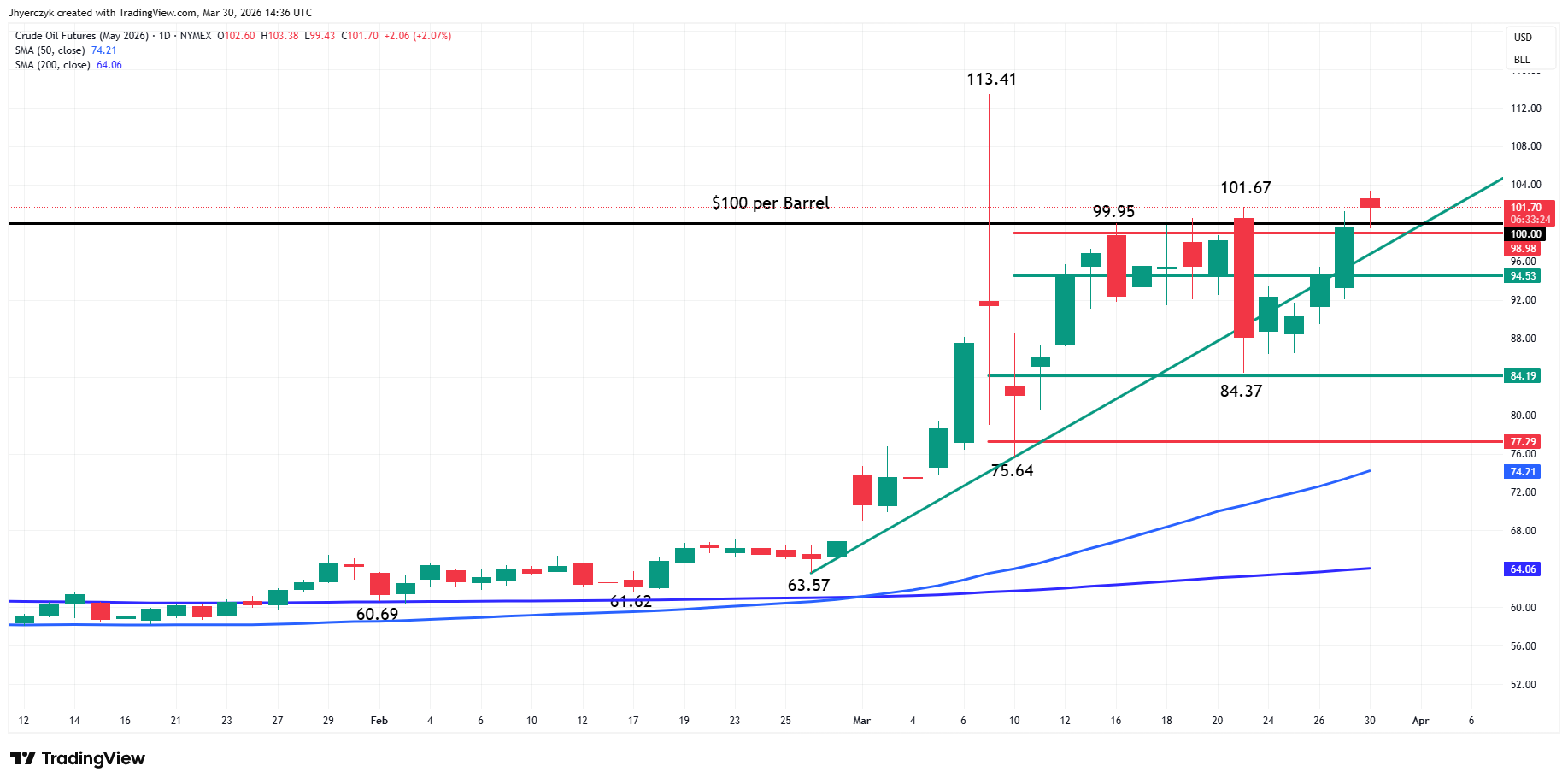
After the initial “Trump Bump”, traders returned their focus to the energy markets as oil prices continued to climb. Brent crude moved above $114 per barrel, while West Texas Intermediate (WTI) topped $101. The key factor driving the rise are supply restraints. I think the markets have accepted the current short-term risks, and are primarily assessing the potential for a prolonged supply strain. We could be looking at a potential global disaster if shortages begin to emerge. Not only that, but higher inflation, lower consumer demand and the possibility of interest rate hikes from several central banks, including the Fed.
Materials Surge While Tech Struggles
The volatility in the broad-based markets also spread to the sectors with strength in materials, but weakness in technology. Alcoa jumped as aluminum prices rose sharply following the infrastructure damage in the Middle East.
Good Friday Closes the Door on Jobs Report Reaction
Looking ahead, the focus is going to remain on headlines pertaining to the developments in the Middle East. Investors will also be reacting to oil price volatility. Later in the week, some of the focus may shift to the U.S. Non-Farm Payrolls report on Friday, but that’s the Good Friday holiday. With the markets closed that day, investors will have to wait until next week to see if the report numbers will have any influence on Fed policy.
Technical Outlook
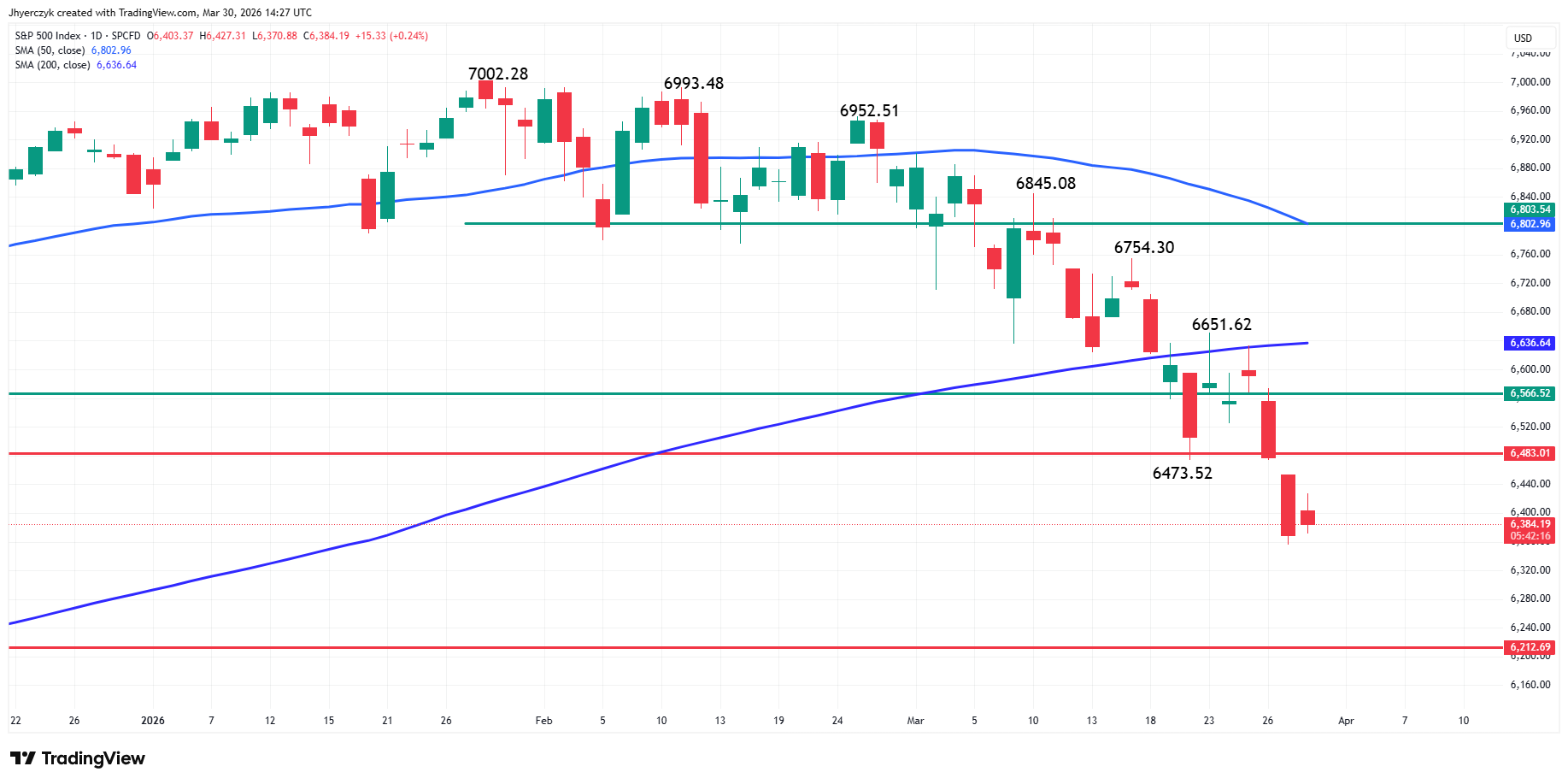
Technically, the main trend is down according to the S&P 500 Index (SPX) daily swing chart. The downtrend is being reaffirmed with the prolonged trade below the 200-day moving average at 6636.62 and the 50-day moving average at 6802.94. The benchmark index is also trading on the weak side of a long-term moving average at 6483.01 to 6566.52, helping to contribute to the overall bearish tone.
Dow Jones Price Forecast
Every new Dow Jones analysis as it publishes, today's technical signal and key levels, live price — on one page.
See all Dow Jones forecastsGiven the current chart pattern, I think traders will be more inclined to sell rallies rather than play for upside breakouts through resistance. The index is vulnerable to the downside since there is no major support until 6212.69.
More Information in our Economic Calendar.