


Nasdaq Slides at Mid-Session as Chip Stocks Take the Biggest Hit
Nasdaq down 1.5% at mid-session. S&P 500 off more than 0.6%. The Dow held near flat. April CPI printed hot. June WTI crude oil pushed back above $101. The chip stocks that carried this market for six straight weeks finally had a reason to sell and traders did not hesitate. The AI trade that looked unstoppable Monday morning was giving back ground by lunch Tuesday. That is how fast sentiment shifts when inflation and oil move in the same direction on the same day.
CPI and Oil Hit at the Same Time
April Consumer Price Index rose to 3.8% annually, the highest reading since May 2023, against an expectation of 3.7%. That print landed and yields moved higher immediately. The U.S. Dollar Index strengthened. Rate cut expectations that were already thin got thinner. Futures markets now suggest the Fed could hold through the end of the year. Some traders are starting to discuss the possibility of another rate hike if oil keeps feeding inflation. I’ve watched this market reprice rate expectations before and the current move is not subtle. Before the conflict started investors expected two Fed cuts in 2026. That number is now zero and moving toward negative.
June WTI crude oil above $101 is the engine behind the inflation re-acceleration and nothing on Tuesday changed the supply picture. Trump said the ceasefire was on life support. Iran’s demands reportedly include war reparations, full control over the Strait of Hormuz, frozen asset releases and sanctions removal. Those are not the demands of a side preparing to compromise. The Strait stays restricted, oil stays elevated, inflation stays hot and the Fed stays on hold. That chain is intact and stocks are feeling every link of it.
Chip Stocks Led the Decline
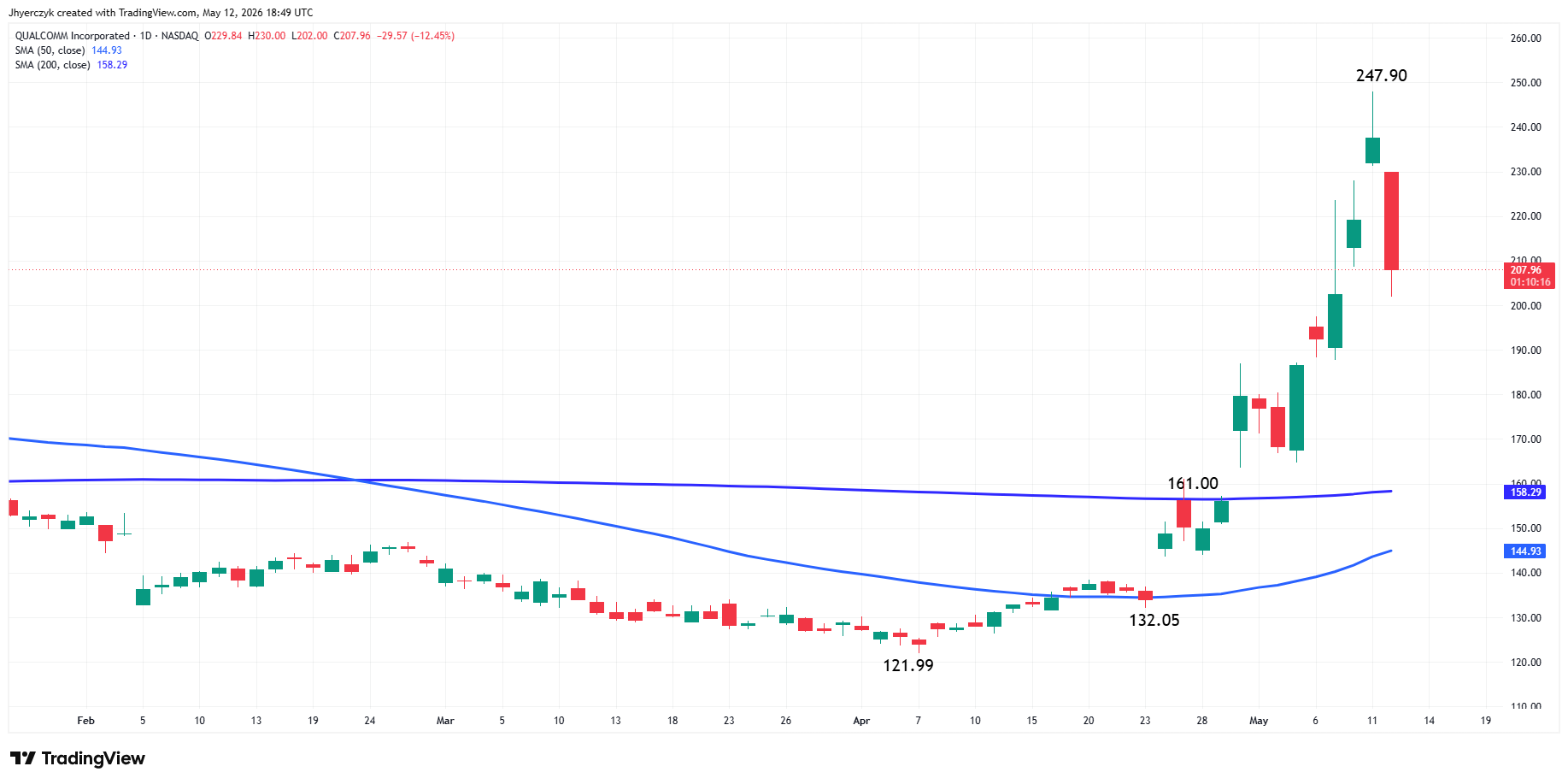
Qualcomm tumbled more than 13% after hitting a record high the session before. Intel dropped close to 10% after surging more than 17% over the prior two trading days. Micron Technology reversed more than 10% after a massive AI memory chip rally. Advanced Micro Devices, Skyworks Solutions and On Semiconductor all traded sharply lower as traders rotated out of momentum names that had run the hardest. The Philadelphia Semiconductor Index fell almost 6% on the session. That is not random selling. That is a coordinated exit from the trade that has been leading this market higher and it happened fast.
The AI memory story that drove these names is not broken. High-bandwidth memory is still a bottleneck in the AI infrastructure buildout and the companies that supply it still have pricing power. One down session does not change that. What it does is remind traders that stocks that surge 38% in a week and then add another 6% the next day are carrying a lot of risk when inflation data prints hot.
Dow Jones Price Forecast
Every new Dow Jones analysis as it publishes, today's technical signal and key levels, live price — on one page.
See all Dow Jones forecastsNot everything sold off. Zebra Technologies surged nearly 17% after raising its annual sales growth forecast and reporting better than expected quarterly results. Vestis rallied more than 30% after boosting its fiscal outlook. Wendy’s jumped on reports that Trian Fund Management may pursue a deal to take the company private. On a day when market breadth was heavily negative with declining stocks outnumbering advancers across both exchanges, those moves stand out. Companies delivering real earnings growth with upside guidance are getting rewarded even when the macro picture is working against the broader market.
Technical Outlook
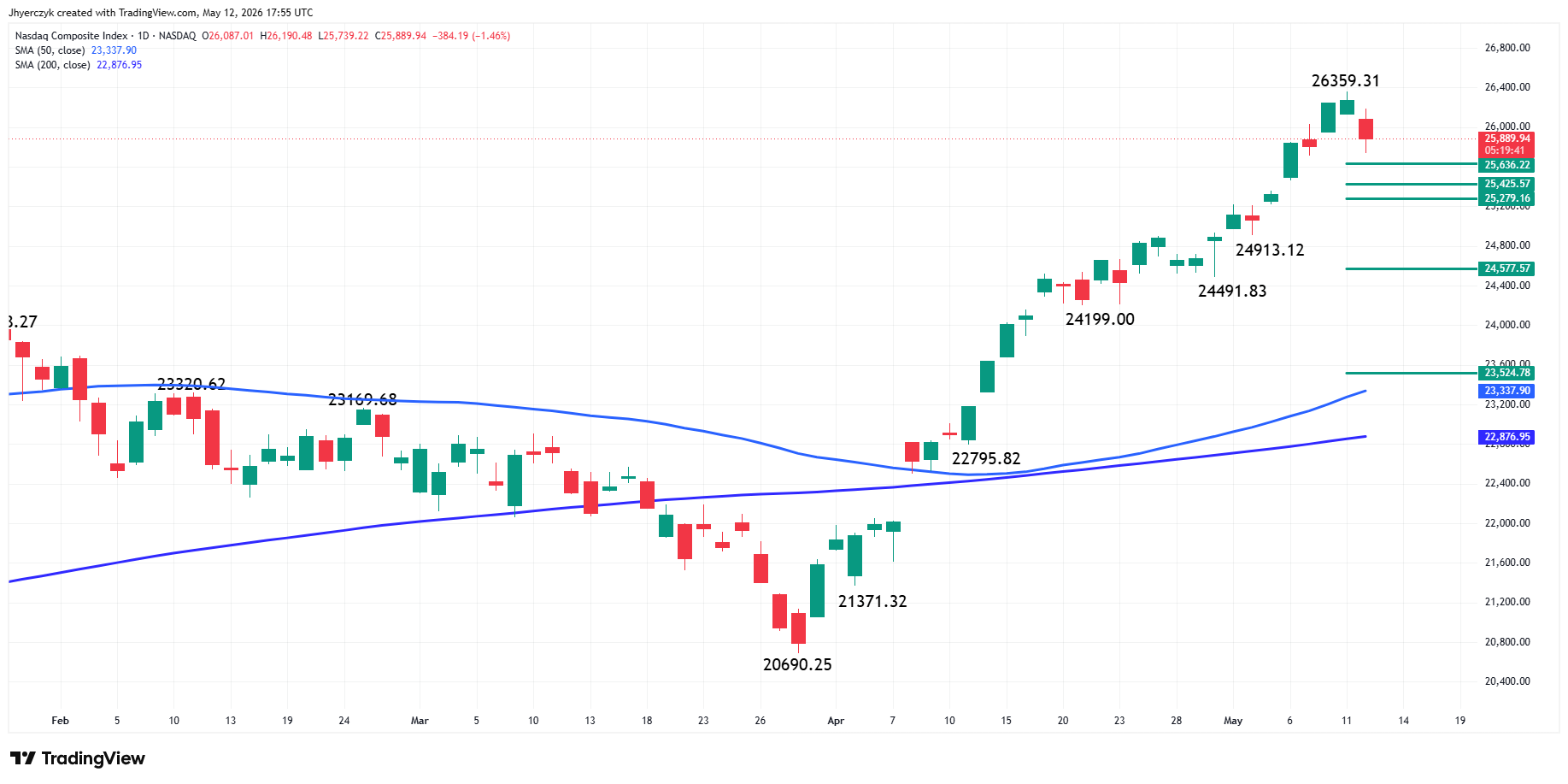
The main trend is up but momentum could be shifting, according to the daily swing chart. Today’s lower-low has turned 26,359.31 into a new minor top. A trade through this level will reaffirm the uptrend.
The nearest minor bottoms are 24,913.12, 24,491.83 and 24,199.00. A trade through these levels will change the minor trend to down and shift momentum to the downside.
The minor swings and the top have created three pivots at 25,636.22, 25,425.57 and 25,279.16. Since the main trend is up, buyers could continue to come in on pullbacks into these levels, but if they start to fail then look out to the downside. Targets will then become the three minor bottoms and another stronger pivot at 24,577.57.
We were looking for a change in the pattern and I think we could be looking at the start of a short-term retreat. The current swing from 26,359.31 to 25,739.22 is 620.09 points. This is the largest downswing of the entire rally, indicating that price is overbalancing.
The key is the next two days. The last and only two-day swing down was April 20 to April 21. A two-day top from current levels will balance this break in time. It will also make 26,359 a new main top. This is something we haven’t seen since March 17. Three days down will break the pattern and indicate early weakness.
It could take time to form a major top. Right now, we’re looking at the first swing down from an all-time high. A fast break will indicate profit-taking and long-liquidation, but the formation of a higher swing bottom than 24,913.12 and a secondary lower top compared to 26,359.31 could bring in the short-sellers.
I was looking for a daily closing price reversal top to set the topping formation in motion, but I didn’t get it. Fortunately, conditions are ripe for a weekly closing price reversal top. Last week’s close was 26,247.08. Keep an eye on this level until Friday’s close.
What to Watch
Last week’s Nasdaq Composite close was 26,247.08. That number matters all week and especially Friday. A weekly close below it produces a closing price reversal top, the first potential major topping signal since March 17.
The pivot cluster at 25,636.22, 25,425.57 and 25,279.16 is where buyers need to show up if this pullback is going to stay contained. Lose those levels and the minor bottoms at 24,913.12, 24,491.83 and 24,199.00 become the next conversation.
Wednesday’s Producer Price Index report lands before the open and adds another inflation data point on top of Tuesday’s CPI. A hot PPI and the selling pressure has a second reason to continue. A soft one and the dip buyers come back. Watch 26,247.08 into Friday’s close. That is the level that tells you whether this is a short-term pullback or the start of something bigger.
More Information in our Economic Calendar.