Stocks Pull Back as Hot CPI and Oil Above $100 Hit at the Same Time
The S&P 500 fell 0.88% Tuesday. The Nasdaq Composite dropped 1.52%. The Dow Jones Industrial Average lost 276 points or 0.56%. One day after touching record highs the market ran into two things it could not ignore. April CPI came in hotter than expected and June WTI crude oil pushed back above $101 a barrel after Trump called the Iran ceasefire massively on life support. The AI trade that has been carrying this market for six straight weeks finally had to share the room with inflation and it did not like the company.
CPI Came in Hot and the Market Felt It Immediately
April inflation came in at 0.6% for the month. 3.8% on the year against a 3.7% estimate. Highest annual reading since May 2023. Technology sold off within minutes of the print. Chip stocks led the decline because they had the most to give back. When inflation data moves against the Fed, rate-sensitive growth names do not wait for confirmation. Traders who had been sitting on six straight weeks of gains found their exit and they took it fast.
The inflation story has one engine right now and it is not wages or shelter costs. It is oil. June WTI crude oil above $100 runs through transportation, manufacturing and food prices before the month is out. That chain does not break until oil breaks and oil is not breaking while the Strait of Hormuz stays restricted and Trump is describing the ceasefire as massively on life support. This is not a complicated inflation story. It has one driver and that driver is getting worse not better.
Oil Above $100 Is the Real Problem
June WTI crude oil climbed 3% Tuesday and pushed back above $101 a barrel. Spot Brent crude oil rose above $108. Trump dismissed Iran’s latest proposal and said negotiations remain stalled. Iran’s demands reportedly include war reparations, full control over the Strait of Hormuz, the release of frozen assets and the removal of sanctions. Those are not the demands of a side that is close to a deal. Every day that gap stays open is another day oil stays elevated and another day the Fed has less room to move. That is the equation stocks are trading right now and Tuesday made it visible.
Chip Stocks Took the Hardest Hit
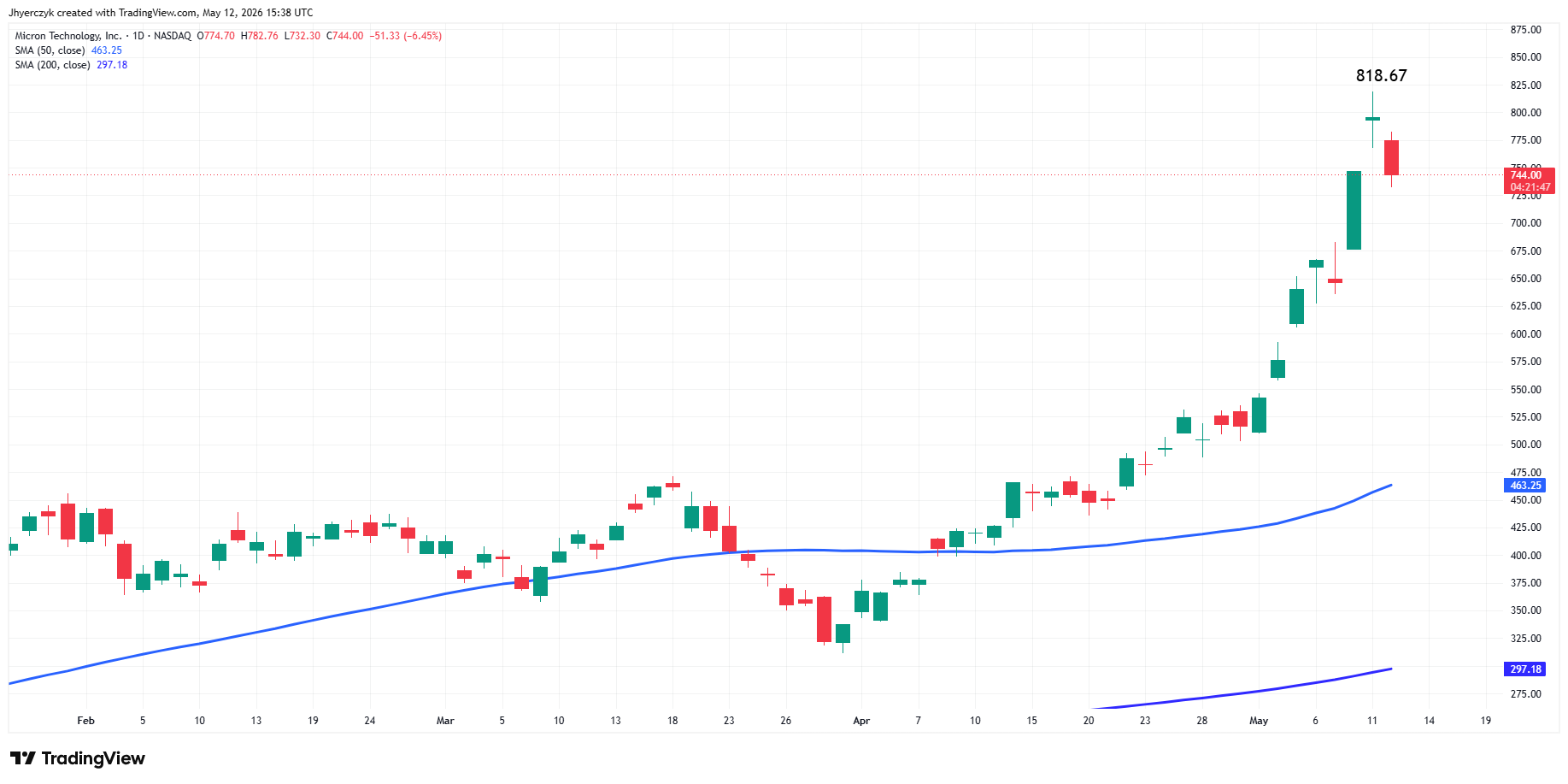
Micron Technology led the semiconductor selloff with a decline of more than 5%. That number needs context. Micron surged nearly 38% last week and added another 6% Monday. A 5% pullback after that kind of run is not a collapse. It is profit taking from traders who bought the AI memory story and decided Tuesday’s inflation data was a good enough reason to reduce exposure. Advanced Micro Devices dropped about 3%. Qualcomm sank roughly 10% as investors pulled back from names that had posted the biggest recent gains.
Dow Jones Price Forecast
Every new Dow Jones analysis as it publishes, today's technical signal and key levels, live price — on one page.
See all Dow Jones forecastsThe memory chip story that drove Micron’s run is not broken. AI data centers need high-bandwidth memory and the companies that supply it have real pricing power right now. Samsung, SK Hynix and Micron control most of the global DRAM market and a large share of NAND. One down session after a 38% weekly gain does not change that structural picture. It just means the trade needed a breather and CPI gave traders the excuse to take one.
Nvidia Held at an All-Time High
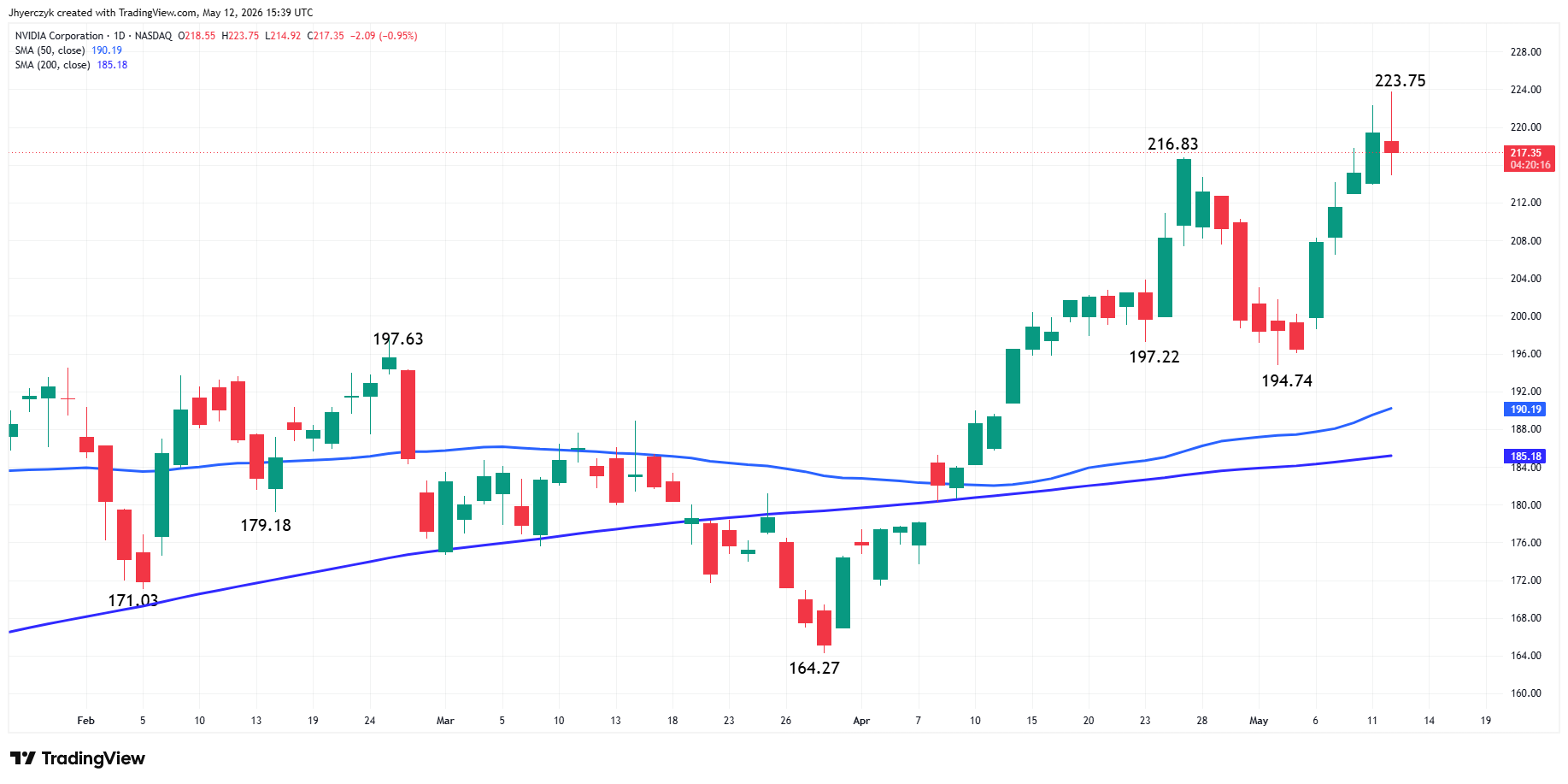
While the rest of the chip sector was selling off, Nvidia touched an all-time intraday high Tuesday before pulling back with the broader market. The company reports earnings on May 20 and expectations are running high. Wall Street is looking for sales near $78.6 billion. One firm’s analysts are projecting closer to $80 billion and have a price target that implies nearly 37% upside from Monday’s close. The data center semiconductor market is being revised higher as custom AI chip demand accelerates. Nvidia is at the center of that revision and the stock is reflecting it even on a down day for the sector.
Technical Outlook
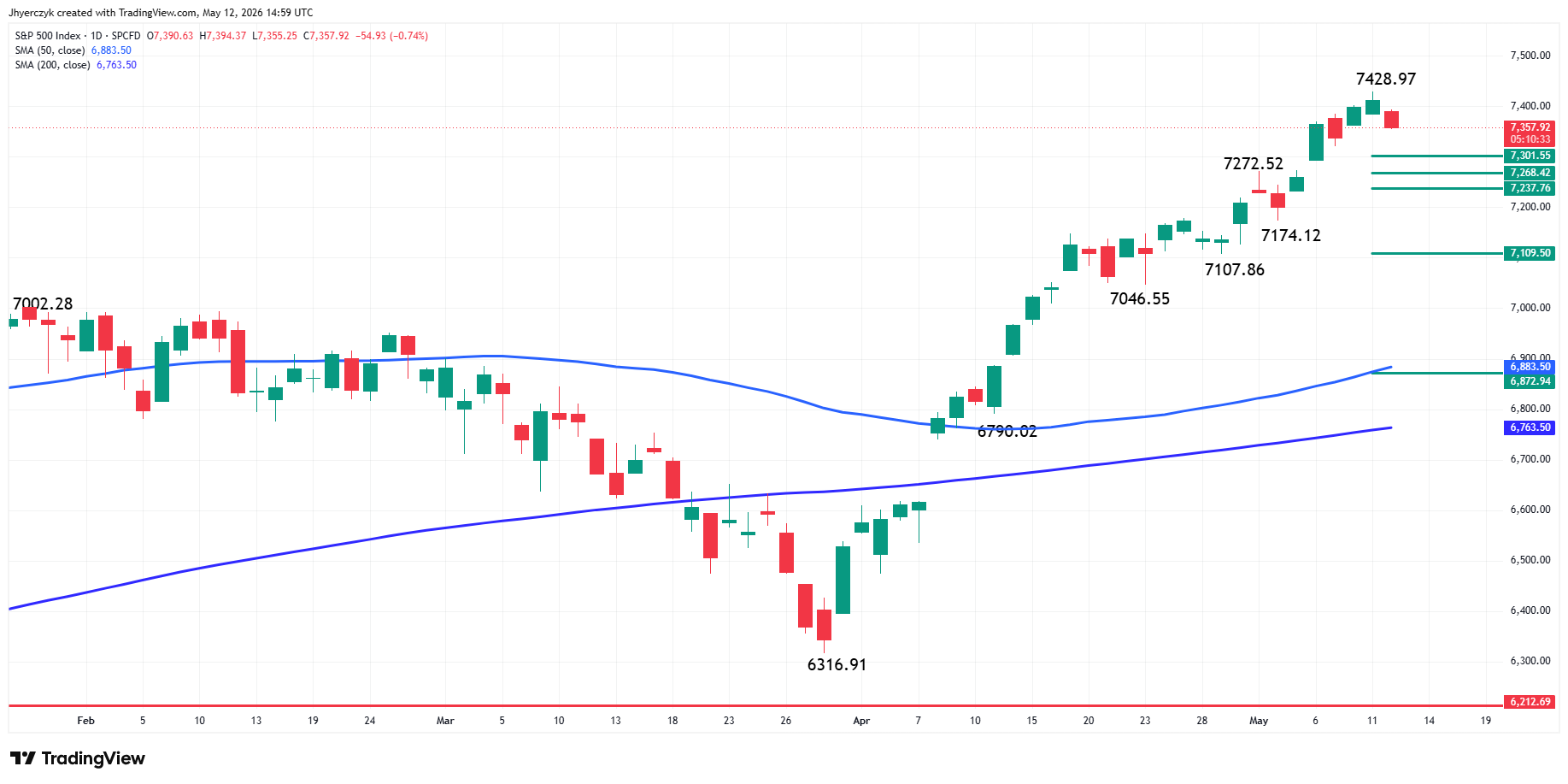
The benchmark S&P 500 Index is edging lower shortly after the opening on Wednesday. The early selling pressure helped produce its first minor top at 7,428.97 since May 1. By itself, this doesn’t mean much but is worth watching.
What we’re looking for is an overbalance of price. This will tell us if the selling pressure is strengthening that could produce an even stronger sell-off. The last break from 7,272.52 to 7,174.12, or 98.40 points. The current top is 7,428.97. A 98.40 point drop from this high puts it at 7,330.57. Today’s low is 7,354.26, so we still have nothing to indicate a significant top is forming. But we’ll be watching.
If price does overbalance we can expect further downside pressure. If we see a lower-low on Wednesday, then we’ll have a two-day break in progress and this will form a main top, the first since March 17.
According to the swing chart, potential downside targets are aligned at 7,301.55, 7,268.42, 7,237.76 and 7,109.50. With the trend up, buyers could continue to come in on these dips. If they can’t produce a new high, then a secondary lower-top will form. This will be the strong sign that a major top is forming and a correction is starting. Our objective is 6,872.94, which puts it inside the 50-day moving average at 6,883.38 and the 200-day moving average at 6,763.47.
What to Watch
Wednesday’s Producer Price Index report is the next inflation data point and it sets the tone before the open. A soft PPI gives bulls a reason to argue Tuesday’s CPI was energy-driven and temporary. A hot PPI confirms the inflation re-acceleration story and puts more pressure on the rate cut timeline. Watch the S&P 500 closely around 7,330.57.
That is the overbalance level that signals whether the selling pressure is strengthening into something more serious. Hold above it and the pullback stays contained.
Lose it and the swing chart targets at 7,301.55, 7,268.42 and 7,237.76 come into play. The main trend is still up and buyers have been coming in on every dip since late March. Wednesday tells us whether that pattern holds or finally cracks.
More Information in our Economic Calendar.